86+
years in existence
#1
Most Innovative Architecture Firm (Fast Company)
27
global offices
The client was a global architecture and design firm, had invested in an Azure Databricks environment that was handed over incomplete by a previous consultant, with no Consumption Layer, no Semantic Layer, undocumented SSIS pipelines the internal team could not maintain, and an on-premises SQL Server warehouse approaching end-of-life. Inferenz engaged on two parallel tracks: building the missing Consumption and Semantic Layer on Databricks and retiring the legacy warehouse by replacing every on-premises dependency with cloud-native pipelines. The result is a single governed Azure data platform serving Finance, HR, Projects, and Business Development, with Power BI report performance up 30%+ and reporting query load reduced by 40–60%.
The client had a partially built Azure Databricks environment inherited from an outgoing consultant: incomplete, undocumented, and growing more costly to maintain by the month. The foundational on-premises warehouse was approaching end-of-life with no migration path defined.
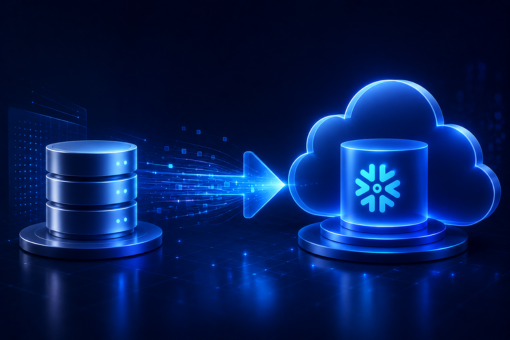
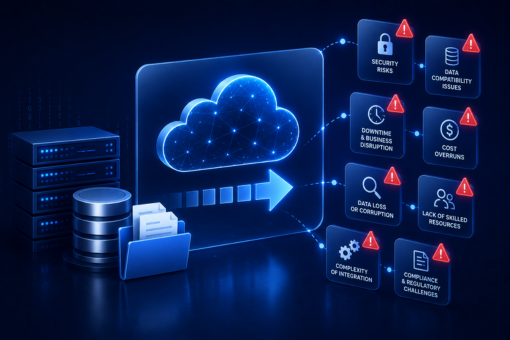
The foundational data warehouse ran on an on-premises SQL Server. As project volumes grew, the environment struggled with slower processing, limited scalability, and mounting costs that could not be justified against the cloud environment already in place
ADF and SSIS pipelines developed by the outgoing consultant were handed over with no documentation and no architectural context. Debugging failures, tracing lineage, and making even minor changes required significant effort, with every firefighting hour taken away from analytics work.
Every Power BI report queried the Curated Layer directly, generating expensive recomputation on every refresh. No pre-aggregation, no materialised views, and no separation between transformation logic and reporting consumption meant performance degraded at scale.
Finance, HR, Projects, and Business Development each built their own KPIs and data relationships independently. The same metric was defined differently in different reports. There was no single definition of utilization rate, revenue per
Inferenz engaged on two parallel tracks, building the analytics layer the existing environment was missing, and retiring the legacy on-premises warehouse by replacing every dependency with cloud-native pipelines.
Materialized Views, Indexed Tables, and Pre-Aggregated datasets were used to separate transformation logic from reporting consumption. Power BI reports now draw from pre-built, optimized datasets instead of triggering re-computation on the curated layer on every refresh, targeting a 40-60% reduction in query load.
Following a direct evaluation, Power BI Desktop was chosen over Microsoft Fabric, which carries DAX limitations, restricted Calculated Column support in Direct Lake mode, and additional licensing overhead. Domain-specific models for Finance, HR, Projects, and Business Development give every team a self-serve reporting layer without touching the engineering stack.
Row-Level and Object-Level Security was configured across all dashboards and Semantic Models, ensuring sensitive financial and HR data reaches only authorized users, without requiring each report developer to manage their own access logic.
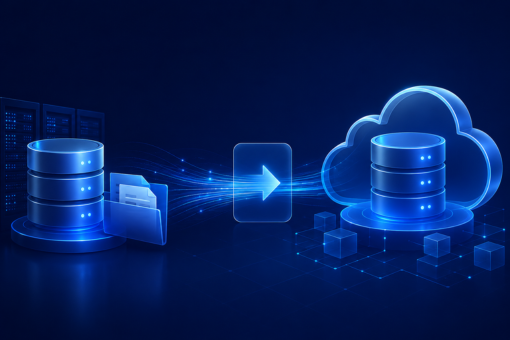
All downstream dependencies of the on-premises SQL Server: Portfolio/Bench, Vena, Project Explorer, Promotions, Chase LockBox, and Positive Pay were mapped and are being replaced with governed ADF pipelines and Databricks transformation jobs. Each integration is subject to UAT validation before the legacy dependency is switched off, with HyperCare handover and team training built into the final phase of the seven-month program.
Reduction in query load
The Consumption Layer absorbs reporting traffic that previously hit the Curated Layer directly, eliminating redundant re-computation on every refresh.
Power BI performance improvement
The Star Schema Semantic Layer delivers pre-defined KPIs and domain models, reducing query complexity and improving dashboard performance across all business functions.
Governed cloud platform
Finance, HR, projects, business development, expenses, and payments — all previously siloed — now flow through one governed Azure data platform on automated pipelines.
On-premises infrastructure
The legacy SQL Server warehouse and inherited SSIS pipelines are being retired systematically, with UAT sign-off required before each legacy dependency is switched off.
Whether you’re starting with data modernization or exploring AI copilots, we’re here to help.
Contact Us