22+
years in existence
279 Parks
owned, operated, or franchised
40M+
annual visitors (2025)
A multi-year Snowflake migration was technically complete, but 32 critical Power BI dashboards still pointed to the legacy warehouse, leaving leadership making decisions on revenue figures that were off by 13%+ per park with no way to prove which system was accurate. Inferenz migrated all reports through a phased SIT-to-UAT framework, built a centralized semantic layer on Azure Analysis Services, and validated both warehouses against the point-of-sale source system, confirming the new warehouse matched to within a fraction of a percent while the legacy system showed 13%+ variances on the same data.
The new Snowflake environment was built and ready, but 32 business-critical Power BI dashboards still pointed to the legacy warehouse. Until those reports were migrated and validated, neither system could be trusted and the legacy platform could not be retired.
The legacy warehouse was structurally inconsistent, with parks tracked by name rather than stable identifiers, franchise data captured irregularly, and revenue formulas applied differently across reports. Both systems remained in use, and neither could be fully trusted.
When legacy and new warehouse outputs were compared, revenue variances exceeding 13% surfaced on individual parks for the same period, six-figure differences on a single location in a single year, invisible to anyone relying on the legacy system.
Different parts of the business had built confidence in different sources. Senior leadership assumed the legacy warehouse was correct because it was familiar. Proving otherwise required independently verifiable evidence from a source neither system could dispute.
With 32 reports spanning years of daily data across 279 parks, each covering revenue, membership, headcount, and transactions, manual comparison was operationally untenable. Validation cycles stretched to days per report with no path to accelerate.
Inferenz implemented a structured migration and validation framework to move all 32 Power BI reports from the legacy warehouse to the new Snowflake environment, with independent source-system validation settling the stakeholder trust debate that no amount of internal comparison could resolve.
Every report progressed from System Integration Testing to User Acceptance Testing with formal business sign-off at each stage, replacing a risky all-at-once cutover with a controlled, traceable promotion process.

A single governed source of business logic was built across all reports, with consistent KPI definitions, reusable data models, and standardized calculations serving every team from one shared foundation.
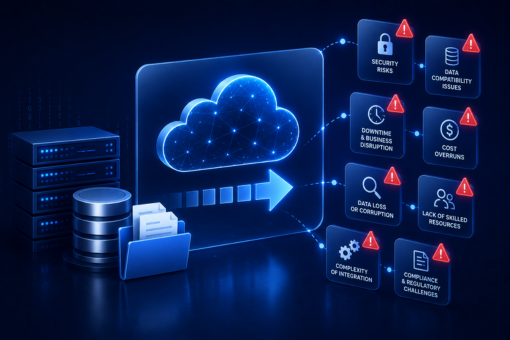
When legacy and new warehouse figures diverged, both were compared against the point-of-sale system, the operational record of every transaction across every park. The new warehouse matched within a fraction of a percent; the legacy warehouse showed 13%+ variance on the same data.
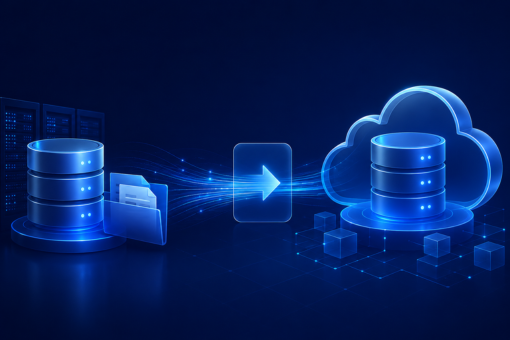
An Azure DevOps pipeline automated the full Dev-to-QA-to-Production journey for every report. Custom Power BI reconciliation dashboards surfaced variances automatically, Python scripts enabled park-level revenue reconciliation, and every report was validated on visual accuracy alongside data accuracy before any business user was transitioned.
Reduction in validation effort
Automated reconciliation dashboards, semantic models, and DevOps pipelines replaced manual comparison, cutting validation cycles from days to hours.
Variance vs. source system
The new warehouse matched the point-of-sale system to within a fraction of a percent, versus 13%+ gaps in the legacy warehouse on the same parks and periods.
Validated SIT to UAT
The highest-priority analytical reports signed off, including daily flash and franchise revenue views, each validated on data accuracy and visual standards before cutover.
May 2026
Report migration unlocked full adoption of the new platform, ending dual-system infrastructure, licensing, and support costs entirely.
Whether you’re starting with data modernization or exploring AI copilots, we’re here to help.
Contact Us