140+
years in business
150+
countries served worldwide
87,000+
employees globally
The client, a global physical security and surveillance infrastructure provider, operated a Gen1 video analytics platform built entirely on core Python with no GPU-level optimization, capping Face Recognition at 20 fps and Object Detection at 64 fps with no path to scale beyond a handful of camera streams. Inferenz redesigned the platform into a GPU-accelerated Gen2 system using NVIDIA DeepStream, ONNX, and TensorRT model quantization, paired with a microservice architecture on Docker and Kubernetes, without adding a single piece of new hardware. The result is a unified Triton Inference Server pipeline running 20+ AI use cases concurrently, with Face Recognition throughput up 4.8x to 96 fps and Object Detection up 6.5x to 420 fps on the same NVIDIA RTX 4000 hardware.
The client operated a Gen1 video analytics platform built entirely on core Python with limited stream support. As demand grew for AI-powered use cases across a global physical security deployment, the platform’s architecture hit hard ceilings on throughput, concurrency, and inference efficiency.
The Gen1 platform ran on core Python with no GPU-level optimization. Face Recognition processed just 20 frames per second and Object Detection processed 64. The architecture could not support the concurrent stream volumes required for enterprise-scale, multi-camera deployments.
The platform lacked a dedicated RTSP-based streaming pipeline. Real-time video ingestion across multiple simultaneous camera feeds could not be handled efficiently, limiting the system to a fraction of its required deployment scale.
Face recognition, object detection, and classification models were deployed without quantization, running at full precision and size. This created memory bottlenecks that prevented multiple use cases from running concurrently on the same hardware.
Streaming, inference, business logic, event handling, and UI were tightly coupled in a single Python codebase, with no separation of concerns, no containerization, and no load balancing. Adding new use cases or camera streams required manual rework across the entire system.
Inferenz redesigned the Gen1 platform into a robust, scalable Gen2 system using NVIDIA DeepStream and GPU acceleration, without replacing any existing hardware. The engagement ran across two parallel tracks: streaming pipeline modernization and AI inference optimization.
Integrated as the core of the streaming pipeline to enable GPU-accelerated real-time video ingestion, processing, and multi-camera deployment at scale.

Designed and implemented real-time streaming pipelines supporting scalable, concurrent deployments across multiple camera feeds simultaneously.

Applied to Face Recognition, Object Detection, and Classification models to reduce model size and inference latency, lifting throughput 4.8x and 6.5x on the same NVIDIA RTX 4000 hardware with zero infrastructure upgrade.
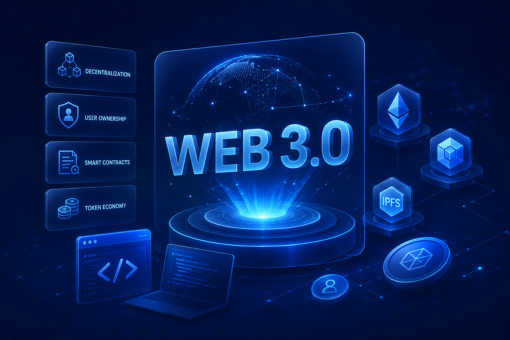
Deployed and integrated with the optimized pipelines to serve 20+ use cases, including fire detection, people counting, colour detection, and face detection, through one production-grade inference layer.

The monolithic Gen1 codebase was split into independent services for streaming, inference, business logic, event handling, and UI, containerized and orchestrated for load balancing, with the same optimized pipeline extended to edge deployment on Jetson Nano.

Face Recognition
4.8x throughput gain on identical NVIDIA RTX 4000 hardware, with zero capital expenditure.
Object Detection
6.5x throughput gain through ONNX and TensorRT quantization and DeepStream pipeline redesign
One Unified Pipeline
All AI use cases, from fire detection to face recognition, now served through a single Triton Inference Server layer.
Edge + Server Ready
DeepStream on Jetson Nano extends the same optimized pipeline to edge deployments without additional hardware.
Whether you’re starting with data modernization or exploring AI copilots, we’re here to help.
Contact Us