
$1B+
Annual Revenue
330%
YoY Net Income Growth
35+
Years in Operation
When five to six product modules share a single centralized database and engineering teams across three continents ship simultaneously, an uncoordinated schema change can cascade into failures across every module. Through its DevOps Consulting Services & Strategy, Inferenz built and operated the centralized database management function for an intelligent video surveillance platform, developing a custom Python versioning tool that treated schema changes with the same rigor as application code. The result: a 100% deployment success rate, zero production incidents from schema changes, one-operation environment configuration, and a full audit trail satisfying compliance requirements, across 250+ SQL tables and 300+ NoSQL entities.
Five to six product modules shared the same centralized database. Any change to a shared table required impact analysis across every module before approval. Without centralauthority and tooling, conflicting changes could reach Production simultaneously and silently break other modules.
Promoting database changes from Dev to QA to Production required manual scripting, manual verification, and manual rollback preparation for each release. With teams across India, the US, and South Korea submitting change requests simultaneously, manual management had become unsustainable.
Schema state was not tracked systematically. If a production issue arose after a release, there was no reliable way to determine what had changed, when, or by whom. Compliance requirements demanded full traceability for every database change, but the existing process produced no durable record.
When a new feature required a schema change, existing records for active users could be left in an inconsistent state if the migration did not account for backward compatibility. Without migration scripts handling existing data, rollback was the only recovery option when conflicts emerged in production.
Inferenz built and operated the centralised database management function and developed a custom Python versioning tool that tracked schema state across every environment. Every change was packaged as a versioned migration script, and any environment could be configured from a known version state in a single operation.
A custom Python tool built on AWS Boto3 managed all DynamoDB and Aurora schema changes across Dev, QA, and Production. Every change was packaged as a versioned migration script, stored in a folder structure that tracked the state of each environment. Any environment could be configured from a known version state in a single operation.
Every schema change request was submitted as a ticket, reviewed for cross-module impact, approved by database operations management, and audited for compliance before execution. The process delivered a complete, durable audit trail from initial request through production deployment without adding friction to the development cycle.
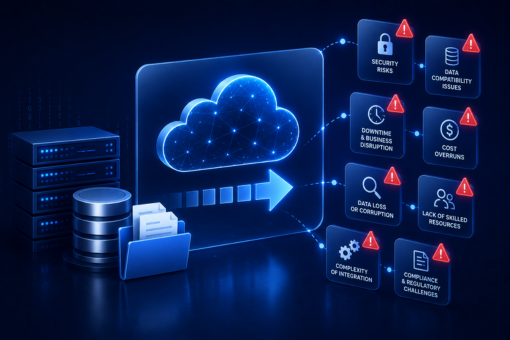
Before any migration was applied, the tool verified that existing records in the target environment would remain valid after the change. Migration scripts included data transformation logic for existing rows where needed, eliminating the risk of active user records being left in an inconsistent state after a schema update.
Database releases were integrated into the Jenkins CI/CD pipeline so schema changes were promoted in lockstep with application code. The versioning tool confirmed successful schema state at each stage before the next phase was allowed to proceed, making it impossible to deploy application code against an unverified database state.
Release Success Rate
Every product release across all 5–6 modules shipped without a rollback
Production Incidents
No schema-caused failures, missing migrations, or backward compatibility breaks
Environment Config
Any environment brought to a known version state from a single operation
Audit Trail
Every schema change tracked from ticket to production, satisfying compliance requirements
Whether you’re starting with data modernization or exploring AI copilots, we’re here to help.
Contact Us