
Data Science in Healthcare: 8 Use Cases No One Will Tell You

New technologies like Machine Learning, Artificial Intelligence, Deep Learning, etc., are revolutionizing every industry, and data science in healthcare is a promising tech advancement helping doctors. With the help of new tech, health organizations can tap into precious insights, get valuable information, and optimize their in-house operations to improve patient care and reduce emergencies.

Data science solutions in the medical sector are essential in helping healthcare professionals harness data analytics to provide better diagnoses to patients. This article reveals the primary applications of data science in the healthcare sector that are transforming the medical industry.

ALSO READ: Alternatives To Twitter: 5 Social Media Platforms That Could Replace Twitter

Why Use Data Science In Healthcare?

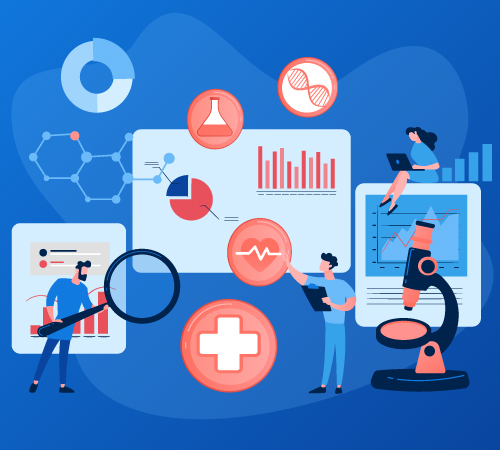
Every human body generates around 2 terabytes of data per day with information related to daily activities. The data generated mainly includes various aspects such as brain activity, stress and sugar level, heart rate, and more. Data science is one of the latest technologies that help health experts handle large data amounts and monitor patients’ health using the information.

Integrating modern data science tools in the medical industry allows doctors to predict health symptoms at an early stage. As a result, they can offer immediate care to reduce the chances of negative consequences on patients’ health. Furthermore, the devices built with the data science algorithms store necessary information about patients’ health and help doctors understand their health conditions.

Data-Science-in-Healthcare-trends-2023

8 Data Science Healthcare Applications

Data science helps streamline healthcare facilities and processes while improving the accuracy of diagnosis. A recent report by Vantage Market Research indicates that the adoption of big data analytics in the healthcare market will reach USD 79.23 billion by 2028. The reason behind the growth of data science in healthcare is the vital use cases and applications of modern technology, like:

  • Medical Imaging 

One of the most vital use cases of data science in healthcare is medical imaging which helps professionals identify distinct medical conditions in patients. The latest techniques, like X-rays, mammography, CT scans, MRI scans, etc., are advanced tools assisting doctors in visualizing the inner human body parts and finding irregularities and deformities in the scanned images.

  • Genomics and Genetics 

Individuals have different genetic makeup, and data science is helping expert doctors to analyze gene sequences, detect diseases, and tailor-made patient care. The latest deep learning technologies in data science allows experts to integrate multiple data strands with genetic information. Using data science in healthcare helps caregivers identify the correlation between disease and generic parameters to provide better care at a lower rate.

  • Drug Discovery 

The primary role of healthcare professionals in the medical sector is to create effective drugs for patients and help them live healthier lives. Data science, deep learning, and Machine Learning algorithms are shaping the drug discovery process. The extensive insights obtained from patient metadata and mutation profiles help researchers develop models, design drugs, and boost the success rate of the drug.

  • Predictive Analytics 

The healthcare industry relies heavily on the predictive analytics model that uses historical data to find health patterns and forecast accurate medicine predictions. With predictive analytics models, healthcare professionals find correlations between habits and diseases to predict diagnosis with a high success rate.

  • Monitoring Patients Health 

IoT (Internet of Things) devices powered by data science are gaining immense popularity in improving healthcare facilities. The analytical tools that track temperature, blood pressure, heartbeat, and other medical parameters help doctors to take necessary steps and help patients avoid health risks.

  • Tracking & Preventing Diseases

Data science algorithms and predictive analytics tools detect chronic diseases early and provide medications before the ailment becomes fatal. Using data science algorithms enables patients to avoid emergencies and reduce the high cost of curing diseases.

  • Virtual Assistance 

The predictive modeling and virtual assistance applications are designed to help patients get insights about their medical condition. Patients can use this platform by entering the symptoms and getting complete information about the possible diseases. Two of the best examples of virtual assistance platforms in healthcare are Woebot (a chatbot developed by Stanford University for patients dealing with depression) and Ada (a Berlin startup that predicts diseases).

  • Optimize Clinical Performance

Data science in healthcare not only helps in improved patient care but also assists professionals in optimizing clinical performance. Data obtained from disparate sources can effectively be used to optimize clinical staff scheduling, manage supplies, reduce patient wait times, and build efficient healthcare programs.

Inferenz has a certified team of data scientists and analysts who help healthcare businesses integrate the latest tools and technologies. The team worked with a pharmaceutical company from Germany to help doctors implement advanced tools to predict diseases and save patients from emergency care. Read the comprehensive case study here.

Implement-Machine-Learning-services-india

Get Ready To Integrate Data Science in Healthcare

The modern world is driven by data, and the healthcare industry can no longer afford to neglect to implement the latest tools like data science. With the aid of data science in healthcare, experts can use scattered information to get a holistic view of a patient’s fitness and improve medical treatment plans.

In addition, the data science tools streamline the in-house operations and reduce caregiving costs that benefit patients and organizations alike. If you are a healthcare organization intending to use data science in healthcare, Inferenz experts can help you implement modern tools based on your specific needs.

Alternatives To Twitter: 5 Social Media Platforms That Could Replace Twitter

With #RIPTwitter trending, people are looking for alternatives to Twitter. “TWITTER IS THE WORST! But also the best,” — says Elon Musk’s recent tweet, giving people a reason to talk. However, people agree more with the former statement than the latter. Soon after he became the new CEO of Twitter, #TwitterMigration became a hot trend. This came after the announcement of mass layoffs news by Musk, where he asked Twitter employees to resign for no definite reason.

Now the term trending on social media platforms is #RIPTwitter, which puts the future of the social media app a little dicey. The hashtag became trending after Twitter employees offered their resignations to Musk before time instead of allegedly signing the ultimatum and agreeing to the new working rules. Witnessing the plans of Elon Musk for the platform, many people are flocking to the alternatives to Twitter. This article will reveal the top 5 social media platforms capable of replacing Twitter and other trending news about the social media platform.

ALSO READ: Benefits Of Big Data Analytics In The Healthcare Industry

Alternative-to-Twitter-in-2023-discord

5 Alternatives To Twitter In 2023

Elon Musk’s decision to purchase Twitter for $44 billion and the changes made to the social media application have frustrated some users. As a result, people are looking to switch from Twitter to its alternatives. Below is the list of top social media platforms with features and functionalities that could replace Twitter in 2023.

  • Mastodon

Mastodon, an open-source software application, is one of the most Twitter-like alternatives available on the market. The popularity of the Twitter alternative was proved by the open-source group’s CEO Eugen Rochko’s tweet declaring that Mastodon got over 1 million users since 27 October, when Elon Musk became the new CEO of Twitter. WIRED also said that millions of people are fleeting to Mastodon after Elon took over Twitter. It has two useful tools — debirdify and Fedifinder — that allow users to search and find all the people they’ve been following on Twitter.

  • Tumblr

Tumblr is one of the oldest social media platforms for people searching for Twitter alternatives. While Twitter has a character limit, Tumblr allows users to write and share whatever they want. It is a comprehensive social networking service that is becoming popular among influencers due to its similar functionality to Twitter. So, it wouldn’t be surprising if Tumblr is the next best alternative to Elon Musk’s Twitter 2.0.

  • Gab

Gab is the perfect combination of Twitter and Facebook to put people and free speech first. With the #RIPTwitter and #TwitterMigration trending, many flocks consider Gab as an alt-right alternative to Twitter. Gab is a fully-decentralized social media platform that allows users to publish posts, join groups, live stream, buy products, and initiate private chats — a lot of the same functions as Twitter.

  • CoHost

CoHost is another popular alternative to Twitter people are talking about. There are numerous charms of the platform over Elon Musk’s Twitter, such as no character limit and more creativity. Users can even add CSS notes to their posts in addition to fully functional games. However, CoHost is not as popular as the other alternatives to Twitter in the list.

  • GETTR

GETTR, launched by Jason Miller (Donald Trump’s former senior advisor), is a new social media platform for conservative people who are irked by Elon Musk’s changes to the app. Many users praise the app with the names such as back to free speech, escape from digital tyranny, and more.

New Wave Of Twitter’s Mass Layoff News 

According to Twitter’s mass layoffs news, Musk fired around 50% of the workforce. After firing half of the employees, Elon Musk has recently laid off 4,400 contractual Twitter workers. Platformer’s founder, Casey Newton, reportedly said contractors aren’t notified about the layoffs. He added workers on contract are allegedly losing access to email and Slack — indicating the new wave of layoffs.

Elon Musk asked the workers to commit to a hardcore culture or leave their three months of severance pay. In response to this, the employees decided to resign from their positions. Musk recently replied to a tweet, “I’m not super worried regarding the mass resignations, as the best employees are staying.” However, the effect of mass resignation can be seen as Twitter temporarily closed all its offices and suspended badge access.

Elon Musk, who heads SpaceX and Tesla, is focused on building Twitter 2.0 and making it successful as soon as possible — following a mass layoff strategy. He said he would grant the blue-tick verification label from November 29 to those willing to buy premium services and pay USD 8 a month.

Future Of Elon Musk’s Twitter 2.0

Elon Musk taking over Twitter, firing employees, and starting the new wave of mass layoffs is the most trending topic. The company’s office has been abruptly shut down until Monday, November 21, 2022, indicating some more news from Twitter’s headquarters. Stay tuned to know what happens next.

If you want to stay updated with the latest news on Blockchain, Metaverse, Artificial Intelligence, Predictive Analysis, Data Migration, etc., subscribe to the Inferenz newsletter!

Benefits Of Big Data Analytics In The Healthcare Industry

Ever since the rise in big data analytics, several industries, like the healthcare industry, entertainment industry, sports industry, and more, are going ahead to utilize the benefits of data analytics.

The healthcare industry, in general, generates an enormous amount of data regarding patients’ health, and these analytics in healthcare help providers get actionable insights from the raw data. Healthcare professionals can use the information strategically to improve operational efficiencies, staffing requirements, and patient care.

Healthcare data analytics can be applied to patient care, improving clinical operations, measuring treatment effectiveness, and enhancing disease prevention. This guide will help healthcare professionals understand the need for big data tools in a healthcare organization and the best examples of data analytics in the healthcare industry.

ALSO READ: Web3 Tutorials: Resources to Master Web3 Development in 2023

Top 10 Healthcare Big Data Analytics Examples

Healthcare is one of the largest sectors leveraging the power of data analytics tools to manage in-house operations and predict future trends. By the end of 2025, the big data market in the healthcare industry will cross $70 billion with a growth rate of 568%. The complex and large volumes of information collected by digital technologies are converted into actionable insights using data analytics solutions. Some real-world applications and examples that enhance patient care and improve operational processes include:

  • Healthcare analytics allows hospitals to use data visualization techniques to forecast patient loads and plan resource allocation. 
  • Electronic Health Records (EHRs) help doctors store patients’ demographics, allergies, medical history, lab test results, etc., in a digital format that allows patients to follow doctor instructions and improve their health. 
  • Real-time alerting devices collect patients’ health data and send live alerts to the doctor for better and quick care. Digital tools enable care managers to respond quickly if the results get disturbed. 
  • People in the digital world are interested in using smart devices that record their every step. Wearables like smartwatches monitor patients sleeping habits, heart rates, etc., to help them lead healthy lives and take measures to improve their health. 
  • Predictive analytics, a major Business Intelligence trend, helps doctors make data-driven decisions based on the complex health histories of patients without human intervention. 
  • Analytics in healthcare help organizations secure personal and valuable patient data from fraud or breach. Advanced security solutions like firewalls, anti-virus software, encryption technology, etc., add layers of security to the healthcare system. 
  • Big data tools in healthcare improve intelligent staffing and personnel management by forecasting demands and streamlining patient care. 
  • Medical analytics help in risk and disease control, allowing healthcare providers to understand symptoms, medication type, and frequency of hospital visits to suggest better care. 
  • Long-term finances and patient care depend highly on supply chain management. Data analytics in the healthcare sector help professionals track supply chain performance metrics, save resources, and make strategic decisions. 
  • Human errors while prescribing medicines, testing, or billing can risk patients’ lives and harm the hospital’s reputation. Big data and forecasting tools can help prevent prescription and billing errors to improve care and reduce expenses. 

The benefits of adopting data analytics tools are endless, and many healthcare organizations are taking steps to leverage the power of technology. Inferenz’s data analysts team helps businesses implement data analytics solutions efficiently to handle the datasets and predict diseases before their onset.

The team of Inferenz has recently worked with a leading Pharmaceutical company from Germany to incorporate data analytics solutions, understand vital health parameters, and save patients from emergencies. Read the complete case study here.

ALSO READ: Predictive Analysis Tutorial: Ultimate Guide To Implement Predictive Model
big-data-analytics-healthcare-industry-2023-tutorial

Why Use Big Data Analytics In Healthcare? 

Big data analytics tools can positively benefit the healthcare industry, amongst which reducing costs and improving patient care are the top advantages. Below are the three main benefits of integrating the right BI software and analytics in healthcare.

  • Big Data Analytics To Reduce Costs 

Analytics in healthcare is a strategic approach to reducing unwanted costs, which is the product of inefficient planning or resource management. Advanced technology is a powerful tool to improve the operations in every size – big or small – health institution. Early identification of health ailments in patients with tools will help doctors provide immediate support and reduce high expenses.

  • Resource Optimization 

Big data analytics tools allow professionals to gather and analyze real-time information about an organization’s performance. Predictive data analytics in healthcare can help experts determine staffing schedules, check the medical supply inventory, and improve resources and personnel management.

  • Reduce Medical Errors 

Using big data and tools helps doctors eliminate the risk of medical errors, reduce manual intervention, and improve the hospital’s reputation. Data gathering and management tools help professionals handle massive and complex data sets to streamline the decision-making process in real time.

web-3-experts-services-online

The Future Of Analytics In Healthcare

As one can see, data analytics solutions play a huge role in helping doctors and healthcare experts revamp how they provide patient care and manage diseases. . Due to the positive aspects of advanced technology like analytics in healthcare, there is an upsurge in adopting data analysis tools in the industry.

At Inferenz, we have a team of certified data analysts who help healthcare businesses tackle challenges by integrating data analytics solutions. Incorporating analytics in healthcare helps small and large health institutions reduce medical errors, improve faculty management, and enhance productivity.

Web3 Tutorials: Resources to Master Web3 Development

Are you looking for a way to master Web3 in 2023? Are you someone who went on different social media channels to see the Web3 tutorials and found little to no information? Do not worry, we at Inferenz have created a resource guide for you that will help you master Web3 development in 2023.

The Web 3.0 industry is growing exponentially, and many users are searching for Web3 tutorials for beginners that help them gain insights into the new gen of technology. With intuitive decentralized apps becoming an essential aspect of the digital business world, students, web developers, and business professionals are looking for resources to learn Web3 technology. 

As business operations and practices shift from traditional methods to online, users are inclined towards learning new technologies like Artificial Intelligence, Machine Learning, the Internet of Things, Blockchain, Metaverse, and NFTs. This article aims to help tech enthusiasts, web developers, and business professionals learn Web3 development in 10 steps & examples.

ALSO READ: Predictive Analysis Tutorial: Ultimate Guide To Implement Predictive Model

Learn Web3 Development in 10 Steps & Examples

Learn-Web3-Development-2023-news

Web 3.0 technology is the future of the Internet that aims to shift the power from big tech companies to individual users, boosting security in the online world. According to Vantage’s study about the Web3 market, the Global Web 3 Market revenue is expected to cross USD 23.3 Billion by 2028, creating job opportunities for aspiring developers.

Below is the step-by-step guided python tutorial for all users who plan to establish a career in Web3 development or business experts who want to leverage the benefits of the third generation of the Internet.

Step 1 – Subscribe to Web3 Developer Newsletters

Newsletters on different social media platforms are an underrated source of knowledge that can help users stay up to date with the significant trends in the Web3 development field. Learning Web3 development from experts allows learners to get deep insights and understand the ongoing and upcoming trends in the industry. Some of the best newsletters one can follow are Inferenz (LinkedIn weekly newsletter), The Daily Ape (Telegram newsletter), EthHub Weekly (weekly newsletter on Ethereum), and The Block Crypto (The Block daily newsletter).

Step 2 – Subscribe to YouTube Channels of Web3 Devs

Learners can find Web3 tutorials for beginners on YouTube, where expert Web3 developers share their knowledge and trends. Experts explain the basic to advanced knowledge of Web3, coding, etc., visually to help learners understand better. Some of the best YouTube channels for Web3 enthusiasts include Web3 Foundation, Bankless, Smart Contract Programmer, etc., which covers a ton of helpful content, low-intensity to advanced video tutorials, and much more.

Step 3 – Follow Web3 Developers on Twitter

Twitter is the best platform where crypto influencers and Web3 developers share insights about their work. From understanding the full stack Web3 apps to learning code for free, Twitter is the right platform. A few popular crypto Twitter influencers include @VitalikButerin (co-founder of Ethereum), @TimBeiko (core Ethereum developer), and @aeyakovenko (co-founder of Solana).

Step 4 – Join DAO

DAO (or Decentralized Autonomous Organization) is an open organization owned and operated by the team members and runs using decentralized governance. Joining these communities enables the learners to discover new information, collaborate on projects, and prepare a blockchain portfolio to showcase their skills. Learners can join any Web3 developer community, such as LearnWeb3DAO, Developer DAO, etc., to learn Web3 technology. These developer-centric DAOs provide educational materials to learners and professionals, such as a Web3 tutorial for beginners to learn code for free.

Step 5 – Join the Communal Coding Event 

Communal coding events like Web3 Hackathon are online spaces where beginners and advanced coders collaborate to enhance their knowledge about the Web3 ecosystem. Some of the best communities one can join include Polygon BUIDLit, ETHOnline, BUIDLathon, and Solana Summer Camp.

Step 6 – Join Web3 Developer Course 

Aspiring Web3 devs can gain deep insights into the new technology by attending Web3 tutorials for beginners and advanced learners through free and paid courses. Road to Web3, Sol Dev, CryptoZombies, and Web3 University courses and boot camps teach learners how to create full-stack Web3 apps and build a portfolio to show skills.

Step 7 – Sign Up For the Web3 Discord Server 

Like DAO, Discord allows users to connect with community people and understand the Web3 ecosystem. The communities in the chat app have thousands of people where members can ask questions, connect with like-minded individuals, and find collaborations. Two popular communities that individuals can join include CryptoDevHub and BuildSpace.

Step 8 – Learn Coding From Web3 & Python Tutorial

Web3 tutorials for beginners are the best approach for learners who do not know about the fundamentals of Web3 and how blockchain works. The Web3 library helps users to learn how to create Web3 apps with solidity, ERC-20 token, deploy smart contracts, etc., to enhance their knowledge.

Step 9 – Follow Repositories on GitHub

GitHub is a great place to find a Web3 tutorial. GitHub is a helpful learning resource where all the open-source Web3 development takes place and is considered the largest code repository in the world. Aspiring Web3 devs can follow the famous GitHub repositories to learn blockchain development from the best developers. A few examples of best GitHub Repos include foundry/foundry-rs, Rainbowkit/Rainbow-me, and OpenZeppelin/openzeppelin-contracts.

Step 10 – Learn About The Web3 Dev Tools

Learners who intend to be skilled Web3 developers should have basic knowledge of web development tools. The three most popular tools include Remix, Alchemy, and Hardhat.

web-3-experts-services-online

Web 3.0 Opportunities in The Future

The evolution of the Internet and the fast technological development in the digital world will cause an employment surge for Web3 developers in the market. Following the roadmap will help developers learn the skills required for blockchain, NFTs, Metaverse, or DeFi development.

With the advent of the latest tools and technologies, enterprises can benefit by hiring Web3 developers to accelerate business growth and attract users. Inferenz has a team of certified Web3 developers to help enterprises leverage modern data tools, and learners start their careers in the field with comprehensive Web3 tutorials for beginners.

Predictive Analysis Tutorial: Ultimate Guide To Implement Predictive Model

A predictive analysis tutorial helps users to understand the step-by-step process of implementing the advanced forecasting tool in their business. The data-driven world demands enterprises to implement new technologies, and predictive analytics is the enterprise grade that enables companies to forecast future trends and challenges by studying historical data.

When companies understand future trends with business intelligence tools, they can formulate the right strategies to predict customer churn, prevent fraud, improve marketing campaigns, and drive sales. However, to leverage the true potential of the tool, one must systematically execute the implementation process. This predictive analysis tutorial will help users understand the simple steps to integrate predictive analytics tools into their business.

ALSO READ: Snowflake Migration: Ultimate Guide To Migrate Data To Snowflake

Why Predictive Analytics?

Businesses are constantly looking for ways to use their data to make strategic decisions and accelerate business growth. Predictive analytics, a part of Machine Learning, enables enterprises to use their existing business data and build a model. The ultimate goal of predictive modeling is to analyze historical data, identify data patterns, and determine future events. Following are some of how predictive analysis helps businesses and why users should focus on a predictive analysis tutorial.

  • Minimize time and expenses by building effective strategies and predicting outcomes 
  • Analyze and mitigate financial risks to accelerate business growth 
  • Implement advanced tools and technologies that help companies hedge against the competition 
  • Gain better consumer insights by analyzing the data and predicting their future demands 
  • Plan inventory, optimize price and promotional campaigns, and personalize customer service to drive sales

Predictive-Analysis-Tutorial-online

Predictive Analysis Tutorial: Steps To Follow

Companies are focusing more on customer retention than attracting a new customer, as it costs five times more to gain a new consumer than to retain one. Predictive analytics tools help companies personalize the service and deliver the services to existing clients based on customer behavior.

However, users should follow the five key steps to add predictive analytics tools to their business. In addition, statisticians, data scientists, and engineers should collaborate to make informed decisions, select better datasets, and create models for easy deployment. Below are the detailed steps that the predictive analytics team should follow to make the implementation successful.

  • Define Business Requirements 

The initial step for predictive analytics implementation is defining the business problems and framing solutions. For instance, businesses need to analyze their problems, expected outcomes, and the team who will collaborate on the project before they begin the initial phase of the process.

  • Data Collection 

In the second step, data analysts identify the business data relevant to the business requirement. While collecting the data for predictive analysis, analysts should consider the data’s suitability, relevancy, quality, and authority. All structured, unstructured, or semi-structured data should be stored in a data lake to understand the analyzing needs and employ the right tools.

  • Data Analyzing 

Experts suggest analyzing the data before transferring it to the predictive analytics model will help teams identify the problems and take measures to overcome the challenges. Cleaning and structuring data before modeling and deployment is the essential step of a predictive analysis tutorial to ensure businesses get valuable insights from predictive modeling.

  • Data Modeling

Once data scientists get access to the cleansed data and transfer it into the predictive analytics model, the next step is data modeling. Business analysts and data scientists can use open-source programming languages like Python and R to calibrate models in the business infrastructure.

  • Deploy The Model

After the data modeling phase, data engineers can retrieve, clean, and transform the raw data into the predictive analytics model for deployment. The insights obtained from the data should be leveraged by experts to make business decisions and generate profits.

  • Monitor The Results 

Data is not static; a predictive analytics model that works well today might not deliver the best results tomorrow. That said, data experts need to monitor the results periodically and safeguard their business from malicious activity that can impact the overall model’s performance.

The predictive analysis tutorial involves the combined efforts of data scientists, business analytics, and data engineers. Enterprises that lack in-house experts should consider outsourcing the predictive analytics implementation to a well-equipped and experienced team.

Inferenz has a team of certified data engineers, scientists, and analysts who help enterprises develop and deploy predictive analytics tools with the right tools. The team of Inferenz has recently worked with a US-based eCommerce company to build predictive analytics solutions and implement Self Service BI tool to improve data availability and increase conversions. Check out the comprehensive case study here.

ALSO READ: Data Migration Process: Ultimate Guide To Migrate Data To Cloud

Planning-to-implement-Predictive

Implement The Predictive Analytics Tools With Experts 

Predictive analysis tools transform how businesses sell their products to customers or manage their in-house operations. However, the learning curve can be steep, and making one mistake can cost a fortune to the company’s revenue and overall growth.

Enterprises that lack the skills or expertise required to make the predictive analytics implementation project successful should hire the best data analyst team to mitigate risks. Inferenz has a team of skilled data experts who will guide you with a detailed predictive analysis tutorial from start to finish, leading to a successful implementation and the best results.

Snowflake Migration: Ultimate Guide To Migrate Data To Snowflake

Demand for cloud and cloud computing is booming worldwide, and many organizations are considering Snowflake migration. As business data is increasingly important to make strategic and data-driven decisions, data experts integrate cloud-based storage solutions to maintain data security, integrity, and relevancy. 

Snowflake, a cloud-based data warehouse solution, is a scalable and flexible data storage solution for companies that intend to analyze, manage, and store big data. This ultimate Snowflake migration tutorial will reveal why companies should choose Snowflake and the steps to move data securely from on-premise to the cloud. 

ALSO READ: Data Migration Process: Ultimate Guide To Migrate Data To Cloud

Why Should Businesses Choose Snowflake Migration?

Snowflake is built for the cloud, and businesses that intend to leverage the benefits of modernized data storage solutions should focus on Snowflake migration. Here are a few ways Snowflake can benefit modern and data-driven organizations.

  • Experts can migrate structured and semi-structured data into the cloud without transforming or converting it into a fixed relation schema. 
  • Snowflake’s cloud data warehouse is extremely easy to set up and manage. 
  • The best part is that there is no need to keep software up-to-date or worry about provisioning hardware with the modern data warehouse. 
  • Unlike several other platforms and tools, Snowflake offers flexibility to businesses. They can scale the software up and down without complexities or downtime.

For a successful Snowflake migration, business owners should focus on following a well-structured cloud data migration process. Inferenz’s data migration experts specialize in Snowflake cloud services and can help SMEs and large enterprises move loads of data safely. Read the case study to learn how Inferenz experts helped a US-based healthcare organization with its services.

Process To Migrate Data To Snowflake 

Migrating data from on-premise to the cloud can help companies reduce costs and gain a competitive edge in the industry. The increased reliability, security, and agility of cloud data migration allow companies to manage and leverage the data for the company’s profit. However, according to the Gartner report, 83% of companies fail to migrate data to Snowflake. Below are the steps organizations can follow to safely move their business data from on-premise data solutions to cloud data migration.

Snowflake-Migration-process-tutorialjpg

  • Step 1 – Analyze The Data

Before starting data migration, experts should focus on the documentation of data and information that needs to be moved. For instance, if the company plans to move its data from Oracle to Snowflake, it should prepare one list of databases, objects, and schemas that need not be touched and another of datasets that need to be moved. The initial step will help companies prioritize essential data sets that require quick migration and can benefit the company.

  • Step 2 – Select & Split Data

Moving data from on-premise to the cloud can be straightforward if data experts follow a structured approach, incorporate advanced tools, and utilize valuable resources. Enterprises should start their process by selecting and splitting data using a file splitter such as ETL tools or GSplit. The modern tools and technologies during data migration will enable data experts to break down big files into small chunks and make the process faster.

  • Step 3 – Stage The Data

The third step is to migrate all the selected data to the Snowflake staging area. Open the SnowSQL command line client (CLI) – a CL environment that data experts can download from the Snowflake platform. Migration experts can use the PUT command with Snowflake syntax to stage all the local files. In the command line utility, experts can set any level of parallelization between 1 and 100. However, one critical point is that the lower the number, the less power is required to execute the command.

  • Step 4 – Auto-Compress Files

While staging the local files to the Snowflake database, it is crucial to auto-compress them to maintain high data migration speed. Experts must identify whether or not they have manually zipped the files beforehand. If the files are manually zipped, they can set the auto-compress feature to a “Boolean value of false.”

  • Step 5 – Verify Cloud Migration 

Once all the local CSV files are successfully transferred to Snowflake’s internal stages, data migration experts can see the list of all the migrated files in the directory. Snowflake directory contains all the newly and previously migrated files. In addition, professionals can create tables and query data in their Snowflake dashboard using the stage data available.

With these five steps, organizations can complete Snowflake migration and move their on-premises to the cloud. However, large enterprises should integrate the latest data migration cloud tools and resources to make the data migration faster and more secure.

cloud-data-migration-services-india

ALSO READ: Data Warehousing vs. Data Virtualization – How to Store Data Effectively?

Migrate Data To Snowflake Successfully With Inferenz 

Storing, managing, and analyzing data stored in the cloud is straightforward and help experts make profitable business decisions. As you see, migrating data from on-premise to the cloud requires technical knowledge, access to tools, and time. Partnering with experts is the ultimate way to migrate data to Snowflake and benefit from the rich array of Snowflake features.

At Inferenz, we help SMEs and large enterprises with on-premise to cloud data migration. The ultimate goal of the expert team is to help organizations in Snowflake migration while keeping the downtime during migration to a minimum.

Data Migration Process: Ultimate Guide To Migrate Data To Cloud

Data is the fuel for modern and data-driven businesses, and many enterprises intend to prepare a well-structured data migration process to migrate data. The main aim behind the strategy is to safely integrate and migrate the entire business data to the cloud. 

Cloud data migration is the transfer of information from on-premise to cloud computing infrastructure with the help of an ideal data migration process. This guide will help enterprises understand the entire data migration process and why they need to migrate their data to the cloud.

Data Migration Process Explained

Migrating enterprise data from one infrastructure to another is tedious, especially if the in-house team lacks the necessary knowledge. Enterprises and data migration experts should follow a comprehensive data migration plan to avoid extensive delays, information breaches, and over-budget issues. Below is the step-by-step process for cloud-based data migration that organizations should follow.

ALSO READ: Data Migration Process: Best Practices To Migrate Data Effectively

  • Planning 

According to the data revealed by Oracle, an enterprise-scale data migration process lasts from six months to two years in general. For this reason, cloud data migration should start with proper planning, and data experts should evaluate the existing data. Data analysts should filter out all the unnecessary information before starting the data migration process to make the process easy. In addition, source and target systems analysis should be done to avoid unexpected issues during the post-migration stage.

Data-Migration-Process-explained

  • Data Auditing & Profiling 

Once data experts analyze the data to be migrated, their next step is to focus on data auditing and profiling. The second stage of the data migration process involves identifying data quality issues, detecting possible conflicts, and eradicating anomalies and duplications before migration. Transferring clean data will help data migration experts make the process smoother and ensure that the tedious process does not harm the business operations while migrating data.

  • Data Backup

Many business owners skip the backup step while formulating the data migration process. However, this is one of the most preeminent steps that adds an extra layer of protection to data while executing a data migration plan. Backup of complete business data before the migration will help eliminate the chances of a data breach during unexpected migration failures.

  • Migration Design

The data migration design clarifies all the necessary migration and testing rules that data experts should consider while executing the data migration process. Preparing a migration design can be overwhelming, especially if the in-house team is unaware of the project’s complexity. An expert team of data engineers, an ETL developer, and a business analyst can help prepare a data migration design customized according to the volumes of data involved.

Inferenz data migration experts help enterprises prepare a data migration strategy and ensure that it is well-executed to get the best outcomes. The Inferenz team has worked with a US-based healthcare service provider to help them migrate data using cutting-edge technologies. Read more about it in the detailed case study here.

  • Execution 

Execution is the most critical phase of the data migration process, as this is where the actual data migration in the cloud happens. In case of large amounts of data, experts can transfer information in trickles to leverage zero downtime and avoid migration failure.

  • Testing 

Testing each phase of the data migration plan helps data experts fix problems on time and avoid causing havoc to the whole migration process.

  • Post-Migration Audit

The final data migration step is to follow a post-migration audit to ensure that the transported data is valid and clean. Once the data migration process is completed, the post-migration audit will help the team identify loopholes and correct them before retiring the old system.

The Importance Of Data Migration Process

Enterprises have a lot of crucial data that is scattered over different systems. Migrating data to a single source allows organizations to get a complete overview of business data, make critical business decisions, and deliver top-notch customer service in real time. No matter whether it is SME or a large-scale enterprise, data migration provides a wide range of business opportunities to every size of organization.

  • Technologies are constantly evolving, and businesses that want to keep pace with the ever-growing technology should adopt data migration to improve their performance in the competitive market. 
  • A significant cloud migration benefit is that it allows organizations to scale up and down with more flexibility and less complexity. 
  • After cloud data migration, organizations can leverage simplified data management, better business performance, and improved reliability from the centralized environment. 
  • Cloud data migration flexibility is crucial for startups and SMEs who want to make profitable business decisions by leveraging data.

cloud-data-migration-services-india

ALSO READ: Predictive Analytics for eCommerce Industry in 2022

Move Your Data From On-Premise To Cloud With Experts

Migrating data and upgrading to advanced systems is critical for business success; however, only experienced data migration specialists should carry out the data migration process. After all, migrating data from on-premise to the cloud is a complex process that requires building a roadmap from start to finish.

With Inferenz, your data migration is at minimum risk as we have a team of dedicated data experts. The data engineers will prepare a robust strategy to make the data migration process simple, cost-effective, and scalable.

Data Migration Process: Best Practices To Migrate Data Effectively

Data migration involves transferring millions of data units from the existing database to a new system to boost productivity and reduce storage costs with the upgraded applications. Modern businesses powered by big data should follow a well-structured process to move data from inputs to the data lake, from the data warehouse to any data mart, or to migrate data from one repository to another without dealing with a data breach.

A lack of adequate data migration strategy or failure of the process midway can lead to over-budget issues and affect business operations. In addition, businesses can find it hard to move data from one system to another without dealing with data loss if they do not follow a rock-solid data migration process. In this data migration ultimate guide, enterprises and beginners will understand different types of data migration and the best practices they can follow to avoid any problems during the process.

types-of-data-migration-services

ALSO READ: Web 3.0 Tutorial: Ultimate Guide for Students, Developers, and Enterprises

Types Of Data Migration Services

The data migration process involves transferring existing business data from one system to another to improve data quality and business profits. However, before commencing the process, data migration experts need to focus on data preparation, extraction, and transformation to ensure that all data is transferred to the new system. Below are the six main data migration types every enterprise owner should know.

  • Storage Migration

Modern business requires effective and unique data-storing solutions that suit their business needs. As the demand for technology upgrades is rising to stay competitive in the digital world, many big enterprises that rely on mainframes will move to virtual servers in 2022 and beyond. Storage migration involves transferring data from one physical medium to another or hardware to cloud-based storage solutions to maximize business profits.

  • Database Migration

Database migration is switching from an old database to a new vendor to make information easy to manage and access for the in-house team. There are generally two types of database migration – homogeneous and heterogeneous data migration processes. The former involves upgrading to the latest version of DBMS and is accessible, whereas the latter consists of switching to a new DBMS that incorporates complexities.

  • Application Migration 

Application migration occurs when an enterprise changes its application vendor or application software. It is a complex data migration type as the source and target infrastructure has different data models and uses distinctive data formats that threaten data integrity.

  • Cloud Migration

Due to the benefits of cloud data migration, many organizations plan to move data from on-premise to the cloud. A report by Gartner indicates that the IT spending of enterprises will increase from $1.3 trillion to $1.8 trillion from 2022 to 2025. The best way to move data from on-premises to the cloud is by leveraging the right data migration tool that fits business needs and ensures no data breach during the process.

  • Business Process Migration

When two businesses merge, they require transferring information, database, and business applications to the new environment. It involves mergers and acquisitions that help companies to enter a new market and overcome competitive challenges with a new business process.

  • Data Center Migration

A data center, a real-world location, is the place where enterprises keep all their critical data and information. It consists of servers, equipment, IT technology, network, and switches. The data center migration process involves relocating all digital assets or existing wires and computers to a new system and servers to enhance productivity and efficiency.

Inferenz data experts help SMEs and large enterprises migrate data from one system to another with the best data migration tools. Data experts of Inferenz have recently helped a leading US-based healthcare service provider by implementing quick and efficient data warehouse solutions. Read out the detailed case study here.

Best Data Migration Practices

Data migration processes can vary from simple to complex, depending on the volumes of data being transferred and the differences between source and target locations. Following some golden rules is the best way to avoid critical delays in migration and make the overall process smooth.

  • Before executing the data migration process, business professionals should use tested backup resources to back up all the data and prevent data loss during migration. 
  • Cleaning old data is critical to eliminating inferior quality data and raising its quality standards before it is transmitted to the new system. 
  • Enterprises should set up a dedicated migration team and strategy to steer the project in the right direction and get the expected results. 
  • Data experts should use practical data migration tools and keep testing the whole process from planning, designing, executing, and maintaining data at different phases. 
  • Experts should switch off the old database system after completing the data migration process. 

ALSO READ: Machine Learning in eCommerce: How ML Reshaped Price Optimization?

Migrate Your Data With Inferenz Experts

Several factors can affect data transmission from one system to another and contribute to losing essential business data. To ensure security, data experts must focus on encrypting the complete business information before beginning data migration.

Inferenz data migration experts help businesses migrate data from start to end, including planning, auditing, backing up, designing, executing, testing, and auditing. If you are an enterprise looking forward to migrating the on-premise data, Inferenz experts can help you make your data migration smooth and successful.

Web 3.0 Tutorial: Ultimate Guide for Students, Developers, and Enterprises

The new era of computing has begun, and Web 3.0 tutorial is becoming the trending search by developers, students, and business owners alike. The technologies like Blockchain, Internet of Things (IoT), Augmented Reality, Metaverse, SocialFi, and GameFi Suite, are expanding the opportunities, leaving no space to discuss the old Web 2.0 term.
The concept of Web 3.0 is based on making Internet communication decentralized, efficient, and transparent while transitioning the web from a passive to a dynamic and interactive social space. The hype around blockchain and other Web 3.0-based technologies make Web 3.0 developers a lucrative career prospect for emerging talents. This Web 3.0 tutorial is the ultimate guide for students, developers, and enterprises looking to learn about the features of the new technology and utilize it to gain an edge in the competitive market. 

ALSO READ: 15 Ways Machine Learning Expands Your Business in 2022

Web 3.0 Tutorial For Students

With the advancements in business technology, applications, software, and devices, imagining a future without the Internet seems impossible. A report by Emergen Research states that the global Web 3.0 market will reach USD 81.5 billion by the end of 2030, growing at a CAGR of 43.7%. Learning advanced technology from the Web 3.0 tutorials will equip students with the right skills to fully leverage the technology. Here are a few ways that make Web 3.0 crucial for everyone, including students:

Web-3.0-Ultimate-Tutorial-Guide-certificate

  • Data Security 

Web 3 improves the privacy and security of data sharing due to the decentralized nature of blockchain technology. Users are the sole proprietor of data and can keep their information secured from being misused by the companies.

  • Personalized Experience 

Incorporating the Internet of Things, Web 3.0, ML, and AI will provide every user with a better user-centric and personalized Internet experience.

  • Career Opportunities 

Web 3 is a prominent career opportunity for students. They can watch Web 3.0 tutorials, improve their skills, and better understand new concepts. YouTube and Web 3.0 communities are the best sources for students to learn about the latest trends in the NFT marketplace, metaverse technology, and other Web 3.0-based concepts.

Web-3.0-Ultimate-Tutorial-Guide-courses

Web 3.0 Tutorial For Developers 

With blockchain technology becoming prominent, the Web 3 industry desperately needs developers for NFT development, applications, and software. Here is detailed information about becoming a Solidity and Blockchain specialist.

  • Learn Smart Contract and Solidity Basics 

Developers need to learn the basics of Smart contracts and Solidity, as there are the two most essential tech stacks they need to focus on to enter the Web 3.0 industry. Solidity, in simple words, is a high-level object-oriented programming language that helps developers to create smart contracts. Solidity generates machine-level code that runs on EVM chains, and smart contracts govern the account behavior in the Ethereum state to help developers understand blockchain programming.

  • Understand Blockchain Fundamentals 

Machine Learning and Artificial Intelligence technologies are expanding exponentially, making them prominent for Web 3.0 developers. Blockchain technology is a solid foundation for Web 3 as it transforms the data in the web backend, contributing to a backend revolution.

  • Learn About AR/VR Frameworks 

As Metaverse is more about virtual reality, there is a drastic shift from 2D to 3D applications. Stan Trenev, a blockchain professional and CEO of Coinbet, said that web 3.0 developers should be part of Web 3.0 culture and walk into users’ shoes to build a successful project. That said, web3 developers must focus on equipping themselves with the skills related to AR/VR frameworks like A-frame, three.js, and babylon.js to create distinct applications using modern technology.

Developers can watch Web 3.0 tutorials to learn more about the skills required to excel in the field and build the next-gen NFT, GameFi, and DeFi products on the Fire Blocks Web3 engine.

Web-3.0-Ultimate-Tutorial-Guide-businesses

Web 3.0 Tutorial For Enterprises

Web 3 uses blockchain technology that powers smart contracts, decentralized apps, non-fungible tokens (NFTs), and cryptocurrency. The new wave of technology is impacting businesses in multiple ways, and some of the significant benefits that Web 3 technology offers to grow companies include the following:

  • Streamline Business Processes 

The third-generation Internet is enabling business owners to streamline their business processes. Organizations can safely store invoices, transaction details, and booking details in the database to ease business operations. With the help of smart contracts, business owners can automate business contracts and manage their supply chain to improve profits.

  • Enables Efficient Collaboration 

Web 3.0 eliminates third-party services, enabling organizations and businesses to store and effectively communicate essential information with employees, customers, and suppliers. Blockchain technology’s easy and efficient collaboration will help companies to save resources and make quick business decisions.

  • Improve Data Access 

Data is one of the most valuable acquisitions for businesses of all sizes as it helps them improve business decisions and gain insights into their day-to-day operations. Since Web 3 utilizes blockchain technology, it will provide faster data access across disparate channels. As a result, it offers better data transparency and protection and will help organizations gain customer loyalty by being accountable for their actions.

Inferenz blockchain development services help business owners develop and deploy the latest technologies and boost their business productivity. The blockchain developers of Inferenz have worked with a leading manufacturer of optical systems and optoelectronics to reduce 70% cost and give access to complete data. Here is the detailed case study – Learn More.

web-3-experts-services-online

Web 3.0 – The Real Future Of The Internet 

Web 3.0, the third version of the Internet, which uses Artificial Intelligence, Blockchain, and Machine Learning, is undoubtedly the future of the Internet. With the world migrating to centralized Internet, a massive wave in the form of a global digital revolution is expected. Users can expect improved digital services, whereas enterprises can envision a way to improve business operations, automate repetitive tasks, and get fast data access.

Inferenz’s experts help enterprises leverage the benefits of modern data tools and technologies for their business growth. The blockchain consultants will assist business owners in understanding the latest technologies with detailed Web 3.0 tutorials and deliver services that meet their unique business needs.

Machine Learning in eCommerce: How ML Reshaped Price Optimization?

Machine Learning in eCommerce is an exceptionally imperative methodology that helps retailers decide the best possible cost for every item and predict customer reactions. Earlier retailers used the traditional pricing models that involved manual intervention and time-consuming processes. As a result, eCommerce business owners found it overwhelming to choose the price that maximizes profit and boosts customer engagement. 

With predictive models and price optimization for retail solutions, it is easy to predict prices and demands that meet the current market conditions and encourage customers to purchase products. This Machine Learning in eCommerce guide will reveal the basics of price optimization, why retailers should leverage the opportunities of Machine Learning, and how this advanced technology is reshaping the industry. 

ALSO READ: Artificial Intelligence System Development in 2022

What Is Price Optimization?

Price optimization is a technique by which business owners can predict a product’s prices and demands utilizing Machine Learning and Artificial Intelligence. Before the advent of modern technologies, it was hard for eCommerce businesses to set the best prices for their commodities and improve sales. Fortunately, Machine Learning is reshaping how retail owners tackle cost assessment and enhancement while reducing manual intervention and human errors.

Leveraging advanced Artificial Intelligence and Machine Learning methodologies is the best way for eCommerce businesses to estimate the correct cost for their product and evaluate the potential impact of promotions on sales to maximize their profits. A survey by Servion Global Solutions predicts that Artificial Intelligence will power around 95% of customer interactions by 2025. A few advantages of adopting an AI methodology for price optimization for retail businesses include the following:

  • Analyzes the massive internal and external data generated by the customers and stored in the database to find a price that boosts sales
  • Avoids price reductions at the expense of profit and helps retailers get the precise price that benefits them and helps them gain a competitive edge 
  • Focuses on customer willingness to buy a product while preparing a pricing strategy to maximize profits 
  • Predicts the factors that influence the sales of a product beforehand based on past and current data to adjust the price accordingly without dealing with a time-consuming process 

Machine Learning Reshaping The Price Optimization

Traditional methods to calculate the price and demand for the product are no longer sufficient due to the fast-paced and complex market conditions. eCommerce business owners should consider investing in predictive models for price optimization to avoid facing competitive disadvantages in the foreseeable future. Here are a few ways modern predictive solutions are reshaping the retail industry.

  • Boost Customer Loyalty 

Modern technology like AI and ML will build a more grounded price optimization methodology to boost customer loyalty and generate more revenue. Machine Learning in eCommerce technology analyzes a larger dataset and considers different variables to determine the best price for each product. In addition, it will predict how customers will react to new pricing by analyzing customers’ past behavior.


Machine-Learning-in-eCommerce-online-tutorial

  • Understand Pattern Fluctuations 

Machine Learning in eCommerce is helping business owners understand the ever-evolving needs of customers to choose the best price for a product. Algorithms can learn patterns from data to determine when to stock products, which costs to set, and how to boost sales. 

Inferenz AI-based predictive models understand the data patterns for price optimization that boost conversions and generate profits. The experts of Inferenz have worked closely with a US-based eCommerce company to build predictive analytics solutions that increased conversions by 15%. Read out the detailed case study here. 

  • Leverage Data Power 

Retail businesses have a massive amount of data stored in their database that AI-based technology can effectively use to build strategies and predict sales. Machine Learning in eCommerce analyzes variables like customer behavior, competition, and product demand that impact business sales and determine the best price for each product.

  • Predict Accurate Outcomes

With predictive analytics, eCommerce owners can get accurate forecasts and build effective pricing solutions by analyzing historical and competitive data. Algorithms help eCommerce owners by not only evaluating the current data but also anticipating its development.

As retailers can analyze the price based on different parameters and with effective pricing solutions, Machine Learning based solutions are on their way to establishing the gold standard in the eCommerce industry.

Implement-Machine-Learning-services-india

Future Of Machine Learning In eCommerce 

With the utilization of Machine Learning in the eCommerce world continuing to enlarge, there is no doubt that this pattern will keep rising in the upcoming years. Retailers must invest in the latest technologies and leverage the opportunities of using Machine Learning that go beyond predicting product prices.

If you intend to leverage advanced technology’s true power but are unaware of how to begin, Inferenz experts can help you. The experts of Inferenz can deploy AI-based algorithms in your retail store to help you utilize the opportunities of Machine Learning in the eCommerce world.