












Summary
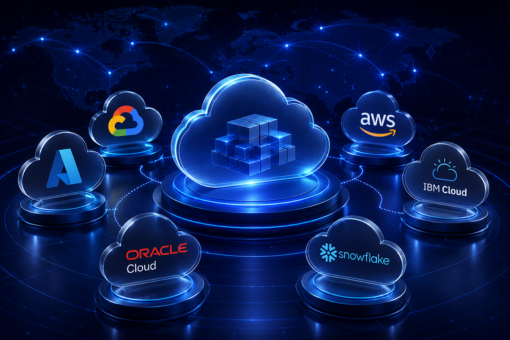
AWS remains a leading cloud platform, but many enterprises now evaluate alternatives that better fit their budget, compliance needs, or hybrid cloud strategy. This guide compares the top AWS competitors in 2026, including Microsoft Azure, Google Cloud, Oracle Cloud, IBM Cloud, and VMware Cloud. It breaks down pricing models, service depth, security posture, and ideal use cases for each provider. Furthermore, it outlines a practical framework for choosing the right platform and migrating without disruption. Businesses evaluating a shift can use this comparison to make a confident, data-backed decision.
Introduction
Cloud spending keeps climbing every year, and AWS still commands the largest share of that market. However, “largest” does not always mean “best fit.” Many organizations discover that AWS’s pricing structure, feature set, or support model does not match their specific workload.
A retail company running seasonal traffic spikes has different needs than a healthcare provider managing sensitive patient data. Similarly, a startup optimizing for cost has different priorities than an enterprise running a multi-region deployment. As a result, more businesses are actively comparing AWS against Azure, Google Cloud, Oracle Cloud, and other providers before committing to a long-term contract.
This guide walks through the strongest AWS alternatives available in 2026, the factors that should drive your decision, and a clear path for migration if you decide to switch. For teams reassessing their cloud strategy, working with a partner that offers dedicated Cloud Consulting Services can turn this comparison into a confident, well-supported decision.
What Is Amazon Web Services (AWS)?
Amazon Web Services is a cloud computing platform that provides on-demand infrastructure, storage, databases, machine learning, and networking services. Amazon launched AWS in 2006, and it has since grown into one of the most comprehensive cloud ecosystems in the world.
AWS runs on a pay-as-you-go pricing model. Consequently, businesses can scale their infrastructure up or down without a large upfront investment. The platform supports thousands of services, ranging from basic compute instances (EC2) to advanced AI and analytics tools.
Core AWS Capabilities
- Compute power through EC2 and Lambda for serverless workloads
- Storage services such as S3 and Glacier for long-term data retention
- Database options including RDS, DynamoDB, and Redshift
- Networking tools like VPC and CloudFront for global content delivery
- Machine learning services through SageMaker
Despite this breadth, AWS is not automatically the right choice for every business. In particular, its pricing complexity and steep learning curve push many teams to evaluate alternatives.
Why Organizations Look for AWS Alternatives
Several recurring pain points push enterprises to review other cloud providers. Understanding these triggers helps clarify whether switching makes sense for your organization too.
Cost Unpredictability
AWS billing can be difficult to forecast, especially for businesses with variable workloads. Hidden costs around data egress, storage tiers, and support plans often surprise finance teams. Therefore, many companies look for providers with simpler, more transparent pricing.
Vendor Lock-In Concerns
Once a business builds deeply on AWS-specific services, moving away becomes expensive and time-consuming. As a result, organizations increasingly prefer platforms that support open standards and multi-cloud portability.
Compliance and Data Residency
Industries like healthcare, finance, and government face strict data residency and compliance rules. In some regions, alternatives like Oracle Cloud or regional providers offer better-aligned compliance frameworks.
Specialized Workload Needs
Some workloads perform better on platforms built for specific use cases. For example, Google Cloud’s strength in data analytics and machine learning makes it appealing for AI-first companies. Meanwhile, Azure’s tight integration with Microsoft products benefits enterprises already running Windows Server or Office 365.
Because of these factors, businesses often reach out to firms offering Data and Cloud Modernization Services and Solutions to assess whether a platform switch, or a hybrid approach, better serves long-term goals.
Key Factors to Consider When Choosing an AWS Alternative
Selecting the right cloud platform requires more than comparing price lists. The following factors matter most for long-term success.
Pricing Structure and Total Cost of Ownership
Look beyond the sticker price. Consider data transfer fees, storage tiers, support costs, and reserved instance discounts. A platform that looks cheaper upfront can cost more once these variables are added.
Service Breadth and Depth
Some providers offer hundreds of services, while others focus on a narrower, highly optimized set. Match this to your actual technical requirements instead of choosing based on the largest catalog.
Security and Compliance Certifications
Check for certifications relevant to your industry, such as HIPAA, SOC 2, ISO 27001, or FedRAMP. Additionally, review the provider’s shared responsibility model to understand what security tasks fall on your team.
Integration With Existing Systems
If your business already runs Microsoft tools, Azure often integrates more smoothly. Conversely, if your team relies heavily on open-source and Kubernetes-native tools, Google Cloud may fit better.
Support and SLA Guarantees
Enterprise support tiers vary significantly across providers. Review response time guarantees, uptime SLAs, and escalation paths before signing a contract.
Migration Complexity
Some platforms offer built-in migration tools and partner ecosystems that simplify the move. Others require significant custom engineering. Partnering with a team experienced in Data Engineering and Integration Services can reduce this risk substantially.
Best AWS Competitors and Alternatives in 2026
The cloud market has matured considerably, and several providers now offer credible, enterprise-ready alternatives to AWS. Below is a breakdown of the top contenders.
Microsoft Azure
Microsoft launched Azure in 2010, and it has grown into the second-largest cloud platform globally. Azure works especially well for enterprises already invested in the Microsoft ecosystem.
- Deep integration with Windows Server, SQL Server, and Active Directory
- Strong hybrid cloud support through Azure Arc
- Extensive compliance certifications across regulated industries
- Flexible pricing through Azure Hybrid Benefit for existing license holders
Google Cloud Platform
Google Cloud has built a reputation around data analytics, machine learning, and Kubernetes-native infrastructure. Since Google originally built Kubernetes, GCP offers arguably the most mature container orchestration experience available.
- Advanced AI and machine learning tools through Vertex AI
- Strong big data analytics with BigQuery
- Transparent, often lower-cost pricing compared to AWS
- Global network infrastructure built on Google’s own backbone
Oracle Cloud Infrastructure
Oracle Cloud focuses heavily on enterprise workloads, particularly those already running Oracle databases. The platform’s Generation 2 architecture separates control and data planes, which improves security and performance.
- Competitive pricing on compute and storage
- Strong performance for Oracle Database and enterprise applications
- Autonomous Database features that reduce manual administration
- Solid support for hybrid and multi-cloud deployments
IBM Cloud
IBM Cloud combines traditional infrastructure services with strong AI and hybrid cloud capabilities through Red Hat OpenShift. Enterprises with existing IBM infrastructure often find this the most natural extension.
- Deep integration with Red Hat OpenShift for hybrid deployments
- Strong focus on regulated industries like banking and healthcare
- Watsonx AI platform for enterprise AI use cases
- Global network of data centers with fast file transfer
VMware Cloud
VMware Cloud gives enterprises a consistent operating model across private and public cloud environments. Consequently, businesses that already run VMware on-premises often choose this path to avoid re-architecting applications.
- Consistent infrastructure across on-premises and cloud environments
- Simplified disaster recovery and workload portability
- Reduced operational complexity for hybrid environments
- Strong fit for enterprises in the middle of a gradual cloud migration
AWS vs. Azure
Azure and AWS compete closely across most categories, but the right choice often depends on your existing technology stack.
Azure holds an advantage for organizations already using Microsoft products. Active Directory integration, Windows Server licensing, and Office 365 compatibility create a smoother transition. In contrast, AWS offers a broader and more mature overall service catalog, along with deeper third-party tool support.
On pricing, Azure Hybrid Benefit can meaningfully reduce costs for businesses with existing Microsoft licenses. However, AWS’s reserved instance and savings plan options remain highly competitive for steady-state workloads.
For hybrid cloud specifically, Azure Arc gives enterprises stronger native tools for managing on-premises and cloud resources together. Businesses should weigh their licensing situation and hybrid needs carefully before deciding between the two.
AWS vs. Google Cloud
Google Cloud distinguishes itself primarily through data and AI capabilities. BigQuery’s serverless architecture handles massive analytical workloads without the infrastructure management that AWS’s Redshift often requires.
For machine learning teams, Vertex AI provides a more streamlined development experience than AWS SageMaker in many use cases. Additionally, since Google created Kubernetes, GCP’s Google Kubernetes Engine (GKE) offers arguably the smoothest container management experience available today.
Pricing also differs meaningfully. Google Cloud’s sustained-use discounts apply automatically, whereas AWS requires more manual planning through reserved instances or savings plans. As a result, Google Cloud often appeals to data-first and AI-first organizations, while AWS remains the safer choice for teams needing the widest possible service catalog.
AWS vs. Oracle Cloud
Oracle Cloud targets a different audience than AWS. Enterprises running Oracle Database, Oracle Applications, or other Oracle enterprise software typically see the strongest results on Oracle Cloud Infrastructure.
Oracle’s Generation 2 Cloud architecture separates the control plane from customer workloads, which can reduce certain attack surfaces compared to traditional multi-tenant designs. Furthermore, Oracle’s Autonomous Database automates patching, tuning, and scaling, reducing the operational burden on internal teams.
On cost, Oracle Cloud frequently undercuts AWS for compute-heavy and database-heavy workloads. However, AWS still offers a significantly larger third-party ecosystem and broader global infrastructure footprint. Businesses already invested in Oracle technology should evaluate Oracle Cloud closely before defaulting to AWS.
Feature Comparison of Top AWS Alternatives
The table below summarizes how each major provider compares across key decision factors.
| Provider | Best For | Pricing Model | Standout Strength | Hybrid Cloud Support |
| AWS | Broadest service catalog | Pay-as-you-go, reserved instances | Largest ecosystem | Moderate (Outposts) |
| Azure | Microsoft-centric enterprises | Pay-as-you-go, hybrid benefit | Windows/AD integration | Strong (Azure Arc) |
| Google Cloud | Data and AI-first teams | Pay-as-you-go, sustained-use discounts | BigQuery, Vertex AI | Strong (Anthos) |
| Oracle Cloud | Oracle database workloads | Competitive fixed and pay-as-you-go | Autonomous Database | Strong (Oracle hybrid) |
| IBM Cloud | Regulated industries | Pay-as-you-go, enterprise contracts | Red Hat OpenShift | Strong (hybrid-first) |
| VMware Cloud | Gradual cloud migration | Subscription-based | Consistent on-prem/cloud model | Very strong |
This comparison shows that no single provider wins across every category. Instead, the right fit depends on your existing infrastructure, team expertise, and workload type.
How to Choose the Right Cloud Platform
Choosing a cloud provider is a strategic decision, not just a technical one. The following approach helps structure that decision.
Start With a Workload Audit
Map out your current and planned workloads before comparing providers. Identify which applications need the most compute, storage, or specialized services like AI and analytics.
Match Providers to Technical Requirements
Once you understand your workload profile, compare it against each provider’s core strengths. For instance, data-heavy workloads often perform better on Google Cloud, while Microsoft-centric enterprises benefit more from Azure.
Model the True Total Cost
Build a realistic cost model that includes compute, storage, data transfer, and support fees. Avoid comparing only the base compute pricing, since this rarely reflects your actual monthly spend.
Involve Compliance and Security Teams Early
Compliance requirements can eliminate certain providers immediately. Therefore, involve your security and compliance teams during evaluation, not after signing a contract.
Consider a Multi-Cloud or Hybrid Strategy
Many enterprises now avoid single-vendor dependency altogether. A multi-cloud approach, supported by strong Data Engineering and Integration Services, can reduce risk while letting teams use the best platform for each workload.
When Should You Migrate from AWS?
Not every business needs to migrate away from AWS, but certain signals suggest it is worth evaluating.
Rising, Unpredictable Costs
If your AWS bill grows faster than your actual usage or business growth, it is a signal to reassess. Egress fees and storage tier costs often drive this pattern.
Mismatched Service Needs
If your team constantly builds custom workarounds because AWS lacks a specific capability another provider offers natively, that is a sign the platform no longer fits.
Compliance or Regional Requirements
New regulations or expansion into new markets sometimes require data residency options that AWS does not support in a given region.
Merger, Acquisition, or Technology Shift
Organizational changes, such as acquiring a company that runs on Azure or Google Cloud, often make a unified cloud strategy necessary.
Cloud Migration Best Practices
A successful migration depends on preparation, not speed. The following practices reduce risk during the transition.
Audit Before You Move
Document every application, dependency, and data flow before starting the migration. Skipping this step often leads to unexpected downtime later.
Migrate in Phases
Moving everything at once increases risk significantly. Instead, migrate lower-risk workloads first, validate performance, and then proceed to mission-critical systems.
Plan for Data Integrity
Data corruption or loss during migration can be costly. Consequently, businesses should build validation checkpoints throughout the process, not just at the end.
Test Thoroughly Before Cutover
Run parallel environments where possible, and test performance, security, and integrations before fully switching traffic to the new platform.
Partner With Experienced Teams
Complex migrations benefit significantly from experienced partners. Firms offering Data and Cloud Modernization Services and Solutions bring the frameworks and tooling needed to reduce downtime and avoid costly missteps.
Conclusion
AWS remains a strong, capable cloud platform, but it is not automatically the right fit for every business. Azure, Google Cloud, Oracle Cloud, IBM Cloud, and VMware Cloud each offer distinct advantages depending on your existing technology stack, compliance needs, and workload type.
The right decision comes from matching your specific requirements to each provider’s core strengths, rather than following market share alone. Furthermore, a clear workload audit, realistic cost modeling, and early compliance review will save significant time and money down the line.
Whether you decide to stay on AWS, move to a competitor, or adopt a multi-cloud strategy, the path forward should be driven by data, not assumptions. Businesses that need support navigating this decision can work with an experienced Cloud Consulting Services provider to build a platform strategy suited to their long-term goals.