








Summary
Interoperability decides whether a patient’s records arrive before the appointment or after it. This guide compares ten healthcare interoperability vendors and companies on standards, network reach, payer API readiness and fit, along with the rules shaping 2027 buying trends.
Introduction
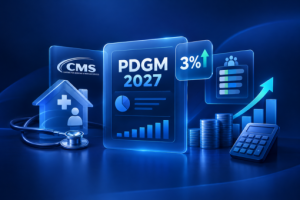
When a patient moves between a hospital, a clinic and a home health agency, care only keeps pace if the records do. Too often they arrive late, incomplete or as a fax. Doctors repeat tests, patients repeat their histories, and prior authorizations stall. Federal deadlines now push the industry to fix this, with most payer API requirements under CMS-0057-F due January 1, 2027.
Inferenz works on the provider side of that problem, unifying data from EMRs, labs and billing systems for hospitals and home-based care networks. Its Caregence agentic AI platform connects through FHIR and EHR integration. This guide compares ten interoperability vendors, Inferenz included.
Quick Answer: Which Interoperability Vendors Fit Which Need?
Interoperability buying splits into four jobs, and most organizations need more than one:
- Connecting your internal systems: Rhapsody, InterSystems Health Connect, Redox.
- Exchanging records across organizations and networks: Epic (Care Everywhere and Epic Nexus), Oracle Health Information Network, Health Gorilla, Surescripts.
- Payer-provider APIs and CMS-0057-F readiness: Smile Digital Health, Moxe Health, InterSystems Payer Services.
- Unifying data from many source systems: Inferenz data engineering and integration.
What Is Healthcare Interoperability?
Healthcare interoperability is the ability of different information systems, devices and applications to exchange health data and use it once it arrives. A lab result that lands in the right chart, in a form the clinician can act on, is interoperability working. A PDF that someone has to retype is not.
What Are the Levels of Interoperability?
Industry bodies describe three levels. Foundational interoperability moves data from one system to another. Structural interoperability keeps the format and syntax intact so the receiver can parse it. Semantic interoperability preserves meaning through shared vocabularies and codes, which is where most projects stall.
FHIR vs HL7 v2 vs C-CDA: What Is the Difference?
HL7 v2 is the older message standard behind admissions, orders and results, and it still runs most hospital interfaces. C-CDA packages clinical summaries as documents. FHIR exposes data as modern web APIs built around resources such as Patient, Observation and Claim. Most buyers need all three for years, so ask each vendor how it bridges them.
What Are TEFCA, QHINs and Carequality?
TEFCA, the Trusted Exchange Framework and Common Agreement, is the federal framework for nationwide exchange. Qualified Health Information Networks, or QHINs, are the designated organizations that connect participants under it. Carequality and CommonWell are long-running frameworks and networks that many providers still use alongside TEFCA.
Why Does Healthcare Interoperability Matter for Patients and Doctors?
Connected records change what happens in the exam room. A physician who sees the outside imaging, the medication list and last month’s discharge summary makes a better call in less time. Patients stop acting as the courier for their own history.
- Fewer repeat tests and calls: Results travel with the patient, so teams stop reordering what already exists.
- Safer medication decisions: Complete medication histories reduce interaction and duplication risks.
- Faster approvals: Prior authorization requests that move by API replace faxed packets and phone tag.
- Smoother transitions: Home health, hospice and skilled nursing teams get hospital data before the first visit.
What Are the Biggest Healthcare Interoperability Challenges?
Why Does Semantic Mismatch Cause So Many Failures?
Two systems can exchange a perfectly formed message and still disagree on what it means. One site codes a diagnosis in ICD-10, another in a local vocabulary, and a third leaves the field blank. Terminology mapping and normalization decide whether received data is usable or just stored.
How Does Patient Identity Affect Data Exchange?
Every exchange begins with the question of who the patient is. Weak matching creates missed records on one side and mixed-up charts on the other, which is why identity tooling belongs in the evaluation next to the interface engine.
What About Legacy Interfaces and Consent?
Hospitals still run thousands of HL7 v2 interfaces that nobody wants to touch. Add state consent rules and sensitive-data segmentation, and a connected network can still hold back records the clinician needs. Ask vendors how they handle both.
Top 10 Healthcare Interoperability Vendors and Companies at a Glance
| Vendor | Core strength | Best for | Network or standards note |
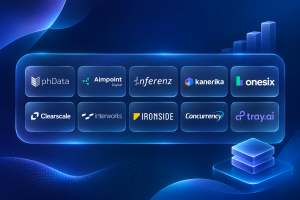
| 1. Inferenz | Data engineering and integration across source systems | Providers with many fragmented sources | Caregence connects via FHIR and EHR integration |
| 2. Rhapsody | Integration engine (Rhapsody and Corepoint) | Health systems and HIEs | 2026 Best in KLAS, Integration Solutions |
| 3. InterSystems | Health Connect, HealthShare, FHIR Services | One platform for integration and records | Payer Services for CMS-0057-F |
| 4. Epic | Care Everywhere and Epic Nexus | Epic-based health systems | Designated QHIN (2023) |
| 5. Oracle Health | Oracle Health Information Network | Oracle Health customers | Designated QHIN (Feb 2026) |
| 6. Redox | API-based integration network | Digital health companies and providers | CMS Aligned Network (2026) |
| 7. Health Gorilla | Clinical data retrieval via TEFCA | Payers, labs and digital health | Dual QHIN and QHIO designation |
| 8. Smile Digital Health | FHIR-first platform with CMS Suite | Payers and providers building APIs | Drummond-certified for CMS-0057-F |
| 9. Surescripts | Medication and network connectivity | E-prescribing and medication data | Designated QHIN (Aug 2025) |
| 10. Moxe Health | Payer-provider data exchange | Payers and providers exchanging clinical data | 2026 Best in KLAS, Payer-Provider Data Exchange |
How We Evaluated Healthcare Interoperability Vendors
We reviewed public product documentation, 2026 announcements, federal designation lists and recognition such as Best in KLAS. We didn’t score vendors, because the right answer depends on your systems and partners. The weights below are a template for your own scorecard.
| Criterion | Weight | What to test |
| Standards coverage | 20% | FHIR R4, HL7 v2, C-CDA, USCDI support and mapping tools |
| Network reach and TEFCA participation | 15% | QHIN status, Carequality and CommonWell connectivity, partner coverage |
| Payer API and CMS-0057-F readiness | 15% | Patient, provider, payer-to-payer and prior authorization APIs |
| Fit with your EHR and systems | 15% | Existing connectors, reference sites on your EHR |
| Data quality and identity | 10% | Patient matching, normalization, terminology mapping |
| Security and compliance | 10% | HIPAA, SOC 2 or HITRUST, PHI location |
| Implementation speed and support | 10% | Time to first interface, staffing model |
| Total cost | 5% | Licensing, per-message or per-connection fees, services |
The 10 Best Healthcare Interoperability Vendors and Companies for 2027
1. Inferenz
Best for: Provider organizations with many fragmented source systems that need a unified, governed data foundation.
Inferenz connects EMR, billing, lab and other sources into one governed platform. One engagement unified 40 source systems into an enterprise data platform for a national home care provider, described in this case study. Caregence, the Inferenz agentic AI platform, sits on a unified data model and connects through FHIR and EHR integration.
- Source-system integration into a governed data platform
- Data quality, governance and compliance work built into delivery
- Identity resolution through its MPI and Patient 360 service
Watch for: Inferenz delivers this as a service engagement and doesn’t operate a national exchange network, so pair it with a network participant for external exchange. Its MPI and Patient 360 service covers the identity side. Pricing: Engagement-based.
2. Rhapsody
Best for: Health systems and HIEs that need a proven integration engine.
Rhapsody, based in Boston, offers the Rhapsody Integration Engine and Corepoint. It was named 2026 Best in KLAS for Integration Solutions, the 17th consecutive year, and reports more than 1,900 customers. Its Axon AI agent became generally available in March 2026.
- Integration engine for HL7, FHIR and other interface types
- Corepoint for provider-side interface work
- AI agent support through Axon
Watch for: Engines reward skilled interface teams, so ask about managed options and staffing. Pricing: On request.
3. InterSystems
Best for: Organizations that want integration, a longitudinal record and FHIR on one platform.
InterSystems offers Health Connect, HealthShare, IRIS for Health and FHIR Services, plus Payer Services built for CMS-0057-F. That breadth lets one vendor cover interface work, record aggregation and payer APIs.
- Health Connect for integration
- HealthShare for longitudinal records
- Payer Services for CMS-0057-F API requirements
Watch for: Breadth needs careful scoping, and value is highest inside the InterSystems stack. Pricing: Not published.
4. Epic (Care Everywhere and Epic Nexus)
Best for: Epic-based health systems exchanging with other Epic sites and TEFCA participants.
Epic’s Care Everywhere moves records between organizations, and Epic Nexus was designated a QHIN in 2023. Epic launched Care Everywhere Diagnostic Image Exchange in August 2026, extending exchange to imaging.
- Care Everywhere record exchange
- Epic Nexus QHIN participation
- Diagnostic image exchange between organizations
Watch for: Exchange is strongest between Epic sites, so test how well non-Epic partners connect. Pricing: Typically part of the Epic relationship; confirm with your account team.
5. Oracle Health
Best for: Oracle Health EHR customers.
Oracle Health Information Network was designated a QHIN in February 2026, according to HealthIT.gov’s designation list. It gives Oracle Health customers a route into nationwide exchange under TEFCA.
- QHIN designation for national exchange
- Connection to Oracle Health EHR data
Watch for: The designation is recent, so ask about onboarding for non-Oracle partners. Pricing: Contract-based.
6. Redox
Best for: Digital health companies and providers that want one API connection to many EHRs.
Redox, based in Madison, Wisconsin, runs the Redox Engine and reports more than 12,000 organizations in its network. It became a CMS Aligned Network in 2026 and launched AI capabilities and an MCP server on June 23, 2026. It also formed an alliance with Kno2.
- Single integration reaching many EHRs
- CMS Aligned Network status
- AI tooling and an MCP server for developers
Watch for: Ask how pricing scales with message volume and connections. Pricing: Quote-based.
7. Health Gorilla
Best for: Payers, labs and digital health companies that retrieve clinical data through TEFCA.
Health Gorilla holds dual designation as a QHIN and a Qualified Health Information Organization (QHIO). It joined the CMS Aligned Network as an early adopter in July 2025.
- QHIN and QHIO designations
- CMS Aligned Network early adopter
Watch for: Retrieval results depend on participant coverage in your regions. Pricing: Quote-based.
8. Smile Digital Health
Best for: Payers and providers building FHIR APIs under CMS-0057-F.
Smile Digital Health, based in Austin, Texas, offers a FHIR-first platform and a CMS Suite that’s Drummond-certified for CMS-0057-F. A September 2025 partnership with MCG supports prior authorization content, and it offers Digital HEDIS capabilities.
- FHIR-first data platform
- Drummond-certified CMS Suite
- MCG partnership for prior authorization
Watch for: Confirm coverage of legacy HL7 v2 feeds if you still depend on them. Pricing: Quote-based.
9. Surescripts
Best for: E-prescribing, medication history and network connectivity.
Surescripts, best known for its e-prescribing network, was designated a QHIN in August 2025. That adds a TEFCA route to an organization many prescribers already use.
- Medication-centered data exchange
- QHIN designation
Watch for: Its center of gravity is medication data, so check breadth for other record types. Pricing: Quote-based.
10. Moxe Health
Best for: Payers and providers exchanging clinical data for quality and payment work.
Moxe Health, based in Madison, Wisconsin, won the inaugural 2026 Best in KLAS award for Payer-Provider Data Exchange.
- Payer-provider clinical data exchange
- KLAS recognition in a new 2026 category
Watch for: The KLAS category is new, so ask for references at your size. Pricing: Quote-based.
How to Choose a Healthcare Interoperability Vendor
Integration Engine, API Platform or Network: Which Do You Need?
An integration engine connects systems inside and between your facilities. An API platform exposes data to apps and payers through FHIR. A network connects you to external organizations under shared rules. Many health systems buy one of each, so map your top five data flows before you talk to vendors.
What Questions Should You Ask Before Signing?
- Which of our EHR versions have you connected, and can we speak with those customers?
- How do you handle patient matching when records come from outside our walls?
- Which FHIR resources and USCDI versions do you support today?
- What are the per-message, per-connection and support charges at our volume?
- Where does PHI sit, and who can see it?
Where Does AI Fit Once Your Data Is Connected?
Agents are only as useful as the data they read. Platforms such as Caregence run on a unified data model and connect to the EHR through FHIR, which is why integration work comes first. Fix the data flows, and the AI projects that follow get easier to trust.
Interoperability Rules and Networks Shaping 2027 Buying
Three forces shape buying this year: payer API deadlines, national exchange networks and federal framework efforts. Each one changes which vendor capabilities matter most.
The biggest date on the calendar is January 1, 2027, when most payer API requirements under CMS-0057-F take effect. The rule covers Patient Access, Provider Access, Payer-to-Payer and Prior Authorization APIs, and the operational prior authorization provisions began in 2026.
Payers carry the legal burden, but hospitals and physician groups feel it in their workflows. Prior authorization requests will increasingly travel by API, and providers need clean, current data to answer them.
Our blog on what CMS-0057-F requires from hospitals walks through that provider-side work in detail.
National exchange is growing fast. According to HHS reporting, about 500 million records had been exchanged through TEFCA by February 2026, up from roughly 10 million in January 2025.
Under TEFCA, designated QHINs now include Epic Nexus, Health Gorilla, Surescripts and Oracle Health Information Network, with eClinicalWorks (April 2025) and Netsmart (November 2025) among the other designations.
Ask every vendor which network it participates in and how requests reach your systems. Answers vary more than the marketing suggests.
CMS has also organized a Health Tech Ecosystem and an interoperability framework for aligned networks, and vendors such as Redox and Health Gorilla have joined it.
Final Thoughts
Interoperability projects succeed when someone owns the data flows. Start with your five most painful exchanges, pick the vendor type that matches each, and test with real messages and your own data.
The deadlines are real, but the lasting gain is simpler: a clinician opens the chart and finds the whole story. Everything on this list exists to get you there.