




Data Science Vs. Machine Learning: 6 Major Differences

Data science vs. machine learning is trending, as they are the two most important technologies that help enterprises scale their business using unstructured, structured, and semi-structured data. The business world is heavily dependent on data sets and technologies like machine learning and data science today.

The raw data from various sources is gathered into a single source of truth. Then, data scientists use machine learning and data science to study data patterns and drive insights from them. With advanced technologies, data scientists and machine learning engineers can unlock the power of data using statistical methods and algorithms.

In this detailed article, we reveal what’s the difference between machine learning models and data science algorithms.

Data Science Vs. Machine Learning

What Is Data Science?

Data science is a broad term that involves cleansing, preparing, and analyzing massive amounts of data. The field of science focuses on data and applies the latest techniques to find insights from the raw data.

The role of data scientists is to understand the data science lifecycle and extract meaning from the data to help enterprises make smart business decisions and improve business profits.

Data science is often confused with data analysis and data mining. However, they are not the same. Instead, data science is the umbrella term that covers both techniques, including data mining and data analytics. Data mining uncovers the repetitive patterns in a dataset, whereas data analysis removes reductant information to reveal valuable insights from data.

What Is Advanced Machine Learning?

Machine learning is the subset of AI (Artificial Intelligence) that uses machine learning algorithms to extract useful information and predict future trends. The statistical analysis and predictive analysis spot patterns in the structured data.

Machine learning is one of the major technologies that work on the idea of teaching and training machines by feeding them with data. When the machines are fed semi-structured and structured data, they learn, grow, adapt, and develop to help humans in various business operations.

Inferenz AI/ML experts help enterprises to catch up with the data science and machine learning trends, implement the latest tools, and generate better revenue.

Data Science Vs. Machine Learning

Key Difference Between Data Science Vs. Machine Learning

Here is the infographic representation of the major differences between data science vs. machine learning.

data science vs machine learning 6 major differences

Here are a few major differences between data science and machine learning. Read about data science vs. machine learning below.

Data Science

  • Data scientists collect data and extract information from semi-structured and structured data.
  • Enterprises use data science to find insights from the data, but the technology is not involved in predicting future trends.
  • Data science can work with manual methods or procedures; however, they do not help make decisions.
  • The field of data science includes using different technologies, including Python, R, Scala, Hadoop, Hive, etc.
  • Raw, structured, and unstructured data can be collected and transformed through data science algorithms.
  • The deep study of data is the umbrella term that involves big data collection, cleaning, processing, etc.

Machine Learning

  • ML or Machine learning is a branch of computer science that allows machines to learn without being programmed.
  • Organizations focus on specific patterns in data to make future predictions. Using machine learning techniques and mathematical models, enterprises can use historical data and stay ahead.
  • Machine learning involves algorithms that are hard to implement manually.
  • Advanced and traditional machine learning specialists use Python, R, and statistical models.
  • Unlike data science, machine learning allows using structured data to drive insights.
  • Machine learning specialist focuses on unsupervised learning, reinforcement, and supervised learning.

Data Science Vs. Machine Learning

Unlock The Power Of Data With Data Science And Machine Learning

Organizations now emphasize using a set of data to improve products and make smart business decisions. Data science and machine learning are deeply related and go hand in hand to automate mundane tasks and fasten business processes. Shortly, enterprises will use technologies like AI and ML prominently to analyze large amounts of data and learn from data.

Inferenz experts help enterprises export data from sources and load data to the destination. Our data scientists transform, enrich, and make analysis-ready data to perform insightful analysis using BI tools. If you intend to know more about the difference between data science and machine learning, contact the Inferenz experts.

FAQs About Data Science & Machine Learning

  • Which is better: machine learning or data science?

Enterprises must focus on both technologies to better use data historical data and interpret industry trends. It is not about data science vs. machine learning; instead, it is about how to use both technologies for business success.

  • Is machine learning used in data science?

Data science uses machine learning and artificial intelligence techniques to predict future trends. It gives enterprises a medium to use historical data to improve business decisions.

  • What are the applications of machine learning?

Some of the applications of ML include the automation of mundane tasks, finding patterns to prevent fraud, and using image detection in the healthcare industry to improve patient care. For example, a study revealed that when machine learning is used in healthcare, it offers 95% accuracy in predicting a patient’s death.

  • What are the challenges of machine learning techniques?

Machine learning focuses on data; however, the lack of diversity in data points makes data processing challenging for machines. This is because machines cannot work if there is no data available. A team of machine learning engineers will help you appropriately store and analyze data to improve business decisions.
Top 10 Python Libraries For Data Science And Machine Learning

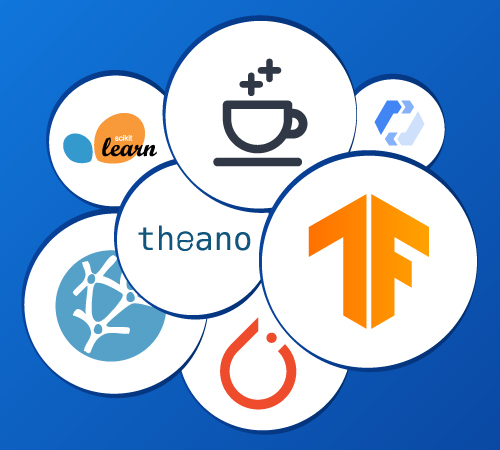
Python libraries for data science and machine learning are the first choice of aspiring and experienced data scientists and ML engineers. Depending on the purpose, you can choose the library for data processing, mining and scraping, data visualization, and model deployment. 

Python libraries for data science are becoming popular among tech professionals. Python programming language is one of the most widely utilized programming languages by data analysts and scientists. It has more than 137,000 libraries valuable for data mining, visualization, and more. Members of the Python community are always looking for guides to understand top python libraries for data collection, which would help them understand different python packages.

The open-source language is easy to learn and easy-to-debug that helps data scientists solve their everyday problems. Python has vast data visualization, machine learning, deep learning, and data manipulation libraries. However, choosing a feature-rich Python framework can be challenging. Read our comprehensive guide to learn the top 10 python libraries for data science.

Python libraries for data science

10 Python Libraries for Data Visualization

With over 8.2 million active users, Python has grown to be the most widely used language in the world. Frontend, backend, data science, machine learning, artificial intelligence, middleware, deep learning, etc., are a few applications for which Python can be used.

Besides its wide applications and ease of use, the supportive community of millions of experts makes it a top choice for beginners. Below are some python learning libraries that every data analyst and scientist should know.

Pandas

Pandas library in Python is one of the useful libraries for the easy-to-use data structure for analysis and handling. It provides efficient, fast, and optimized objects, especially for data manipulation tasks. The open-source and data science communities make Pandas the suitable data library. In addition, the rich functionalities of Pandas help you deal with missing data or create your own data.

TensorFlow

TensorFlow is a framework best known for data visualizations and computational graph visualizations. It reduces 50-60% of errors in data using neural machine learning models. The python data libraries collect data that are available and are useful to train and deploy machine learning models for production.

Scikit-Learn

Machine learning is a branch of data science used for predictive data analysis. It is an accessible, reusable, open-source package built on SciPy, Matplotlib, and NumPy.

The widely-used library that data scientists use helps them in data storage, regression, classification, and clustering with basic machine-learning algorithms.

SciPy

Another open-source python data science library in our list is SciPy, which is useful in simple data science and analytics projects for optimization and integration. The high-level solutions provided by SciPy help in underlying mathematics, linear algebra equations, statistics, and differential equations for data science projects. The in-built collections of the algorithm are used in data science for manipulating data visualization components or layers to ease scientific calculations.

PyTorch

Like other tech fields, data science and the use of data structures are constantly evolving, and the need for data analysis and manipulation tools is rising. As a result, scientists need a simple supervised and unsupervised machine learning approach to move from research to practice. The PyTorch library helps data scientists quickly shift from theory to machine learning research.

Matplotib

In data science and machine learning, algorithms, tasks, and structured data visualization play a considerable role. Matplotib is one of the useful Python data visualization libraries that provide plots and figures developers can utilize for data visualization creation. However, the primary function of the open-source plotting library for Python is to bring different types of data between in-memory data structures to life and uncover insights to solve many data science problems.

Theano

Many data mathematics complications make it hard for data scientists to solve mathematical operations. The use of the data in the library helps you to solve problems related to data processing, mining, and wrangling. One of the useful open-source python libraries for data aggregation and creating a python object is Theano, which is also useful in creating web-based data visualizations and evaluate multi-dimensional expressions.

Keras

Keras library supports Theano and Tensorflow backends and is useful for data analysis, deep learning, and neural network modules. It offers vast prelabeled data sets which you can import and load. Using the popular Python library will help developers reduce cognitive load. It also minimizes the actions used for data visualization.

NumPy

One of the most useful statistical data exploration libraries is NumPy, or Numerical Python library contains a powerful N-dimensional array object. Developers can use NumPy in data analysis for faster and more compact computations. In addition, the general-purpose array-processing package of libraries like NumPy provides interactive data visualization to improve efficiency.

Scrapy

The next known library for data in Python that enables quick and easy data manipulation is Scrapy. It is a popular open-source and fast web crawling framework written in Python. Data professionals use Scrapy data science libraries to build crawling programs, collect, and retrieve structured data from the web. Developers can train machine learning models using libraries and tools for better data analysis.

Python libraries for data science

Python Libraries for Data Scientists

The python ecosystem has a vast ocean of data science, data analysis, and machine learning libraries. NumPy and Pandas data structures perform better for manipulating numeric, mathematical functions, and time series. For example, libraries like Pandas are useful for data wrangling and can train machine learning models faster, whereas Matplotib is helpful for the visualization of distributed data from APIs.

You can quickly complete end-to-end data frame projects and machine learning tasks using Python. In addition, you can solve data science tasks and challenges by leveraging the power of scientific Python programming.

If you are apprehensive about which library is efficient for data wrangling, consider contacting the experts of Inferenz. Our experts can help you choose suitable text processing libraries and tools from the list of top tools for data science projects.

AWS vs. Azure: Best Cloud Computing Platform

AWS vs. Azure battle in the cloud computing industry has come a long way. The fierce battle of AWS vs. Azure has always been challenging and never-ending for enterprises.

Given the high competition between cloud computing providers, AWS and Azure stand out proudly as the top two cloud service providers that help the business scale in the competitive field.

AWS and Microsoft Azure provide similar features but differ in a few core aspects. Below are the top 6 differences you should know before choosing cloud computing services.

AWS Vs Azure Vs Google Cloud - AWS Certification

Key Differences Between AWS and Azure

According to the Statista report, Amazon Web Services has a 33% market share, whereas Microsoft Azure has a 22% market share. That indicates the popularity of both cloud solutions among users. Learn what AWS and Azure offer and how they differ here.

AWS And Azure: Availability Zones

AWS was the early player in the cloud domain and has successfully established and expanded its network in the competitive market.

Microsoft Azure also offers its cloud offerings in multiple locations worldwide; however, the number of availability zones differs. For example, Amazon AWS has 66 regions with 12 on the way, whereas Azure has 54 availability zones in 140 worldwide countries.

Winner – The clear winner here is AWS cloud, with more available zones and regions worldwide.

AWS And Azure: Who Uses Them? 

As AWS is the oldest player in the cloud computing market, it has a large audience base and more significant community support than Microsoft Azure. Some big companies that use Amazon Web Services cloud services include BMW, Samsung, and Netflix.

On the other hand, Azure has 80% of Fortune 500 companies as its customers. Some major customers of Azure include Polycom, HP, Honeywell, Apple, etc.

Winner – It’s a tie as various high-end customers have adopted AWS and Azure cloud platforms.

AWS And Azure: Compute Services

AWS is, by far, the most evolved and functionally rich computing and database service provider.

The leading cloud computing giant, AWS, offers 200+ services, whereas Azure can provide 100+ services to its customers.

That said, large enterprises requiring some extra advanced services might choose Amazon AWS over Azure.

You can integrate AWS on DevOps to help your in-house team automate mundane tasks and manage complex environments.

Winner – AWS is the clear winner if we discuss the number of services. But Azure stands neck and neck with AWS and wins the first position as it can be easily integrated with open-source and on-premise systems.

AWS Vs Azure Vs Google Cloud - Azure Console

AWS And Azure: Cloud Storage Offerings

Storage is one of the most critical defining factors describing cloud deployment’s success. AWS and Azure are equally strong in this aspect, but their offerings differ.

Some AWS services include Amazon’s simple storage service (S3), elastic block store (EBS), and Glacier. On the other hand, Azure storage services provide disk storage, blob storage, and standard archive.

When customers use AWS S3, they gain a secure, scalable, and robust storage solution for structured and unstructured data use cases. Azure files, blogs, tables, disks, and queues are storage options in the Microsoft Azure cloud.

Winner – AWS and Microsoft Azure offers a variety of cloud storage options for the end-users. So, it’s a tie between hybrid cloud systems!

AWS Vs. Azure: Security & Data Privacy

Enterprises are concerned with security and data privacy when selecting private or third-party cloud providers. Amazon AWS performs an excellent job of choosing secure alternatives to enhance the data privacy of networks within the cloud.

Providers like Microsoft Azure use Cloud defender services based on Artificial Intelligence powered solutions that protect your data and business from new and emerging threats. However, it is less secure compared to AWS.

Winner – Hence, in terms of security and data privacy, Azure services may not be 100% secure by default. That said, a cloud platform like AWS wins in this case.

Learn about the difference between AWS, Azure, and Google Cloud in our comparison blog.

AWS Vs. Azure: User-Friendly Platform

When compared to Azure, AWS is an easy-to-use cloud platform for beginners and the first choice of enterprises that move to the cloud. It features a user-friendly and feature-rich dashboard along with extensive documentation for its cloud services.

However, one downside to Amazon AWS is that adding users and accessing rules can be complex. On the other hand, Azure has a friendlier interface. A cloud platform like Azure keeps all the information and user accounts in one location, although the recommendation and documentation system is less search-friendly and intuitive.

Winner – If you’re a first-time cloud adapter, you can use the Amazon virtual private cloud platform. It is beginner-friendly compared to the Azure SQL server database!

AWS vs Azure

AWS Vs. Azure: Which Is Better Cloud Computing Solution?

Azure and AWS are the two major cloud computing platforms that offer similar features to their customers. However, they are different in terms of pricing model and documentation approach.

AWS provides a flexible hourly pricing model, where you are charged for services you use in one hour. Meanwhile, when it comes to hybrid cloud like Azure, the pricing is per minute, making it a little expensive.

If you want to choose a tool for cloud Infrastructure as a service (IaaS) or high availability of services/tools, choose AWS. But if you want a good platform as a service (PaaS) and easy integration, consider choosing Azure virtual solution with flexible pricing models.

We hope our comparison between Azure and AWS guide will help you understand the differences between AWS vs. Azure and make an informed decision. However, if you are still apprehensive about it, contact Inferenz experts, and we will help you choose between AWS vs. Azure and move data from the on-premise data center into the cloud.

FAQs About AWS Vs. Azure

  • Is Azure as good as AWS? 

Both cloud providers, like AWS and Azure, offer a variety of features and services that make them two leading platforms. However, you should consider your specific needs before making your final choice between AWS or Azure.

  • Is Azure easier than AWS? 

On the surface, it might look like a yes, but service providers like AWS are more user-friendly than Azure.

  • Which cloud has the highest demand? 

AWS, compared to Azure, holds the largest market share in the cloud market and consists of different computing products and services, including IoT, databases, analytics, storage, mobile, networking, etc.

6 Machine Learning Trends By AWS That Will Drive Adoption & Innovation

Machine Learning Trends in 2023 are more than the buzzword, as ML technology can revolutionize how business operations are performed. Machine Learning (ML) and Artificial Intelligence (AI) are emerging technologies that can transform our lives and business beyond imagination.

In 2023, creative AI, distributed enterprise management, autonomous systems, and cyber security will be a few technical segments that will witness the increasing use of ML. Businesses that leverage the power of machine learning technologies will have the ability to stay ahead in the competitive market. 

Given the rapid transformation that Machine Learning has undergone, McKinsey’s recent report reveals that industrializing ML and applied AI are the two top trends of the year. Read this article to understand the new trends that will shape the future. Adopting the trends will help enterprises scale, expand, and innovate to achieve goals in 2023.

Top Machine Learning Technology Trends

The Machine Learning industry is evolving rapidly, and businesses are improving their in-house operations using advanced tech. AWS, the leading provider of cloud, outlines the six key Machine Learning trends that can help drive ML innovation and adoption in the upcoming years.

Growth Of Model Sophistication

There has been an exponential boost in ML solutions and model sophistication in recent years. The state-of-the-art ML models have grown from 300 million to 500 billion from 2019 to 2022. The 1600 times increase in ML sophistication models in the past three years proves that Machine Learning has a bright future.

Commonly known as foundation models, these massive ML models can be trained with large datasets. They can then be reused and tuned for different tasks. Hence, the easier-to-adopt approach reduces ML deployment’s cost and effort. It will also help enterprises leverage the benefit of increased sophistication to maximize business productivity and improve the efficiency.

Data Growth

The second key trend identified by Amazon Web Services about Machine Learning is the rising volumes and different types of data. With the increasing power, innovation, and technology adoption, enterprises can train and build models for structured data sources like text and unstructured data sources like audio and video.

When enterprises can effortlessly get different data types into ML models, it leads to an increase in the deployment of multiple services at AWS that assist in model training. For example, AWS’s SageMaker Data Wrangler is a practical ML training solution that helps users process unstructured data using a defined approach.

Machine Learning Industrialization

Another emerging technology that enterprises need to catch up with includes the industrialization of Machine Learning. The growth of ML industrialization enables organizations to build applications quickly. In addition, enterprises can automate deployment and make it reliable with the help of ML industrialization.

The critical approach followed by industries results in building and deploying more ML models in less time, all thanks to the new tech, libraries, and frameworks. One of the best examples of ML industrialization is AWS SageMaker, which can train Alexa speech models. In 2023, we can see more adoption of ML solutions throughout the industries that help them rise in the competitive market.

ML-Powered Purpose-Built Apps

Machine Learning (ML) is growing in popularity due to the development of purpose-built applications that serve specific use cases. Using the cloud services like AWS, enterprises can automate common ML use cases. Services such as translation, voice transcription, text-to-speech, anomaly detection, etc., help teams working on machine learning projects to automate half of the mundane tasks.

Furthermore, Amazon Transcribe service, one of the latest Machine Learning and Artificial Intelligence trends, can support real-time call analytics. In addition, the user speech recognition feature of the service helps enterprises understand customer sentiment and improve business operations. With these easy-to-develop and deploy purpose-built applications, enterprises can save time and resources to stay ahead of the market.

Responsible AI

Even though the two technologies, ML and AI, are increasing in popularity, enterprises need to use them responsibly. That said, another Machine Learning trend booming in the market is responsible AI. For this, an AI system must be fair, regardless of gender, religion, user attributes, or race.

In addition, there should be explainable Machine Learning systems that help teams understand how a model operates in a specific environment. Finally, enterprises need to focus on the need for a governance mechanism and ensure AI is practiced responsibly. In the upcoming years, we can see a rise in solutions promoting the responsible use of trending technologies.

ML Democratization

The next key Machine Learning trend in our list revealed by the cloud computing platform is ML democratization. According to this trend, technology will be democratized, making skills and tools accessible to more people. In addition to the use-case-driven tool, the no-code and low-code applications simplify the machine learning process. It will solve the problems and challenges of democratization using deep learning models.

This low-code and no-code machine learning solutions will help non-tech employees build applications faster. It helps you to reduce time-to-delivery and eradicate high development costs. According to recent data, around 60% of the world’s corporate data is reserved in the cloud. That said, 2023 will see increased investment in resilience and cloud security to meet the ever-evolving demands of the tech industry.

A skilled team of experts will help you differentiate your business and utilize the power of technology to reduce human error. Inferenz AI and ML engineers help organizations understand the ins and outs of the technology better and improve in-house business operations.

machine learning trends

Top Technological Segments For ML in 2023

Some technological segments that will have the most usage of Machine Learning models include:

  • Distributed Enterprise Workforce: As remote work is the new normal of 2022, enterprises are bound to look for new ways that help them manage the workforce. Machine Learning is the tech that will help distributed companies grow by assisting teams to come on the same page.
  • Automation: From banking to security, many industries are integrating autonomous software systems. The aim of automation is to ease complicated tasks for data scientists working on machine learning applications. New innovations will help enterprises with smart automation to quickly adapt to recent changes.
  • Cybersecurity: With the growth of digitization in different fields, the need to protect sensitive information is rising. AI and Machine Learning are smart technologies that help organizations protect their private data and secure business.

machine learning trends

Future Of Machine Learning Development 

Artificial Intelligence and Machine Learning technologies drive innovations across different industries. According to the Artificial Intelligence market report, the market is expected to reach $500 billion in 2023 and $1597.1 billion in 2030. This indicates that emerging machine learning and AI technologies will continue to be in high demand in the upcoming years.

Organizations that wish to leverage the power and benefit of technologies need to focus on innovation. Data teams should focus on adopting the latest machine learning algorithms. Partnering with a certified team of ML/AI engineers can help you adopt deep learning solutions and achieve goals. If you’re apprehensive about how to catch up with the Machine Learning trends, contact the expert team of Inferenz.

Top 10 AI Tools & Frameworks Every AI Engineer Needs To Know

AI tools in 2022 and 2023 are new-gen technology that can process code, solve problems independently, and clean data to improve business operations.

Artificial Intelligence is already a staple of the business world, and thousands of companies compete in today’s ever-changing tech landscape.

If you haven’t yet implemented tools for your AI solutions in your business, here is the list of the best Artificial Intelligence tools you can choose from if you are planning to implement end-to-end growth.

Check out AI Tools For 2023

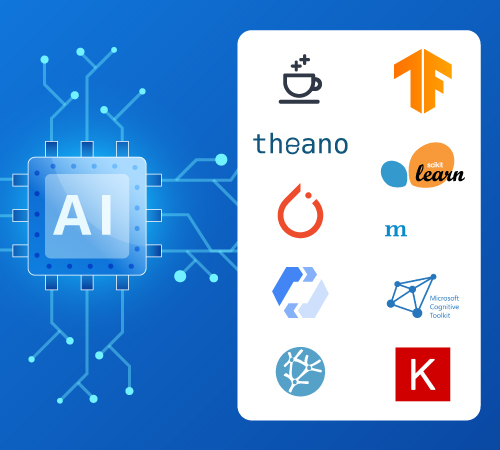
Here is the infographic representation of top 10 AI tools and frameworks every AI engineer needs to know.

top 10 tools for AI

Scikit-Learn

Scikit-Learn is one of the best Artificial Intelligence solutions in the machine learning community for automation processes. Some essential features that make Scikit Learn the top choice of developers include feature extraction, cross-validation, supervised learning algorithms, etc.

  • It runs on a single processor CPU and is built on SciPy.
  • The tool focuses on data modeling rather than manipulating it.
  • It includes a lot of calculations for projects like regular AI and data mining.
  • It is less suitable for complex calculations but can handle simple ones effectively.

TensorFlow

TensorFlow is the most sought-after machine learning and deep learning library. It is a Python-friendly open-source framework that facilitates numerical computation to make future predictions.

  • It utilizes a multi-layered hub arrangement to rapidly set up, train, and send counterfeit neural systems.
  • It runs on CPU and GPU and is built on a deployable scale.
  • Applications made by TensorFlow can be run on Android, iOS, local machines, and the cloud.
  • Developers can easily create graphical visualization and construct neural networks using Tensorboard.

Theano

Theano stands apart from other conversational intelligence solutions as it exploits the PC’s GPU. The high speed of popular AI platforms makes them profitable for computationally complex undertakings and profound learning.

  • Theano is specifically designed to integrate with Python.
  • It is an AI-powered library that helps developers to develop, optimize, and launch code projects.
  • It is built with ML (Machine Learning models) capabilities to obtain actionable insights.
  • It can independently diagnose and solve bugs with little to no external support.

Caffe 

Caffe is another popular open-source AI system that has a Python interface. Due to its high processing power, which is more than 60 million images per day, Caffe is a popular Artificial Intelligence application for faster projects.

  • Caffe structure is a BSD-authorized C++ library with a Python interface.
  • The profound learning structure is popular for its high speed, quality, and articulation.
  • One of the best examples of the Caffe framework includes Google’s DeepDream.

Apache MxNet

Apache MxNet is an advanced Artificial Intelligence platform and framework adopted by Amazon. Its deep learning framework based on AWS allows for trading computation time for memory.

  • MxNet, an application created with scalability in mind, has easy-to-use support for multi-GPU.
  • With MxNet, you can quickly write custom layers in high-level languages.
  • TVM support is available, which will improve deployment support and run on new device types.

Keras

Keras is a high-level open-source framework that uses a neural network library. It is specially designed for the team looking for a user-friendly framework with a Python interface.

  • It runs seamlessly on CPU and GPU.
  • It is useful for fast prototyping that facilitates state-of-the-art experiment completion.
  • An AI framework like Keras is suitable for creating a functioning prototype.

PyTorch

The next comprehensive AI model built on Python is PyTorch, which is similar to TensorFlow. It is created by Facebook and is in relentless reception development.

  • It is suitable for projects that require faster development.
  • PyTorch can handle large and complex projects that TensorFlow cannot manage.
  • It is incredibly flexible and has rich APIs for the library extension.

CNTK

Built on similar lines as TensorFlow, CNTK is a Microsoft Cognitive Toolkit. Anyone can try CNTK as it is under an open license. However, CNTK is challenging to deploy and requires special skills and expertise.

  • With CNTK, you can quickly combine model types like recurrent networks, convolution nets, and DNNs.
  • It has wider APIs like Java C, C++, Python, etc.
  • CNTK majorly focuses on creating deep learning neural networks.

AutoML

One of the most robust and recent additions to Artificial Intelligence is AutoML. It can automate all the processes involved in articulating a real-world problem with the help of ML techniques.

  • Beginners can also use intelligent automation solutions to preprocess and clean data.
  • With AutoML, you can quickly perform data analysis to obtain real-time and data-driven results and optimize model hyperparameters.
  • It can accelerate ML research and help you save time and resources.

OpenNN

OpenNN, or Open Neural Networks, is a popular library for neural network simulation. The OpenNN library, written in C++, is essential to deep learning research.

  • OpenNN is an advanced technology that even experienced developers can use.
  • It features a Neural Designer that is suitable for advanced analytics.
  • The AI tool provides graphs and tables for data entry interpretation.

AI Tools

Integrate Top AI Tools To Grow Your Business 

Enterprises have realized the benefits of Artificial Intelligence in business, and around 37% of companies use AI tools in some form. Not only will the AI application integration power the company, but it will also improve business efficiency through data management.

Inferenz is a team of AI and ML experts who can help your business with AI-powered tools. The experts will analyze your business needs and ensure that you choose the right AI tools that fuel business growth with real-time insights.

FAQs

  • Which are the best AI tools? 

Some of the best technologies available are MxNet, PyTorch, TensorFlow, OpenNN, etc.

  • What are AI tools and AI platforms? 

An Artificial Intelligence tool and platform allows developers to create intelligent business applications.

  • What are the three types of AI? 

Three AI types include Artificial narrow intelligence (ANI), Artificial general intelligence (AGI), and Artificial superintelligence (ASI).

  • Why are AI tools important? 

AI solutions are specifically designed to help enterprises to make better business decisions, improve speed and accuracy, boost core business processes, and so on.

AWS Services: Overview of Amazon AI & ML Applications

AWS services are designed to maximize the value of complex data ecosystems using cloud computing. In the digital world, data is power.

Enterprises have access to large data volumes, but the ability to use data is constrained by ill-equipped infrastructure, poor data management, high complexity, etc.

As a business owner, you need to use the data efficiently with the help of advanced analytics, Machine Learning, Artificial Intelligence, and more. Let us understand AWS services in detail.

Amazon Artificial Intelligence Service Overview

AWS AI services offer ready-made intelligence solutions for your workflows and applications. You can easily integrate AWS with your existing applications to address standard use cases that include:

  • Personalized recommendations 
  • Improving safety & security 
  • Boosting customer engagement 
  • Modernizing contact center
  • And much more

To help you understand better, here is the breakdown of AWS AI services. 

  • Computer Vision 

Amazon Rekognition helps enterprises analyze catalog assets, extract meaning from applications and media, and automate workflows. Amazon Lookout for Vision can detect defects and automate inspections for quality control. In addition, Automated monitoring helps data teams to find bottlenecks in management and improve in-house operations. 

  • Automated Data Extraction 

With Artificial Intelligence AWS services, enterprises can pull valuable information from documents, acquire insights with natural language processing (NLP), and ensure compliance and accuracy of sensitive data. Some tools used include Amazon Textract, Amazon Comprehend, and Amazon A2I.

  • Language AI

With ML and AI services, you can build chatbots, virtual agents, automated speech recognition, etc. Enterprises can create automated conversation channels to improve customer experience, applications, workflow, and accessibility.

There are multiple other benefits, like high scalability, of AWS AI services that can help accelerate business growth. 

Amazon Machine Learning Service Overview 

Advanced technologies like AWS services help enterprises get deep insights from their business data to make strategic decisions. With the latest technology, developers can build, train, and deploy ML models faster.

Amazon SageMaker is the Machine Learning service of AWS that wholly manages the entire business process. Data developers and scientists can use SageMaker to deploy ML models into a production-ready hosted environment directly.

Some main Amazon SageMaker features include:

  • SageMaker Studio Lab 

The free offering provides users with AWS compute resources in an ecosystem based on JupyterLab.

  • SageMaker Canvas

The AWS ML service SageMaker Canvas helps teams generate predictions via Machine Learning. However, it involves coding.

  • SageMaker Studio IDE

Amazon SageMaker Studio, a web-based visual interface, allows you to perform different ML development phases in a single location. As a result, it boosts data science team productivity multifold times.

Using different tools and technologies gives your enterprise an edge over the competition. Not to mention the AWS cloud computing services make it easy for you to utilize the total value of your data.

AWS services in machine learning and AI

Advantages & Use Cases Of AWS Services 

From boosting employee productivity and enhancing customer experience to reducing fraud and cutting costs, AI and ML from AWS services can help improve business operations. Some advantages of Artificial Intelligence and Machine Learning include the following:

  • Improve Customer Experience 

One of the best benefits and use cases of AWS services is improving customer experience by reducing the lag between business responses and customer needs.

Automated chatbots, personalized messaging systems, and triggered emails using deep learning and NLP can increase efficiency and reduce manual workflows with the latest technologies.

  • Reduce Errors 

The AI and automation models can help you notice manual errors and remove them. With the help of machines, your team can reduce the workload of remedial tasks such as onboarding and data processing.

  • Automation 

Enterprises can automate multiple time-consuming and respective tasks related to marketing, internal onboarding, support, etc., with AI and ML services. This, in turn, will free up the resources so you can focus on other essential tasks that lead to business growth.

  • Decision Making 

The main goal of AWS Artificial Intelligence is to generate intelligent decisions. Advanced technologies will help you store data effectively, analyze trends, and forecast results. In addition, it can assist you in translating raw data into objective decisions without human error.

To leverage the benefits of advanced tech, you need to partner with an expert team. Inferenz AI and ML services help enterprises automate their business operations with Artificial Intelligence and Machine Learning algorithms.

AWS services in machine learning and AI

Leverage Advanced Analytics & AI/ML Services With Experts

As enterprises look to scale and expand, AI and ML services from AWS are a powerful way to help you achieve your goals faster. In addition, the technologies are the table stakes that will help you remain competitive in the market.

With the right tools, your company can improve customer satisfaction, increase operational efficiencies, and reduce errors.

If you want to leverage AWS’s AI and ML services, contact the experts of Inferenz. Our certified engineers can help you implement the latest technologies and reap the benefits of AWS services.

FAQs on AWS Services

What tools are used for AI ML?

TensorFlow, Apache MXNet, PyTorch, and OpenNN are some tools used for Artificial Intelligence and Machine Learning. 

What are the examples of AI & ML?

Two of the best examples of AI and ML are Siri and Cortana – two voice recognition systems based on ML. 

What is the AWS service used for AI ML applications?

Amazon SageMaker is a fully managed AWS service that data scientists and developers can use to build, train, and deploy ML models.

What is an ML service?

Machine Learning as a service represents different cloud-based platforms that ML teams can use to grow their business.

Anomaly Detection in Machine Learning: ML Algorithms For Anomaly Detection

Anomaly detection in Machine Learning is identifying outliers to prevent network intrusions, adversary attacks, frauds, etc.

Every organization must focus on in-house business operations to ensure everything works efficiently.

However, a sudden suspicious activity due to data corruption or human error can impact a model’s performance. This is where anomaly detection in ML comes into the picture.

The approach identifies outlier data points to make the entire dataset free of anomalies. In this article, we’ve touched on every aspect of anomaly detection. Let’s get started!

ALSO READ: AWS Community Day 2022 With AWS Experts For AWS Insights

What Is Anomaly Detection in Machine Learning?

Anomalies are data points that do not confirm normal data behavior amongst other data points in the dataset. There are three board categories of anomaly detection.

  • Point Anomaly – if the tuple is far from the rest of the data. 
  • Contextual Anomaly – if the anomaly is due to the context of a specific observation. 
  • Collective Anomaly – the data set that helps you to find an abnormality.

The process of catching these outliers/anomalies is called anomaly detection. It is done using the concept of Machine Learning.

Anomaly Detection in Machine Learning

ML Algorithms For Anomaly Detection 

Multiple Machine Learning algorithms are available that will help you with anomaly detection. Below is the list of top ML and data science algorithms that every data scientist needs to understand.

  • DBSCAN

DBSCAN uncovers clusters in large spatial datasets based on the principle of density. When used for anomaly detection, the algorithm handles outliers where non-discrete data points represent data.

  • K-Nearest Neighbors

K-nearest neighbors have supervised Machine Learning algorithms used for classification. It is a valuable tool that helps to visualize data points and make anomaly detection intuitive.

  • Support Vector Machines 

Another supervised Machine Learning algorithm is SVM which uses hyperplanes in multi-dimensional space. SVM is effective when more than one class is involved in the problem.

  • Bayesian Networks

Bayesian networks enable Machine Learning engineers to discover defects in high-dimensional data. When anomalies are subtle and more complex, ML engineers use bayesian networks to discover and visualize abnormalities.

Different algorithms are used for anomaly detection in Machine Learning to get desired results. However, before commencing the project, you should have an experienced ML engineer team.

Need For Machine Learning In Anomaly Detection

According to Anomaly Detection Solution Market Research Report, the worldwide anomaly detection solution is expected to grow at a booming CAGR between 2022-2030. Let us now understand a few ways to use anomaly detection in Machine Learning in the real world.

  • Intrusion Detection 

Companies are concerned about protecting confidential data about clients and employees. Intrusion detection systems detect malicious activity and notify the team of actions.

  • Defect Detection

The manufacturing industry especially has to deal with defects in the supply chain. Anomaly detection in Machine Learning uses computer vision to monitor internal systems and detect faults.

  • Fraud Detection

Like intrusion detection, fraud detection aims to prevent activities that focus on obtaining money or property from customers. In addition, anomaly detection in ML detects fraudulent activities and documents to protect business operations.

  • Health Monitoring

Anomaly detection systems are incredibly useful in the healthcare sector. They assist health professionals in detecting unusual patterns in test results and MRIs to give a more accurate diagnosis.

Inferenz has worked with a manufacturing and eCommerce company to help them with text mining solutions. The AI and ML algorithms helped the company with 100% information availability and improved data quality. 

Different Anomaly Detection Methods

There are three different types of anomaly detection methods with Machine Learning.

  • Supervised – This method labels the datasets as normal and abnormal samples to classify future data points. ML engineers must collect and label examples to train the datasets in supervised anomaly detection. 
  • Unsupervised – It is the most common type of anomaly detection in Machine Learning that does not involve manual work. Artificial neural networks can be applied to unstructured data to determine anomalies. 
  • Semi-Supervised – This anomaly detection method combines supervised and unsupervised methods. ML engineers can automate anomaly detection of unstructured data with unsupervised learning methods and monitor the process to improve accuracy.

Anomaly Detection in Machine Learning

Make Your Business Smart With ML Solutions 

Machine Learning and computer vision are the leading technologies used by anomaly detection systems. Adapting this latest technology like ML will help you automate anomaly detection and efficiently manage large datasets.

If you intend to scale your business operations, automate redundant tasks, and digitize your business, contact Inferenz ML experts. The team helps companies to implement systems like anomaly detection in Machine Learning to manage their large datasets better.

FAQs for Anamoly Detection in ML

  • Which algorithm will you use for anomaly detection?

Data scientists can use multiple Machine Learning algorithms for anomaly detection depending on data type and size. Some standard algorithms include Local outlier factor (LOF), K-nearest neighbors, support vector machines, and more.

  • What are the three basic approaches to anomaly detection in ML?

The three basic approaches to anomaly detection in ML are unsupervised, semi-supervised, and supervised.

  • What is anomaly detection in AI?

Anomaly detection uses Machine Learning and Artificial Intelligence to identify abnormal behavior in datasets by comparing it with an established pattern.

  • How does anomaly detection work?

Anomaly detection works by analyzing the business data to identify the data points that do not align with standard data patterns. It helps to investigate inconsistent data, identify deviations from baseline, and so on.

AWS Community Day 2022 With AWS Experts For AWS Insights

AWS Community Day 2022, conducted at Ahmedabad, was a huge success. AWS experts, developers, brands, and passionate members participated in the event to share their insights and years of knowledge about Amazon Web Services. Better known as “by the community, for the community,” the event focused on the peer-to-peer learning experience where experts collaborated to learn about advanced tech.

Inferenz team participated in community-led conferences where AWS leaders featured workshops, hands-on labs, and technical discussions about the latest technology. The article reveals insights about the event conducted in Ahmedabad and AWS services that can help businesses spread awareness and grow in the competitive market.

What Are AWS Community Events?

AWS community day, simply put, refers to community-led events that focus on acquiring AWS knowledge in a digestible format. The concept is based on peer-to-peer learning, ensuring that everyone simultaneously is an attendee and an expert, that is, shares and gains knowledge.

The primary aim of the AWS community events is to help attendees learn best practices for AWS application deployment, monitoring cloud resources, cutting costs, managing security, optimizing performance, and more.

ALSO READ: Azure Data Factory: Key Components, Use Cases, Concept & More 

Where Was It Conducted Recently? 

AWS community day was recently held on the 17th of December, 2022. The event was known as AWS User Group Ahmedabad (AWSUGAHM).

The Ahmedabad-based group, diversified by multiple tools and technologies and united by community-led learnings, revealed in-depth insights about AWS services.

Some of the things discussed by Amazon Web Services experts on the AWSUGAHM day include:

  • Amazon design implementation and servicing 
  • Artificial Intelligence 
  • Blockchain development 
  • Production use cases of AWS
  • Cloud computing technology 
  • Amazon Web Services and more

The community-based learning connected enthusiasts in person, where they shared first-hand experiences and knowledge about cloud services and AWS in general.

Inferenz was the platinum sponsor during AWS community day 2022, which helped the team increase brand awareness, showcase services/products, and connect with expert AWS technologists in the region.

Attendees Of The AWS Community Day 2022

AWS enthusiasts from Ahmedabad, Chennai, Hyderabad, and other places participated in the AWS community day 2022 conducted at Ahmedabad.

Some speakers at AWS community day 2022 were:

  • Gayatri Akhani (From team Inferenz)
  • Nilesh Vaghela (the founder of ElectroMech)
  • Ashish Patel (the Enterprise Solution Architect at AWS)
  • Nirav Shah (director of Eternal Web Pvt. Ltd) 
  • Chetan Hirapara (the Lead Data Scientist of Vedity software) 
  • And more

Here are a few things discussed by AWS experts during the AWS Community Day 2022

  • Artificial Intelligence to help businesses automate their mundane and repetitive tasks and how it will shape the future. 
  • Cloud computing solutions and how businesses can deploy applications to improve business operations. 
  • Use cases of data analytics in different industries that help businesses improve their in-house operations.

Besides data science and analytic solutions, Inferenz experts revealed insights on another leading technology — augmented reality.

The augmented reality tool, SelfStylo, is specially designed for fashion brands. The AR tool has advanced features like social media sharing, an uncluttered interface, makeup combos, etc. In addition, users can use the AR-powered tool to try different makeup products using hand-held devices.

Artificial intelligence, augmented reality, and cloud computing trends discussed by experts ensure that the future is all about technology, and brands need to adopt them faster.

Benefits Of Attending AWS Community Day

AWS community day 2022 was an informative session where experts discussed advanced tech and how it impacts the business world.

Participating in community events helps businesses spread brand awareness and connect with a wide range of audiences. You can expect multiple things from participating in the AWS community day, including:

  • Gather valuable and helpful information that can be taken back to business. 
  • Spread awareness about your brand and connect with more people. 
  • Get insights about industry trends and intricacies of new and innovative developments and implementations from AWS experts. 
  • Network with AWS techies and veterans from different corners of the world. 
  • Learn valuable information about Amazon Web Services and how to use them to improve business operations. 
  • Harness the peer-to-peer learning experience and power of networking with 500+ DevOps, AWS users, developers, and more.

AWS COMMUNITY DAY 2022

Learn More About AWS Services From Our Experts

AWS community day 2022 of Ahmedabad connected experts with experts and promoted peer-to-peer learning. Attending the events will help attendees learn the latest technology trends to build a sustainable tomorrow.

Cloud computing is another new trend that will dominate the business world. Businesses that want to hedge against the competition, gain more customers, and improve in-house operations should harness the power of the cloud.

If you’re an enterprise owner who wants to leverage the benefits of AWS cloud computing, consider contacting the AWS experts of Inferenz. The team of Inferenz has hands-on experience in helping businesses adapt advanced technologies discussed in AWS community day 2022 and stay ahead of the competition.

Azure Data Factory: Key Components, Use Cases, Concept & More 

Azure Data Factory (ADF) is a fully managed, cloud-based serverless data integration service for enterprise use. The platform allows users to create a workflow by efficiently moving large volumes of data between on-premise and cloud systems.

ADF, created by Microsoft Azure, enables users to convert and process data using scalable and efficient cloud computing services. Before you intend to integrate ADF to move data from on-premise to the cloud, let us understand its key concepts, use cases, and more.

What is Azure Data Factory?

Azure Data Factory, offered by the Azure platform (one of the best cloud platforms of 2023), is a cloud-based integration service that allows you to create cloud data-driven workflows.

However, ADF itself does not store any data. Instead, it enables you to ingest, prepare, and manage data at scale. It helps you to create data-driven workflows, orchestrate data movements, and monitor workflows using a single tool.

Azure Data Factory console

How Does ADF Work? 

According to PeerSpot, Azure Data Factory is the top-ranked solution among different data integration tools and is used by small and large enterprises for easy and efficient data integration.

ALSO READ: 7 Best Bitcoin & Crypto Wallets – A Detailed Comparison [2023]

To help you understand how ADF works, here are the three simple steps that take place.

  • Connect & Collect 

ADF connects with all the data and processing sources, including file sharing, SaaS services, web services, FTP, etc.

Then, Copy Activity in the data pipeline works to move data from the cloud data system and on-premise to a centralized location.

  • Transform & Enrich 

As soon as the data is transferred to a centralized cloud data source, ADF transforms it using compute services.

This includes Azure Data Lake Analytics, Spark, Hadoop, and Machine Learning.

  • Publish 

Finally, the Azure Data Factory delivers the data from the cloud to on-premise sources. You can even keep it in your cloud storage sources for further analysis.

However, you need additional skills to work with Azure Data Factory tools. Inferenz experts can help you with easy tool integration and data migration if you don’t have a skilled in-house team.

Azure Data Factory components for cloud migration

Key Azure Data Factory Components

To better understand the working of ADF, you should know about its essential features. All these key ADF components work together to build data copy, ingest, and transform workflows.

  • Pipeline 

A pipeline is a group of activities required to perform work. For example, when you execute the process, Data Factory might have one or more ADF pipelines that run manually or use a trigger.

They can operate independently in parallel or be chained together for sequential operation.

  • Activity 

Activities are all the steps or tasks performed in the Azure Data Factory pipeline. These are generally the actions that you perform on your data.

The data integration service tool supports data movement, transformation, and other control activities. In addition, users can execute actions in two forms – sequential and parallel – depending on their needs.

  • Datasets 

Another critical component of ADF is datasets which are a careful representation of business data.

It represents data structure within data stores and the data you want to ingest or store in your activities.

  • Linked Services

As the name signifies, linked services majorly define the links (connections) to the data source. It tells you where you can find valuable data.

In addition, linked services are connection strings that represent connection information needed for a data factory to connect with external resources and fetch data.

  • Triggers 

Triggers initiate pipeline execution by determining the time for the process. You can execute the ADF pipeline periodically when an event happens or on a wall-clock schedule.

There are many uses of ADF, and some best use cases include supporting data migration, executing data integration processes, transferring data from the client’s server to Azure Data Lake, and integrating and loading data from ERP systems to Azure Synapse.

Azure Data Factory consultation in india

ALSO READ: AWS DevOps: Integrating AWS on DevOps, Architecture, & DevOps Tools

Leverage Data Integration Service With ADF Experts 

ADF is a great tool that allows you to rapidly transit data onto the cloud. The best part about ADF is its pay-as-you-go pricing structure.

ADF pricing depends on pipeline orchestration and execution, data flow execution and debugging, and the number of data factory operations you use.

Though the data integration service has multiple benefits, you should contact experts to leverage its full benefits.

If you want to incorporate the Azure Data Factory tool in your enterprise for effective data integration or need assistance with data-related activities, get in touch with the Inferenz ADF experts today!

FAQs on Azure Data Factory (ADF)

Is Azure Data Factory an ETL tool? 

Azure Data Factory is a fully managed cloud service built for hybrid extract transform load (ETL), data integration, and extract load transform (ELT) processes.

What is the difference between Azure Data Factory and Azure Databricks?

Azure Data Factory is an orchestration tool mainly used for data integration services to create ETL workflows and orchestrate data transmission. On the other hand, Azure Databricks is a single collaboration platform to execute ETL and create ML (Machine Learning) models.

Why do you need Azure Data Factory?

The cloud-based ETL and data integration service create data-driven workflows for data movement orchestration. It helps you ingest data from disparate data sources and use it efficiently to make business decisions.

Is ADF SaaS or PaaS?

Azure Data Factory (ADF) data integration service is a Microsoft Azure PaaS solution. The primary function of ADF is to support data movement from on-premise to cloud data sources.

AWS DevOps: Integrating AWS on DevOps, Architecture, & DevOps Tools

AWS DevOps is one of the widely used methodologies in the IT arena. That being said, IT companies are making the most out of it by integrating AWS on DevOps and using the latest cloud technologies.

And the primary reason to integrate AWS into DevOps is to help teams manage complex environments and automate manual tasks.

However, as Amazon has refined its offering to meet the ever-evolving needs, it has brought unexpected integration challenges for enterprises.

Let’s understand AWS DevOps, architecture, integration, and tools in detail.

What Is AWS DevOps? 

AWS DevOps leverages infrastructure as code services such as AWS Cloud Development Kit and AWS CloudFormation to bring your organization together.

The flexible services enable businesses to build and deliver products using a combination of AWS and DevOps practices.

Below we have listed three primary categories of cloud computing.

  • Platform as a Service (PaaS) 
  • Infrastructure as a Service (IaaS) 
  • Software as a Service (SaaS)

AWS falls under the Infrastructure as a Service (IaaS) category — where customers can control the scalable instant-computing infrastructure, including operating systems and virtual servers.

AWS DevOps Tutorial

AWS DevOps Architecture

To help you implement AWS on DevOps, we will first break down the underlying architecture of AWS DevOps.

Let us take an example of AWS EC2 to help you better understand AWS DevOps architecture.

  • Load Balancing: The virtual network appliance analyzes the traffic demands and distributes EC2 traffic across different web server resources. Thanks to the Elastic Load Balancing feature of AWS, you can automate this process. 
  • Amazon CloudFront: This service is optimized to operate with AWS components. In addition, it is compatible with non-AWS features and delivers different types of content. 
  • Amazon Security Group: The security feature of AWS DevOps acts as an inbound network firewall to protect data related to your organization. 
  • Elastic Caches: This service manages the cloud’s memory cache. And the best part is it reduces the strain and increases scalability by caching frequently used data. 
  • Amazon Relational Database Service (RDS): RDS service simplifies cloud-based relational databases’ setup, operations, and scalability. Some databases supported by AWS are MariaDB, MySQL, Oracle, Amazon Aurora, etc. 
  • Amazon’s Simple Storage Service (S3): The S3 gives users a simple user interface to manage the organization’s data anytime and anywhere from the web. 
  • Amazon Elastic Block Store (EBS): It is used to manage data partitions and application logs. It is ideal for dealing with primary storage for file systems, databases, or other applications. 
  • Amazon Auto Scaling: The capacity groups of servers can be expanded or reduced on-demand or as needed with the auto-scaling feature.

AWS DevOps Tools

Now that you know AWS DevOps architecture, it is time to learn about the various DevOps tools. Below is the list of popular tools to build and deploy software in the cloud.

  • AWS CodeBuild: The tool can create the code that the DevOps team desires. Team members can compile source code, test all the codes, and read deployment packages with AWS CodeBuild. 
  • AWS CodePipeline: With DevSecOps at its heart, AWS CodeBuild is about CI/CD betterment through security and efficiency. The project managers can get quick and secure software updates with the deployment of the CodePipeline tool. 
  • AWS CodeCommit: The newly developed tool allows developers to securely control and host Git-based repositories. 
  • AWS Cloud Development Kit: The open-source software development framework that uses familiar programming languages to model and provision cloud application resources. 
  • AWS CodeStar: The valuable tool helps developers conduct DevOps on AWS. The intuitive user interface allows users to develop, build, and deploy AWS applications.

Finding it hard to use the AWS DevOps tools without experts? Contact the Inferenz DevOps experts today!

Best Practices To Integrate AWS on DevOps

The demand for AWS DevOps services is growing exponentially, and the global DevOps market share is expected to reach $37.23 billion by 2030.

But to get the most out of DevOps, you need to integrate it successfully.

You need to follow certain practices to combine AWS and DevOps seamlessly. Learn more here.

  • Continuous Integration

The software development practice involves regularly merging code changes into a central repository. After this, automated builds and tests are run to find and address bugs, boost software quality, and reduce the time to release new software.

  • Continuous Delivery

The code changes in this step are automatically built, tested, and prepared for release. The process involves deploying all code changes to the testing environment after the building stage. Once the continuous delivery process is completed, developers will have access to deployment-ready build artifacts.

  • Microservices

The AWS DevOps microservices architecture is a design approach that allows for building a single application. Each set of services runs its process and can communicate with other services through API. Developers can use different programming languages or frameworks to write or deploy microservices.

  • Infrastructure as Code

Developers use code and software development techniques to provision and manage the infrastructure. However, instead of manual setup and configuration of resources, the cloud’s API-driven model enables easy and quick interaction with infrastructure.

  • Monitoring & Logging

Enterprises monitor metrics and logs to understand how infrastructure and applications impact the end user’s experience. Active monitoring, data analysis, real-time data analysis, creating alerts, etc., help organizations quickly find and solve the root cause of the problem.

  • Communication & Collaboration

DevOps teams need to focus intensely on communication and collaboration in any organization. Chat applications, project or issue-tracking systems, and wikis should be incorporated to speed up communication among developers and other team members.

Following the best practices while integrating AWS on DevOps is key to success. However, a lack of knowledge can lead to unwanted expenses. That’s where choosing the right AWS partner comes into the picture.

Inferenz has a team of certified experts who understands the unique needs of organizations. So, reach out to us and walk away with the best AWS solution for your DevOps strategy.

AWS DevOps Integration AWS Architecture

Schedule A Call With Our DevOps Experts

AWS provides services that make DevOps journey easy and more successful than ever. The fully-managed AWS services take care of all operating infrastructure, so you can focus on core products.

As you realize there are many benefits of the AWS DevOps combination, the real quest begins for choosing the right partner.

But no more stress!

Inferenz’s AWS and DevOps consulting services are modified to match business needs and requirements.

Give our DevOps experts a call, and let us help you integrate and implement AWS DevOps successfully!

FAQs on AWS DevOps

What is the difference between AWS DevOps and Azure DevOps?

The significant difference between the two is service integration. For example, AWS DevOps allows users to integrate Beanstalk, EC2, and S3, whereas Azure DevOps integrates with Azure VM, SQL database, etc. 

Why do we need AWS DevOps? 

AWS DevOps tools are designed to automate manual tasks, reduce complexity, and resolve issues faster. Some benefits of AWS DevOps include highly secure, easy automation, programmable, built-for-scale, and fully managed services.

Which is better: DevOps on AWS, Azure, or GCP?

AWS and Azure are the top two players in the cloud technology space and are highly preferred for DevOps. However, they all differ as they offer a different pay-as-you-go pricing model. AWS charges hourly, Azure bills on a minute basis, and GCP charges for seconds.

Is AWS DevOps free?

DevOps resources are available on AWS free tier, including a 12-month free tier, an always-free offer, and short-term trials.