Snowflake Storage Layer: Understanding Snowflake Architectural Layers

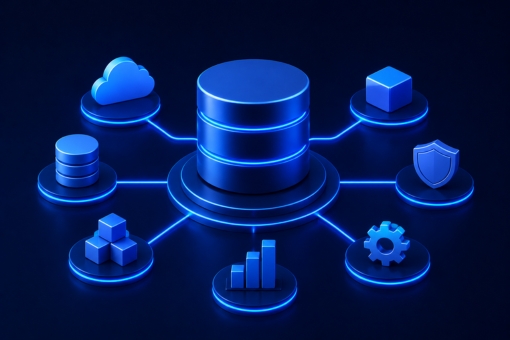
Snowflake architectural layers include storage, computing, and cloud services, where data fetching, processing, and cleaning occur. In the data-driven world, enterprises produce a large amount of data that should be analyzed to make better business decisions. Snowflake, a cloud-based data storage solution, has a unique architecture that makes it one of the best data warehousing solutions for small and large enterprises.

The Snowflake data warehouse is a hybrid model amalgamation of traditional shared-disk and shared-nothing architecture. It uses a central data repository for persisted data, ensuring the information is accessible to the teams from all compute nodes. This ultimate guide will discuss the three Snowflake architectural layers in detail and how each layer functions to store, process, analyze, and clean stored data.

3 Key Snowflake Architectural Layers 

As it is designed “in and for the cloud,” Snowflake is a data platform used both as a data lake as well as a data warehouse. Snowflake data warehousing solution eliminates the need for two applications and reduces the workload on the business team. In addition, organizations can scale up and down depending on their computing needs due to the high scalability of the platform. Below we will understand the Snowflake Storage layers briefly.

  • Storage Layer 

Snowflake internally optimizes and compresses data after organizing it into multiple micro partitions. All the data in the organization is stored in the cloud, simplifying the business team’s data management process. It works as a shared-disk model, ensuring that the data team does not have to deal with data distribution across multiple nodes.

Compute layers connect with the storage layer, and the data is fetched to process the query. The advantage of the Snowflake storage layer is that enterprises pay for the monthly storage used (average) rather than a fixed amount.

  • Compute Layer 

Snowflake uses virtual warehouse — MPP (massively parallel processing) compute clusters that consist of multiple nodes with Memory and CPU — to run queries. The data warehouse solution separates the query processing layer from the disk storage.

In addition, the virtual warehouse has an independent compute cluster. That said, it doesn’t interact with other virtual warehouses. As a virtual warehouse, data experts can start, stop, or scale it anytime without impacting the other running queries.

  • Cloud Service Layer

The cloud service layer is the last yet most essential Snowflake architectural layer among the three. All the critical data-related activities, such as security, metadata management, authentication, query optimization, etc., are conducted in the cloud service layer.

Whenever a user submits a query to Snowflake, it is sent to the query optimizer and compute layer for processing. In addition, metadata required for data filtering or query optimization takes place in the cloud services layer.

All three Snowflake architectural layers scale independently, and users can pay separately for the virtual warehouse and storage.

Inferenz data migration experts understand the ins and outs of Snowflake architectural layers and how to migrate data from traditional databases to modern data cloud systems. We have helped a US-based eCommerce company with data engineering and predictive analytics solutions that involved Snowflake implementation. Read the case study here.

Understanding Snowflake Data Architecture Layers & Process 

According to IDC (International Data Centre), the world’s big data is expected to grow to 175ZB by 2025, at a CAGR of 61%. This massive growth in business data opens opportunities for adopting cloud-based data storage solutions. In the hyper-competitive era, enterprises store data in disparate sources, such as Excel, SQL Server, Oracle, etc.

Analyzing, processing, and cleaning information from different data sources is a challenge for in-house teams. This is where Snowflake helps the teams by being a single data source. Below we have mentioned a few steps that will help enterprises and teams understand the exact process of Snowflake.

  • Data Acquisition 

The initial step is to collect data from various sources such as data lake, streaming sources, data files, data sharing, on-premise databases, and SAS and data applications. Then, all the business data is extracted/fetched and loaded into the Snowflake data warehouse. Finally, ETL tools extract and convert data into readable formats and store them in the Snowflake warehouse for the next step.

  • Data Cleaning & Processing 

After the data is ingested into the Snowflake, different processes like cleaning, integration, enrichment, and modeling occur. Next, all the acquired data is thoroughly analyzed and cleaned by removing the repetitive and unstructured data. Lastly, information is governed, secured, and monitored to ensure business teams access structured and accurate data to make strategic business decisions.

  • Data Consumers 

The cleaned data is then available for the teams for further action. Using business intelligence solutions and data science technologies, they can use the data to accelerate business growth.

ALSO READ: Data Cleansing: What Is It & Why It Matters?

Switch To Snowflake Data Warehouse With Inferenz 

Cloud data platforms such as Snowflake are high-performing and cost-effective data storage solutions for any enterprise that uses big data to make strategic decisions. Snowflake architectural layers and hybrid model make the platform a secure, scalable, and pocket-friendly solution to all data storing needs.

Inferenz, a company with certified data migration experts, can help you learn more about the concept and migrate from on-premise solutions to cloud-based data-storing applications. The experts of Inferenz will help you understand Snowflake architectural layers and transfer data from one repository to another without data breach threats.

Types Of Data Warehouses & 7 Best Tools For Modern Data Stack

In today’s modern ecosystem, enterprises use distinct types of data warehouse tools to handle large data volumes and get quick insights. Modern data tools can store, centralize, and query large data volumes to aid the decision-making process across various departments. The best data warehousing tool helps large enterprises reserve pools of information in their database beyond terabytes.

The lack of tools and the massive size of information stored in the organization often overshadows the value data can provide. A data warehousing solution is a sophisticated and structured approach to storing data and driving value from it. This guide will reveal the various types of data warehouses and the best warehousing tools a company can use to store data effectively.

ALSO READ: Snowflake Migration: Ultimate Guide To Migrate Data To Snowflake

Types Of Data Warehouses to Escalate Business

Data warehousing solutions are the ultimate solution to access critical data from disparate sources to make quick business decisions. It is a central repository where data is stored, processed, transformed, and ingested to help teams make strategic decisions. Leveraging the right data warehousing tool and solution can help businesses scale and unlock the true potential of enterprise data, which is why the data warehousing market will exceed $30 billion by 2025. Here are the three main types of data warehouses for different business sizes.

  • Enterprise Data Warehouse: An enterprise solution is a centralized place where all business information and data are available. Data stored consistently and logically makes it easier for teams to utilize data and scale business. 
  • Operational Data Store – Also known as ODS, it allows refreshing the information stored in the data warehouses in real time. The best use of ODS is to reserve employee records and make them easy to manage for large enterprises. 
  • Data Mart – The third type of data warehouse is data mart which collects data subsets. The primary goal of storing the information in the data mart is to enhance user response and reduce data volumes for analysis.

Top 7 Data Warehouse Tools to Implement in 2023

With different types of data warehouse tools available on the market, it can be challenging for business owners to invest their money in the right modern data stack tool. Learn about the top 7 highly efficient and scalable data warehouse platforms.

  • Snowflake

Snowflake is an enterprise-grade data warehouse solution that helps businesses analyze data from structured and unstructured sources. Snowflake’s high scalability and multi-tenant design accelerate query performance, deliver actionable insights, and share data across their organization.

  • Google BigQuery

Organizations that intend to choose a cost-effective data warehousing solution should choose Google BigQuery. The built-in Machine Learning capabilities help organizations execute queries and get real-time analysis for petabytes of data. This cloud-native solution supports geospatial analytics to help teams analyze location-based data and improve business operations.

  • Amazon Redshift

Amazon Redshift is specially designed for enterprises that store exabytes of data and plays a primary role in establishing the data warehousing industry. Startups and large enterprises prefer AWS Redshift as it prioritizes speed and scalability and has an easy-to-use structure. Furthermore, the data warehousing solution separates computing and storage to help enterprises scale as per their business needs.

  • Microsoft Synapse Analytics

Microsoft Synapse Analytics is an efficient data warehouse tool hosted in the Azure ecosystem. Organizations operating in the Microsoft Azure ecosystem can easily integrate the tool with Microsoft SQL Server. In addition, it is equipped with advanced security features like data masking and row-level security to keep data secure.

  • Teradata

Teradata is a data warehousing solution that collects and analyzes data in the cloud. The super fast parallel querying infrastructure helps data experts to get real-time actionable insights. Organizations can optimize their database performance to employ smart in-memory processing without extra expenses.

  • PostgreSQL

An open-source database management solution suitable for SMEs and large enterprises is PostgreSQL. Like Google BigQuery, it can help data teams with location-based business solutions. However, they should integrate PostgreSQL with the PostGIS extension to drive value from geospatial data.

  • SAP HANA

SAP HANA is a cloud-based solution that supports enterprise-wide data analytics and high-speed real-time data processing. SAP HANA’s simple and centralized interface enables teams to access, integrate, and virtualize data. The data federation feature helps data experts query remote databases without moving data from one location to another.

Inferenz has experienced analysts and data migration experts who assist startups, SMEs, and large enterprises choose and integrate the right data warehousing solution. Read the case studies of Inferenz to learn how our experts help enterprises switch from on-premise solutions to cloud computing tools.

ALSO READ: 5 Best Practices For Snowflake Implementation in 2022

Get Best Data Warehouse Services With Inferenz

Organizations that intend to scale their business should focus on improving data quality and making it available for in-house data experts. However, storing data in disparate resources can make data mining challenging for teams.

The best solution to save time and resources while using the stored data to get valuable insights is switching to the right data warehousing solution. If you want to choose the right type of data warehouse tool or a cloud-based solution for your business, feel free to contact the experts of Inferenz.

On-Premise to Cloud Migration: Step-by-Step Guide on Conducting On-Premise to Cloud Migration

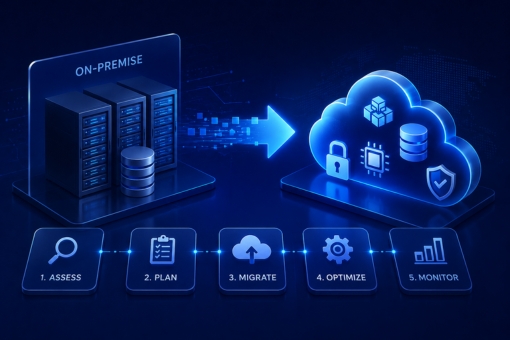
On-premise to cloud migration, in general, is a process of transferring programs, data, and IT processes from traditional data centers to cloud-based solutions. Organizations migrate data to the cloud to reduce IT expenses, save costs, and increase flexibility. Cloud computing is a safe and secure data-storing solution that supports employee needs and helps teams collaborate from anywhere and anytime.

Due to the well-established value of the cloud, many enterprises across different industries have made the leap into the cloud computing realm. Three main migration strategies help move data from premise to cloud, including lift and shift, hybrid migration, and improving and moving, the model. In this ultimate cloud migration guide, enterprises will learn the 6 Rs of cloud migration and the steps in migrating on-premises data and applications to the cloud.

ALSO READ: Snowflake Migration: Ultimate Guide To Migrate Data To Snowflake

Six R’s of On-Premise to Cloud Migration

According to the Cloud Data Market Analysis report released by GlobalData, the cloud computing market is expected to grow from $552.3 billion in 2021 to $1,119.5 billion in 2026 at a growth rate of 15.2%.

The six R’s of migration are the common cloud migration strategies enterprises can choose to transfer data from one database to another.

  • Rehosting

Also referred to as the lift and shift strategy, rehosting involves transferring data and applications to a new hosting environment. It is the most popular and straightforward approach to migrating data to the cloud without changing its architecture or code.

  • Replatforming

Better called lift tinker and shift, re-platforming involves a few cloud optimizations. Enterprises that intend to transfer data without modifying the application’s fundamental architecture prefer re-platforming cloud migration strategy.

  • Refactoring

Although tagged as an expensive and time-consuming process, refactoring future-proofs businesses that want to utilize complex cloud functions, this approach involves rewriting applications to use cloud-native features, including serverless computing and auto-scaling.

  • Repurchasing

Repurchasing involves the replacement of current apps with a new cloud-native platform to avoid development expenditures. Experts recommend following the cloud migration strategy when there is a reduction in applications or services they want to manage in the new environment.

  • Retiring

Sometimes enterprises determine that cloud migration does not suit their business needs. For instance, it could be when an application surpasses its ability to deliver value. Business professionals can also disable outdated programs to minimize unwanted expenses in such a scenario.

  • Revisiting

Enterprises have applications that contain sensitive data or govern internal operations stored in their on-premise database. Moving applications from in-house to cloud-based computing solutions without a robust strategy can be tricky. Revisiting involves considering the cloud migration services in the future when businesses have more risk tolerance, time to plan, and budget.

Understanding the approach can be challenging, especially if the in-house team lacks the knowledge and skills required for cloud migration. Inferenz experts work closely with you to develop a customized plan and make the transition stress-free and smooth. Read our case study to learn more about how our experts help enterprises using the Inferenz framework.

Ultimate Guide for On-Premise to Cloud Migration

No two cloud migration processes are the same; however, following a few steps can help enterprises successfully migrate data and applications from on-premise to the cloud.

  • Planning

Careful planning is the first and most crucial step of successful cloud migration. A blueprint of what, how, and why aspects of migration will help the team transfer the digital assets and the enterprise workload to the new environment. Here are the three main questions that should be accessed to avoid the extra work of migrating.

  • What all assets need to be migrated? 
  • Why does the team intend to migrate apps and data to the cloud? 
  • How complex is the overall migration process?

Having a clear idea and following the strategic approach will help team members execute on-premise to cloud data migration successfully.

  • Reviewing

Once a plan is prepared, the cloud migration experts should review the migration strategy to identify troubleshooting and potential issues. The end team’s goal should be limiting the risk and accelerating the cloud migration process.

  • Optimizing

The third step involves cloud optimization, where the data experts need to optimize resources and costs based on business requirements. Always contact different vendors and understand the total cost of ownership (TCO). Preparing different migration strategies and considering logistics and resourcing requirements is the cornerstone of a successful migration.

  • Secure Migration

Data is one of the most valuable and confidential assets for any sized organization. That said, securing data while migrating it from one system to another should be emphasized. Business experts should deploy a cloud firewall-as-a-service (FWaaS) to minimize exposure and data breach threats while transitioning.

  • Migrate Small

Preparing, reviewing, and optimizing are the main steps to designing a strategic procedure. However, enterprises should migrate small data to ensure nothing is left unaccounted for. Advanced planning and testing at each stage are mission-critical to ensure app and data functionality and to execute the on-premise to cloud migration process. Furthermore, enterprises can mitigate the disruption risk by choosing the best cloud service provider and modern tools.

  • Measure & Monitor

Cloud migration is not a one-and-done process; it requires measuring and monitoring to accelerate innovation and get the most out of the migration. Data migration experts should ensure that team members get access to the data for business operations. Also, understanding how the application behaves and the financials ensure that enterprises are not over-billed for the services they don’t need.

ALSO READ: Data Migration Process: Ultimate Guide To Migrate Data To Cloud

Execute On-Premise to Cloud Migration Process With Experts

On-premise to cloud migration can be daunting, but with guidance and modern tools, businesses can make cloud migration successful. There are six common strategies for migration, and the right approach will depend on business needs and preferences. Following the step-by-step process will help businesses move their data and applications without worrying about data breaches.

If you still feel lost or need expert help for your data migration project, Inferenz can assist you from start to finish. Our advanced tools and solutions will cover everything from assessment to post-migration support to ensure a successful on-premise to cloud migration.

Data Cleansing: What Is It & Why It Matters?

Data Cleansing, or Data Cleaning in general, is a detailed procedure of removing or modifying incomplete, duplicated, corrupted, or inaccurate data within a dataset. A solid data cleansing strategy will ensure the trustworthiness of data stored in the database to gain insights and make profitable business decisions.

The primary role of the data cleansing process is to improve data analysis, boost productivity, and prevent employee and customer frustration. This guide will reveal what data cleaning is and why it is vital for individuals and business owners.

ALSO READ: Data Science in Healthcare: 8 Use Cases No One Will Tell You

What Is Data Cleansing?

Data cleansing involves cleaning outdated and inaccurate data to streamline business operations and reduce resource wastage. Many small and large enterprises face the issue of data duplication that leads to poor decision-making processes. However, businesses should understand that data cleaning focuses on updating, correcting, modifying, and consolidating data rather than only cleaning it.

Frequently performing data cleansing will help businesses utilize regular and structured data to improve in-house business operations, forecast market trends based on data, and generate a continuous revenue stream. Below is how data cleaning can help both individuals and businesses improve efficiency.

  • Data Cleaning For Businesses

Cleaning data is crucial for business, especially when the competition is fierce in the digital world. Enterprise databases hold customer and employee information that can be effectively utilized to get the most from marketing strategies.

Accurate customer information allows organizations to improve their strategies based on customer behavior and market trends, leading to improved sales. With a data cleansing process, employees don’t waste time wading through countless outdated documents and make decisions quickly.

  • Data Cleaning For Individuals

Aside from enterprises, data cleansing allows individuals to keep their paperwork and important documents handy. Having clean, accurate, and organized data will help individuals find the most recent files and critical documents without following a time-consuming manual process.

Inferenz has a team of certified data analysts who help businesses eliminate the time-consuming data-cleaning process. Experts use advanced tools and technologies to declutter the database so that the internal team pulls the correct information every time. Read our case studies here.

Importance Of Data Cleansing

B2B data decays at a rate of 35% every year, which means around ⅓ of the company’s data becomes irreverent, corrupt, and unusable during a year. The only way to access high-quality data at the right time is by performing a data cleansing strategy at specific intervals. Below is the list of benefits that data cleaning offers to business owners.

  • Keeps Data Organized

In the digital world, businesses collect information from clients, product users, customers, etc., to improve their services and match customer demands. Cleaning data regularly and removing outdated information from the database will help organizations make intelligent decisions based on data analysis.

  • Avoid Costly Errors

Data cleaning is the ultimate solution to eliminate incorrect data or troubleshooting that can lead to costly errors. With accurate information, internal teams can process data faster, avoid significant delays, and minimize errors due to poor data quality. In addition, it will help employees save time and make the best use of their work hours.

  • Enhances Productivity

Cluttered and outdated databases can harm the productivity of internal teams. Regularly cleaning old data and updating the database with new information help teams find the information fast and enhance productivity. Furthermore, maintaining high data quality in the database will help companies deliver superior customer service and retain customers.

  • Improve Business Decisions

Using data efficiently can help businesses find innovative ways to target customers, improve in-house decisions, and gain a competitive advantage over the top competitors. Clean data ensures that the reports are free from irrelevant, oversaturated, or cluttered information. Thus, it allows teams to make better and more informed business decisions.

  • Target Right Market

The sheer volume of coarse data can cause businesses to target the wrong market. This can not only harm the business revenue but can also affect the market reputation. Data cleaning can help clean up the old data and update it with new information to target the right market segment and generate results.

  • Efficient Email Campaigns

Sending emails to loyal customers is the most crucial aspect of improving the ROI of email campaigns. However, using inefficient and outdated data for email campaigns can lead to reduced open rates and resource wastage.

ALSO READ: Top 5 Game-Changing AI Applications In The Sports Industry

Start Data Cleansing Process Today

Data cleansing is a vital aspect of the data analytics process that maintains the overall data quality. Using poor-quality data to create business strategies and make decisions can affect a company’s market reputation. Any data analysis based on inaccurate and unorganized information can make it challenging for teams to make decisions and generate better revenue.

That said, every small and large enterprise should work on improving its data quality with the help of a robust data cleansing strategy. If you are a business owner who intends to declutter the database and organize information with a comprehensive data-cleaning process, get in touch with the experts of Inferenz.

Top 5 Game-Changing AI Applications In The Sports Industry

The adoption of AI in the FIFA World Cup 2022 will allow video match officials to get real-time offside alerts and improve the viewer experience. With modern data tools and algorithms, Artificial Intelligence has completely transformed how we interact with the world and brands market their products. In the sports industry, technology is becoming more prevalent as it helps teams with post-game analysis, improves fan experience, and enhances player performance.

Although AI technology is in its nascent stage, the sports industry is witnessing endless use cases and benefits of emerging tech. FIFA World Cup 2022 will use AI to detect social media abuse among the players, making it an AI-powered world cup. This guide will reveal the role of emerging techs, the top 5 AI trends for the sports industry, and the innovative ways to use them.

ALSO READ: Data Science in Healthcare: 8 Use Cases No One Will Tell You

Role Of Artificial Intelligence In the Sports Industry

The advent of new technologies, such as Artificial Intelligence, Augmented Reality, Machine Learning, etc., has changed the face of every industry, including sports. Brands, viewers, and players use Artificial Intelligence tools in multiple ways to improve strategizing, advertising, broadcasting, and player training.

One of the biggest brands, Adidas, has jumped onto the bandwagon for FIFA World Cup 2022 by creating NFT characters for advertisement. Likewise, other brands are incorporating different ways to leverage the new technology and gain an edge against the competition. The new wave of AI in the sports industry will transform the way players used to watch the FIFA World Cup, and brands use it to promote their services.

5 AI Trends For The Sports Industry

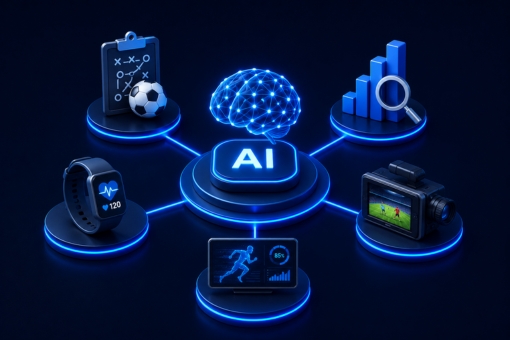
The benefits of AI in the sports industry are endless, and that is why the AI segment is expected to reach $19.2 billion by 2030. Many biggest names in the sports industry are leveraging the power of AI, including Major League Baseball (MLB), the National Football League (NFL), and the National Basketball Association (NBA). FIFA World Cup 2022 is adopting Artificial Intelligence to enhance viewers’ experience and help players improve their training and play. Below is the list of top AI applications or use cases in the sports industry.

  • Improve Viewer Experience

Sports teams are incorporating Artificial Intelligence to enhance the fan experience and make them feel valued with personalized service. A few use cases of AI to improve viewer experience include creating virtual reality experiences and matching fans with their stadium seats. AI tools help offer personalized content to viewers and help them interact with their favorite players via chatbot. With advanced tech, it is possible to monitor social media to see what fans say about FIFA World Cup 2022 and the players to avoid hatred and abusive content.

  • Predictive Modeling

Another major AI trend in FIFA World Cup 2022 is predictive modeling, which helps teams predict future trends. The information gathered from a player’s past performance can be utilized to predict future trends and identify which players are likely to get injured. AI helps predict breakout seasons, injuries, and underperformance to help sports teams make strategic decisions.

  • Customized Training Programs 

The trend of customized training programs is growing by leaps and bounds, especially in the FIFA World Cup 2022. Athletes use AI tools to create personalized training programs that meet their needs and help them monitor their progress to improve performance. With the information received from AI tools, athletes can revamp their gaming strategy and overall game.

  • Prevent Injuries

The team has to incur financial damage if a player gets injured during a match. AI promises to prevent monetary loss due to injuries by helping teams monitor players’ health beforehand. The AI tool tracks the various health parameters of the individual and identifies the players at risk of injury.

  • Better Sports Equipment

Big companies are using AI to manufacture better, more accurate, and more powerful sports equipment. Adidas, for instance, recently developed an AI-powered soccer ball with an adjustable flight path to improve accuracy. The primary role of using Artificial Intelligence during the manufacturing of sports products is to improve their performance and accuracy, leading to improved gaming.

Brands can integrate the latest technologies to market their products and services on various social media platforms, including Twitter, Snapchat, Instagram, etc., during the FIFA World Cup 2022 and remain ahead of the competition.

Enter The World Of AI With Inferenz Experts

Artificial Intelligence is revolutionizing the sports industry by improving player safety and gaming strategy with predictive modeling. Aside from players, marketers are bringing Web3 to FIFA World Cup 2022 to improve their marketing strategy, engage more customers, and drive sales.

As you see, the future of the sports industry goes hand-in-hand with emerging technologies like Artificial Intelligence. If you are an enterprise owner looking to improve your strategies in FIFA World Cup 2022 with AI tools, get in touch with the skilled team of Inferenz to build AI applications.

Data Science in Healthcare: 8 Use Cases No One Will Tell You

New technologies like Machine Learning, Artificial Intelligence, Deep Learning, etc., are revolutionizing every industry, and data science in healthcare is a promising tech advancement helping doctors. With the help of new tech, health organizations can tap into precious insights, get valuable information, and optimize their in-house operations to improve patient care and reduce emergencies.

Data science solutions in the medical sector are essential in helping healthcare professionals harness data analytics to provide better diagnoses to patients. This article reveals the primary applications of data science in the healthcare sector that are transforming the medical industry.

ALSO READ: Alternatives To Twitter: 5 Social Media Platforms That Could Replace Twitter

Why Use Data Science In Healthcare?

Every human body generates around 2 terabytes of data per day with information related to daily activities. The data generated mainly includes various aspects such as brain activity, stress and sugar level, heart rate, and more. Data science is one of the latest technologies that help health experts handle large data amounts and monitor patients’ health using the information.

Integrating modern data science tools in the medical industry allows doctors to predict health symptoms at an early stage. As a result, they can offer immediate care to reduce the chances of negative consequences on patients’ health. Furthermore, the devices built with the data science algorithms store necessary information about patients’ health and help doctors understand their health conditions.

8 Data Science Healthcare Applications

Data science helps streamline healthcare facilities and processes while improving the accuracy of diagnosis. A recent report by Vantage Market Research indicates that the adoption of big data analytics in the healthcare market will reach USD 79.23 billion by 2028. The reason behind the growth of data science in healthcare is the vital use cases and applications of modern technology, like:

  • Medical Imaging 

One of the most vital use cases of data science in healthcare is medical imaging which helps professionals identify distinct medical conditions in patients. The latest techniques, like X-rays, mammography, CT scans, MRI scans, etc., are advanced tools assisting doctors in visualizing the inner human body parts and finding irregularities and deformities in the scanned images.

  • Genomics and Genetics 

Individuals have different genetic makeup, and data science is helping expert doctors to analyze gene sequences, detect diseases, and tailor-made patient care. The latest deep learning technologies in data science allows experts to integrate multiple data strands with genetic information. Using data science in healthcare helps caregivers identify the correlation between disease and generic parameters to provide better care at a lower rate.

  • Drug Discovery 

The primary role of healthcare professionals in the medical sector is to create effective drugs for patients and help them live healthier lives. Data science, deep learning, and Machine Learning algorithms are shaping the drug discovery process. The extensive insights obtained from patient metadata and mutation profiles help researchers develop models, design drugs, and boost the success rate of the drug.

  • Predictive Analytics 

The healthcare industry relies heavily on the predictive analytics model that uses historical data to find health patterns and forecast accurate medicine predictions. With predictive analytics models, healthcare professionals find correlations between habits and diseases to predict diagnosis with a high success rate.

  • Monitoring Patients Health 

IoT (Internet of Things) devices powered by data science are gaining immense popularity in improving healthcare facilities. The analytical tools that track temperature, blood pressure, heartbeat, and other medical parameters help doctors to take necessary steps and help patients avoid health risks.

  • Tracking & Preventing Diseases

Data science algorithms and predictive analytics tools detect chronic diseases early and provide medications before the ailment becomes fatal. Using data science algorithms enables patients to avoid emergencies and reduce the high cost of curing diseases.

  • Virtual Assistance 

The predictive modeling and virtual assistance applications are designed to help patients get insights about their medical condition. Patients can use this platform by entering the symptoms and getting complete information about the possible diseases. Two of the best examples of virtual assistance platforms in healthcare are Woebot (a chatbot developed by Stanford University for patients dealing with depression) and Ada (a Berlin startup that predicts diseases).

  • Optimize Clinical Performance

Data science in healthcare not only helps in improved patient care but also assists professionals in optimizing clinical performance. Data obtained from disparate sources can effectively be used to optimize clinical staff scheduling, manage supplies, reduce patient wait times, and build efficient healthcare programs.

Inferenz has a certified team of data scientists and analysts who help healthcare businesses integrate the latest tools and technologies. The team worked with a pharmaceutical company from Germany to help doctors implement advanced tools to predict diseases and save patients from emergency care.

Get Ready To Integrate Data Science in Healthcare

The modern world is driven by data, and the healthcare industry can no longer afford to neglect to implement the latest tools like data science. With the aid of data science in healthcare, experts can use scattered information to get a holistic view of a patient’s fitness and improve medical treatment plans.

In addition, the data science tools streamline the in-house operations and reduce caregiving costs that benefit patients and organizations alike. If you are a healthcare organization intending to use data science in healthcare, Inferenz experts can help you implement modern tools based on your specific needs.

Alternatives To Twitter: 5 Social Media Platforms That Could Replace Twitter

With #RIPTwitter trending, people are looking for alternatives to Twitter. “TWITTER IS THE WORST! But also the best,” — says Elon Musk’s recent tweet, giving people a reason to talk. However, people agree more with the former statement than the latter. Soon after he became the new CEO of Twitter, #TwitterMigration became a hot trend. This came after the announcement of mass layoffs news by Musk, where he asked Twitter employees to resign for no definite reason.

Now the term trending on social media platforms is #RIPTwitter, which puts the future of the social media app a little dicey. The hashtag became trending after Twitter employees offered their resignations to Musk before time instead of allegedly signing the ultimatum and agreeing to the new working rules. Witnessing the plans of Elon Musk for the platform, many people are flocking to the alternatives to Twitter. This article will reveal the top 5 social media platforms capable of replacing Twitter and other trending news about the social media platform.

ALSO READ: Benefits Of Big Data Analytics In The Healthcare Industry

5 Alternatives To Twitter In 2023

Elon Musk’s decision to purchase Twitter for $44 billion and the changes made to the social media application have frustrated some users. As a result, people are looking to switch from Twitter to its alternatives. Below is the list of top social media platforms with features and functionalities that could replace Twitter in 2023.

  • Mastodon

Mastodon, an open-source software application, is one of the most Twitter-like alternatives available on the market. The popularity of the Twitter alternative was proved by the open-source group’s CEO Eugen Rochko’s tweet declaring that Mastodon got over 1 million users since 27 October, when Elon Musk became the new CEO of Twitter. WIRED also said that millions of people are fleeting to Mastodon after Elon took over Twitter. It has two useful tools — debirdify and Fedifinder — that allow users to search and find all the people they’ve been following on Twitter.

  • Tumblr

Tumblr is one of the oldest social media platforms for people searching for Twitter alternatives. While Twitter has a character limit, Tumblr allows users to write and share whatever they want. It is a comprehensive social networking service that is becoming popular among influencers due to its similar functionality to Twitter. So, it wouldn’t be surprising if Tumblr is the next best alternative to Elon Musk’s Twitter 2.0.

  • Gab

Gab is the perfect combination of Twitter and Facebook to put people and free speech first. With the #RIPTwitter and #TwitterMigration trending, many flocks consider Gab as an alt-right alternative to Twitter. Gab is a fully-decentralized social media platform that allows users to publish posts, join groups, live stream, buy products, and initiate private chats — a lot of the same functions as Twitter.

  • CoHost

CoHost is another popular alternative to Twitter people are talking about. There are numerous charms of the platform over Elon Musk’s Twitter, such as no character limit and more creativity. Users can even add CSS notes to their posts in addition to fully functional games. However, CoHost is not as popular as the other alternatives to Twitter in the list.

  • GETTR

GETTR, launched by Jason Miller (Donald Trump’s former senior advisor), is a new social media platform for conservative people who are irked by Elon Musk’s changes to the app. Many users praise the app with the names such as back to free speech, escape from digital tyranny, and more.

New Wave Of Twitter’s Mass Layoff News 

According to Twitter’s mass layoffs news, Musk fired around 50% of the workforce. After firing half of the employees, Elon Musk has recently laid off 4,400 contractual Twitter workers. Platformer’s founder, Casey Newton, reportedly said contractors aren’t notified about the layoffs. He added workers on contract are allegedly losing access to email and Slack — indicating the new wave of layoffs.

Elon Musk asked the workers to commit to a hardcore culture or leave their three months of severance pay. In response to this, the employees decided to resign from their positions. Musk recently replied to a tweet, “I’m not super worried regarding the mass resignations, as the best employees are staying.” However, the effect of mass resignation can be seen as Twitter temporarily closed all its offices and suspended badge access.

Elon Musk, who heads SpaceX and Tesla, is focused on building Twitter 2.0 and making it successful as soon as possible — following a mass layoff strategy. He said he would grant the blue-tick verification label from November 29 to those willing to buy premium services and pay USD 8 a month.

Future Of Elon Musk’s Twitter 2.0

Elon Musk taking over Twitter, firing employees, and starting the new wave of mass layoffs is the most trending topic. The company’s office has been abruptly shut down until Monday, November 21, 2022, indicating some more news from Twitter’s headquarters. Stay tuned to know what happens next.

If you want to stay updated with the latest news on Blockchain, Metaverse, Artificial Intelligence, Predictive Analysis, Data Migration, etc., subscribe to the Inferenz newsletter!

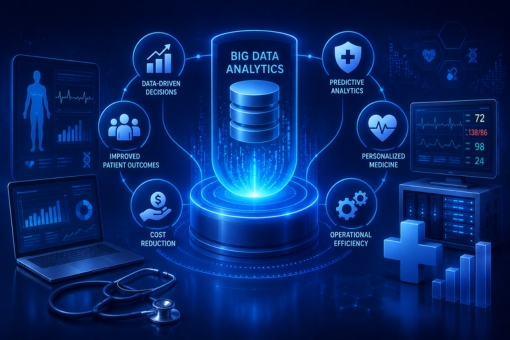
Benefits Of Big Data Analytics In The Healthcare Industry

Summary

Big data analytics is fundamentally reshaping how healthcare organizations deliver patient care, manage operations, and control costs. From predictive diagnostics to supply chain optimization, data-driven decision-making is now a competitive necessity rather than an optional upgrade. The global healthcare analytics market is projected to surpass $84 billion by 2027. This article examines the measurable benefits, leading use cases, inherent limitations, and strategic considerations for healthcare leaders evaluating or expanding analytics adoption.

Healthcare organizations sit on one of the richest data reserves of any industry. Yet for most, that data remains fragmented across legacy systems, clinical workflows, and administrative records, generating noise instead of insight. The organizations closing that gap are gaining demonstrable advantages: faster diagnoses, reduced readmissions, and leaner supply chains. Those that are not are increasingly visible in outcome benchmarks.

What Is Big Data Analytics in Healthcare?

Big data analytics in healthcare refers to the process of collecting, processing, and interpreting large volumes of structured and unstructured clinical, operational, and financial data to support evidence-based decisions. Sources include electronic health records (EHRs), medical imaging, genomic sequences, IoT-connected devices, insurance claims, and patient-generated data from wearables.

The discipline spans four analytical modes: descriptive (what happened), diagnostic (why it happened), predictive (what is likely to happen), and prescriptive (what action should be taken). In practice, leading healthcare systems use all four in concert.

  • $84B+ Global healthcare analytics market by 2027
  • 30% Reduction in readmission rates with predictive tools (McKinsey)
  • 2.5 EB Daily healthcare data generated global
  • ~40% Of avoidable costs tied to late-stage disease detection

Core Benefits of Big Data Analytics in Healthcare

1. Improved Patient Outcomes Through Predictive Diagnostics

Predictive analytics models trained on longitudinal patient records can identify risk markers for sepsis, cardiac events, and chronic disease progression significantly earlier than traditional clinical assessments. Mayo Clinic and Mass General Brigham have both published evidence showing machine learning-assisted early warning systems cut ICU mortality rates by 10 to 20 percent in controlled deployments.

The practical implication is clear: earlier identification of high-risk patients allows clinicians to intervene before conditions deteriorate into high-cost emergency episodes.

2. Operational Cost Reduction

Administrative waste accounts for an estimated 25 to 30 percent of total healthcare expenditure in the US alone. Analytics platforms that optimize staff scheduling, patient throughput modeling, and claims processing workflows have demonstrated consistent cost reduction in the 12 to 18 percent range for mid-size hospital systems.

The lever here is not headcount reduction. It is eliminating unplanned overtime, discharge delays, and avoidable inventory stockouts through continuous data monitoring rather than reactive management.

3. Reduction of Medical Errors and Adverse Events

A 2024 JAMA study found that AI-assisted prescription review flagged clinically significant drug interactions in 7 percent of discharge orders that had passed standard pharmacist checks. Billing analytics tools have similarly reduced claim rejection rates in large health systems by detecting coding anomalies before submission.

These are not marginal gains. Medication errors alone contribute to over 250,000 preventable deaths annually in the US according to Johns Hopkins research. Data tools that reduce error rates even incrementally carry significant patient safety and liability implications.

4. Precision Resource Allocation and Staffing

Workforce shortages remain acute across nursing and specialist disciplines globally. Analytics platforms that integrate historical admission data, seasonal disease patterns, and local demographic trends enable hospitals to forecast staffing requirements 30 to 60 days in advance with measurable accuracy improvements over manual planning.

This reduces agency staff reliance, which typically costs 30 to 50 percent more per hour than employed staff, while maintaining care quality benchmarks.

5. Supply Chain Visibility and Waste Reduction

Medical supply chains became a critical vulnerability during the COVID-19 pandemic. Analytics tools that provide real-time inventory tracking, expiration monitoring, and demand forecasting have since become priority investments for health systems seeking supply chain resilience. Case studies from the NHS and Kaiser Permanente both document inventory waste reductions exceeding 20 percent following analytics integration.

6. Population Health and Disease Prevention

Aggregated and de-identified patient data, analyzed at scale, allows public health systems and large integrated care organizations to identify disease clusters, at-risk demographic cohorts, and intervention gaps before conditions reach epidemic thresholds. During recent influenza and COVID variant waves, health systems with mature population health analytics activated targeted outreach campaigns weeks before peers using conventional surveillance.

Key Applications: Where Analytics Is Creating the Most Value

  • Electronic Health Records (EHRs): Centralized patient histories enable cross-care-team coordination, reduce duplicate testing, and feed predictive model training pipelines.
  • Remote Patient Monitoring: IoT-connected devices and wearables transmit continuous biometric data, enabling real-time alerts for deviations in cardiac, respiratory, or metabolic markers.
  • Clinical Trial Optimization: Machine learning accelerates patient cohort matching for trials, cutting enrollment timelines by up to 30 percent in pharma applications.
  • Fraud Detection and Compliance: Anomaly detection across billing and claims data identifies fraudulent patterns that rule-based systems routinely miss, protecting both revenue and regulatory standing.
  • Genomics and Precision Medicine: Multi-omics data analysis is enabling treatment protocols tailored to individual patient genetic profiles, particularly in oncology and rare disease management.
  • Mental Health Analytics: Natural language processing applied to patient communications and clinical notes is increasingly used to flag deterioration in behavioral health conditions between appointments.

Benefits vs. Implementation Challenges: An Honest Assessment

  • Strengths: Earlier diagnosis, cost reduction, error prevention, resource optimization, population health insight.
  • Limitations: Data silos, interoperability gaps, algorithmic bias risks, talent scarcity, regulatory complexity (HIPAA, GDPR).
  • High ROI Areas: Predictive readmission, supply chain optimization, fraud detection, staffing automation.
  • Watch Points: Model drift over time, patient consent architecture, over-reliance on correlational models without clinical validation.

Implementation maturity matters significantly. Organizations in the early stages of analytics adoption often underestimate the data governance work required before models can generate reliable output. A clean, governed data layer is not optional infrastructure: it is the foundation on which every downstream analytics investment depends.

The Regulatory and Ethical Dimension

Healthcare analytics operates in a uniquely constrained regulatory environment. In the US, the Health Insurance Portability and Accountability Act (HIPAA) sets strict boundaries around patient data use and sharing. In Europe, GDPR and the EU AI Act (which took effect in 2024) impose additional requirements, including transparency obligations for high-risk AI systems used in clinical settings.

The ethical risks are equally real. AI models trained on historically biased datasets have demonstrated differential performance across racial and socioeconomic patient groups in peer-reviewed studies. Organizations deploying clinical AI need model validation frameworks that account for sub-population performance, not just aggregate accuracy metrics.

What Differentiates Leading Healthcare Analytics Organizations in 2026

  • Federated learning architectures that enable cross-institution model training without sharing raw patient data, resolving a major compliance bottleneck.
  • Real-time, event-driven data pipelines replacing batch processing, enabling same-encounter clinical decision support rather than retrospective review.
  • Clinician-in-the-loop model design, where AI augments rather than replaces physician judgment, improving adoption rates and clinical trust.
  • Synthetic data generation for model training, reducing reliance on sensitive patient records in the development environment.
  • Integration of social determinants of health (SDOH) data to move beyond purely clinical predictors toward whole-person risk stratification.

Conclusion

The case for big data analytics in healthcare is no longer speculative. The measurable outcomes, from reduced readmissions and medication errors to optimized supply chains and earlier disease detection, are documented across health systems at scale. The strategic question for healthcare leaders is not whether to invest, but where to invest first and with what governance structures in place.

Organizations that will lead in this space are not those that deploy the most tools. They are those that treat data quality, clinical validation, and responsible AI governance with the same rigor they apply to patient safety protocols. In that context, analytics is not a technology initiative. It is a clinical and operational strategy.

Frequently Asked Questions

What is big data analytics in healthcare and why does it matter?

Big data analytics in healthcare is the application of advanced data processing and statistical methods to large, complex datasets generated across clinical, operational, and patient touchpoints. It matters because it enables healthcare organizations to shift from reactive, experience-based decisions to proactive, evidence-based ones, improving both patient outcomes and financial performance.


How does predictive analytics reduce healthcare costs?

Predictive analytics reduces costs primarily by identifying high-risk patients before costly acute episodes occur, optimizing staff and resource scheduling to eliminate waste, and flagging billing anomalies that result in claim rejections or fraud. Studies consistently show 10 to 30 percent cost reductions in targeted operational areas after analytics integration.


What are the biggest challenges in implementing healthcare data analytics?

The primary barriers are data fragmentation across incompatible systems, regulatory compliance requirements (HIPAA, GDPR, EU AI Act), algorithmic bias in models trained on non-representative datasets, a shortage of healthcare-specialized data science talent, and change management resistance among clinical staff. Governance and interoperability challenges consistently outweigh the technical ones in practice.


Is patient data safe when used in healthcare analytics?

When properly governed, yes. Responsible analytics deployments use de-identification, encryption, role-based access controls, and consent management frameworks. Federated learning approaches are increasingly used to train models without exposing raw patient records. Regulatory frameworks like HIPAA and GDPR provide enforceable standards, though compliance quality varies significantly across organizations.


How is artificial intelligence different from traditional healthcare analytics?

Traditional analytics surfaces patterns from historical data using structured queries and statistical methods. AI, particularly machine learning and deep learning, can identify non-linear relationships across high-dimensional datasets, generate predictions on unseen cases, and improve autonomously with additional data. In healthcare, AI adds the greatest value in imaging analysis, early warning systems, and natural language processing of clinical notes.


What healthcare roles benefit most from data analytics tools?

Clinical leaders gain decision support and patient risk stratification. Operations teams gain staffing forecasts and capacity planning tools. Finance and compliance teams benefit from billing accuracy and fraud detection. Supply chain managers gain inventory visibility and demand forecasting. At the executive level, analytics provides system-wide performance visibility that was previously only available with significant reporting lag.

Web3 Tutorials: Resources to Master Web3 Development

Are you looking for a way to master Web3 in 2023? Are you someone who went on different social media channels to see the Web3 tutorials and found little to no information? Do not worry, we at Inferenz have created a resource guide for you that will help you master Web3 development in 2023.

The Web 3.0 industry is growing exponentially, and many users are searching for Web3 tutorials for beginners that help them gain insights into the new gen of technology. With intuitive decentralized apps becoming an essential aspect of the digital business world, students, web developers, and business professionals are looking for resources to learn Web3 technology. 

As business operations and practices shift from traditional methods to online, users are inclined towards learning new technologies like Artificial Intelligence, Machine Learning, the Internet of Things, Blockchain, Metaverse, and NFTs. This article aims to help tech enthusiasts, web developers, and business professionals learn Web3 development in 10 steps & examples.

ALSO READ: Predictive Analysis Tutorial: Ultimate Guide To Implement Predictive Model

Learn Web3 Development in 10 Steps & Examples

Web 3.0 technology is the future of the Internet that aims to shift the power from big tech companies to individual users, boosting security in the online world. According to Vantage’s study about the Web3 market, the Global Web 3 Market revenue is expected to cross USD 23.3 Billion by 2028, creating job opportunities for aspiring developers.

Below is the step-by-step guided python tutorial for all users who plan to establish a career in Web3 development or business experts who want to leverage the benefits of the third generation of the Internet.

Step 1 – Subscribe to Web3 Developer Newsletters

Newsletters on different social media platforms are an underrated source of knowledge that can help users stay up to date with the significant trends in the Web3 development field. Learning Web3 development from experts allows learners to get deep insights and understand the ongoing and upcoming trends in the industry. Some of the best newsletters one can follow are Inferenz (LinkedIn weekly newsletter), The Daily Ape (Telegram newsletter), EthHub Weekly (weekly newsletter on Ethereum), and The Block Crypto (The Block daily newsletter).

Step 2 – Subscribe to YouTube Channels of Web3 Devs

Learners can find Web3 tutorials for beginners on YouTube, where expert Web3 developers share their knowledge and trends. Experts explain the basic to advanced knowledge of Web3, coding, etc., visually to help learners understand better. Some of the best YouTube channels for Web3 enthusiasts include Web3 Foundation, Bankless, Smart Contract Programmer, etc., which covers a ton of helpful content, low-intensity to advanced video tutorials, and much more.

Step 3 – Follow Web3 Developers on Twitter

Twitter is the best platform where crypto influencers and Web3 developers share insights about their work. From understanding the full stack Web3 apps to learning code for free, Twitter is the right platform. A few popular crypto Twitter influencers include @VitalikButerin (co-founder of Ethereum), @TimBeiko (core Ethereum developer), and @aeyakovenko (co-founder of Solana).

Step 4 – Join DAO

DAO (or Decentralized Autonomous Organization) is an open organization owned and operated by the team members and runs using decentralized governance. Joining these communities enables the learners to discover new information, collaborate on projects, and prepare a blockchain portfolio to showcase their skills. Learners can join any Web3 developer community, such as LearnWeb3DAO, Developer DAO, etc., to learn Web3 technology. These developer-centric DAOs provide educational materials to learners and professionals, such as a Web3 tutorial for beginners to learn code for free.

Step 5 – Join the Communal Coding Event 

Communal coding events like Web3 Hackathon are online spaces where beginners and advanced coders collaborate to enhance their knowledge about the Web3 ecosystem. Some of the best communities one can join include Polygon BUIDLit, ETHOnline, BUIDLathon, and Solana Summer Camp.

Step 6 – Join Web3 Developer Course 

Aspiring Web3 devs can gain deep insights into the new technology by attending Web3 tutorials for beginners and advanced learners through free and paid courses. Road to Web3, Sol Dev, CryptoZombies, and Web3 University courses and boot camps teach learners how to create full-stack Web3 apps and build a portfolio to show skills.

Step 7 – Sign Up For the Web3 Discord Server 

Like DAO, Discord allows users to connect with community people and understand the Web3 ecosystem. The communities in the chat app have thousands of people where members can ask questions, connect with like-minded individuals, and find collaborations. Two popular communities that individuals can join include CryptoDevHub and BuildSpace.

Step 8 – Learn Coding From Web3 & Python Tutorial

Web3 tutorials for beginners are the best approach for learners who do not know about the fundamentals of Web3 and how blockchain works. The Web3 library helps users to learn how to create Web3 apps with solidity, ERC-20 token, deploy smart contracts, etc., to enhance their knowledge.

Step 9 – Follow Repositories on GitHub

GitHub is a great place to find a Web3 tutorial. GitHub is a helpful learning resource where all the open-source Web3 development takes place and is considered the largest code repository in the world. Aspiring Web3 devs can follow the famous GitHub repositories to learn blockchain development from the best developers. A few examples of best GitHub Repos include foundry/foundry-rs, Rainbowkit/Rainbow-me, and OpenZeppelin/openzeppelin-contracts.

Step 10 – Learn About The Web3 Dev Tools

Learners who intend to be skilled Web3 developers should have basic knowledge of web development tools. The three most popular tools include Remix, Alchemy, and Hardhat.

Web 3.0 Opportunities in The Future

The evolution of the Internet and the fast technological development in the digital world will cause an employment surge for Web3 developers in the market. Following the roadmap will help developers learn the skills required for blockchain, NFTs, Metaverse, or DeFi development.

With the advent of the latest tools and technologies, enterprises can benefit by hiring Web3 developers to accelerate business growth and attract users. Inferenz has a team of certified Web3 developers to help enterprises leverage modern data tools, and learners start their careers in the field with comprehensive Web3 tutorials for beginners.

Predictive Analysis Tutorial: Ultimate Guide To Implement Predictive Model

A predictive analysis tutorial helps users to understand the step-by-step process of implementing the advanced forecasting tool in their business. The data-driven world demands enterprises to implement new technologies, and predictive analytics is the enterprise grade that enables companies to forecast future trends and challenges by studying historical data.

When companies understand future trends with business intelligence tools, they can formulate the right strategies to predict customer churn, prevent fraud, improve marketing campaigns, and drive sales. However, to leverage the true potential of the tool, one must systematically execute the implementation process. This predictive analysis tutorial will help users understand the simple steps to integrate predictive analytics tools into their business.

ALSO READ: Snowflake Migration: Ultimate Guide To Migrate Data To Snowflake

Why Predictive Analytics?

Businesses are constantly looking for ways to use their data to make strategic decisions and accelerate business growth. Predictive analytics, a part of Machine Learning, enables enterprises to use their existing business data and build a model. The ultimate goal of predictive modeling is to analyze historical data, identify data patterns, and determine future events. Following are some of how predictive analysis helps businesses and why users should focus on a predictive analysis tutorial.

  • Minimize time and expenses by building effective strategies and predicting outcomes 
  • Analyze and mitigate financial risks to accelerate business growth 
  • Implement advanced tools and technologies that help companies hedge against the competition 
  • Gain better consumer insights by analyzing the data and predicting their future demands 
  • Plan inventory, optimize price and promotional campaigns, and personalize customer service to drive sales

Predictive Analysis Tutorial: Steps To Follow

Companies are focusing more on customer retention than attracting a new customer, as it costs five times more to gain a new consumer than to retain one. Predictive analytics tools help companies personalize the service and deliver the services to existing clients based on customer behavior.

However, users should follow the five key steps to add predictive analytics tools to their business. In addition, statisticians, data scientists, and engineers should collaborate to make informed decisions, select better datasets, and create models for easy deployment. Below are the detailed steps that the predictive analytics team should follow to make the implementation successful.

  • Define Business Requirements 

The initial step for predictive analytics implementation is defining the business problems and framing solutions. For instance, businesses need to analyze their problems, expected outcomes, and the team who will collaborate on the project before they begin the initial phase of the process.

  • Data Collection 

In the second step, data analysts identify the business data relevant to the business requirement. While collecting the data for predictive analysis, analysts should consider the data’s suitability, relevancy, quality, and authority. All structured, unstructured, or semi-structured data should be stored in a data lake to understand the analyzing needs and employ the right tools.

  • Data Analyzing 

Experts suggest analyzing the data before transferring it to the predictive analytics model will help teams identify the problems and take measures to overcome the challenges. Cleaning and structuring data before modeling and deployment is the essential step of a predictive analysis tutorial to ensure businesses get valuable insights from predictive modeling.

  • Data Modeling

Once data scientists get access to the cleansed data and transfer it into the predictive analytics model, the next step is data modeling. Business analysts and data scientists can use open-source programming languages like Python and R to calibrate models in the business infrastructure.

  • Deploy The Model

After the data modeling phase, data engineers can retrieve, clean, and transform the raw data into the predictive analytics model for deployment. The insights obtained from the data should be leveraged by experts to make business decisions and generate profits.

  • Monitor The Results 

Data is not static; a predictive analytics model that works well today might not deliver the best results tomorrow. That said, data experts need to monitor the results periodically and safeguard their business from malicious activity that can impact the overall model’s performance.

The predictive analysis tutorial involves the combined efforts of data scientists, business analytics, and data engineers. Enterprises that lack in-house experts should consider outsourcing the predictive analytics implementation to a well-equipped and experienced team.

Inferenz has a team of certified data engineers, scientists, and analysts who help enterprises develop and deploy predictive analytics tools with the right tools. The team of Inferenz has recently worked with a US-based eCommerce company to build predictive analytics solutions and implement Self Service BI tool to improve data availability and increase conversions. Check out the comprehensive case study here.

ALSO READ: Data Migration Process: Ultimate Guide To Migrate Data To Cloud

Implement The Predictive Analytics Tools With Experts 

Predictive analysis tools transform how businesses sell their products to customers or manage their in-house operations. However, the learning curve can be steep, and making one mistake can cost a fortune to the company’s revenue and overall growth.

Enterprises that lack the skills or expertise required to make the predictive analytics implementation project successful should hire the best data analyst team to mitigate risks. Inferenz has a team of skilled data experts who will guide you with a detailed predictive analysis tutorial from start to finish, leading to a successful implementation and the best results.