




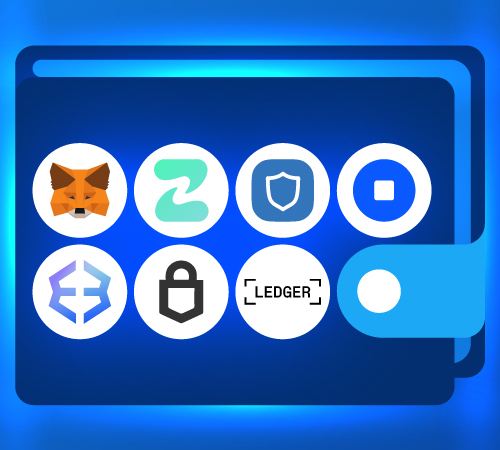
7 Best Bitcoin & Crypto Wallets – A Detailed Comparison

The best crypto wallets come in many forms, but at the core, they function to keep your digital assets secure.

Are you looking to invest in cryptocurrency in 2023? Are you worried about choosing the right crypto or BitCoin wallet? Today we are going to help you choose the best crypto wallets in 2023 if you are planning to invest for the long term.

If you’re a crypto enthusiast, you’ll need to choose the best crypto wallets to keep your private keys and digital assets safe. A cryptocurrency wallet is an app that lets people trade, sell, and store their digital currency with high security.

But here is a pitfall: choosing the best crypto wallet can be an arduous task since many options are available on the market.

We’re here to help with that.

Below is a list of the seven best crypto wallets for 2023, each with its pros, cons, and best features.

So, read along, and find the cryptocurrency wallet that’s right for your trading needs in 10 mins or less.

best crypto wallets 2023 in india

Best Crypto Wallets – A Detailed Comparison

Before we dive deep into each crypto wallet online, let’s quickly compare them based on a few parameters. 

Parameters

Exodus

Coinbase

Trust Wallet

ZenGo

Ledger Nano X

Trezor T

MetaMask

Price Free Free Free  Free $59-149 $77-280 Free
Security Encrypt private keys Offline phrases Private access keys Keyless crypto security and 3FA authentication  24-word recovery phrase, CC EAL5+ secure element Encryption via GPG, U2F and FIDO2 authentication Encryption in browser and protected via MetaMask password
Platforms Windows, iOS, Android Chrome extension, Windows, iOS, Android Browser, iOS, Android Android and iOS Windows, Android, Mac, iOS Windows, Android, Mac, iOS iOS and Android 
Wallet Type Hot Hot Hot  Hot Cold Cold Hot 
Cryptocurrencies Supported 260+ 5000+ 1 million  100+ 5500+ 1000+ 670,000+

7 Best Crypto Wallets for 2023

Due to the immense popularity of crypto trading, the growth rate of the crypto wallet market is expected to grow at 24.4% CAGR from 2022 to 2030.

It’s time for you to choose the best crypto wallet!

Let’s look at the top seven crypto wallets for 2023 that are excellent options for beginners and advanced investors who trade frequently.

  • Exodus

Exodus can hold almost every cryptocurrency under the sun, making it one of the best crypto wallets for 2023. In addition, the handy mobile app allows users to purchase 260+ cryptocurrencies with robust built-in security features.

Features

  • Supports 260+ digital currencies and NFTs
  • Robust connectivity with third-party devices/apps 
  • 24*7 customer support line available 
  • Top-tier flexibility with other wallets

Pros

  • Support buying/swapping various cryptocurrencies and NFTs
  • Free to download and use 
  • Quick customer support 
  • Buy bitcoin with Apple Pay
  • Compatible with Trezor T hardware and Trezor One wallet

Cons

  • Lack of multi-signature support 
  • No native 2-factor authentication 
  • High transaction charges on in-wallet cryptocurrency exchange

Coinbase Wallet

Coinbase is the most intuitive and highly secure wallet for beginners. If you have little to no trading experience with cryptocurrencies, Coinbase is the way to get started.

Features

  • Can connect with major bank accounts 
  • Intuitive and easy-to-use user interface 
  • Can store popular coins, including Dogecoin, Litecoin, Bitcoin, Ripple, and ERC-20 tokens 
  • Supports over 5500 digital assets

Pros

  • Multi-signature support available 
  • Two-factor authentication support for better security 
  • Easy to navigate Coinbase interface 
  • Directly link with Coinbase exchange for easy transaction 
  • Built-in earning feature available

Cons

  • Less secure compared to hardware wallets 
  • Customer service takes time to respond 
  • Available only on mobile and tablet devices (except for Chrome extension)

Trust Wallet

Another best crypto wallet for 2023 is Trust Wallet, explicitly designed for mobile users. The clean and scannable user interface makes it a reliable option for NFT and decentralized app enthusiasts.

Features

  • Easy to integrate with Binance DEX
  • Simple to get started on both iOS and Android devices 
  • Import or backup existing wallets from certain providers 
  • Receive and send NFTs
  • Support around 1 million cryptocurrencies

Pros

  • Completely free to set up and use the wallet 
  • Sleek and modern app design 
  • Trusted by more than 10 million active users 
  • Supports a vast range of coins and tokens 
  • Built-in Web3 browser

Cons

  • Lack of reliable customer support 
  • No multi-factor authentication 
  • No hardware wallet support 
  • Minimal features compared to other non-custodial wallets

ZenGo

Founded in 2018, ZenGo is another simple and secure way to store your digital currencies. It is a mobile-first platform that can be accessed by Apple and Android smartphone users.

Features

  • Utilizes secret multi-party computation (MPC) 
  • Multi-chain compatibility to store 100+ tokens and coins 
  • Three Factor Authentication (3FA) available for extra security 
  • Built-in Web3 firewall to prevent malicious transactions 

Pros

  • Completely free to download with no subscription cost or microtransactions
  • No complex setup process 
  • Streamlined user interface for beginners 
  • Buy direct from the ZenGo platform

Cons

  • Does not work with desktop/PC
  • Not fully non-custodial

Ledger Nano X

Ledger Nano X is a well-known cryptocurrency wallet that perfectly balances convenience and offline security. It is the safest way to store cryptocurrency and can be paired with iOS and Android mobile apps.

Features

  • Supports wireless connectivity with in-built Bluetooth 
  • Compatible with over 50 wallets 
  • Supports 5500 crypto assets, DeFi integration, and NFTs
  • Smooth interface and high security 
  • Buy, trade, or exchange currencies straight from your device

Pros

  • Compact and easy-to-store product 
  • Supports staking Ether and storing NFTs
  • Excellent compatibility with a range of blockchain services 
  • Easy to set up Ledger Live app

Cons

  • Expensive compared to other options 
  • Bluetooth does not work with computer 
  • Only 100 applications can be stored on the device

Trezor T

If Ledger boasts convenience and security, Trezor is an advanced security-focused alternative. It can support over 1000 digital currencies and is known to be the main competitor to Ledger.

Features 

  • Supports more than 1000 digital assets 
  • Manage coins on Android, browser, or desktop with Native Trezor Suite 
  • Multiple security features that include a swathe of password/seed phrases, secondary internal wallets, and so on
  • Supports integration with different exchanges to buy, sell, and trade assets 

Pros

  • Beginner-friendly due to smooth user interface 
  • Most secure hardware wallet 
  • Easy to switch private transactions 
  • Large portfolios for experienced crypto investors

Cons

  • Highly expensive crypto wallet online 
  • Slow and inconvenient for people looking to trade digital currencies quickly 
  • No mobile app option

MetaMask

If you wish to trade Ethereum, look no further than MetaMask. The widely used and the best crypto wallet helps you access thousands of decentralized apps and tokens within the Ethereum network.

Features

  • Compatible with other blockchain solutions 
  • Supports popular Web3 networks such as Binance, Polygon, Avalanche, and Binance Smart Chain 
  • Gives complete control of private keys to users 
  • Easy to swap between layer one and layer two Web3 solutions

Pros

  • Easy to link with the NFT marketplace 
  • Supports 1000+ dApps
  • User-friendly and easy-to-use interface

Cons

  • High fees for buying Ether 
  • Complex setting up of non-Ethereum-based wallets
  • Less secure compared to other hot wallets

3 Other Crypto Wallets For 2023 

A few other crypto wallets for 2023 include:

Blue Wallet – Best Mobile Bitcoin Wallet 

Blue Wallet is regarded as one of the best bitcoin wallets for mobile. Its feature-rich mobile app, integration with the Lightning Network, and simple user interface make it ideal for beginners. It is an excellent alternative for Bitcoin traders who want a simple wallet instead of using software on a desktop computer. 

Pros

  • Modern design and an accessible user interface 
  • Import or create multiple wallets 
  • Supports lightning and on-chain transactions 
  • Added security with multi-signature vaults 

Cons 

  • No two-factor authentication 

Crypto.com – Best DeFi Crypto Wallet 

The robust security feature, excellent onboarding process, and multiple decentralized finance tools make it one of the best DeFi crypto wallets. Beginners wanting to start their journey into decentralized finance can choose the DeFi wallet. It allows you to have complete control over your digital assets and private keys, making it a safe choice. 

Pros 

  • Earn interest on 21+ cryptocurrencies 
  • 250+ digital coins like BTC, CRO, ETH, LTC, ATOM, etc. 
  • Various trading options and confirmation speed 

Cons 

  • The built-in token swap comes with a few geo-restrictions
  • If you lose your recovery phrase and private key, funds are inaccessible 

KeepKey

For those wanting to choose an affordable hardware wallet, KeepKay could be a good option. With a price tag of $49.00, the KeepKey wallet features a beginner-friendly interface and display. The top-grade security standards make the hardware wallet safe for digital assets. 

Pros 

  • Cost-effective wallet 
  • QR code-supported device display 

 Cons 

  • Heavier than other wallets 
  • Provides a limited number of digital coins 

Choosing the best crypto wallet for 2023 can take time and effort, especially if you are a beginner. So, why not contact the experts and seek some help? Inferenz experts are just a call away! 

Two Main Types Of Best Crypto Wallets

If you intend to choose a non-custodial wallet, the first step is to determine whether it’s a hot or cold wallet. The main difference between the two is whether the wallet is connected to the Internet. 

  • Hot Wallet: It is often free to use and is connected to the Internet. It offers add-on services like staking and trading in exchange for fees. Though the hot wallet makes it relatively easy to carry out crypto transactions, they’re vulnerable to hackers. 
  • Cold Wallet: Unlike a hot wallet, it is disconnected from the Internet. These tend to cost money, as users must purchase an actual piece of hardware to store it. Furthermore, as it is disconnected from the Internet, it is much safer.

Choose The Best Crypto Wallets With Inferenz Experts 

Holding your digital assets on an exchange wallet can leave them at risk. Therefore, investors should consider choosing a non-custodial wallet to lock up crypto assets and get extra peace of mind.

Rather than leaving the fate of your money in others’ palms, you should focus on choosing the best crypto wallet for 2023 from our list.

If you still feel moving through each option is problematic, Inferenz experts are here to lend you a helping hand.

Best Crypto Wallets for ecommerce

Our blockchain and Web3 experts will access your business or trading needs and help you with crypto exchange/wallet development services. Get in touch today!

Best Crypto Wallets FAQs

Which crypto wallet is best? 

Coinbase wallet is suitable for beginners, whereas MetaMask is the best crypto wallet for Ethereum investors. 

Which is the safest crypto wallet? 

Trezor T is the safest crypto wallet, followed by Ledger Nano X and ZenGo. The advanced high-security features ensure that your assets are always protected.

Which crypto wallet has the lowest fees?

Coinbase and Trust Wallet are the two popular crypto wallets in this list that are free to download and use. Both cryptocurrency wallets offer robust security and help you buy, sell, and trade digital assets without paying.

How do I choose a crypto wallet?

While choosing the best crypto wallet online, you should consider features such as security, user interface, portability, multi-currency support, reputation, and so on.

What are the 5 types of cryptocurrency wallets?

The five types of crypto wallets include mobile wallets, web wallets, desktop wallets, hardware wallets, and physical media.
Web3 Tutorials: Resources to Master Web3 Development

Are you looking for a way to master Web3 in 2023? Are you someone who went on different social media channels to see the Web3 tutorials and found little to no information? Do not worry, we at Inferenz have created a resource guide for you that will help you master Web3 development in 2023.

The Web 3.0 industry is growing exponentially, and many users are searching for Web3 tutorials for beginners that help them gain insights into the new gen of technology. With intuitive decentralized apps becoming an essential aspect of the digital business world, students, web developers, and business professionals are looking for resources to learn Web3 technology. 

As business operations and practices shift from traditional methods to online, users are inclined towards learning new technologies like Artificial Intelligence, Machine Learning, the Internet of Things, Blockchain, Metaverse, and NFTs. This article aims to help tech enthusiasts, web developers, and business professionals learn Web3 development in 10 steps & examples.

ALSO READ: Predictive Analysis Tutorial: Ultimate Guide To Implement Predictive Model

Learn Web3 Development in 10 Steps & Examples

Learn-Web3-Development-2023-news

Web 3.0 technology is the future of the Internet that aims to shift the power from big tech companies to individual users, boosting security in the online world. According to Vantage’s study about the Web3 market, the Global Web 3 Market revenue is expected to cross USD 23.3 Billion by 2028, creating job opportunities for aspiring developers.

Below is the step-by-step guided python tutorial for all users who plan to establish a career in Web3 development or business experts who want to leverage the benefits of the third generation of the Internet.

Step 1 – Subscribe to Web3 Developer Newsletters

Newsletters on different social media platforms are an underrated source of knowledge that can help users stay up to date with the significant trends in the Web3 development field. Learning Web3 development from experts allows learners to get deep insights and understand the ongoing and upcoming trends in the industry. Some of the best newsletters one can follow are Inferenz (LinkedIn weekly newsletter), The Daily Ape (Telegram newsletter), EthHub Weekly (weekly newsletter on Ethereum), and The Block Crypto (The Block daily newsletter).

Step 2 – Subscribe to YouTube Channels of Web3 Devs

Learners can find Web3 tutorials for beginners on YouTube, where expert Web3 developers share their knowledge and trends. Experts explain the basic to advanced knowledge of Web3, coding, etc., visually to help learners understand better. Some of the best YouTube channels for Web3 enthusiasts include Web3 Foundation, Bankless, Smart Contract Programmer, etc., which covers a ton of helpful content, low-intensity to advanced video tutorials, and much more.

Step 3 – Follow Web3 Developers on Twitter

Twitter is the best platform where crypto influencers and Web3 developers share insights about their work. From understanding the full stack Web3 apps to learning code for free, Twitter is the right platform. A few popular crypto Twitter influencers include @VitalikButerin (co-founder of Ethereum), @TimBeiko (core Ethereum developer), and @aeyakovenko (co-founder of Solana).

Step 4 – Join DAO

DAO (or Decentralized Autonomous Organization) is an open organization owned and operated by the team members and runs using decentralized governance. Joining these communities enables the learners to discover new information, collaborate on projects, and prepare a blockchain portfolio to showcase their skills. Learners can join any Web3 developer community, such as LearnWeb3DAO, Developer DAO, etc., to learn Web3 technology. These developer-centric DAOs provide educational materials to learners and professionals, such as a Web3 tutorial for beginners to learn code for free.

Step 5 – Join the Communal Coding Event 

Communal coding events like Web3 Hackathon are online spaces where beginners and advanced coders collaborate to enhance their knowledge about the Web3 ecosystem. Some of the best communities one can join include Polygon BUIDLit, ETHOnline, BUIDLathon, and Solana Summer Camp.

Step 6 – Join Web3 Developer Course 

Aspiring Web3 devs can gain deep insights into the new technology by attending Web3 tutorials for beginners and advanced learners through free and paid courses. Road to Web3, Sol Dev, CryptoZombies, and Web3 University courses and boot camps teach learners how to create full-stack Web3 apps and build a portfolio to show skills.

Step 7 – Sign Up For the Web3 Discord Server 

Like DAO, Discord allows users to connect with community people and understand the Web3 ecosystem. The communities in the chat app have thousands of people where members can ask questions, connect with like-minded individuals, and find collaborations. Two popular communities that individuals can join include CryptoDevHub and BuildSpace.

Step 8 – Learn Coding From Web3 & Python Tutorial

Web3 tutorials for beginners are the best approach for learners who do not know about the fundamentals of Web3 and how blockchain works. The Web3 library helps users to learn how to create Web3 apps with solidity, ERC-20 token, deploy smart contracts, etc., to enhance their knowledge.

Step 9 – Follow Repositories on GitHub

GitHub is a great place to find a Web3 tutorial. GitHub is a helpful learning resource where all the open-source Web3 development takes place and is considered the largest code repository in the world. Aspiring Web3 devs can follow the famous GitHub repositories to learn blockchain development from the best developers. A few examples of best GitHub Repos include foundry/foundry-rs, Rainbowkit/Rainbow-me, and OpenZeppelin/openzeppelin-contracts.

Step 10 – Learn About The Web3 Dev Tools

Learners who intend to be skilled Web3 developers should have basic knowledge of web development tools. The three most popular tools include Remix, Alchemy, and Hardhat.

web-3-experts-services-online

Web 3.0 Opportunities in The Future

The evolution of the Internet and the fast technological development in the digital world will cause an employment surge for Web3 developers in the market. Following the roadmap will help developers learn the skills required for blockchain, NFTs, Metaverse, or DeFi development.

With the advent of the latest tools and technologies, enterprises can benefit by hiring Web3 developers to accelerate business growth and attract users. Inferenz has a team of certified Web3 developers to help enterprises leverage modern data tools, and learners start their careers in the field with comprehensive Web3 tutorials for beginners.

Web 3.0 Tutorial: Ultimate Guide for Students, Developers, and Enterprises

The new era of computing has begun, and Web 3.0 tutorial is becoming the trending search by developers, students, and business owners alike. The technologies like Blockchain, Internet of Things (IoT), Augmented Reality, Metaverse, SocialFi, and GameFi Suite, are expanding the opportunities, leaving no space to discuss the old Web 2.0 term.

The concept of Web 3.0 is based on making Internet communication decentralized, efficient, and transparent while transitioning the web from a passive to a dynamic and interactive social space. The hype around blockchain and other Web 3.0-based technologies make Web 3.0 developers a lucrative career prospect for emerging talents. This Web 3.0 tutorial is the ultimate guide for students, developers, and enterprises looking to learn about the features of the new technology and utilize it to gain an edge in the competitive market. 

ALSO READ: 15 Ways Machine Learning Expands Your Business in 2022

Web 3.0 Tutorial For Students

With the advancements in business technology, applications, software, and devices, imagining a future without the Internet seems impossible. A report by Emergen Research states that the global Web 3.0 market will reach USD 81.5 billion by the end of 2030, growing at a CAGR of 43.7%. Learning advanced technology from the Web 3.0 tutorials will equip students with the right skills to fully leverage the technology. Here are a few ways that make Web 3.0 crucial for everyone, including students:

Web-3.0-Ultimate-Tutorial-Guide-certificate

  • Data Security 

Web 3 improves the privacy and security of data sharing due to the decentralized nature of blockchain technology. Users are the sole proprietor of data and can keep their information secured from being misused by the companies.

  • Personalized Experience 

Incorporating the Internet of Things, Web 3.0, ML, and AI will provide every user with a better user-centric and personalized Internet experience.

  • Career Opportunities 

Web 3 is a prominent career opportunity for students. They can watch Web 3.0 tutorials, improve their skills, and better understand new concepts. YouTube and Web 3.0 communities are the best sources for students to learn about the latest trends in the NFT marketplace, metaverse technology, and other Web 3.0-based concepts.

Web-3.0-Ultimate-Tutorial-Guide-courses

Web 3.0 Tutorial For Developers 

With blockchain technology becoming prominent, the Web 3 industry desperately needs developers for NFT development, applications, and software. Here is detailed information about becoming a Solidity and Blockchain specialist.

  • Learn Smart Contract and Solidity Basics 

Developers need to learn the basics of Smart contracts and Solidity, as there are the two most essential tech stacks they need to focus on to enter the Web 3.0 industry. Solidity, in simple words, is a high-level object-oriented programming language that helps developers to create smart contracts. Solidity generates machine-level code that runs on EVM chains, and smart contracts govern the account behavior in the Ethereum state to help developers understand blockchain programming.

  • Understand Blockchain Fundamentals 

Machine Learning and Artificial Intelligence technologies are expanding exponentially, making them prominent for Web 3.0 developers. Blockchain technology is a solid foundation for Web 3 as it transforms the data in the web backend, contributing to a backend revolution.

  • Learn About AR/VR Frameworks 

As Metaverse is more about virtual reality, there is a drastic shift from 2D to 3D applications. Stan Trenev, a blockchain professional and CEO of Coinbet, said that web 3.0 developers should be part of Web 3.0 culture and walk into users’ shoes to build a successful project. That said, web3 developers must focus on equipping themselves with the skills related to AR/VR frameworks like A-frame, three.js, and babylon.js to create distinct applications using modern technology.

Developers can watch Web 3.0 tutorials to learn more about the skills required to excel in the field and build the next-gen NFT, GameFi, and DeFi products on the Fire Blocks Web3 engine.

Web-3.0-Ultimate-Tutorial-Guide-businesses

Web 3.0 Tutorial For Enterprises

Web 3 uses blockchain technology that powers smart contracts, decentralized apps, non-fungible tokens (NFTs), and cryptocurrency. The new wave of technology is impacting businesses in multiple ways, and some of the significant benefits that Web 3 technology offers to grow companies include the following:

  • Streamline Business Processes 

The third-generation Internet is enabling business owners to streamline their business processes. Organizations can safely store invoices, transaction details, and booking details in the database to ease business operations. With the help of smart contracts, business owners can automate business contracts and manage their supply chain to improve profits.

  • Enables Efficient Collaboration 

Web 3.0 eliminates third-party services, enabling organizations and businesses to store and effectively communicate essential information with employees, customers, and suppliers. Blockchain technology’s easy and efficient collaboration will help companies to save resources and make quick business decisions.

  • Improve Data Access 

Data is one of the most valuable acquisitions for businesses of all sizes as it helps them improve business decisions and gain insights into their day-to-day operations. Since Web 3 utilizes blockchain technology, it will provide faster data access across disparate channels. As a result, it offers better data transparency and protection and will help organizations gain customer loyalty by being accountable for their actions.

Inferenz blockchain development services help business owners develop and deploy the latest technologies and boost their business productivity. The blockchain developers of Inferenz have worked with a leading manufacturer of optical systems and optoelectronics to reduce 70% cost and give access to complete data. Here is the detailed case study – Learn More.

web-3-experts-services-online

Web 3.0 – The Real Future Of The Internet 

Web 3.0, the third version of the Internet, which uses Artificial Intelligence, Blockchain, and Machine Learning, is undoubtedly the future of the Internet. With the world migrating to centralized Internet, a massive wave in the form of a global digital revolution is expected. Users can expect improved digital services, whereas enterprises can envision a way to improve business operations, automate repetitive tasks, and get fast data access.

Inferenz’s experts help enterprises leverage the benefits of modern data tools and technologies for their business growth. The blockchain consultants will assist business owners in understanding the latest technologies with detailed Web 3.0 tutorials and deliver services that meet their unique business needs.

5 Strong Reasons Why Your Workplace Needs Learning & Development?

Since ancient times Learning & Development has been considered to be one of the most important and continuous processes of life; it has been referred to a number of times in many civilizations across the globe.

In the Ramayana, Ram received his education through his teachers who were there as ‘Vashishtha’ (educators); they were giving theoretical knowledge in a safe ecosystem called Ashramas. Then came Vishvamitra, who insisted on the need for learning through experience.

To understand this, Ram’s both technical and soft skills are harnessed with different challenges in his life as a balanced individual and leader. Ram as a student, was asked to kill a bird, and as a balanced king, he was also expected to win justice for a woman. This certainly correlates with the L&D in the corporates as well, as a learner, after going through classroom training, needs to be put into real-life situations to be able to apply the theoretical knowledge.

ALSO READ: The Essential Components of a Successful L&D Strategy

Devdutt Patnaik, an Author, Mythologist, and Leadership Coach, says, “A successful organization is one where everyone feels powerful, energized, and motivated. This is possible only where the people are both skilled in their purpose and are good human beings.”

In today’s context, L&D has now already become one of the integral processes in businesses. Organizations are now able to align employee goals with that the company’s goal through an empowered learning and development team.

Learning and Development Framework

Ideally, the L&D Team is organizationally a part of the HR team. The team does a lot of in-depth analysis on its implementation following these quick steps:

A. Define the Organization’s Vision & Mission.
B. Apply competency mapping.
C. Analyze the gap between A) and B) through “Need analysis”.
D. Design the curriculum and content.
E. Deliver effectively.
F. Measure success through PMS.

5 Strong reasons why is Learning & Development so important:

  1. Well-trained and skilled employees: Any organization wishes to build a strong workforce who are well-trained, equipped, and smart to handle their clients and develop long-lasting relationships. The cross-functional and cross-departmental training and learnings make this happen very effectively. For eg: a Technical person might be good with coding and technically sound but might not be confident to sell the idea or project to the client he is working for because he lacks soft skills like strong communication and negotiation skills.
  2. Well-aware of the updated workforce: Employees also require updates and information about the various current topics pertaining to the business. Regular Compliance Training also keeps them in the loop and well aware of rules, laws, regulations, and company policies related to their job function, department, or the industry they are working in.
  3. Employee retention: Recruitment or hiring the workforce and talent is the most time-consuming and expensive process. Hence retaining the existing employees by L&D is much more cost-effective than starting the hiring process all over again, which includes searching profiles, a lot of coordination, offering them packages, joining, and then waiting for the expected performance. Organizations can spend a little more time and effort on the L&D of their existing work to boost their confidence, increase their productivity through a lot of continuous training and eventually gain mutual trust.
  4. Improved customer service and productivity: With the kind of trained and skilled employee, a company’s customer service or customer experience would obviously going to be the best and will positively impact the overall productivity of the business. Who would not like to deal or join hands with an organization that is empowered by a skilled and well-trained workforce?
  5. Happy, content employee and work culture: It’s been proven with studies that employees always appreciate, respect, and remain loyal to the organization that invests in their professional and personal learning and growth. Higher the learning and development opportunities, the higher the job satisfaction and happy employees. This happens when L&D enables the employees to get trained on the specific knowledge and skills they require to outshine in their current position. This can help create a balanced and positive work culture while simultaneously boosting employee morale. With technological advancement across the globe, there are now various L&D technologies available to impart quick and effective training. Earlier, the trainers used to spend time making efforts to create content, instructions, and overall classroom setup coordination to make sure of an excellent learning environment. L&D Technologies like Gamification, AI, Chatbots, Android phones, Apps, Storytelling, Hybrid Learning, Visual training tools, etc., have made the entire L&D process swift, impactful and engaging.

This all can be simply concluded as, “Learning and Development is like a healthy fodder for organizations which empowers them to grow and accomplish their ultimate aims and objectives”

The Essential Components of a Successful L&D Strategy

The workforce of the majority of organizations is evolving in one or the other ways because of numerous factors like competitive markets, multigenerational workforce, new complexities of businesses, digital evolutions, employee diversity, and much more reasons. The new L&D strategy set, talents, efficiencies, and creativities are snowballing day by day, making the entire professional universe even more competitive. Due to the major shift from a knowledge-based economy to a digital economy, now a vibrant workforce is a mandate to sustain the business.

Under such circumstances, it’s obligatory to remain and keep your teams updated with the required skills, knowledge, and talent. Recent research has proven that investment in this sector is one of the significant expenses management is undertaking to create and ensure a coordinated strategy to meet the company goals in the long run.

The training and Learning process is defined in this diagram as per their contribution in a real sense to the employees.

Training is the process of equipping employees with the knowledge and skill required to perform a particular task. Learning and development is the process of absorbing that information in order to increase skills and abilities and make use of it in a variety of contexts. Constant learning results in the overall development of the resource, which results in giving the company a high-performing employee.

Components to be considered while carving the L&D strategy process in an organization. For most prominent responsibility of L&D is to have a flawless process of attracting and hiring the right people and retaining them for longer.

  • Attracting and Hiring the right talent.
  • Training them as per the organizational needs.
  • Motivating and engaging them.
  • Building employer brand in their mind.
  • Emphasizing and creating a value-based culture.
  • Developing their capabilities.

L&D Objectives:

It’s important to understand and define the real objective behind this entire process of L&D. The focus is on shaping the desired culture, fostering new ways of thinking, developing new behaviors, and driving strategic opportunities.

Main Objectives

  • Drive Organizational Growth– Moving closer to the end goal
  • Enhanced Resource Capabilities– Closing the skill gap, resulting in better performance
  • Engaged, Involved and Thriving Workforce– Resulting in increased retention
  • Better Learning Culture– which triggers intellectual stimulation encouraging creativity and innovation
  • Individual Growth– which brings better job satisfaction

L&D Framework or Strategy:

Capability assessment and Training Needs Identification
Every organization has different business priorities and demands for various skill sets. They first need to analyze whether their employee is skilled enough to take the role and deliver the expected result. Hence it’s vital they first have to deep dive to find out the real need and gap in training among its employees.

Understanding the real gap in skills, behavior, and attitude is the key point to be considered before implementing an L&D strategy. At Inferenz, this process is well defined, discussed, and revised as and when required for better clarity about the employee’s real state. Most of good and well-organized companies have a deliberate and systematic approach to capability assessment followed by training need identification.

Training Need Analysis & Evaluation
After finding those gaps, the next thing to be done is to study and understand the extent of that gap and how this gap can be fixed or met.  Training needs analysis to seal that gap effectively, whereas training needs evaluation is simply understanding whether training should be conducted or not for that particular gap. Or in other words, the gap can be fixed by some other means but not training.

Designing the precise Program/ Curriculum of training
Once the needs are understood, the approach to meet the needs is planned, and training programs are selected and designed effectively to make sure the impact is deep and long-lasting. At Inferenz, the L&D strategy teams create the content as per the need of the employees, team, or the project they are involved in. The designing of content depends on the majority of the intent, type of crowd, understanding levels, and learning styles which certainly vary from employee to employee, and the projects they are involved in.

Many organizations now provide digital training, but research says there is no substitute to in per-personal classroom training. The main objective remains the same the learning must be utilized in their actual job.

Execution & Implementation
At Inferenz, training is planned, scheduled, and managed flawlessly so that there is a clear, better, and continuous understanding of the subject matter with the required handouts and takeaways for reference.

Evaluation of the impact
The impact of the training provided needs to be evaluated to understand its effectiveness. They are generally measured by Key Performance Indicators KPIs. There is no simple way to accurately find out the impact of such training. Many organizations have the traditional methods of evaluating that through learning program completion scores etc.

Yet much other organization like Inferenz believes in a real-time attitudinal change or Feedback from the participant after the session and reporting leader to gauge the efficiency and impact of the training conducted.

Incorporation of L&D interventions into HR Processes
Just like the L&D process must be aligned with the business of the organization, it must be aligned with the HR Processes as well. Human resource is an integral part of any organizational system; they are involved in scrutinizing profiles, interviewing and selection, appraisal, and succession planning of the workforce. To understand this at Inferenz, L&D gets merged with the HR system to evaluate and train the candidates accordingly. At the same time, with the training evaluation, the HR team has a fair understanding of the actual growth of the employee, which can assist them in a genuine appraisal.

An organization’s ability to learn and translate that learning into action rapidly is the ultimate competitive advantage. — Jack Welch, former General Electric CEO

7 Things Modern L&D Professionals Should Be Doing

As the Pandemic hit the World in 2019, digitalization of the entire L&D is the biggest revolution in the field of Knowledge Sharing.

The era of learning has changed drastically. Learners nor the techniques have remained the same now. The last couple of years of the Pandemic has turned things upside down. In fact, we have discovered skills, creativity, and passion that we could never think of or could never have even attempted. Over a period of time, organizations, companies, professionals, and almost all individuals have learned to grow and understand the importance of knowledge and .earning in life. Hence they are eager to learn and be informed, updated, and smart to walk confidently with the evolving world.

With this alteration of learning, let’s discover the latest L&D trends every Learning professional must be updated about in 2022.

  • Reskilling and Upskilling for Digital Workplace.
  • Content Repurposing.
  • Agile Learning.
  • Customized Learning Experience.
  • Engaging and Impactful Material.
  • Collaborative Knowledge sharing.
  • Gamification

1- Reskilling and Upskilling for Digital Workplace.

The digital era has trained the young generation naturally to be adopted the technology molding their professional life accordingly. A press release in Feb 2021 says, because of the evolving scenario, 58 % of the existing workforce in the organization needs new skill sets to do their job efficiently.

Organizations are now wanting their employees to be in pace with technology or learn new skills in accordance with the same. Hence, upskilling and Reskilling have become the mandate for sustaining in the digital workplace.

Upskilling, which means adding an existing skill set within a role due to technology, and Reskilling means learning and adding a new skill for a different job role. Free and democratic social media access has made people become self-learners.

2- Content Repurposing

The content is an extremely important aspect of learning and development because its quality of it ensures the interest of the reader, viewer, or learner. However, it is extremely important to keep revising and making it more interesting, catchy, and convenient for today’s learners. Creating and repurposing such content increases learners’ interest as well as adds to several competitive advantages, improves SEO, and targets a better audience.

Many companies research and proves that this increases their page views and posting the same content with different flavor also helps them identify which form of content is giving them the best results. Repurposing content also helps you save time in creating new content, topics, and keyword research.

3- Agile Learning

Learning and Development (L&D) Agile way of learning is basically to roll out the training content and knowledge in bits and parts that are distributing or breaking a large volume of content into paramount or small content for better and quick learning.

Things like a quick read, audio, activity, and video knowledge in a small bit, and parts that induce quick and effective understanding amongst the receivers.

ALSO READ: 5 Essential Tips for Corporate Learning

4- Customized Learning Experience

The old approach of “One size fits all” is not acceptable to the kind of learners we have today in the era of digitalization. Just like the way not all fingers are of the same size, we have a wide range of learners, their types, learning style, capabilities, and absorption levels. The learning leaders need to revise their approach and put efforts into providing or creating user-friendly content that the learner can access at their ease.

  • Creating specified training paths.
  • Using AI technology ensures learners’ control over their own learning.
  • Self-paced learning.

Creating content that is close to user experience is the demand of the time because of the big shift in the learning era and the learners both.


5- Engaging and Impactful

In the e-learning world, the learning level becomes extraordinary when you have content that appeals to the learner. Content that engages them mentally and them feel more focused and involved in the process. These quick tips, like real-life experiences, factual information, case studies, short and simple yet interactive, gamified content, pictorial, audio-based, etc., keep the learner engaged and impacted.

6- Collaborative Knowledge sharing
Collaborative Knowledge sharing is used as a strategy for organizational development. The sharing of any information or knowledge, or skill grows more with communication, transfer, and sharing of knowledge, discussions, developmental programs, and interactions through one-to-one or using social media. Human resources can play a major role and play a strategy or practice to create collaborative knowledge-sharing work culture by implementing all of the above.

7- Gamification
When learning becomes fun, it’s more in demand. There are several ways now to make training and learning more evolved and interesting to increase their usefulness. Games have always been fun for all age groups; people love to play and win. It’s an exciting way to interact with the online world. It certainly improves the absorption of knowledge and retention of the same and keeps the learning process ongoing and in demand.

Conclusion

Digitalization has profoundly impacted the Learning and development (L&D) sector. There is an extremely progressive and positive revolution that is taking place for the excellent development of future generations.

5 Essential Tips for Corporate Learning

Corporate Learning has become customary in the last 2 decades because of unpretentious reasons like developing organizations, conception of different roles and departments, smart and capable workforce, evolving learning dynamics, and last but not least, the big digital revolution.

As per a recent study, 75% of 1500 managers surveyed from across 50-odd organizations were found dissatisfied with their company’s learning and development function. They felt they were not given enough training and guidance on their roles to grow further as a professional.

Organizations and even employees today have become aware, alert, and prompt in ensuring their development. They are well aware that it is important to be fully skilled, proficient, competent, and groomed in every way to withstand the competitive business environment.

With all the above, let’s discuss 5 essentials of Corporate Learning to be kept in mind in today’s era.

1- The Alignment of Business and learning.
2- E-Learning in corporate learning.
3- Choose the correct Learning Software.
4- Managing Generation diversity.
5- Making it a Culture.

corporate learning by inferenz in 2022

1- The Alignment of Business and learning

Corporate training now is no more ordinary and general training with those stereotypical learning materials and styles. Today organizations prefer their workforce to understand, act and perform in agreement with the company goals, vision and mission. With the awakening of business experts and increasing competition, organizational leaders are focusing on upskilling and reskilling the employees to drive business performance hence corporate training needs to be designed in accordance with the same.

2- E-Learning in corporate learning

E-learning obviously needs to be included in corporate learning to reach out to more learners in a convenient way in this rapidly evolving digital world. It is adaptable for all kinds, less expensive, and in demand of the hour. It requires no staff or trainers but smart content.  It can reach from one employee to a group of employees and even hundreds of them in no time. The delivery mode is faster than the traditional methods. It also ensures the customized content per the learner or the business need. It gives the flexibility to learners to learn at their own pace and style anywhere, anytime.

3- Choose a correct Learning Software

Continuous employee training is a mandate now for organizations to succeed. From new employee onboarding training to the departmental or particular skill or enhancement or even new skill training, all the training is to be planned, created, scheduled, and uploaded for the learners for easy and quick access. There are many software available to handle the above, but you must go for an LMS (Learning management software), which:

  • Help you to do a proper need analysis
  • Bifurcate the content as per roles and responsibilities
  • Enables learning at a global scale (if your employees are globe diversified)
  • Able to provide collaborative learning
  • Save time and money both

ALSO READ: The Future of Blockchain Technology in India

4- Managing Generation Diversity

With the diversified work culture, there is a huge difference between the generations who work together in an organization. Companies hire people from all generations because they need creative and dynamic people along with experienced and settled individuals. They all have different learning styles, paces, absorption, and attitude. Generation diversity is another challenge for corporate training.
To meet this challenge, organizations must:

  • Avoid making assumptions and stereotyping anything
  • Age and seniority-specific need analysis
  • Listen to the diverse set of learners
  • Customize the learning content and style
  • Adopt various communication styles
  • Refine existing learning techniques
  • Assemble age-diverse teams for projects

5- Creating a natural learning Culture

Learning has been a continuous process for ages. It must be well taught and set in the mind of employees. Not employees from all industries, departments, or even individuals feel the need for training. Many people are reluctant to experience this because of the industry or even their individual nature. The need has to be generated so naturally that it looks like a general process that everyone has to go through consistently. Culture development helps a lot in the entire corporate learning process.

It’s best concluded as –  

 “Tell me and I forget, teach me and I may remember, involve me, and I learn”
Making sure the involvement, once involved it becomes an individual path.