




Data Warehousing vs. Data Virtualization – How to Store Data Effectively?

Data Warehousing or Data Virtualization? This is one of the most important questions enterprises ask when it comes to storing data effectively. With the advent of the latest Data Design, Architecture, and Engineering technologies, an organization can use the tools to gain insights into their business operations from the company’s data and develop new strategies that help them generate more revenue and market share. Organizations have data stored in diverse sources and locations, so they require a reliable architecture and engineering tool to export, copy and transform data into one system. 

The two principal techniques that focus on cleaning, integrating, and consolidating data available in a company are data warehousing and data virtualization, which can help drive better business decisions using up-to-date information. This comprehensive data warehousing vs. virtualization guide will reveal the best technology to store the company’s data and why business owners should choose it. 

Why Is Effective Data Storage Important For An Organization?

Every business – small, mid-size, or large enterprise – gathers data to understand its customers better and improve the business decisions that directly impact the company’s bottom line.

ALSO READ: 15 Ways in Which Machine Learning Expands Your Business

In his article, Bernard Marr, a thought leader in the business and technology field, said: “While the average small business has less self-generated data than big players like Google or Facebook, this doesn’t mean big data is off limits. In many ways, big data is more suited to small businesses because they’re generally more agile and able to act more quickly on data-driven insights.”

Bernard Marr’s statement proves that stored data can benefit companies of all sizes, especially SMBs and growing enterprises, and help them hedge against their competitors.

Some of the critical benefits of adequate data storage and utilization of the latest data warehousing services in an organization include:

  • Helps make better decisions, increase customer retention, improve customer service, and find new customers
  • Tracks the past-month performance to build marketing campaigns that drive sales 
  • Keeps the sensitive business data safe and secure against cyber attackers and hackers 
  • Prevents data loss by consolidating data from multiple sources into a single data source 
  • Helps create fail-proof strategies by identifying the customer interaction with business 

Which Is Better – Data Warehousing VS Data Virtualization?

survey conducted by Deloitte indicates that “data analytics helped 49% of respondents make better business decisions, 16% to take strategic initiatives, and 10% to improve relationships with business partners and their customers.” 
No matter the business size, this study indicates that data storage is vital to outrank the competitors in the market. Both data warehousing and data virtualization are effective ways to store, access, and analyze data; however, the ultimate choice will depend on the needs and preferences of an organization. 

Data Warehousing

Data warehousing is extracting, electronically storing, and making the data from the operational systems available for analysts and other team experts for ad-hoc queries and reporting. The dimensional models used in the data warehousing architecture help extract meaningful information from the raw data available in an organization and translate it into an easy-to-understand structure to achieve business goals. 

Features & Benefits Of Data Warehousing

The data warehousing solutions are subject-oriented and gather data from different sources in a single place to get an in-depth business overview. Data analysts and other business experts can get information about sales data, products, and customer and supplier details to improve the organization’s ongoing operations. Data warehousing is time-variant, integrated, and non-volatile, making it one of the most accurate data storage solutions, which keeps data integrity intact. 

Data Virtualization

On the other hand, data virtualization is a tool that involves accessing, managing, and retrieving critical business data without collecting or duplicating the data in a physical repository. It leverages modern technology to help business owners get real-time insights with high speed, low cost, and agility and perform their business operations better than the competition. 

The data engineering experts of Inferenz can help you implement data virtualization tools that integrate information from diverse sources into a single system for easy access to data. Inferenz has recently helped a US-based e-commerce company build analytics solutions and implement a Self Service BI tool to increase conversions and access 100% of data in real time. Read our case study here.

ALSO READ: 5 Essential Tips for Corporate Learning

Features & Benefits Of Data Virtualization

The unified virtual layer of data virtualization reduces the complexities of gathering data from different sources by avoiding the need for data replication. Compared to data warehouse cost, data virtualization allows speedy resource deployment at a lower price, as it does not involve installing hardware devices. 

Implement The Best Data Storage Tool With Inferenz

As one must have seen, data virtualization and warehousing services are the two best technologies for storing business data and analyzing it to predict future outcomes. However, the choice between the two will depend on business needs and preferences, budget, and business objectives. 

If you want to choose the data engineering tools that best serve your company and boost revenue, Inferenz experts can help you simplify the data architecture with their tech-enabled solutions.
Implementing Predictive Analytics for Promotion & Price Optimization

Implementing predictive analytics provides an edge to different businesses. With advancements in computing technologies and high market competition, businesses seek diverse ways to get ahead, and predictive analytics offers a trove of information to predict future outcomes. It enables data analysts and business experts to skim past real-time data and predict a customer’s future behavior. Data analysts can acquire better insight beyond comprehending a customer’s past behavior and instead use the gathered data to look forward to the future possibilities that bring success to a business. 

Machine Learning, the subset of Artificial Intelligence (AI) and computing technology, can accelerate the work pace by automating all the manual operations in a business, identifying customer behavior, and improving customer satisfaction by recommending additional products. This predictive analytics guide will focus on two crucial aspects important for every business owner – promotion and price optimization – and why businesses should implement them.

ALSO READ: The Essential Components of a Successful L&D Strategy

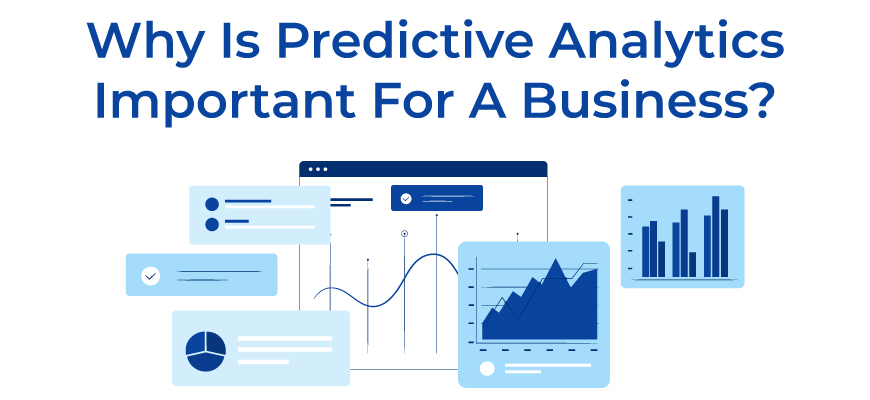
Why Is Predictive Analytics Important For A Business?

With the increasing use of Artificial Intelligence and Machine Learning and the drive toward their adoption due to the benefits, the predictive analytics market size will reach USD 28.1 billion by 2026, states research. 

Predictive analytics work by collecting, assembling, organizing, and using the ever-increasing volumes of data to draw a conclusion that leads to profitable results. The sales and marketing experts and the business team can use predictive analytics to evaluate the new pricing strategies and promotional activities to generate sales and revenue per the market trends. Some of the other benefits of predictive analytics for pricing and promotion optimization include the following:

  • Provides actionable insights to devise ways that help to hedge against the competition 
  • Saves time and business resources by eliminating the need for manual research and testing 
  • Reduces the cost of ineffective marketing campaigns
  • Helps businesses attract, engage, and retain customers 
  • Analyzes the historical data of a company to identify factors that lead to product failures 

Two Ways To Implement Predictive Analytics 

Implementing predictive analytics for promotion and price optimization will allow businesses to predict the future better and create a satisfactory user experience for their customers. Thomas Goulding, a renowned professor for the Master of Professional Studies in Analytics program, says during his conversation with Northeastern College of Professional Studies, “Data analytics today is allowing us for the first time to take the massive amount of data we’ve been assembling for years and use it for predictive purposes rather than in just descriptive ways.”

Here are the two ways to implement predictive analytics in one’s business. 

  • Price Optimization 

Price optimization involves analysis of customer purchase patterns and deciding the price that maximizes the company’s revenue. Predictive analytics considers a few aspects, such as competitor’s pricing, market condition, customer demand, and more, to serve customers with the best possible price. Inferenz follows a unified analytics-based approach to implement predictive analytics that leads to improved sales, higher margins, and lower costs. 

Inferenz recently worked with a Germany-based pharmaceutical company to implement predictive analytics; you can check the detailed case study here and see how our predictive analytics and machine learning experts created a model that understood vital parameters for positive and negative patients.

  • Promotion Optimization

By implementing predictive analytics for promotion optimization, business owners can use historical data to determine the impact of their past promotions and prepare the best future promos that save costs and maximize revenue. One can connect the promotions to inventory management to collect data and proactively ensure that the business meets promotional demand and reach its targeted price goal.

ALSO READ: The Future of Blockchain Technology in India

Grow Sales With Inferenz’s Predictive Analytics Experts

No matter the industry, business owners can lean into data by implementing predictive analytics to gain in-depth insights into how customers interact with their business. Based on predictive models, business experts can make data-driven decisions to maximize profits and mitigate potential risks. 

If you want to implement predictive analytics for promotion and price optimization, contact the experts at Inferenz.  who can not only help you evaluate the predictive model but can also devise the implementation method that best fits your business needs.

5 Things To Consider Before Any SQL To Snowflake Migration

SQL to Snowflake migration can be a straightforward task if a proactive approach is followed during migration. The migration process starts with data identification, in which data is categorized based on sensitivity, format, and location. Organizations must consider the right tools and resources during migration to keep the business’s confidential data safe.

With the rise in data and information, SMEs and large enterprises understand that the traditional method of collecting, managing, and storing data through SQL is insufficient, as its database is no longer sufficient to handle the massive data. Due to some vulnerabilities in the database management system, SMEs and large enterprises are looking for effective ways to migrate their data from SQL to other reliable solutions. This is where Snowflake comes with its modern data analytics capabilities.

Being one of the top-performing cloud data warehousing solutions, Snowflake allows businesses to store, manage, analyze and share data in unthinkable ways. This Inferenz’s comprehensive SQL to Snowflake migration guide will uncover the effective aspects that will make launching a migration project easy and help SMEs and large enterprises stay on track.

Why Launch A Migration Project From SQL To Snowflake?

For SMEs, SQL servers have multiple advantages, as no specific coding knowledge is required, and basic keywords like SELECT, UPDATE, and INSERT INTO can be used.

ALSO READ: 5 Essential Tips for Corporate Learning

However, the disadvantages of going ahead with SQL exceed the advantages of an enterprise looking for an effective way to store its data. For instance, newer versions of Microsoft SQL Server need advanced technologies, and one might have to invest in acquiring new machines to use the updated versions of SQL Server.

Enterprise solutions looking to create multiple warehouses to isolate multiple processes prefer migrating from SQL to Snowflake. Some of the benefits of launching an SQL to Snowflake migration project are:

  • Supports both semi-structured and structured data 
  • Compliant with automated query optimization 
  • Fully managed and cost-effective data warehousing solution with the pay-as-you-go pricing model 
  • Robust technology support and cross-cloud capabilities 

Remember, organizations should follow the best practices for Snowflake implementation so all the data is migrated safely. 

5 Factors To Consider Before Any SQL to Snowflake Migration

Moving data from the SQL database to the Snowflake data cloud is not enough; business managers and experts need to review and structure the data in a way that seamlessly fits the new system that is reformed, effective, possess fewer vulnerability factors, and can handle big data-related projects.

Here are a few things that you should keep in mind when the foundation of the migration to the Snowflake project is launched:

Analysis the Data

Every data has its value, but organizations should consider the build-up expenditures when one migrates from SQL Server to Snowflake. If an enterprise migrates the entire data to a new server, it might reduce the efficiency of the data migration process. The best way to customize the data is by decluttering, restructuring, and discarding the information that is no longer required.

Architecture And Roadmap

SQL-to-Snowflake-Migration_inferenz

Defining the migration architecture and data beforehand is the best way to avoid the big bang approach and make a seamless move to the Snowflake data cloud. For a smooth MS SQL to Snowflake migration project, businesses must follow the strenuous architecture and data preparation procedure by keeping the team members in a loop.

At Inferenz, we specialize in complex SQL to Snowflake migration processes, and if you are wondering how to start constructing the correct architecture, you can speak with one of our experts, who will guide you and save you time and resources as you migrate to a new server.

Security & Governance Needs

During the launch of a migration project, business solutions have to deal with security threats that harm the entire migration process and put the data in a highly vulnerable condition, resulting in a massive data breach. The best way to protect the data during the migration process is by keeping the connections secure, encrypting them, and putting all the data retention and archiving policies in place. 

Scalability

As a growing business requires more data storage space, scalability is crucial when launching a migration project. This scalability might lead to an increase in cost and complexities. Snowflake uses standard ANSI SQL and follows a pay-as-you-go pricing model, helping SMEs and large enterprises to understand the cost factor effectively. 

Understand Business Goals

Data is an asset for every business as it can help them identify the loopholes in the existing business framework and make necessary changes to grow in the long run. While launching SQL to Snowflake migration project, understanding the business goals and analyzing the data helps enterprises make meaningful decisions that would bring efficient results.

It’s worth noting that a step-by-step process to migrate data to Snowflake should be followed. This will help companies reduce the overall migration costs and safely move data from traditional data warehouses to Snowflake.

Get Effective SQL to Snowflake Migration Solution

As one must have learned from this SQL Server migration guide, SQL primarily stores and retrieves data, but Snowflake is an analytics database built for the Cloud. Snowflake’s modern architecture, which runs on AWS, makes it one of the top-performing data warehousing solutions among other cloud-native database players.

If you are looking for SQL to Snowflake migration methods, schedule a discovery call with our experts, who will analyze your data and suggest the best method that you should use to achieve a seamless data migration.