











Snowflake Summit 2025: Key Highlights and Announcements

Snowflake Summit 2025 was unlike any other summit that happened before. It was a like a magnificent product launchpad, and it did full justice to the action-packed four days as part of the event schedule.  

The data-cloud giant showed how it plans to cut query costs, add trusted AI, and open its platform to every format from Iceberg to Postgres. Leaders teased faster warehouses, live FinOps alerts, and chat-style analytics that turn plain English into charts. They also sealed a $250 million Postgres deal and signed on as the data engine for the LA 28 Olympics. Staggering, isn’t it? 

Why does this matter though, you may ask?  

Because teams everywhere still wrestle with slow reports, rising bills, and security gaps. Snowflake’s new moves promise hands-off tuning, real-time guardrails, and AI tools that stay inside the same secure walls.  

The highlights below break down what shipped, what’s in preview, and how each change could move the needle on cost, speed, and trust. 

Compute that runs faster and costs less 

Gen2 Standard Warehouses hit general availability and already show about 2.1× faster query time in live customer tests. Pair that with Snowflake Adaptive Compute (private preview) and the platform now picks cluster size, parks idle nodes, and pools resources across jobs without manual tuning. 

  • To keep Snowflake pricing in check, the FinOps console adds Cost-Based Anomaly Detection (public preview) and Tag-Based Budgets (GA soon). Both alert teams to cost spikes before month-end surprises.  
  • Workspaces now bundle inline Copilot help, Git sync, and a GA Terraform provider, so builders can code, test, and ship inside one browser tab. 
  • Python 3.9 is live in Notebooks, plus custom Git URLs for smoother CI/CD. 

Take-away:  Faster analytics with less knob-twisting and clearer bills. 

Stronger governance and security 

Horizon Catalog gains an AI Copilot for natural-language search plus Iceberg catalog-linked databases, so data stewards can find and govern tables sitting outside the core warehouse.  

On access control, Snowflake now supports passkeys, authenticator apps, and programmatic tokens, moving the service toward a full MFA-only stance before November 2025.  

For backups, new Immutable Snapshots (preview) keep point-in-time copies that cannot be altered—extra insurance against ransomware. Here are some more updates: 

  • Horizon Catalog adds external-data discovery, letting stewards govern dashboards and other cloud stores from one pane. 
  • Trust Center picks up passkeys, new MFA choices, and leaked-password shielding—tightening the lock before year-end. 
  • Snowflake Trail widens coverage, and Openflow now emits pipeline telemetry for faster root-cause checks. 

Data engineering and the open Lakehouse 

Snowflake Openflow (GA on AWS) is a multimodal ingestion service powered by Apache NiFi. Teams can pull data from hundreds of sources into Snowflake or keep it in place and still query it. 

Lakehouse fans got welcome news: Iceberg queries are now up to 2.4× quicker, and catalog-linked databases let Iceberg tables live under the same roof as native Snowflake tables. 

  • Native dbt Projects and Pandas on Snowflake (both previews) shorten the “extract-transform-load” cycle by letting engineers work inside the platform. 
  • Openflow ships an Oracle-to-Snowflake CDC path, easing the biggest on-prem migration ask we hear from clients. 
  • Iceberg gains VARIANT support and Merge-on-Read, closing format gaps while keeping those 2.4× speed gains. 

AI & analytics for every role 

Here are some updates relevant to AI and analytics from the summit: 

  • Snowflake Intelligence (public preview) turns the familiar ai.snowflake.com chat bar into a way to ask, “Why did sales dip in Q3?” and get charts back in seconds. 
  • Cortex AISQL folds AI operators into normal SQL so analysts can label images or sum up PDFs without leaving the warehouse. Document AI lifts tables straight out of PDFs, while Cortex Search scans it all in seconds—no helper scripts. 
  • Data Science Agent builds data sets, trains models, and sets up pipelines on demand—handy for teams that lack ML engineers.  
  • SnowConvert AI speeds “lift-and-shift” moves off legacy warehouses.  
  • Built-in AI observability traces every LLM call inside Cortex Apps, satisfying audit teams. 
  • Semantic Views hit GA, turning raw tables into shared business logic that both SQL and AI tools can read. 

Together these moves push AI deeper into the Snowflake data cloud while keeping the SQL surface that users already know. 

Apps, marketplace, and collaboration 

The Snowflake Marketplace now lists Agentic Native Apps and Cortex Knowledge Extensions so buyers can install third-party AI helpers inside their own account—no extra data pipes.  

  • Cortex Knowledge Extensions pull curated news and research into agent answers—helpful for care-trend insights. 
  • Teams can now share full Semantic Models with partners, keeping metrics in sync across firms. 
  • Snowflake native apps depend on a framework that picks up versioning, runtime stats, and a compliance badge, meeting release rules. 

Clean-room upgrades and an Egress Cost Optimizer make cross-company sharing cheaper and privacy-aware. 

Acquisitions and partnerships 

  • Postgres joins the party. Snowflake is buying Crunchy Data for roughly $250 million and will offer Snowflake Postgres, a managed enterprise Postgres service that sits right beside Unistore. 
  • Olympic-scale data. Snowflake became the official data collaboration provider for LA 28 Olympics and Team USA, proving that the platform can handle real-time, high-profile workloads. 
  • Ecosystem bet. Snowflake Ventures backed Sema4.ai, whose Team Edition agent will ship as a Snowflake Native App, reinforcing the agentic theme across the marketplace. 

What this means for your stack 

  1. Less handholding, more insight. Automatic compute plus FinOps alerts free engineers to focus on models, not knobs. 
  1. Trusted AI without new silos. Cortex tools and agentic apps stay inside the Snowflake security perimeter, so data governance rules still apply. 
  1. Freedom of choice. With Iceberg support and Postgres on deck, Snowflake no longer forces a single storage format or engine. Use what suits each workload. 

Quick recap 

Snowflake Summit 2025 moved from vision to shipped code: faster compute, visible spend controls, built-in AI agents, and an open stance on formats, from Iceberg to Postgres. The result is a data platform that lets teams ask bigger questions without breaking a sweat. In short, Snowflake just made data work simpler, cheaper, and safer.  

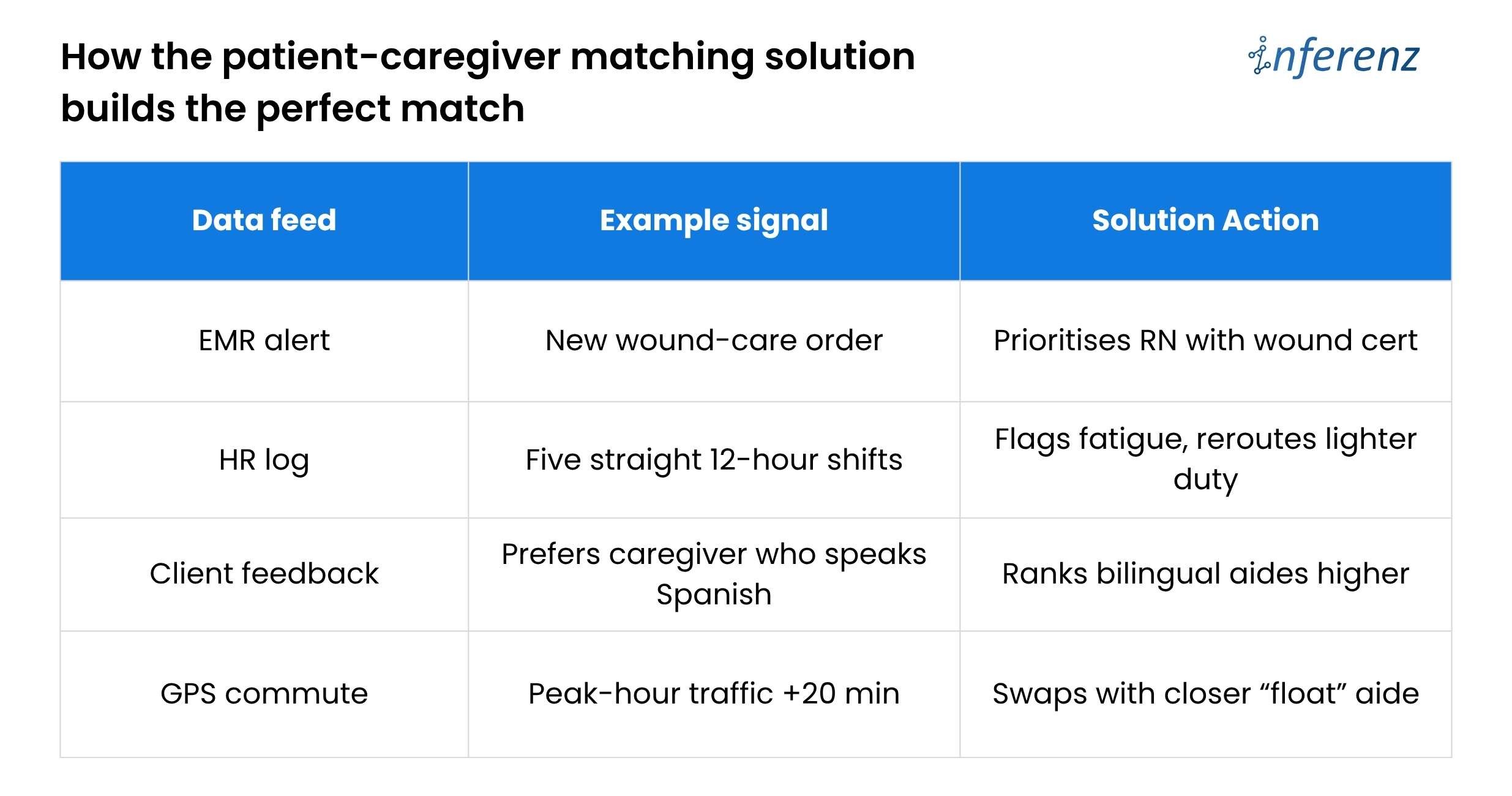
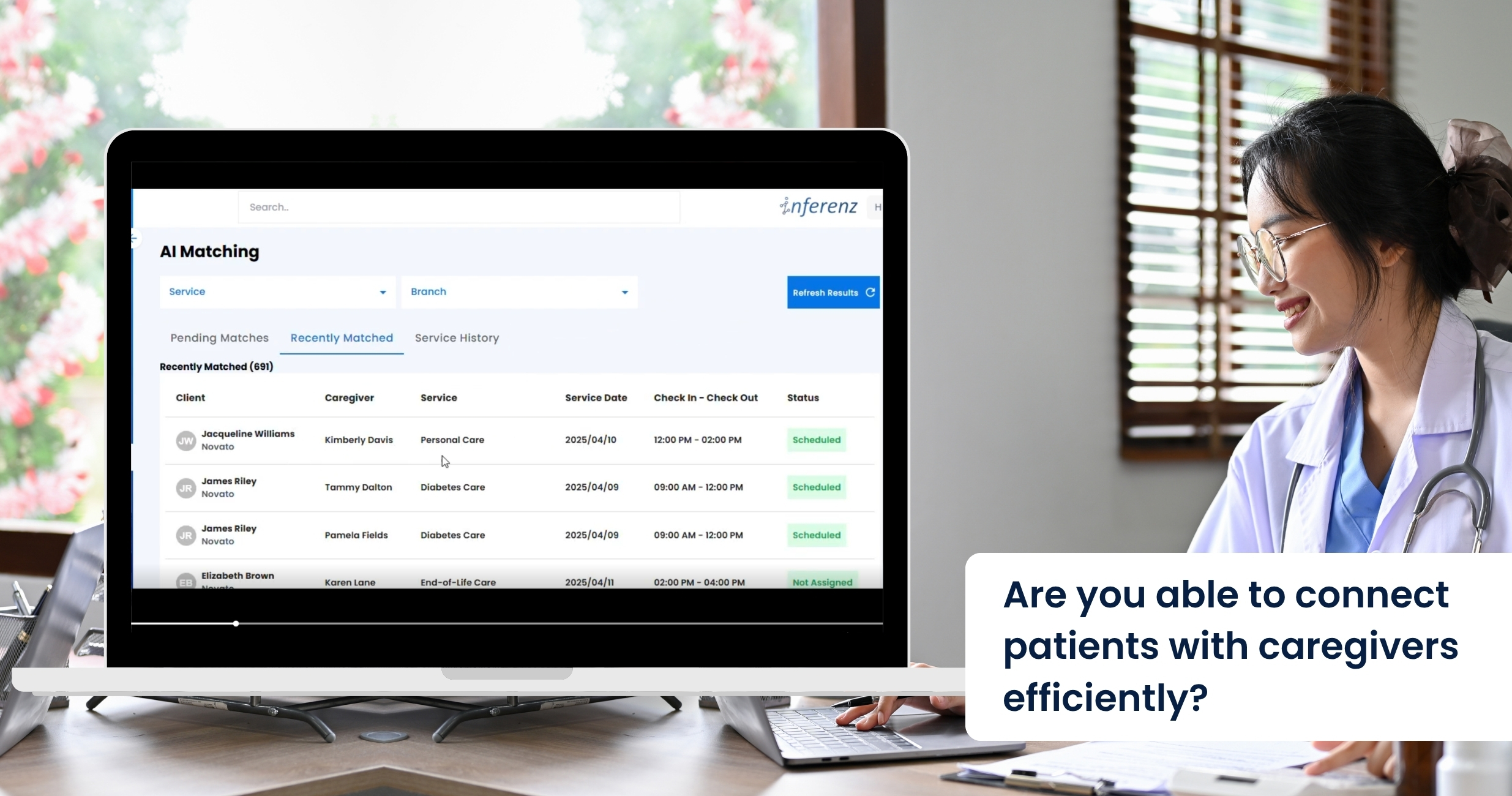
Inferenz, an official Snowflake Select partner, is already wiring these gains into its agentic AI tools for caregiver connect including patient-caregiver matching, workforce analytics, and conversational AI reporting through natural language. The upshot is that healthcare teams can spot risks sooner and act faster, without piling on new tech debt. Expect Healthcare AI companies to follow suit soon enough! 

Connect with us today to know more. 

FAQs on Snowflake Summit 2025 

  1. What were the headline launches at Snowflake Summit 2025?
    Snowflake unveiled Gen2 Standard Warehouses, Adaptive Compute, Horizon Catalog Copilot, Cortex AI SQL, and the managed Snowflake Postgres service—all aimed at faster analytics, lower costs, and broader data-format support.
  2. How will Adaptive Compute affect Snowflake pricing for day-to-day workloads?
    Adaptive Compute auto-sizes clusters and suspends idle nodes, so teams pay only for the minutes they use, reducing surprise bills and smoothing monthly budgets.
  3. What new capabilities arrived in Snowflake Cortex during the summit?
    Cortex gained AI SQL operators for text, image, and audio analysis; built-in LLM observability; and Data Science Agent for no-code model pipelines, making advanced AI tasks accessible by plain SQL.
  4. How does the updated Snowflake Marketplace help developers after these releases?
    The marketplace now features Agentic Native Apps and Cortex Knowledge Extensions, letting users install third-party AI helpers and shared Semantic Models directly inside their Snowflake account with a single click.
  5. Do I need to change anything at snowflake login to test the new features?
    No. Once your account admin enables the relevant previews, the new tools appear in Snowsight under the same secure login, with no extra setup.
  6. Will the summit changes impact snowflake certification paths such as SnowPro Core?
    Yes. The exam guides will add sections on Adaptive Compute, Cortex AI SQL, and Horizon Catalog Copilot. Snowflake recommends reviewing the updated study outline before scheduling an exam.
  7. How do these releases strengthen the overall Snowflake data cloud story?
    They tighten cost control, expand open-format support, embed AI in every layer, and add governance safeguards, reinforcing Snowflake’s position as a one-stop data and AI platform for enterprises.

Navigating Healthcare Data Security & Compliance

As AI technology becomes increasingly integrated into healthcare, ensuring strict healthcare data security and regulatory compliance is essential for its seamless adoption. These AI systems allow healthcare providers to make more accurate interventions, improving care efficiency.

The use of AI algorithms to process different types of healthcare data, such as electronic health records and medical images, has become key to predicting health outcomes and refining individualized treatment plans. However, the sensitive nature of healthcare data makes its protection a primary concern.

Multi-layered encryption, real-time anomaly detection, multi-party computation, and access restrictions are vital to ensure the security of patient data. Healthcare providers must adopt comprehensive security measures, including data masking, federated learning, and robust auditing mechanisms.

Inferenz ensures compliance by leveraging automated systems alongside advanced encryption and access control, facilitating seamless integration of these protocols into AI systems, and providing healthcare organizations with a secure and compliant environment.

Key Compliance Regulations in Healthcare AI

Healthcare compliance regulations consist of laws and standards that safeguard patient privacy and ensure the quality of care. To navigate the complexities of healthcare data security, one needs a deep understanding of the regulations listed below:

HIPAA (Health Insurance Portability and Accountability Act) 1996

HIPAA establishes strict standards for the confidentiality and security of individually identifiable health information. Primary healthcare providers and their business collaborators are required to implement safeguards and notify individuals in the event of a breach.

HITECH Act  2009

The act strengthens HIPAA by enhancing penalties for data breaches and promoting the adoption of electronic health records (EHRs). It emphasizes secure electronic health information exchange, further protecting patient data and encouraging healthcare innovation.

21st Century Cures Act 2016

The act aims to foster scientific innovation, reduce administrative burdens, and improve healthcare data sharing and privacy protections. It also enhances the overall healthcare experience for patients while prioritizing healthcare data security.

GDPR (General Data Protection Regulation) 2018

GDPR applies primarily to the European Union and affects U.S. healthcare organizations handling data of EU citizens. It sets stringent rules for data protection, including health data, and mandates informed consent for data processing.

CCPA (California Consumer Privacy Act) 2020

The CCPA grants California residents control over their personal information, including health data. It mandates transparency in data practices and allows individuals to request the deletion of their data.

HITRUST CSF (Health Information Trust Alliance Common Security Framework)

Even though it is not a regulation, HITRUST provides a security framework for medical facilities. This framework helps ensure compliance with various regulations and protects patient data across platforms.

Information Blocking Rule  2021

Enforced by the Office of the National Coordinator for Health IT (ONC), this rule prohibits information-blocking practices and promotes interoperability while safeguarding the privacy and security of patient information.

Interoperability and Patient Access Final Rule 2021

Enforced by the Centers for Medicare & Medicaid Services (CMS), this rule advances patient data access and exchange. Health systems are required to share electronic patient data upon request, giving patients more control over their healthcare data.

According to the NHS, it’s essential to recognize that these regulations do not encompass AI applications such as software for health management, administrative tools, or clinical support systems for healthcare providers.

As these applications are intended to be used by qualified individuals who can make their own rational decisions based on the AI’s recommendations.

The analysis of global regulatory frameworks for AI in healthcare reveals that regulations predominantly include professional guidelines, voluntary standards, and codes of conduct adopted by both governments and industry players. However, these frameworks are not directly enforced by governments.

Addressing Healthcare Data Security Challenges

While AI enhances healthcare outcomes, it also brings forth challenges related to healthcare data security.

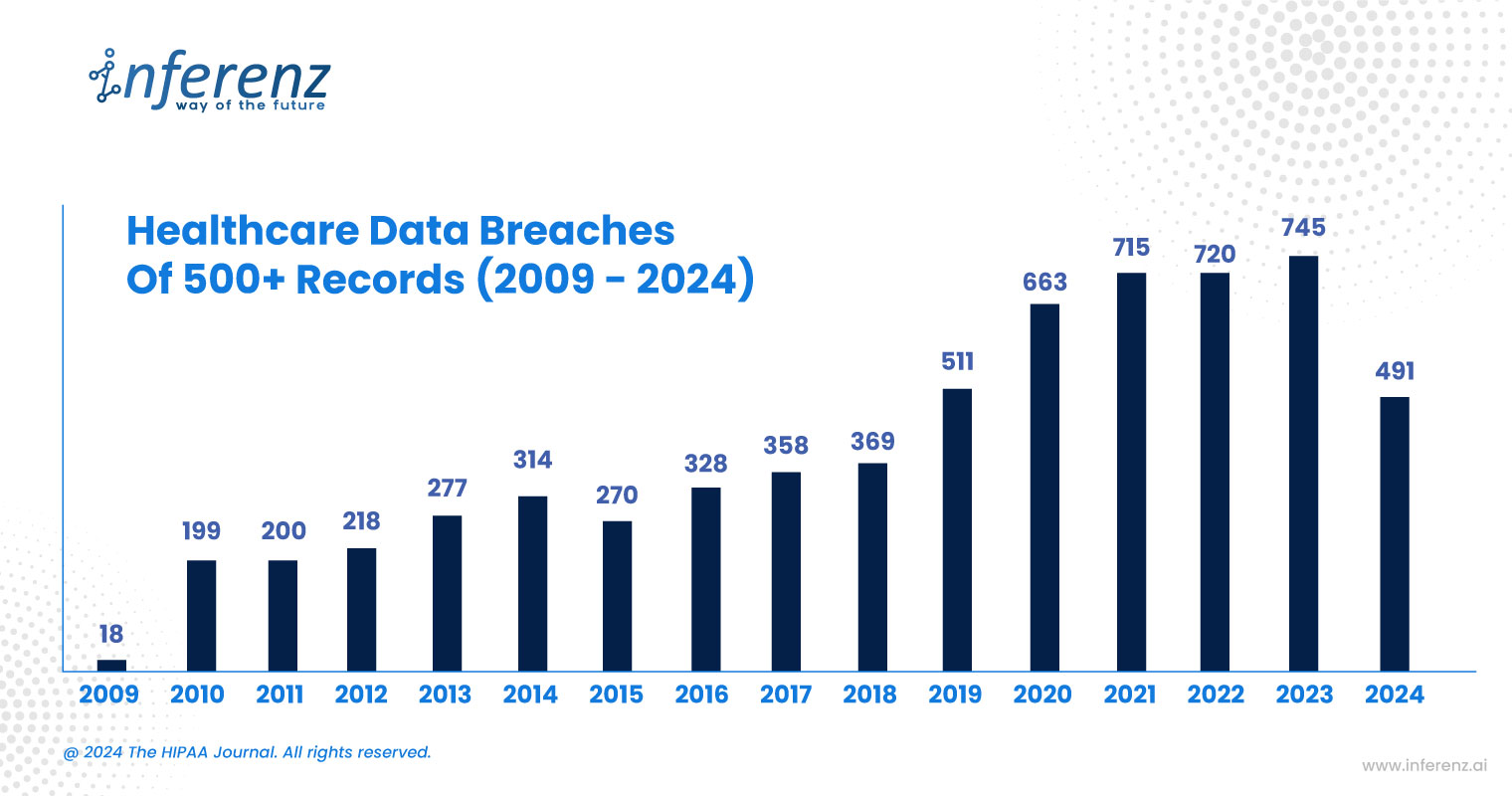
In the most recent period, in line with the Advisory board, the latest updates from California, DC, and Texas suggest that 2023 saw an alarming rise in healthcare data breaches, with 727 reported incidents compromising the data of nearly 133 million individuals.

The HIPAA Journal further reveals that in this year itself, February 2024 witnessed 69.5% of healthcare data breaches attributed to hacking, compromising nearly 5 million records in only one month. Here is a more detailed explanation:

Healthcare Data Security Breaches

The large volumes of sensitive data handled by healthcare organizations, combined with AI systems’ reliance on this data, make them vulnerable to data breaches and cyber-attacks.

Vulnerabilities in Machine Learning Models

ML models are at risk of data leakage, potentially resulting in privacy crises for organizations. As stated by the National Library of Medicine, while machine learning (ML) can significantly enhance physicians’ decision-making, it also introduces vulnerabilities in healthcare systems that are susceptible to attacks.

ML models are particularly vulnerable to various types of attacks, including data poisoning, where the training data is compromised. Evasion attacks, where test data is manipulated to mislead the model invalidation and backdoor exploits.

In response to these concerns, employing techniques like encryption, anonymization, and secure storage is essential for safeguarding sensitive healthcare data. While encryption secures data during both transfer and storage, anonymization minimizes the potential exposure of personal identifiers.

Data engineers and tech leaders are at the forefront of implementing these measures, working to ensure that AI architectures are both secure and scalable.

Inferenz boasts a team of skilled data engineers who specialize in developing AI-driven healthcare solutions that seamlessly integrate top-tier security practices, ensuring data protection and regulatory compliance.

Balancing Compliance and Security in AI Development

As suggested by the Diagnostic and Interventional Radiology Journal, research has shown that AI algorithms may unintentionally absorb biases in their models. Whether intentional or not, such biases could lead to unforeseen challenges in clinical practice.

To prevent bias in AI systems, it is crucial to focus on early-stage strategies in AI development. Here are key principles that are essential to guide AI design and minimize the risk of bias:

  • Transparency: Ensures that data collection and processing methods are clear, fostering trust and accountability in the AI system.
  • Fairness: Promotes equal treatment and considers diversity, preventing discriminatory practices and ensuring that AI systems serve all users impartially.
  • Non-maleficence: Focuses on ensuring AI systems do not cause harm, particularly by avoiding biased, discriminatory, or ineffective decisions that could negatively impact patient outcomes.
  • Privacy: Ensures that data is used responsibly, giving patients control over their information and maintaining the ethical handling of sensitive data.

Thus, by balancing compliance and security at every stage of AI development, from data collection and processing to model deployment, service providers can minimize the risk of breaches and vulnerabilities.

Real-Time Auditing and Cross-Functional Review

For sustained compliance and security, healthcare data security measures should be consistently audited and assessed using real-time monitoring tools for risks such as unauthorized access or breaches in data handling.

Furthermore, robust compliance relies on seamless collaboration between regulatory advisors, data analysts, and healthcare experts. Healthcare law advisors can ensure that the AI systems meet evolving regulatory standards. AI engineers can design and implement security measures, and clinicians can provide insights into clinical requirements.

This cross-functional teamwork will ensure that all aspects of AI system development and deployment are fully compliant with regulations and aligned with best practices for healthcare data security and patient care.

Conclusion

Healthcare data security is critical, and it demands unwavering attention to privacy and regulatory standards. Top executives, Chief Technology Officers (CTOs), and data architects need to work in tandem to ensure that patient data remains protected while pushing the boundaries of AI-driven innovation.

AI in Healthcare: Expert Insights, Use Cases, Future Trends

AI in healthcare is no longer a glimpse into the future but a breakthrough that is happening today. Its role is extremely conspicuous and has brought about a considerable change to many aspects of healthcare.

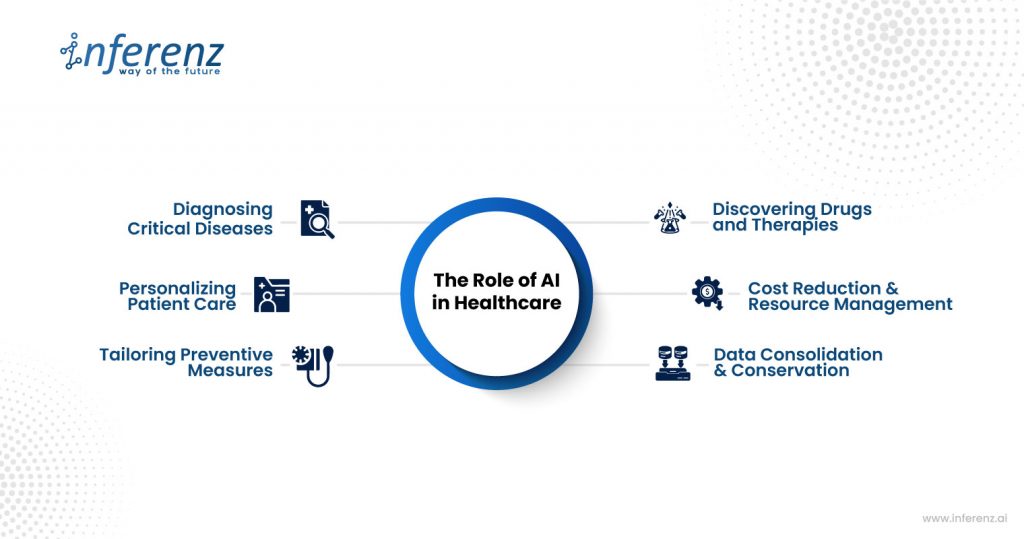
From diagnosing diseases with speed and precision, personalizing patient care, tailoring preventive measures, discovering drugs and therapies, and cost reduction to overseeing administrative workflow, the benefits are far-reaching. By consolidating and conserving data, predicting analytics, and natural language processing, AI has optimized healthcare data.

role of ai in healthcare


Considering the upheaval brought by AI technology in healthcare, evaluating its usage is crucial, as unregulated AI can endanger patient safety and compromise trust in healthcare. Through this article, we will explore the critical role of responsible AI technology and how it is attainable.

Ethical Considerations in AI-Driven Healthcare

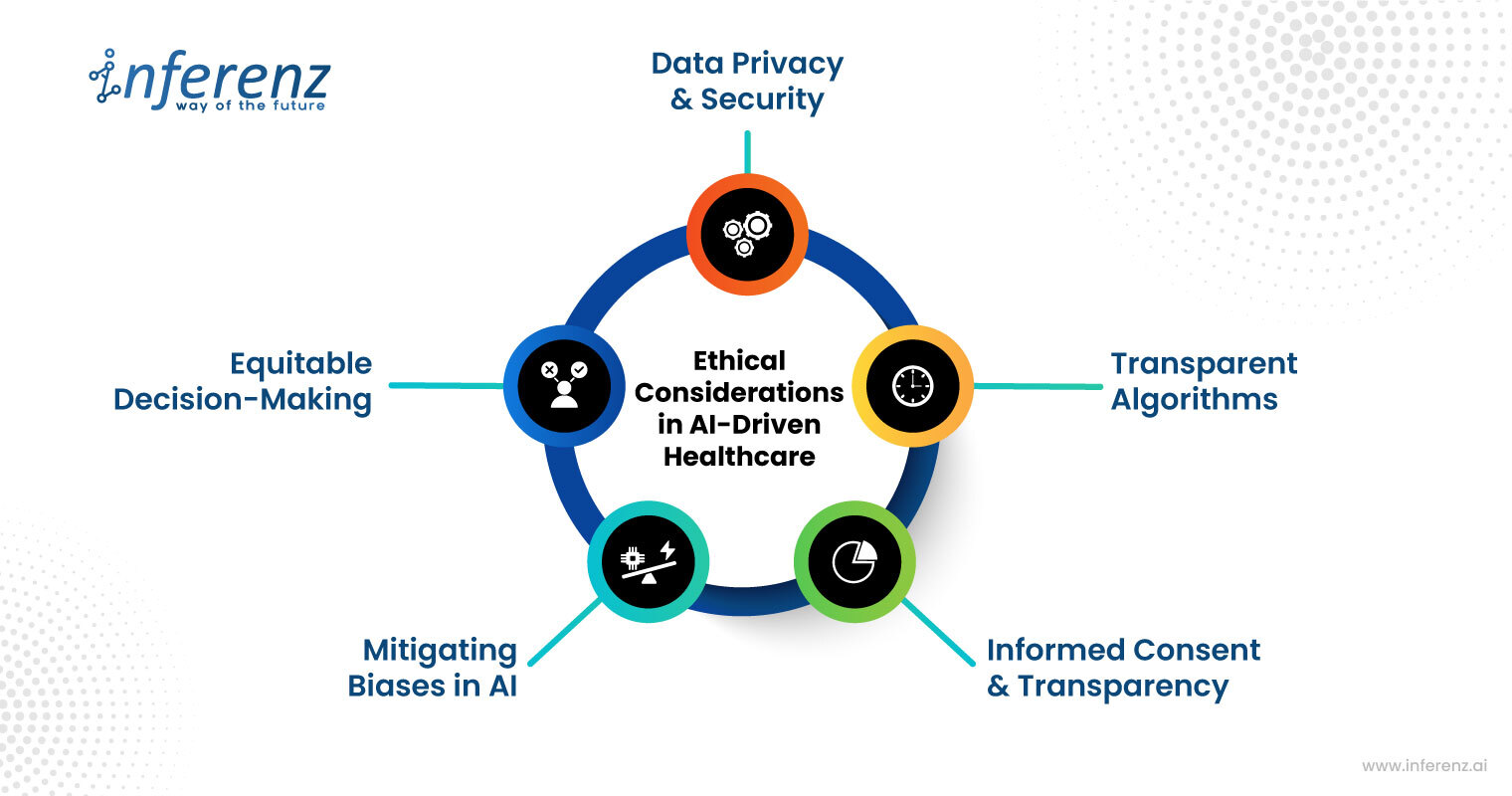
Ethics in AI-driven healthcare is critical as its role in healthcare is one of a silent partner. It impacts the three fundamentals of the industry, which are products, services, and finance. Therefore, rightness in data privacy and security, patient autonomy, roles of stakeholders should be secured. Here are a few examples of ethical considerations in AI-driven healthcare:

Data Privacy & Security

As the volume of healthcare data is growing exponentially, data privacy and security have become primary concerns. Here are a few ways to ensure data privacy and security in healthcare:

Handling Sensitive Patient Data:

As the orientation of the healthcare industry is toward patients, ensuring their data confidentiality is crucial to it. The industry is faced with a wide spectrum of structured, unstructured, and patient-generated health data that necessitates the use of artificial intelligence to process large data sets. 

However, its unmonitored use can anonymize patient information. To mitigate that, healthcare organizations must have stringent compliance with security regulations like HIPAA and GDPR and ensure broadened protection of patients’ sensitive medical data. 

Risk Of Data Breaches and The Need For Robust Security Protocols:

The HIPPA journal’s healthcare data breach statistics have shown an upward trend in data breaches due to hacking incidents and ransomware attacks. In a record stated by OCR, there was a 239% increase in hacking-related data breaches between January 1, 2018, and September 30, 2023, and a 278% increase in ransomware attacks over the same period.

In 2023, 79.7% of data breaches were due to hacking incidents. Such breaches of healthcare data can be averted through widespread data encryption, the use of intrusion and malware detection systems, and strict security audit protocols.

HIPPA report on AI in healthcare

Bias in AI Algorithms

In healthcare generally, biases in AI can emerge from inherent design or learning mechanisms of the algorithm itself. A study published in the Science Journal described how biases in AI algorithms systematically discriminated based on gender, race, and socioeconomic parameters. Here are a few ways to overcome the prejudice in patient care:

Identifying and Mitigating Biases in Healthcare AI

Healthcare has struggled to include women and minorities in research despite knowing they have different risk factors and manifestations of the disease. Also, the algorithm assigned people to high-risk groups based on their socioeconomic status. According to biases, black people had to be sicker than white people before being referred for additional help.

Ethical considerations in AI driven healthcareThe bias in the algorithms that lead to inequities in healthcare can be identified and mitigated by capturing data from varied demography, collaborative research, continuous monitoring, and ensuring accurate and formatted data for use in multiple systems.

Importance of Transparent Algorithms for Equitable Decision-Making:

To ensure transparency in algorithms and support equitable decision-making, the design and implementation of AI algorithms must align with ethical guidelines and industry standards. 

The performance of algorithms must be continuously evaluated to ensure transparency and accountability. There should be mechanisms that regularly audit the AI systems to provide accuracy. 

Patient Consent & Transparency

The role of AI technology in healthcare must complement patient care and not compete with it. The AI decisions must be regularly scrutinized to identify any potential inaccuracy in the judgment

The outcomes must be explained to the patients using explainable AI (XAI) to ensure transparency throughout their treatment. Also, healthcare industries must allow insights and data collection from diverse patients to understand the impact of AI on them and mitigate disparities in their care.

Fair Use of AI in Healthcare Analytics and Decision-Making

Fair use of AI in healthcare means the use of unbiased AI that supports patient autonomy and provides accurate diagnoses and treatments for all patients regardless of their differences. Establishing this fairness requires an understanding of the potential causes of misuse of AI and the development of strategies to mitigate them.

AI in Diagnostics and Treatment Planning

The integration of AI in healthcare offers precision in diagnosis and effective treatment plans. With algorithms, AI can identify anomalies in medical data and offer evidence-based recommendations and insights. It can help monitor patient conditions and provide personalized treatment, thus improving overall patient care. 

Ensuring AI Recommendations Align With Human Clinical Judgment

Healthcare is human-centered, making it imperative that AI recommendations harmonize with human intelligence for enhanced clinical judgments. While AI can process large data sets and provide predictive analysis, it lacks the nuanced judgment and ethical reasoning of humans. 

The healthcare industry must have a collaborative human-in-the-loop model where AI is used as a tool to increase diagnostic accuracy, provide remote health monitoring and personalized treatment, and streamline administrative workflow.

Avoiding Over-reliance on AI

AI has the potential for misinformation, algorithmic bias, and lack of accountability that can endanger patient safety. Therefore, it is important to avoid over-reliance on AI, maintain human oversight to mitigate biases, and explore key ethical concerns, including patient data privacy, security, and discrimination.

By avoiding over-reliance on AI and integrating human oversight, we can ensure that AI technologies align with healthcare values and ethical standards, thereby fostering patient’s trust in healthcare systems. 

AI in Predictive Analytics

AI predictive analytics uses machine learning (ML) algorithms to assess how different diseases progress in individual patients and predict how they might respond to various treatments. This leads to more personalized treatment plans, maximizing effectiveness in healthcare management.

Responsible Use Of AI In Predicting Patient Outcomes

In the context of preventative care and personalized medicine, AI can be used responsibly to process broader medical data, including genetic data, medical history, and lifestyle factors, to identify patterns and make predictions about health outcomes. It can forecast public health risks, provide personalized risk assessments, and support decision-making in preventive medicine.

Ethical Implications Of Using Predictive Data In Patient Care Decisions 

Although AI is a potentially promising application, the ethical implications of using patient data raise concerns about patients’ autonomy in decision-making that could impact the doctor-patient relationship.

As over-reliance on predictive analytics grows, aspects like voluntary participation, informed consent, confidentiality, etc., must be necessitated. It’s crucial to strike a balance between taking advantage of the benefits and safeguarding the patient’s confidential data against misuse. 

Regulatory Landscape and Future Outlook

AI technologies are being rapidly deployed, which could either benefit or harm stakeholders, including healthcare professionals and patients. When using health data, AI systems could have access to sensitive personal information, necessitating robust legal and regulatory frameworks for safeguarding privacy, security, and integrity.

Current AI Regulations in Healthcare

The World Health Organization (WHO) has listed key regulatory considerations on the role of AI in healthcare. WHO emphasizes the following aspects in its listing:

  • Ensure accurate data quality through rigorous evaluations and prevent biases and errors in the AI algorithms.
  • Address risk management, issues like ‘intended use,’ ‘continuous learning, human interventions, training models, and cybersecurity threats.
  • Externally validate data and interpret the intended use of AI to assure safety and facilitate regulation.
  • Encourage dialogue and collaboration among stakeholders, including healthcare developers, regulators, manufacturers, health workers, and patients.
  • Foster trust and transparency in documentation by documenting the entire product lifecycle and tracking development processes.

Future Trends in Responsible AI Governance

The future of AI in healthcare is brimming with promises as it is expected to enhance the functionality of healthcare systems further and positively impact patient care. According to the Mayo Clinic, the future of AI in healthcare could create novel methods to diagnose, treat, predict, prevent, and cure disease. It can select and match patients with the most promising clinical trials and develop remote health-monitoring devices and more. Here are a few areas of development:

  • Adaptive Learning & Real-Time Data Analysis: The future of AI in healthcare will be more equipped with advanced learning capabilities and analyzing data in real-time. It will constantly update its knowledge base and algorithms with new data, research, and outcomes.
  • Adaptive Patient Care: Continuous learning will enable AI to assess patient-specific factors over time better, leading to more personalised and effective healthcare solutions.
  • Accuracy Over the Long Run: As AI gains more exposure to diverse patient cases and conditions, its diagnostic and treatment recommendations are expected to become precise and reliable.

FDA has developed SaMD (Software as a Medical Device) that necessitates the steps AI models must follow to be approved for healthcare. AI developers have to seek review and approval from the FDA when significant medication is involved.

Here are a few more ways to ensure that the future of AI in healthcare is made with greater responsibility: 

  • Maintain algorithmic accountability by building a framework that ensures that AI systems are audited and held accountable for their outcomes.
  • Develop a human-in-the-loop (HITL) model where human judgment is blended with AI technical know-how.
  • Mobilize Fast Healthcare Interoperability Resources (FHIR), a health level seven international (HL7) standard for exchanging healthcare information electronically. 
  • Execute a federal learning approach to train AI models using data from healthcare institutions without sharing sensitive data, ensuring patient privacy while still improving the model’s performance.

Inferenz is a team of skilled professionals that offers healthcare professionals cutting-edge solutions and products. We provide tailor-made machine learning and AI chatbots for healthcare to ensure they align with your business needs.

Contact us today, and let us help you build the right solution that seamlessly fits into the existing system.

 Responsible AI in healthcare

AI in Healthcare FAQs 

What is the future of AI in healthcare? 

The future of AI in healthcare includes tasks ranging from simple to complex—everything from reading radiology images to making clinical diagnoses and treatment plans and providing preventive healthcare measures.

What is the most common use of AI in healthcare?

One of the most common uses of AI in healthcare is training algorithms using data sets such as health records to create models capable of performing tasks like predicting and categorizing outcomes.

How to improve healthcare using AI? 

AI can improve healthcare in many ways, including medical diagnosis, drug discovery, patient safety and experience, and healthcare data management. While AI has many benefits in healthcare, patient education and building trust are also crucial for successful integration.

What are the ethical considerations in AI healthcare? 

Some ethical considerations in healthcare include addressing the biases in AI algorithms, ensuring data privacy, asking for patient consent, and maintaining complete transparency in the decisions.

How does AI reduce costs in healthcare? 

AI can process a vast amount of medical data to identify patterns that improve decision-making and offer more cost-effective treatments. It can also automate certain administrative tasks that reduce patients’ workloads and improve job satisfaction.

ChatGPT 3 Vs. ChatGPT 4: How They Are Different From GPT 3.5

ChatGPT 3 vs. ChatGPT 4 has become a hotly debated topic since OpenAI released the latest version of the large language model. Since the launch of ChatGPT, the powerful and unique AI chatbot has never failed to amaze users with its abilities. However, it had a few limitations, such as inaccurate data generation, hallucinations, etc. 

OpenAI unveiled its latest creation, GPT-4, to address and eliminate the shortcomings of ChatGPT. The main difference between ChatGPT 3 and GPT-4 is that the latter can generate up to 25,000 words eight times faster than its predecessor. Compared to ChatGPT 3.5, ChatGPT 4 can analyze images and generate answers based on the picture. 

Undoubtedly, GPT-4 is the improved version of ChatGPT 3 and ChatGPT 3.5. But is it worth paying for? Here we have covered everything you need to know about the multimodal developed by OpenAI. 

What Is ChatGPT 4 & How To Access It? 

After the launch of OpenAI’s viral AI chatbot – ChatGPT, various developments in the tech world have occurred. ChatGPT is an app that relies on ChatGPT 3 vs. ChatGPT 4 to produce human-like text. 

Think of it this way: if ChatGPT is a car, GPT is like the engine that powers it. It is the brain behind the app that can be tailored for different purposes like text summarizing, parsing text, copywriting, or translating languages. 

GPT 4 is nearly ten times more advanced than its predecessor, GPT-3.5. It can better understand the inputs and distinguish nuances thanks to its efficiency and accuracy. Hence, it leads to more coherent and accurate responses. 

However, if you are using the current free version of the viral AI chatbot – ChatGPT, you are accessing GPT 3.5. You will need to subscribe to ChatGPT Plus to explore the capabilities of GPT-4.

Differences Between GPT-4 And Its Predecessor GPT 3.5

OpenAI, the developer of GPT 3.5 and GPT-4, said, “We spent six months making GPT-4 safer and more aligned.” They added, “GPT-4 is 82% less likely to respond to disallowed content requests and 40% more likely to generate factual responses than GPT-3.5.” 

Here are a few more differences between the two artificial intelligence models developed by OpenAI – ChatGPT 3 vs. ChatGPT 4. We will compare the models with ChatGPT 3.5 – a model that is used by the free version of ChatGPT to generate texts. 

  • GPT 4 has advanced capabilities and has been designed to generate and interpret the text in various dialects. As the multimodal can respond sensitively to users expressing frustration or sadness, it generates more personalized and genuine responses. 
  • Unlike ChatGPT 3.5, GPT-4 can understand complex tasks that require contextual understanding. In addition, it can process complex mathematical and computational concepts. Be it solving an advanced calculus problem or stimulating chemical reactions, GPT-4 can do it all. 
  • GPT-4 has stronger programming powers than its predecessor. It can debug the existing code or generate code snippets more efficiently and in less time. You never know when GPT-4 will lead ChatGPT and Copilot in terms of code generation. 
  • ChatGPT 3.5 focuses primarily on generating text, whereas GPT 4 is capable of identifying trends in graphs, describing photo content, or generating captions for the images.

GPT 3 was released by OpenAI in 2020 with an impressive 175 billion parameters. In 2022, OpenAI fine-tuned it with the GPT 3.5 series, and within a few months, GPT-4 was launched on March 14, 2023, which can do many more things.

Impact Of New Tools Impact The Tech World In 2023 

Microsoft and Google are two leading companies that have entered the bandwagon after the release of ChatGPT by OpenAI. However, it’s essential to understand that no AI tool is perfect, but it can help individuals and companies in multiple ways. 

Businesses can integrate AI apps or tools to automate mundane tasks and improve employee productivity. These tools can eliminate the unnecessary usage of resources, helping you save money. If you are a business owner wanting to stay ahead, it’s time to develop an AI app that meets the needs of your organization and performs multiple tasks simultaneously.  

Inferenz has dedicated and professional Artificial Intelligence and Machine Learning experts who understand your requirements and develop an AI app. Remember, the ChatGPT 3 vs. ChatGPT 4 debate is the beginning of the AI-driven world, so get ready for the future with your own AI app! 

Best ChatGPT Alternatives in 2026: Free and Paid Options Compared

Summary

ChatGPT remains the most recognized AI assistant, but it is not always the best fit for every use case, user, or budget. A new generation of AI tools has emerged, offering stronger coding support, real-time web access, multimodal capabilities, and enterprise-grade reliability. This guide evaluates the leading ChatGPT alternatives across categories, from general-purpose assistants to coding copilots and specialized vertical tools, helping you make an informed decision based on actual capability, not hype.

Introduction

The AI assistant market has moved well beyond “ChatGPT or nothing.” Enterprises building on LLMs, developers debugging production code, and professionals writing technical documents all have distinct requirements that a single tool rarely satisfies. ChatGPT has faced capacity constraints, knowledge cutoff limitations, and pricing pressures. Meanwhile, competitors have moved aggressively, with models from Anthropic, Google, Microsoft, Meta, and Mistral challenging OpenAI’s dominance across nearly every performance benchmark.

The real question for most users is not whether to use an AI assistant, but which one is aligned with their workflow, data sensitivity requirements, and output quality expectations. This guide gives you the signal to cut through that decision.

What Is ChatGPT and Why Look Beyond It?

ChatGPT is a conversational AI developed by OpenAI, built on the GPT-4o model family as of 2025. It handles text generation, code assistance, document analysis, image interpretation, and structured reasoning. OpenAI offers a free tier and a ChatGPT Plus plan at $20 per month, with enterprise and API pricing layered on top.

Despite its capabilities, several structural limitations drive users to look for alternatives.

Key limitations of ChatGPT:

  • Knowledge cutoffs can lag by months, affecting research and current event queries.
  • Context window management can degrade on very long documents without proper tooling.
  • API costs scale quickly for high-volume enterprise use cases.
  • The free tier has meaningful restrictions on model access, speed, and file handling.
  • Privacy-sensitive industries require data handling guarantees that OpenAI’s standard offering does not always provide.

How to Choose a ChatGPT Alternative

Before selecting a tool, align your choice against four criteria: use case fit, model quality, data privacy standards, and total cost of ownership. A creative writer has entirely different requirements from a compliance analyst or a backend engineer.

Questions to guide your selection:

  • Does the tool have real-time web access, or is it working from a fixed training set?
  • What is the maximum context window, and does it handle long documents reliably?
  • Is the tool deployable on-premises or via private cloud, if data residency matters?
  • Does it support multimodal input (images, PDFs, audio)?
  • Is pricing usage-based, seat-based, or flat-rate?

The Best ChatGPT Alternatives in 2026

General-Purpose AI Assistants

Claude (Anthropic) Claude, built by Anthropic, is one of the most capable general-purpose alternatives to ChatGPT available today. The Claude 3.7 and upcoming Claude 4 family offer an exceptionally large context window, precise instruction-following, and strong performance on complex reasoning tasks. Claude is particularly well-regarded in enterprise settings for its constitutional AI approach, which prioritizes safe and reliable outputs. Available via Claude.ai and the Anthropic API. Pricing includes a free tier; Claude Pro is $20 per month.

Google Gemini Google’s Gemini models (Ultra, Pro, Flash) are deeply integrated into Google Workspace, giving them a practical edge for organizations already operating within the Google ecosystem. Gemini Ultra is competitive with GPT-4o on most benchmarks and offers native multimodal processing. Gemini’s integration with Google Search gives it a real-time information advantage over models working from static training data.

Microsoft Copilot (Bing AI) Built on OpenAI’s model stack and integrated across Microsoft 365, Bing Search, and Azure, Microsoft Copilot is the most tightly embedded AI assistant in the enterprise productivity space. For organizations running on Microsoft infrastructure, Copilot’s contextual awareness across Outlook, Word, Excel, and Teams makes it a high-value alternative.

Perplexity AI Perplexity is purpose-built for research-oriented queries. It retrieves and synthesizes live web content with source citations, making it a strong choice for analysts, journalists, and researchers who need current, verifiable information. Its Pro tier adds GPT-4o and Claude model access, file uploads, and expanded context.

Meta Llama (Open Source) Meta’s Llama models are open-weight, meaning they can be downloaded, fine-tuned, and deployed on private infrastructure. For enterprises with the engineering capacity to run their own inference, Llama offers maximum control over data and customization. Llama 3.1 405B is competitive with closed frontier models on many benchmarks.

AI Tools for Coding and Development

GitHub Copilot GitHub Copilot remains the standard for AI-assisted development. Powered by OpenAI’s Codex and GPT-4 models, it provides inline code completion, multi-file context awareness, pull request summaries, and CLI support. It integrates across VS Code, JetBrains IDEs, and Neovim. Pricing starts at $10 per month for individuals.

Amazon CodeWhisperer Amazon’s CodeWhisperer is optimized for AWS environments and supports Python, Java, JavaScript, TypeScript, and C#, among others. It includes security scanning to flag vulnerable code patterns, making it a practical choice for development teams building cloud-native applications on AWS infrastructure. Free tier available for individual developers.

Tabnine Tabnine differentiates itself with privacy-first positioning and an option to run the model entirely on-device or in a private cloud. It supports over 80 languages and integrates with most major IDEs. For teams with strict IP or compliance requirements around code, Tabnine’s data isolation model is a meaningful advantage.

Cursor Cursor is an AI-native code editor built on VS Code. It allows developers to write code using natural language, refactor entire codebases in a single prompt, and query their codebase semantically. It has emerged as a high-productivity tool for engineers working on greenfield projects and complex refactoring tasks.

Replit AI (Ghostwriter) Replit’s AI tooling is embedded directly in its cloud-based IDE. For educators, student developers, and teams prototyping quickly without local environment setup, Replit AI offers a streamlined path from idea to running code.

AI Writing and Content Tools

Jasper AI Jasper is designed specifically for marketing teams and content operations at scale. It offers brand voice training, campaign workflows, and integrations with CMS platforms. Teams producing high volumes of landing pages, ad copy, and blog content benefit from its templated workflows. Jasper operates on GPT-4 and proprietary fine-tuned models.

Writesonic / Chatsonic Chatsonic, built on the Writesonic platform, integrates real-time Google Search results, making it more current than standard LLM outputs for trending topics. It also supports image generation through Stable Diffusion integration. Pricing starts at around $13 per month after the free trial.

Rytr Rytr is a cost-efficient writing assistant covering 40-plus use cases including product descriptions, email drafts, and blog outlines. It is not a frontier model tool, but for teams prioritizing cost over raw capability, Rytr’s flat-rate pricing (including a generous free tier) makes it accessible for small businesses and freelancers.

QuillBot QuillBot remains a strong tool for paraphrasing, grammar correction, summarization, and translation. Its translator supports over 30 languages. It does not replace a general-purpose LLM but serves a specific editorial workflow effectively.

WordTune WordTune focuses on rewriting and improving existing text rather than generating from scratch. It is particularly useful for non-native English speakers polishing professional documents, or for teams seeking to adapt content across tonal registers.

AI Tools for Research and Search

You.com (YouChat) You.com’s YouChat offers a conversational interface layered on top of a customizable search engine. It supports app integrations for coding, writing, and image generation within the same interface. YouChat 2.0 adds richer source citations and improved answer quality.

Neeva AI Neeva’s AI search product emphasizes privacy, with no tracking and no ad-based revenue model. Its Gist feature provides a quick AI-powered browsing summary. Pricing is approximately $5 per month after the trial period.

Elicit Elicit is purpose-built for academic research workflows. It reads and synthesizes information from research papers, extracts key findings, and identifies study limitations. For researchers doing systematic reviews or literature analysis, Elicit is considerably more precise than a general-purpose chatbot.

AI Tools for Specialized Use Cases

Midjourney For AI image generation, Midjourney remains the quality benchmark. It operates via Discord and a web interface, producing high-fidelity visual content from text prompts. The describe command, which converts images into text prompts, is useful for reverse-engineering visual styles.

Otter.ai Otter.ai automates meeting transcription, summary generation, and action item extraction. It integrates with Zoom, Google Meet, and Microsoft Teams. For teams managing high meeting volumes, Otter reduces the overhead of note-taking and follow-up documentation significantly.

Character AI Character AI enables conversation with custom AI personas, including fictional and public figure-inspired characters. It is primarily a consumer entertainment product rather than a professional tool, but it demonstrates the breadth of what conversational AI interfaces can support when applied to engagement-driven use cases.

Socratic by Google Socratic is an education-focused AI assistant designed for K-12 students. It provides step-by-step explanations across subjects including math, science, and history. Available as a free mobile app on iOS and Android.

ChatGPT vs. Key Alternatives: A Capability Comparison

ToolReal-Time WebCode FocusMultimodalFree TierBest For
ChatGPT (GPT-4o)Yes (Plus)StrongYesLimitedGeneral use
Claude 3.7PartialStrongYesYesLong docs, reasoning
Gemini UltraYesStrongYesYesGoogle Workspace
Perplexity AIYesModerateYesYesResearch, citations
GitHub CopilotNoSpecializedNoNoDevelopment teams
Jasper AINoNoLimitedNoMarketing content
MidjourneyNoNoImage genNoVisual content

Limitations to Understand Before Switching

No AI tool is universally superior. Each alternative involves a trade-off.

Switching costs are real. Prompting styles, integrations, and fine-tuned workflows often do not transfer cleanly between platforms. A team that has optimized around ChatGPT’s API behavior will incur retraining and integration time moving to a different provider.

Benchmark performance does not equal task-specific performance. A model that scores higher on MMLU or HumanEval may still underperform on your specific use case. Pilot testing on representative tasks is the only reliable evaluation method.

Open-source models require infrastructure. Running Llama 3 or Mistral models privately requires GPU infrastructure, model serving expertise, and ongoing maintenance. The “free” label on open-weight models does not account for operational costs.

Conclusion

The competitive landscape for AI assistants has matured significantly. ChatGPT is no longer the only credible option, and in many specific use cases, it is not the best one. Claude leads on long-document reasoning and safety-conscious enterprise deployment. GitHub Copilot and Tabnine dominate the development workflow. Perplexity and Elicit serve researchers who need grounded, cited outputs. Gemini is the natural choice for Google Workspace-native organizations.

The strategically sound approach is not to pick one tool for all tasks, but to build a small, deliberate stack aligned to your actual workflows. For most professional and enterprise contexts, that means a primary general-purpose assistant, a specialized coding tool, and one research-oriented interface. The tools exist; the priority is the evaluation discipline to match them to genuine requirements.


Frequently Asked Questions

What is the best free alternative to ChatGPT in 2025?
Claude by Anthropic, Google Gemini, and Perplexity AI all offer capable free tiers. Claude and Gemini handle long documents and general reasoning well. Perplexity is the strongest option if you need real-time sourced information. The right choice depends on whether you prioritize reasoning depth, current information, or integration with existing tools.

Which ChatGPT alternative is best for coding?
GitHub Copilot is the industry standard for AI-assisted development and integrates directly into most major IDEs. Cursor is a strong alternative for developers who prefer an AI-native editor. Amazon CodeWhisperer is the best fit for teams working primarily within the AWS ecosystem. Tabnine is worth considering if data privacy and on-premises deployment are priorities.

Is there a ChatGPT alternative with real-time internet access?
Yes. Perplexity AI, Google Gemini, and Microsoft Copilot all retrieve live web content. Chatsonic also integrates Google Search results. ChatGPT Plus supports web browsing as well, but several alternatives make real-time retrieval a core part of their product rather than an optional add-on.

What is the best ChatGPT alternative for enterprise use?
Claude (Anthropic) and Microsoft Copilot are the most commonly selected options for enterprise deployment. Claude offers strong data handling policies and is available via the AWS Bedrock and Google Cloud Vertex AI model catalogs. Microsoft Copilot integrates across the Microsoft 365 suite and benefits from Microsoft’s enterprise compliance infrastructure.

Are open-source ChatGPT alternatives reliable?
Meta’s Llama 3.1 405B and Mistral’s frontier models are competitive with commercial alternatives on many benchmarks and are fully auditable. The reliability depends less on model quality and more on deployment infrastructure. Organizations with the engineering capacity to run robust inference pipelines can achieve strong, cost-efficient results with open-weight models. Without that infrastructure, hosted commercial options are more dependable in practice.

What AI tool should I use instead of ChatGPT for research?
Perplexity AI is the most practical general research tool, offering real-time citations and source transparency. Elicit is the stronger choice for academic research, particularly for synthesizing findings from scientific literature. For business research requiring current market data, Gemini’s integration with Google Search provides a natural advantage.

AI Chatbots For Businesses: ChatGPT & 12 Best AI Chatbots

Finding the best AI chatbots have become a hot topic lately, and that too for a good reason. Individuals are using conversational AI chatbots to automate repetitive and mundane tasks. Besides, many businesses are leveraging the power of advanced AI chatbot platforms to streamline interactions with customers. 

From welcoming customers on the website to help them during product discovery, an AI-powered chatbot can do it all. But not all chatbots are the same. In order to maximize the benefits of chatbot technology, it’s vital to choose the best AI chatbots for 2023. This guide reveals the best chatbots so you can make the ideal choice for your business. 

What Are Artificial Intelligence Chatbots Online? 

Chatbot technology has come a long way and is reshaping the customer service experience. An AI-enabled chatbot uses machine learning to converse with people. Customers can ask questions to intelligent chatbots online and get quick solutions to their queries. 

As per Statista, the size of the chatbot market is expected to cross 1.25 billion U.S. dollars in 2025. This indicates that more businesses are using chatbots to improve customer service, increase business sales, and boost website engagement. 

Some of the best benefits of using artificial intelligence chatbots in 2023. 

Increased Sales

AI chatbot solutions can recommend products depending on customer demands and requirements. It can upsell and cross-sell products during its conversation with the customers. 

Personalized Shopping Experience 

Customers spend more time with a brand if they offer a personalized shopping experience. Shoppers say they will likely buy from retailers if they receive customized recommendations. Integrating smart chatbots will help you boost sales and improve the online shopping experience. 

Improved Communication 

Many companies prefer integrating the best AI chatbots to improve communication between the brand and customer. As chatbots are available 24*7, they can keep your website visitors engaged and offer quick support. 

13 Best AI Chatbots For Your Business [2023]

Let us now reveal the list of the best AI chatbots available online for businesses. 

ChatGPT

Since ChatGPT’s inception in late 2022, it has been in the news due to its unmatchable capabilities. The conversational AI platform is based on OpenAI’s GPT-3.5 or GPT 4 and is free. You can use ChatGPT by writing detailed and customized prompts to generate answers, letters, emails, and more. However, due to its limited knowledge of world events, it may provide inaccurate results. 

Tidio

Tidio is an artificial intelligence chatbot for your business that uses deep learning to improve customer support and sales generation. This best chatbot tool is easy to use, helping you to create your eCommerce AI chatbot. These AI chatbots use machine learning and natural language processing (NLP) technology to support shoppers and boost sales efficiently. 

Drift

Drift is one of the best AI-powered chatbots, specially designed for B2B brands. The chatbot offers real-time engagement and personalized user experience for buyers. The best part about the powerful AI chatbot is that it can integrate with other tools like Zaiper, MailChimp, Google Analytics, etc. 

atSpoke

One of the best AI chatbots available online in 2023 is atSpoke. It provides employees with all the knowledge they need about customers and business. The internal ticketing system with built-in help desk AI technology allows internal teams to enjoy 5x faster resolutions while automatically answering 40% of requests. 

WP Chatbot

WP-Chatbot can easily integrate with a Facebook Business page and power live and automated interactions with a WordPress site. The easy one-click installation process allows fast addition to live chat. 

Kasisto

The custom chatbot is designed for finance businesses and delivers real-time customer service using deep conversational AI models. It can serve as a virtual assistant for banking customers and improve engagement on various platforms. 

Medwhat

One of the best AI chatbots for personal medical assistance is Medwhat. It can provide medical consulting to patients with relevant information based on their health condition. This chatbot benefits organizations wanting to adopt AI in healthcare and reduce human error. 

Infeedo

One of the most advanced AI chatbots that collect employee feedback for companies is Infeedo. The virtual assistant communicates with the employees to understand those who are unhappy, about to leave, or disengaged. 

WATI 

WATI, officially integrated with WhatsApp, is an AI chatbot application for customer service. Companies that operate on WhatsApp can integrate the tool to improve customer interaction and optimize experiences, leading to more sales. 

Intercom 

Intercom is one of the feature-rich AI software that supports chatbots and live chat and offers messenger-based experiences for prospects. It can answer around 33% of customer queries while providing a personalized experience. 

Watson Assistant 

Developed by IBM, Watson Assistant can efficiently run on messaging channels, websites, mobile apps, or customer service tools. In addition, the AI-powered chatbot is pre-trained with content from your specific industry. This helps the popular AI tool to understand historical chat or call logs, search for answers in the knowledge base, provide straightforward solutions to customers, or guide them to human representatives. 

Infobip

The intelligent chatbot-building platform of Infobip allows you to create and deploy a smart AI-powered virtual assistant for customer service support. The new level of automation, speed, and availability boosts customer satisfaction while reducing overall customer support costs. 

Zendesk Answer Bot

Many brands are leveraging chatbot software to engage their customers and streamline in-house operations. Zendesk Answer Bot is a multilingual tool that works alongside your support team. You can deploy the Zendesk Answer Bot fly solo or use additional technology on top of the Zendesk chatbot within mobile apps or on your website chat. 

AI experts help brands build chatbots that can understand customer queries and offer quick solutions. If you want to know more about developing an AI app, schedule a call with Inferenz experts today! 

Build The Best AI Chatbot Or App With Inferenz Experts 

Undoubtedly, AI chatbot software is a conversational tool that can benefit businesses in multiple ways. Not only can a powerful chatbot improve customer interaction, but it can also help brands boost sales. If you are a business owner wanting to stay ahead and understand the ins and outs of the competitive world, it’s vital to invest in creating your AI app. 

Inferenz has a team of dedicated and professional Artificial Intelligence and Machine Learning experts who understands your business needs and help you get off on the right foot. Whether you are a healthcare or an eCommerce owner, we will help you create the best AI chatbots for business to improve customer support.

ChatGPT Plugins: How To Use Plugins With ChatGPT

ChatGPT plugins are alluded to as the “eyes and ears” for the language model by OpenAI due to their unmatchable capabilities. Since the launch of ChatGPT, the AI tool has swayed the world by storm. Its ability to write code, generate human-like responses, analyze raw data, etc., is the main reason why users prefer using the chatbot. 

However, it is also fraught with drawbacks and limitations. ChatGPT plugins are designed to eliminate these shortcomings by making the chatbot safe to interact with. If you are planning to get access to ChatGPT plugins, this guide is for you. In this ultimate guide, we will walk you through what plugins are, how to use them, their benefits, and much more! 

What Are ChatGPT Plugins? 

Until now, OpenAI ChatGPT failed to access real-time information or solve complex mathematical problems. However, this is going to change now as OpenAI has announced a set of proprietary plugins and the inclusion of third-party plugins. 

You can think of ChatGPT plugins as tools that will help ChatGPT access up-to-date information, ease complicated computation, and integrate third-party services. With the new set of plugins and accurate prompts, ChatGPT can browse the Internet and provide relevant answers to users. 

In addition, ChatGPT will enable users to book tickets, do shopping, share their to-do list to automate tasks, and much more. 

Types Of ChatGPT Plugins & Their Uses

OpenAI, in collaboration with third-party companies, hosted multiple ChatGPT plugins to help users make the most out of using ChatGPT. These include: 

Web Browser Plugin

With the help of a web browser plugin, ChatGPT can access data from the Internet. That said, the web browsing ability of ChatGPT allows users to generate answers to the latest topics or get information that is too recent. 

Code Interpreter Plugin

ChatGPT is capable of writing and debugging code, making it a competitor of Copilot. The code interpreter plugin is limited to python and helps users to run and interpret the code on ChatGPT better than Copilot. 

Retrieval Plugin 

The open-source plugin enhances the usefulness of the system by allowing ChatGPT to obtain a document from its knowledge base. Hence, it helps users to get relevant answers quickly. 

On the other hand, a few plugins created by third-party services include: 

  • Expedia 
  • Zaiper 
  • Wolfram
  • Speak 
  • Slack 
  • Klarna
  • Milo 
  • KAYAK
  • OpenTable
  • Instacart
  • FiscalNote
  • Shopify 

Let us understand how these third-party plugins work: 

Expedia 

This ChatGPT plugin will allow users to converse about traveling with the AI tool. It will act as a travel guide to help users plan trips and check flight prices, vacation rentals, or hotels. 

Wolfram

Wolfram boosts the capabilities of ChatGPT by allowing it to solve complex problems with mathematical and computational information without hallucinations. 

OpenTable 

With OpenTable plugins, users can book a table at a nearby restaurant or place a home delivery for food. In addition, the plugin helps users to learn more about the restaurants in their vicinity with a few clicks. 

InstaCart 

InstaCart makes ordering groceries and other household items easy. To use the plugin, you can list your requirements, and ChatGPT will automatically place the order. 

Kayak

One of the best plugins for OpenAI’s ChatGPT is Kayak which allows ChatGPT users to plan their short or long holidays. From making a list of arrangements to managing and arranging everything in advance, ChatGPT can do it all. 

Benefits Of ChatGPT Plugins 

Plugins for ChatGPT offer multiple benefits to users. Some of the best benefits of using ChatGPT plugins include the following: 

  • Users can access real-time data and use ChatGPT viral AI chatbot as their assistant to automate mundane tasks. 
  • With access to ChatGPT plugins from the plugin store, the AI chatbot can browse a user’s query from the web as well as retrieve data from the Internet. 
  • ChatGPT plugins like code interpreters help users easily write, debug, and run code. 

Plugins will make the AI chatbot more useful and accurate. If you want to develop an AI app that meets your business requirements, contact the Inferenz experts. The team of dedicated professionals will help you with Artificial Intelligence and Machine Learning services to build your AI app. 

How To Join The Waitlist To Access ChatGPT Plugins? 

As ChatGPT plugins are available only to a limited set of insiders and developers, you will have to join the waitlist to use them. Here is the step-by-step answer to how to join the waitlist to get ChatGPT Plugins. 

  • Click on https://openai.com/waitlist/plugins, and you will find the ChatGPT plugin waitlist. 
  • Scroll below the page until you find the “Join waitlist form.” 
  • Start filling in all the required details, such as full name, email, country of residence, use cases, etc. 
  • Once you complete the form filling, click on the “Join waitlist” button. 
  • A confirmation message will be displayed on your screen “Thank you. You will soon hear from us.” 

That’s it! You have successfully joined the waitlist to get access to the ChatGPT plugins. 

Note:- Developers and ChatGPT Plus users are more likely to be selected to try the plugins initially. 

How To Use The ChatGPT Plugins? 

If you are among the selected users, here is how to use the ChatGPT Plugins. 

  1. Click on the official website of GPT-4 (https://openai.com/product/gpt-4) and select “Try on ChatGPT Plus.” 
  2. On the account page, you can either log in or sign up. If you already have an account, click on login to continue and skip to step 7.
  3. If you do not have an account, click on sign up and enter your email address. Click continue. 
  4. Create a strong password and continue to proceed. 
  5. Verify your email using the mail received from OpenAI ChatGPT. From the email, select login. 
  6. Fill in all the required information, such as first name, last name, and your organization’s name. Click continue. 
  7. Now you will be directed to the free version of ChatGPT based on GPT 3.5. Select the “Upgrade to Plus” option on the page’s left side. 
  8. Select the “Upgrade Plan” in the pop-up window and fill in the payment details. 
  9. Choose the plugin model from the ChatGPT chat interface. A drop-down menu will appear. Click on the Plugin Store. 
  10. Install the plugins and get ready to use them to automate tasks. 

ChatGPT will leverage the installed plugins to perform a variety of tasks, fetch answers, or offer real-time information. 

Get Ready For The Artificial Intelligence World 

Artificial intelligence technology is taking the world by storm, with new tools and chatbots entering the market. The recent announcement of plugins for ChatGPT reveals that these plugins will be a true game-changer. Depending on their needs and requirements, individuals and businesses can build their own AI models. 

If you are planning for artificial intelligence system development or want to initiate a new machine learning project, contact Inferenz experts today. Leveraging the power of technology and understanding advanced tools like ChatGPT plugins will ensure your business stays ahead of the competition.

Chatbot For Healthcare: Key Use Cases, Benefits, & Risks Of AI

A chatbot for healthcare is a game changer for the medical industry, as it helps professionals serve patients 24*7. The conversational artificial intelligence chatbot reduces caseloads by assisting patients with easy access to healthcare. 

Using technology in healthcare is not a new concept. Healthcare professionals are already using various types of artificial intelligence, like machine learning, predictive analytics, etc., to address multiple issues. 

Thanks to new technology inventions, many healthcare organizations are leveraging the power of medical chatbots. If you are a healthcare provider wanting to integrate AI healthcare chatbots, this guide is for you. 

In this ultimate guide, we will discuss everything you need to know before implementing chatbot technology in healthcare. 

What Are Conversational AI Chatbots? 

There is no denying that chatbots in healthcare are becoming more critical than ever. According to Allied Market Research, the global healthcare chatbot market that accounted for $116.9 million in 2018 will cross $345.3 million by the end of 2026. That said, we can expect more implementation of chatbots in healthcare organizations. 

But before we dig deeper into chatbot technology in healthcare, let’s start with what a chatbot can do. In medical terms, healthcare bots are designed to provide guidance and appropriate help to patients digitally. Instead of searching online and understanding the cause of their symptoms, chatbots offer reliable and accurate information to patients. 

Many professionals believe that chatbots are designed to help patients who aren’t sure about the severity of their diseases. Chatbots work by collecting basic information from patients. Then, based on the input, healthcare AI bots provide patients with more information about their conditions. In addition, the chatbot can suggest the next steps or connect patients with doctors based on their health condition. 

Key Use Cases Of AI Healthcare Chatbot In Healthcare

Let us learn how healthcare providers can use chatbots to improve the patient experience. 

Health Tracking 

Many patients require daily health monitoring and tracking. Healthcare chatbots can be used to create a link between the patient and the doctor. Not only does the chatbot provide a detailed record of a patient’s health condition to the doctor, but it also assesses how well-prescribed medicines work to improve a patient’s health. 

Symptom Checking 

Chatbots can offer symptom checking to patients without them having to leave their homes. The Natural Language Processing (NLP) technology of chatbots helps patients to check their symptoms online and understand their medical condition. 

Patients can input their requests in the conversational AI in healthcare. The bot can access the information and narrow down the cause behind their symptoms. Thus, it will help patients determine whether they need professional treatment. 

Schedule Medical Appointments 

Scheduling doctor appointments has never been an easy feat. Patients have to wait in long queues, making it hard to get quick health information. Chatbots are proven to be a fantastic solution to this problem due to round-the-clock availability. 

Patients can quickly access medical information via chatbot by using its message interface. Plus, a well-designed healthcare chatbot can schedule medical appointments based on the doctor’s availability and the patient’s health. 

AI-powered chatbots can also send follow-up messages or reminders via email, text, or voice messages to remind patients about their appointments. The best part about scheduling appointments via chatbot is that the staff won’t get overwhelmed when inquiries become high. 

Easy Hiring & Employee Training 

Hiring and onboarding new employees can be cumbersome and time-consuming, especially in a large healthcare company. That’s why they implement AI chatbots to make the job of the HR department easy. 

Chatbots, for instance, can help new employees receive information about the company. In addition, new joiners can use the chatbot to automate multiple tasks, including maternity leave, requests for vacation time, etc. 

Answer Frequently Asked Questions 

One of the primary use cases of medical chatbots is providing timely answers to questions based on patient data. Many healthcare organizations can deploy an interactive chatbot feature on their homepage to answer common questions.

For example, a chatbot can help website visitors understand payment tariffs, insurance information, business hours, etc. This, in turn, lowers the workload on the in-house team and helps patients get quick information without any wait times. 

If you are planning to get started with a project related to machine learning or artificial intelligence system development, contact Inferenz experts. The AI and ML professionals will help you integrate advanced technology into your organization without spending out of your budget. 

Benefits Of Medical Chatbots For Healthcare 

In today’s technology-driven world, every industry is leveraging the power of AI, and the medical industry is no different. Chatbots for healthcare can automate repetitive and mundane tasks, so healthcare experts can focus on complex ones. Below we cover a few common benefits of chatbots for healthcare. 

  • Chatbots help patients get immediate responses, improving patient engagement, providing better care, and reducing wait time. 
  • AI-enabled healthcare chatbot understands patient behavior to deliver personalized recommendations in real-time. 
  • Delegating repetitive tasks to medical chatbots can help organizations reduce the need for human resources. 
  • Patients with minor medical issues can chat with the bot to get simpler medical advice based on their medical history. 

Risks Associated With Using Healthcare Chatbots 

Similar to other technologies, a healthcare chatbot comes with a few disadvantages and shortcomings. Chatbots can work with doctors to provide immediate care, but they can never replace doctors in the healthcare industry. Ultimately, it’s the doctor who will provide physical and mental health assistance. 

User privacy is the main concern when it comes to using AI chatbots to provide medical assistance. That said, medical professionals need to implement data safety measures and ensure their platforms are resistant to cyber-attacks. 

The Future Of Chatbot Technology In The Healthcare Industry 

AI-enabled chatbots can be used to check patients’ symptoms online, book appointments, contact doctors via video call, or answer simple medical questions. 

That said, it is clear that healthcare chatbots are transforming the healthcare sector. We can expect many more organizations to deploy machine learning and artificial intelligence technologies in healthcare to streamline their processes. 

If you want to know how healthcare organizations can use modern technologies to stay ahead, contact Inferenz experts today. Our professionals will help you in your health tech project or answer your questions related to chatbots for healthcare deployment.

Create A Chatbot Using ChatGPT: Step-By-Step Tutorial For Beginners

If you want to create a chatbot using ChatGPT, this 5-minute guide is all you need to read. 

ChatGPT (or Chat Generative Pre-trained Transformer) is an artificial intelligence tool developed by OpenAI. The chatbot is capable of answering questions on a variety of topics. ChatGPT creator, OpenAI recently introduced the ChatGPT API to developers and the public. 

ChatGPT Plus, powered by the new GPT-3.5 turbo model, has been recently released by OpenAI at a 10x lower price. These steps have opened the door for endless opportunities in the field of artificial intelligence. Even if you are a non-coder, you can create a chatbot using ChatGPT API for free.  

In this ChatGPT tutorial for beginners, we will reveal a step-by-step guide on how to create a personalized AI with ChatGPT API.

Steps To Set Up Software Environment For AI Chatbot

To create a chatbot using ChatGPT, you will need a ChatGPT API. It is relatively easy to use, and developers can send requests to the API with desired input text and functionality. You can access the API using Python, JavaScript, and Ruby. Though all these programming languages are easy to integrate, we will use Python to explain the chatbot development. Some other tools you will require include OpenAI, Pip, and Gradio libraries. 

Step 1: Start By Installing Python

First things first, you need to install Python by downloading the latest version for Windows. Click on https://www.python.org/downloads/ and then download python 3.11.2. 

Before clicking on the “Install Now,” make sure you enable the checkbox for “Add Python.exe to PATH” present at the bottom of the page. Now press “Install Now” and follow the usual steps to install Python. 

Pro Tip: Open the terminal on your PC or use Command Prompt “python –version” to check if Python is installed appropriately. 

Step 2: Upgrade Pip

When you install Python, Pip automatically gets installed on your system. It is a package manager for Python that plays a crucial role in creating a chatbot by allowing you to install thousands of Python libraries. However, it’s essential to upgrade it before you proceed. Here are a few simple steps that will help you upgrade Pip. 

  • Open Terminal and run the command “python -m pip install -U pip.” 
  • Install the OpenAI library to interact with ChatGPT via API. Then run the command “pip install openai.” 
  • Next, install Gradio, which helps you develop a friendly web interface. It allows you to demo your AI chatbot or share the chatbot on the Internet through a shareable link. Use the command “pip install gradio.” 
  • Lastly, download a code editor to edit codes easily. You can use Notepad++, VS code, Caret app, or Sublime Text. 

Once you have installed everything, your software environment is ready. 

Step 3: Get The OpenAI API Key For Free

You need an API key from OpenAI to create a chatbot using ChatGPT. OpenAI is currently offering free API keys for the first three months. ChatGPT users will have a free credit worth $18. 

  • Create a free account by clicking on https://platform.openai.com/signup. If you have an existing account, log in by filling in your details. 
  • At the right corner of the page, click on your profile. Select “View API keys” using the drop-down menu. 
  • Now you can click on “Create new secret key.” Make sure you copy the API key to your Notepad file. 
  • As there are private keys, make sure you do not share or display them in public. 

If you need any help in artificial intelligence or machine learning projects, contact Inferenz experts today. 

Easy Steps To Build Your Own Chatbot With ChatGPT API

Now we will build an AI chatbot using OpenAI’s latest GPT-3.5 turbo model. 

  • Open Notepad++ or any code editor and paste the code. You can even generate code using ChatGPT or Copilot — two popular tools that help in code development. 
  • Add your API key that we have generated before. 
  • Now save the code by clicking on File and then Save As using the drop-down menu. 
  • Set the file name by adding “.py” at the end and save it to “All files.” 
  • Move to the saved file location, right-click on it, and select “Copy as path.” 
  • Open the terminal, enter Python, add a space, paste the copied path, and hit enter.
  • On the below page, you will find local and public URLs. Copy the local URL and then paste it into the browser. 

That’s it! You have built your own AI chatbot with ChatGPT API. Now, you can share the public URL with anyone, as it will be live for 72 hours. You can stop the server anytime by pressing Ctrl + C. 

Start Your Artificial Intelligence Project In 2023

ChatGPT is a relatively easy-to-use artificial intelligence chatbot. It can carry out human-like conversations or write codes using the correct prompts. Besides creating a conversational chatbot, ChatGPT API can be used for a variety of purposes. You can use it to create content, translate languages, summarize text, etc. 

If you are still perplexed about how to implement artificial intelligence or machine learning in your project, feel free to contact Inferenz experts. The AI professionals will help you from start to finish so you can create a chatbot using ChatGPT tailored to your business needs.

Artificial Intelligence In Healthcare: Benefits & Use Cases Of AI

Artificial intelligence in healthcare is a broader term that refers to using machine learning algorithms to human-like behavior. As the global pandemic has weakened the roots of the healthcare sector, many healthcare professionals are opting for digital solutions to overcome the new challenges. Artificial intelligence is one of the best technologies revolutionizing every sector, and the healthcare industry is no different.

AI impacts how healthcare workers diagnose diseases and care for their patients. The main aim of deep learning, natural language processing, artificial intelligence systems, and machine learning is to help professionals identify medical solutions faster and make informed clinical decisions.

AI software analyzes large healthcare data sets and identifies specific patterns and insights to improve the efficiency and outcome of the treatment provided. In this article, we’ll dive deeper into the use cases of artificial intelligence in healthcare and how AI benefits the healthcare industry.

Use Cases Of AI In Healthcare

Multiple studies suggest that AI plays a vital role in the healthcare industry and access the complex healthcare data. Here is what the studies suggest:

  • Over 93% of healthcare providers strongly agree that AI and machine learning technologies help them access hidden or unobtainable value.
  • 69% of healthcare companies have adopted artificial intelligence solutions for preliminary diagnosis and administrative assistance.
  • As per EIT Health and McKinsey, systems powered by AI help improve patient care, drive operational gains, and support professionals in achieving better patient outcomes.

Here is the infographic representation of benefits and use cases of artificial intelligence in healthcare.

Now, let us check out the best uses of artificial intelligence in the healthcare industry.

Medical Imaging Analysis

Artificial Intelligence is one of the best tools that help healthcare experts review images and scans to gain essential insights. Instead of manually studying vast amounts of data, AI algorithms can speed up the analysis process to extract crucial information and use it for disease treatment.

Detect Breast Cancer

Regular screening has proven to reduce the risk of breast cancer by detecting it at an early stage. Timely treatments improve medicine efficiency and survival rates. AI tools work effectively, as they process images faster and provide valuable information. This, in turn, helps radiologists to provide immediate care and minimize post-disease risks.

Automate Administrative Tasks

Modern artificial intelligence and machine learning algorithms can help automate administrative tasks. Some tasks that AI can handle include:

  • Healthcare claim management
  • Patient records management
  • Create and process clinical records faster
  • Prior authorization
  • Appointment booking, management, and scheduling

Natural language processing (NLP) also helps providers process information faster and better utilize health data.

Ophthalmology Care

Providing timely ophthalmology care is one of the biggest concerns for healthcare systems. Rapidly aging populations demand timely assistance from specialists. Artificial Intelligence tools compensate for gaps in screening, diagnosis, and patient care. With AI tools, they can perform population-level screening, analyze health, predict changes, and schedule timely visits.

AI Benefits In Healthcare

AI is transforming the healthcare sector. Below we have listed how Artificial intelligence may benefit healthcare in 2024 and beyond.

Accurate & Efficient Diagnosis

Misdiagnosis is a primary concern for healthcare specialists and patients. Implementing AI and digital medical solutions like computer vision helps doctors with accurate analysis of MRI reports, CT scans, mammograms, etc.

Better Patient Care

Poor communication between healthcare providers and patients can lower the efficiency levels of care. Artificial Intelligence can automate patient communication and eliminate tedious tasks like payment issues, reminders, appointment management, etc. As a result, healthcare professionals can better utilize the time saved and focus on providing better care to patients.

Improved Surgical Operations

AI-powered tools help surgeons provide safe and smart surgeries to patients. Robotic-assisted surgeries enable surgeons to achieve higher precision, flexibility, and safety and solve complicated surgery problems. Furthermore, patients that undergo robotic-assisted surgery have shorter hospital stays after the procedure, fewer post-surgery complications, and low pain scores.

Pharma companies can hire expert Al/ML engineers to better utilize the data using advanced technology. Inferenz has recently collaborated with a pharmaceutical company from Germany to help them predict health outcomes with the latest tools. Our AI/ML experts implemented the tools to help doctors understand the vital health parameters to diagnose and treat patients better.

Empower Business With Artificial Intelligence In Healthcare

Artificial Intelligence and Machine Learning algorithms help health workers drive actionable insights from the data. Medical professionals analyze large volumes of unstructured patient data sets to improve treatment decisions.

Not only does the adoption of AI in healthcare improve the care given to patients, but it also helps doctors reduce manual work with automation. If you are a medical professional wanting to leverage the advantages of artificial intelligence in healthcare, contact the team of Inferenz today!

FAQs About AI In Health

  • What are the examples of Artificial Intelligence in healthcare? 

Chatbots, robotic surgeries, virtual nursing assistants, etc., are a few best examples of AI in healthcare.

  • Which problems can AI solve in healthcare?

AI tools are specifically designed to improve the efficiency of treatment. It can help doctors remove complexity from diagnostic procedures and eliminate repetitive and labor-intensive processes.

  • How is AI used in clinical documentation? 

The most common usage of AI in healthcare involves NLP applications that can access, analyze, and classify clinical documentation. The AI-powered systems can analyze unstructured patient data and give incredible insights to doctors.

  • What is AI’s future in healthcare? 

In the future, AI will keep automating the work of clinical and health workers. Repetitive tasks will become fully automated, so healthcare professionals can perform their jobs better and improve outcomes.