Artificial Intelligence In Healthcare: Benefits & Use Cases Of AI

Summary

Artificial intelligence in healthcare is reshaping clinical decision-making, patient engagement, diagnostics, and hospital operations at scale. From AI-powered imaging analysis to conversational AI in healthcare that supports patients around the clock, the technology delivers measurable improvements in accuracy, efficiency, and outcomes. Healthcare organizations that strategically adopt AI gain a clear operational edge, reduce diagnostic errors, and improve patient satisfaction. This blog examines the most impactful AI use cases in healthcare, the core benefits, and what decision-makers need to know before investing.

Introduction: A Sector Under Pressure Needs Smarter Solutions

Healthcare systems worldwide face a compounding set of challenges: aging populations, clinician burnout, rising treatment costs, and an explosion of patient data that no human team can process manually at speed. Misdiagnosis rates remain stubbornly high. Administrative burdens consume up to 30% of a clinician’s working time. Meanwhile, patients expect faster, more personalized care than ever before.

The role of artificial intelligence in modern healthcare is not simply to digitize existing processes. Instead, AI fundamentally transforms how providers identify disease, coordinate care, and interact with patients. Machine learning models surface patterns in data that human review would miss. Natural language processing accelerates documentation and coding. Robotic systems assist surgeons with precision that reduces complication rates.

For healthcare executives, CIOs, and clinical leaders evaluating AI adoption, the central question is no longer whether AI delivers value. The evidence is clear. The question is where to deploy it first, and how to govern it responsibly.

The Importance of Artificial Intelligence in Healthcare

The importance of artificial intelligence in healthcare becomes evident when examining the volume and complexity of data the sector generates. Electronic health records, imaging files, genomic data, wearable sensor outputs, and clinical notes represent a dataset far too large for manual analysis.

AI systems process this data in real time, identify clinically relevant patterns, and support faster, more accurate decisions. According to research from EIT Health and McKinsey, AI-powered systems can improve patient care quality, drive operational efficiency, and help professionals achieve better outcomes consistently.

Furthermore, the global AI in healthcare market continues to grow rapidly, projected to reach over USD 187 billion by 2030. This growth reflects not just technology optimism but demonstrated clinical and financial returns across early adopters.

Why Healthcare Organizations Are Prioritizing AI Investment

Several converging forces drive AI adoption across healthcare systems:

  • Diagnostic complexity: Conditions like cancer, rare diseases, and neurological disorders benefit significantly from AI-assisted pattern recognition in imaging and genomics.
  • Workforce constraints: Clinician shortages in radiology, pathology, and primary care make AI augmentation a practical necessity, not a luxury.
  • Regulatory evolution: Regulators in the US, EU, and other markets now provide clearer frameworks for AI-based clinical decision support, reducing adoption risk.
  • Cost pressure: Hospitals and health systems face margin compression that demands operational efficiency at every level.

Together, these factors make AI adoption a strategic priority rather than an exploratory experiment.

Key Applications of AI in Healthcare

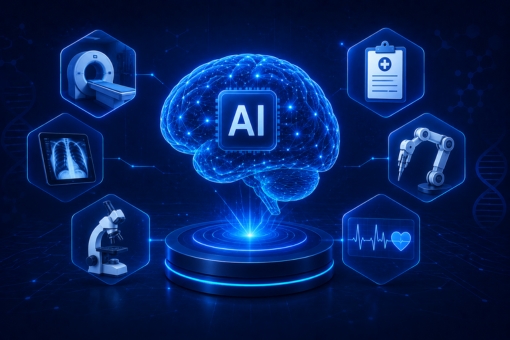
The applications of AI in healthcare span the entire care continuum, from early detection and diagnosis to treatment planning, post-discharge follow-up, and administrative management. Below are the areas delivering the most significant impact.

Medical Imaging and Diagnostic Analysis

Medical imaging represents one of the most mature and validated applications of AI in clinical care. AI algorithms trained on millions of annotated images detect anomalies in CT scans, MRIs, X-rays, and mammograms with accuracy that matches or, in specific conditions, exceeds specialist performance.

For example, AI tools detect early-stage breast cancer in mammography screenings with greater sensitivity than radiologists reviewing the same images independently. This capability reduces false negatives, supports earlier intervention, and improves survival outcomes.

In ophthalmology, AI systems analyze retinal images to detect diabetic retinopathy, macular degeneration, and glaucoma at population scale. This matters particularly in regions where specialist access is limited, as AI enables community-level screening without requiring an ophthalmologist present at every site.

Predictive Analytics and Early Warning Systems

Hospitals increasingly deploy AI models that predict patient deterioration before clinical signs become obvious. These early warning systems analyze vital sign trends, lab results, and nursing observations to flag patients at high risk of sepsis, cardiac events, or respiratory failure.

Because of this early detection capability, clinical teams can intervene hours before a crisis develops, reducing ICU admissions and improving outcomes. Studies in high-volume hospitals show that AI-powered early warning systems reduce sepsis mortality by 20% or more in deployments with proper workflow integration.

Administrative Automation and Workflow Optimization

How AI is used in healthcare extends well beyond clinical care. Administrative functions represent a significant share of healthcare operating costs, and AI automation delivers measurable savings.

Specifically, AI handles the following administrative tasks effectively:

  • Healthcare claims processing and prior authorization review
  • Patient record management and clinical documentation coding
  • Appointment scheduling, rescheduling, and automated reminders
  • Insurance eligibility verification and billing reconciliation

Natural language processing (NLP) tools transcribe physician-patient conversations in real time and populate electronic health record fields automatically. As a result, clinicians spend less time on documentation and more time on direct patient interaction. In practices where AI scribing tools are deployed, physicians report saving 1.5 to 2 hours per shift on average.

Drug Discovery and Pharmaceutical Research

AI use cases in healthcare extend into pharmaceutical R&D, where the cost and time required to bring a new drug to market have long been prohibitive. AI platforms analyze molecular structures, predict protein folding, identify candidate compounds, and model clinical trial designs at speeds no traditional research approach matches.

For instance, Inferenz collaborated with a pharmaceutical company in Germany to deploy AI and ML tools that predict health outcomes from patient data. By analyzing vital health parameters, the AI models helped clinicians diagnose and treat patients with greater precision, reducing time to treatment and supporting better drug-outcome matching.

Moreover, AI reduces the failure rate of clinical trials by improving patient selection, identifying biomarker-based inclusion criteria, and predicting adverse events before they occur in large-scale testing.

Benefits of AI in Healthcare: A Structured View

The benefits of AI in healthcare span clinical quality, operational performance, and patient experience. Each dimension matters when building the business case for AI investment.

More Accurate Diagnosis, Fewer Errors

Misdiagnosis remains one of the most serious patient safety risks in healthcare. AI-powered diagnostic tools reduce error rates in radiology, pathology, dermatology, and cardiology by providing a consistent, data-driven second opinion that does not suffer from cognitive fatigue or confirmation bias.

Specifically, computer vision models analyze MRI reports, CT scans, and mammograms with a level of consistency that human reviewers cannot sustain across an entire shift. The result is a measurable reduction in missed diagnoses and a shorter time to treatment for patients whose conditions are identified earlier.

Improved Patient Engagement and Communication

Poor communication between providers and patients reduces medication adherence, increases no-show rates, and lowers overall care quality. Conversational AI in healthcare addresses this gap directly.

AI-powered virtual assistants and chatbots handle appointment scheduling, send medication reminders, answer common clinical questions, and triage patient concerns before a clinician needs to engage. Patients receive timely responses around the clock, without placing additional demand on front-desk staff or nursing teams.

Furthermore, conversational AI platforms support patients with chronic conditions by checking in regularly, collecting self-reported symptom data, and alerting care teams when a patient’s condition appears to be changing. This continuous engagement model improves chronic disease management at scale.

Safer, More Precise Surgical Procedures

AI-assisted robotic surgery systems give surgeons enhanced precision, real-time visual guidance, and motion stabilization that reduces surgical trauma. Patients who undergo robotic-assisted procedures consistently report shorter recovery times, lower post-operative pain scores, and fewer complications compared to traditional open surgery.

In addition, AI systems can analyze intraoperative data streams to flag potential risks during a procedure, providing the surgical team with decision support in real time rather than retrospectively.

Operational Efficiency and Cost Reduction

Beyond clinical impact, AI delivers material operational value. Automated prior authorization workflows reduce claim denials and accelerate reimbursement cycles. Predictive scheduling tools reduce appointment no-shows and optimize clinic throughput. Supply chain AI models improve inventory management and reduce medication waste.

Consequently, healthcare organizations that deploy AI across both clinical and administrative functions report reductions in operating costs alongside improvements in patient satisfaction scores. These two outcomes, typically in tension, become simultaneously achievable with well-implemented AI.

Conversational AI in Healthcare: A Closer Look

Conversational AI in healthcare deserves particular attention because its adoption has accelerated sharply since 2023. These systems use large language models and NLP to understand and respond to patient queries in natural language, across text and voice interfaces.

Use cases include:

  • Pre-visit triage: Patients describe symptoms through a chat interface; the AI collects structured clinical history and routes the patient to the appropriate care level.
  • Post-discharge follow-up: AI contacts discharged patients by text or voice to check on recovery progress and flag concerns to the care team.
  • Mental health support: AI-powered tools provide evidence-based conversational support for mild anxiety and depression, extending the reach of behavioral health services.
  • Patient education: Conversational AI explains diagnoses, treatment plans, and medication instructions in plain language, improving comprehension and adherence.

However, organizations must govern conversational AI deployments carefully. Clear escalation pathways to human clinicians, transparent AI disclosure to patients, and robust audit logging are non-negotiable requirements for responsible deployment.

Limitations and Responsible Deployment Considerations

No honest assessment of AI in healthcare can overlook its current limitations. AI models perform best on data distributions that closely match their training data. Demographic gaps in training datasets can introduce bias, leading to reduced accuracy for underrepresented patient populations.

Additionally, AI systems require ongoing monitoring after deployment. Model drift, where performance degrades as patient populations or clinical workflows change, is a real operational risk that governance frameworks must address.

Therefore, healthcare organizations should treat AI adoption as a continuous program, not a one-time implementation. Clear ownership of model performance, structured validation protocols, and clinician training on AI tool limitations are essential components of a responsible deployment strategy.

Conclusion: AI as a Strategic Imperative, Not an Optional Add-On

The evidence for AI’s value in healthcare is no longer theoretical. Across diagnostics, surgical assistance, patient engagement, administrative automation, and pharmaceutical research, AI delivers outcomes that improve care quality and reduce costs simultaneously.

The organizations that benefit most are those that approach AI adoption strategically: identifying high-value use cases, investing in data quality, building governance frameworks, and treating clinicians as partners in deployment rather than passive recipients of new tools.

For healthcare leaders evaluating where to begin, the practical advice is straightforward. Start with use cases where AI augments rather than replaces clinical judgment, where data quality is high, and where measurable outcomes allow rapid validation. Build from there.

The role of artificial intelligence in modern healthcare will only expand as models become more capable and data infrastructure matures. The question is not whether your organization will operate in an AI-enabled environment. It is whether you will lead that transition or follow it.

Frequently Asked Questions

What is artificial intelligence in healthcare?

Artificial intelligence in healthcare refers to the use of machine learning, natural language processing, computer vision, and related technologies to analyze clinical data, support diagnosis, automate administrative workflows, and improve patient outcomes. AI systems learn from large datasets to identify patterns that guide clinical and operational decisions.

What are the most important benefits of AI in healthcare?

The core benefits of AI in healthcare include more accurate diagnostics, reduced administrative burden, improved patient engagement, safer surgical procedures, and faster drug discovery. Together, these benefits lower costs and improve the quality of care delivered across the patient journey.

How is AI used in healthcare today?

AI is used in healthcare for medical imaging analysis, predictive patient deterioration monitoring, clinical documentation automation, drug discovery, robotic surgery assistance, and patient-facing conversational interfaces. Each application addresses a specific inefficiency or clinical quality gap.

What is conversational AI in healthcare?

Conversational AI in healthcare refers to AI-powered chat and voice systems that interact with patients in natural language. These systems handle appointment scheduling, symptom triage, post-discharge follow-up, medication reminders, and patient education, extending care team capacity without adding headcount.

What are the limitations of AI in healthcare?

Current AI limitations in healthcare include potential bias in models trained on non-representative datasets, vulnerability to model drift over time, reliance on high-quality structured data, and the need for ongoing clinical oversight. Responsible deployment requires governance frameworks, continuous monitoring, and transparent communication with patients about AI use.

How does AI support drug discovery?

AI accelerates drug discovery by analyzing molecular structures, predicting protein interactions, identifying viable drug candidates, and optimizing clinical trial design. These capabilities reduce the time and cost required to bring new therapies to market, while improving the probability of trial success.

Will AI replace doctors in healthcare?

AI will not replace doctors. Instead, it augments clinical judgment by handling data-intensive, repetitive, or pattern-recognition tasks. Clinicians remain responsible for final decisions, patient relationships, and complex ethical judgments. AI functions as a precision tool that extends what a clinician can accomplish within a given period.

Top 10 AI Tools & Frameworks Every AI Engineer Needs To Know

Summary

AI engineers today operate in a rapidly expanding ecosystem of tools and frameworks, each designed to solve specific challenges in model development, training, deployment, and monitoring. Choosing the wrong stack can stall delivery cycles and inflate infrastructure costs. This guide covers the ten most critical AI tools and frameworks in active enterprise use as of 2026, explains how to evaluate them for your specific context, and addresses the emerging challenges AI engineering teams face. Whether your organization is building its first production model or scaling a fleet of intelligent agents, these insights will sharpen your technical decision-making.

Introduction

Enterprise AI projects fail more often because of poor tooling choices than poor algorithms. Teams pick frameworks that perform well in research environments but buckle under production load. They adopt platforms that lack observability hooks, making model debugging a manual nightmare. Others invest in specialized deep learning libraries before establishing basic data pipelines, resulting in wasted compute and delayed timelines.

Furthermore, the AI engineering landscape has shifted dramatically since 2022. Large language models (LLMs), vector databases, and real-time inference infrastructure have moved from niche experiments into core enterprise requirements. As a result, the criteria for evaluating AI frameworks have changed significantly. Performance benchmarks alone no longer tell the full story.

This guide takes a consulting-grade approach to the topic. Rather than listing features in isolation, it connects each tool to real engineering contexts, common use cases, and organizational fit. Additionally, it addresses what experienced AI engineers and technology leaders need to make confident decisions in 2026.

What Are AI Tools and Frameworks?

An AI tool is a software utility that supports one or more stages of the machine learning lifecycle, including data preparation, model training, evaluation, deployment, or monitoring. An AI framework, by contrast, provides the foundational architecture on which models are built and executed.

In practice, the distinction between tools and frameworks often blurs. TensorFlow, for example, functions as both a computational graph framework and a deployment platform. However, understanding the core purpose of each technology helps engineering teams avoid over-engineering their stacks.

Key Categories of AI Tools and Frameworks

Modern AI engineering stacks typically span five categories:

  • Training frameworks: Libraries for defining, training, and optimizing models (e.g., TensorFlow, PyTorch)
  • LLM application frameworks: Platforms for orchestrating LLM-based workflows (e.g., LangChain, LlamaIndex, Haystack)
  • Model and data management platforms: Tools for experiment tracking, versioning, and serving (e.g., MLflow, Hugging Face, Kubeflow)
  • API-based AI services: Hosted model APIs that abstract training infrastructure (e.g., OpenAI APIs)
  • Agentic and multi-agent frameworks: Tools for coordinating autonomous AI agents (e.g., CrewAI, AutoGen)

Together, these categories form a complete AI engineering stack. In practice, most enterprise teams use tools from each category rather than relying on a single vendor or platform.

Top 10 AI Tools and Frameworks Every AI Engineer Should Know

The following ten tools represent the most strategically relevant choices for enterprise AI engineering teams in 2026. Each entry covers an overview, key features, and practical use cases to help you evaluate fit within your own stack.

1. TensorFlow

Overview

TensorFlow is Google’s open-source machine learning framework and one of the most widely deployed deep learning platforms in enterprise environments. Originally released in 2015, it has since grown into a full production ecosystem that spans model development, training, evaluation, and serving.

TensorFlow runs efficiently on CPUs, GPUs, and TPUs, and it supports deployment across Android, iOS, cloud environments, and edge devices. Its TensorFlow Extended (TFX) component provides an end-to-end pipeline platform for production ML, while TensorFlow Lite enables optimized inference on mobile and embedded hardware.

Key Features

  • Scalable distributed training across multi-GPU and multi-node clusters
  • TensorBoard for interactive visualization of training metrics and model graphs
  • TensorFlow Serving for high-throughput model API deployment
  • TensorFlow Lite for mobile and edge inference with model quantization
  • Keras integration as the high-level API for model definition and rapid prototyping
  • Strong support for custom training loops via the tf.GradientTape API

Use Cases

TensorFlow suits teams building and deploying large-scale deep learning models in production, particularly on Google Cloud or in environments with strict hardware optimization requirements. Additionally, it fits computer vision pipelines, speech recognition systems, and recommendation engines where model serving performance is critical.

2. PyTorch

Overview

PyTorch, originally developed by Meta AI, has become the dominant framework in both academic research and production LLM development. Its dynamic computation graph model gives developers immediate feedback during model construction, which accelerates iteration cycles considerably compared to static graph frameworks.

Furthermore, PyTorch underpins most of the foundational LLM work in the field, including GPT model training and Meta’s LLaMA series. Its ecosystem includes TorchServe for deployment, PyTorch Lightning for training abstraction, and direct integration with Hugging Face Transformers.

Key Features

  • Dynamic computation graphs (eager execution) for flexible model experimentation
  • Native support for distributed training via PyTorch Distributed and FSDP (Fully Sharded Data Parallel)
  • TorchCompile for model optimization and accelerated inference
  • Rich ecosystem of domain libraries including TorchVision, TorchAudio, and TorchText
  • Deep integration with Hugging Face Transformers for LLM fine-tuning
  • ONNX export support for cross-framework deployment

Use Cases

PyTorch is the framework of choice for teams building and fine-tuning large language models, conducting NLP research, and developing computer vision systems. Consequently, any engineering team working with LLMs will encounter PyTorch at some stage of their workflow, whether in training, fine-tuning, or evaluation.

3. LangChain

Overview

LangChain is an open-source framework for building applications powered by large language models. It provides a structured way to chain together LLM calls, tools, memory components, and data sources into coherent workflows. Since its release in 2022, it has become one of the most widely adopted frameworks in the LLM application development space.

Specifically, LangChain addresses the challenge of connecting LLMs to external data, tools, and systems without requiring teams to build custom orchestration logic from scratch. Its modular architecture allows developers to compose complex pipelines from reusable components.

Key Features

  • Chains: Sequential composition of LLM calls and processing steps
  • Agents: LLM-driven decision-making loops that select and execute tools dynamically
  • Memory: Short-term and long-term conversation context management
  • Retrieval-augmented generation (RAG) support with vector store integrations
  • LangSmith integration for tracing, evaluation, and debugging LLM pipelines
  • Broad connector library covering 50+ LLM providers, vector databases, and external APIs

Use Cases

LangChain is well suited for building enterprise chatbots, document question-answering systems, automated research assistants, and multi-step reasoning pipelines. Moreover, teams implementing retrieval-augmented generation architectures find LangChain’s document loader and retriever abstractions significantly reduce development time compared to building from scratch.

4. Hugging Face

Overview

Hugging Face is both a model hub and a framework ecosystem for NLP, computer vision, and multimodal AI development. Its Transformers library provides standardized implementations of hundreds of pre-trained models, enabling teams to apply state-of-the-art architectures with minimal setup.

Additionally, Hugging Face operates the largest public repository of pre-trained AI models and datasets, with over 500,000 models available as of 2026. This makes it a critical infrastructure component for any team working with foundation models.

Key Features

  • Transformers library with unified API for 200+ model architectures (BERT, GPT, T5, LLaMA, Mistral, etc.)
  • Datasets library for efficient data loading, preprocessing, and sharing
  • PEFT (Parameter-Efficient Fine-Tuning) for LoRA, QLoRA, and adapter-based fine-tuning
  • Inference Endpoints for managed model deployment on dedicated hardware
  • Evaluate library for standardized model assessment and benchmarking
  • Spaces platform for sharing interactive AI demos and applications

Use Cases

Hugging Face suits teams that need to fine-tune pre-trained models on proprietary data, benchmark model performance across standardized tasks, or deploy NLP models into production APIs quickly. For organizations building on top of open-source LLMs such as LLaMA or Mistral, Hugging Face provides the most complete toolchain for model access, adaptation, and deployment.

5. LlamaIndex

Overview

LlamaIndex (formerly GPT Index) is a data framework designed to connect large language models with enterprise data sources. Where LangChain focuses on agent orchestration and chaining, LlamaIndex specializes in data indexing, retrieval, and query optimization for LLM-powered applications.

In particular, LlamaIndex excels at building retrieval-augmented generation (RAG) pipelines over complex, heterogeneous data sources including PDFs, databases, APIs, and knowledge graphs. As a result, it has become the preferred tool for enterprise teams building knowledge-intensive AI applications.

Key Features

  • Advanced indexing structures: vector stores, summary indexes, keyword table indexes, and knowledge graph indexes
  • Multi-document reasoning with cross-document synthesis capabilities
  • Query routing and sub-question decomposition for complex retrieval tasks
  • LlamaParse for high-fidelity extraction from complex document formats including tables and charts
  • LlamaCloud for managed indexing and retrieval infrastructure
  • Extensive integrations with vector databases including Pinecone, Weaviate, Qdrant, and pgvector

Use Cases

LlamaIndex is the framework of choice for enterprise document intelligence applications, internal knowledge bases, and any system that requires LLMs to reason over large volumes of structured or unstructured organizational data. Furthermore, teams building compliance automation, contract analysis, and technical documentation search tools find LlamaIndex’s retrieval capabilities significantly more capable than basic vector search implementations.

6. OpenAI APIs

Overview

OpenAI’s API platform provides programmatic access to GPT-4, GPT-4o, o1, o3, and a growing suite of supporting models including DALL-E for image generation, Whisper for speech transcription, and text-embedding models. It abstracts the complexity of training and serving large models, allowing teams to integrate advanced AI capabilities through simple REST API calls.

For many enterprise teams, OpenAI APIs serve as the fastest path from AI concept to working prototype. Moreover, the platform’s structured outputs, function calling capabilities, and Assistants API have made it viable for complex production workflows, not just experimentation.

Key Features

  • Access to GPT-4o and o3 reasoning models with function calling and JSON mode
  • Assistants API for building stateful AI agents with built-in memory and tool use
  • Batch API for high-volume, cost-optimized asynchronous inference
  • Fine-tuning support for domain-specific model adaptation on GPT-3.5 and GPT-4o mini
  • Embeddings API for semantic search, clustering, and classification
  • Enterprise-grade controls including role-based access, usage policies, and audit logs

Use Cases

OpenAI APIs suit organizations that want to integrate advanced language understanding and generation capabilities without managing model infrastructure. They also fit teams that need rapid iteration on LLM-powered features, structured data extraction from unstructured documents, or intelligent search over enterprise content. For production workloads requiring governance and cost control, the Batch API and fine-tuning options provide additional operational levers.

7. MLflow

Overview

MLflow is an open-source platform for managing the full machine learning lifecycle, from experiment tracking through model packaging, registry, and deployment. Databricks developed it as a response to the reproducibility and governance challenges that teams encounter when running multiple experiments across different frameworks and environments.

MLflow is framework-agnostic, which means it integrates with TensorFlow, PyTorch, Scikit-Learn, XGBoost, and most other ML tools without requiring code changes beyond a few logging calls. Consequently, it has become a standard component in enterprise MLOps stacks.

Key Features

  • Experiment Tracking: Log parameters, metrics, and artifacts across runs with automatic comparison views
  • MLflow Projects: Package reproducible runs in a standardized format for sharing and execution
  • Model Registry: Centralized store for model versioning, stage transitions (staging, production, archived), and annotations
  • Model Serving: Deploy registered models as REST endpoints locally or on cloud infrastructure
  • MLflow Recipes: Opinionated pipelines for common tasks including regression and classification
  • Native integration with Databricks for managed tracking and governance at enterprise scale

Use Cases

MLflow is an essential tool for teams that run frequent experiments and need to maintain reproducibility, compare results systematically, and promote models through governed review stages. Additionally, organizations building Enterprise LLMOps Services and Solutions increasingly use MLflow to track LLM evaluation runs, log prompt versions alongside model outputs, and maintain an auditable record of model lifecycle decisions.

8. Kubeflow

Overview

Kubeflow is an open-source machine learning platform built on top of Kubernetes. It brings ML workload orchestration, pipeline management, and model serving into cloud-native infrastructure, enabling teams to run ML workflows with the same reliability and scalability they expect from production software systems.

Specifically, Kubeflow addresses the challenge of running ML pipelines at scale in a way that integrates with existing DevOps and platform engineering practices. For organizations with mature Kubernetes infrastructure, Kubeflow provides a natural ML layer without requiring a separate managed ML platform.

Key Features

  • Kubeflow Pipelines: Define, run, and track multi-step ML workflows as directed acyclic graphs (DAGs)
  • Katib: Automated hyperparameter tuning and neural architecture search using Kubernetes-native jobs
  • KServe: Scalable, standards-compliant model serving with support for TensorFlow, PyTorch, ONNX, and XGBoost
  • Notebooks: Managed Jupyter notebook environments with GPU scheduling and persistent volumes
  • Training Operator: Coordinated distributed training for TensorFlow, PyTorch, MXNet, and XGBoost
  • Multi-tenancy and namespace isolation for team-level resource governance

Use Cases

Kubeflow suits platform engineering teams building internal ML infrastructure for large organizations where multiple data science teams need shared, governed access to compute and pipeline tooling. Furthermore, organizations with complex multi-step training pipelines, hyperparameter search requirements, or strict infrastructure compliance policies find Kubeflow’s Kubernetes-native design more controllable than managed cloud ML services.

9. Haystack

Overview

Haystack is an open-source NLP framework developed by deepset, specifically designed for building production-ready search, question answering, and retrieval-augmented generation systems. It provides a pipeline-based architecture that connects document retrieval, reader models, and LLMs into end-to-end NLP applications.

In contrast to general-purpose LLM frameworks, Haystack focuses narrowly on document-centric AI use cases. As a result, it provides deeper retrieval optimization features and more mature document processing components than broader orchestration frameworks.

Key Features

  • Pipeline architecture: Composable, inspectable DAG pipelines for NLP workflows
  • Document stores: Native connectors to Elasticsearch, OpenSearch, Weaviate, Pinecone, and pgvector
  • Dense and sparse retrieval: Support for BM25, sentence transformers, and hybrid retrieval strategies
  • Reader components: Extractive and generative QA using fine-tuned and LLM-based models
  • haystack-experimental: Early-access components for agentic pipelines and structured output generation
  • Evaluation framework: Built-in tools for measuring retrieval accuracy, answer faithfulness, and context relevance

Use Cases

Haystack is particularly well suited for enterprise search applications, customer support automation, knowledge base querying, and compliance document analysis. Additionally, teams that need to implement hybrid retrieval, combining keyword and semantic search, across large document repositories find Haystack’s document store integrations significantly reduce implementation complexity compared to building custom retrieval layers.

10. CrewAI and AutoGen

Overview

CrewAI and Microsoft AutoGen represent the leading frameworks for multi-agent AI systems, where multiple specialized AI agents collaborate, delegate tasks, and reason together to complete complex objectives. This category has grown rapidly as organizations move beyond single-agent chatbots toward more capable, autonomous AI workflows.

CrewAI provides a role-based agent collaboration model, where each agent has a defined persona, goal set, and tool access. AutoGen, developed by Microsoft Research, takes a more flexible conversational approach, enabling agents to engage in multi-turn dialogue and self-correct through peer review. Together, these frameworks define the current frontier of agentic AI engineering.

Key Features

  • CrewAI: Role-based agents with defined goals, backstories, and task assignments
  • CrewAI: Sequential and hierarchical task execution with inter-agent delegation
  • AutoGen: Conversational multi-agent patterns including two-agent debate and group chat
  • AutoGen: Code generation and execution loops with automated review and correction
  • Both: Integration with OpenAI, Anthropic, Hugging Face, and local LLMs via Ollama
  • Both: Tool use and function calling to connect agents with external APIs, databases, and file systems

Use Cases

Multi-agent frameworks suit organizations building AI systems that require decomposing complex tasks across specialized agents, such as automated software development workflows, market research pipelines, financial report generation, and multi-step data analysis. Moreover, as organizations scale their AI Strategy Consulting Services practices and move toward autonomous AI operations, multi-agent frameworks provide the architectural foundation for AI-driven enterprise workflows that go far beyond simple chatbot interactions.

How to Choose the Right AI Tools and Frameworks

Selecting the right AI stack requires evaluating several dimensions beyond raw performance benchmarks. The following framework helps engineering leaders make defensible decisions aligned with team capability, infrastructure, and business context.

Evaluate Against Your Use Case First

Not all tools suit all problem types. TensorFlow and PyTorch handle deep learning tasks well, while LangChain and LlamaIndex fit LLM application development. Haystack serves document-centric NLP, and CrewAI or AutoGen suits multi-agent orchestration. Start by categorizing your task type before selecting a framework.

Assess Team Maturity and Ecosystem Fit

A framework that your team cannot maintain in production creates more risk than it eliminates. Therefore, assess current skill levels honestly. PyTorch’s Python-first design suits teams with strong software engineering backgrounds. OpenAI APIs suit teams prioritizing speed of delivery over infrastructure control. Kubeflow suits platform engineering teams with existing Kubernetes expertise.

Additionally, consider the broader ecosystem. Organizations using Databricks benefit from MLflow’s native integration. Teams building on AWS benefit from tight SageMaker alignment. Similarly, organizations invested in Microsoft Azure find AutoGen and Azure OpenAI Service a coherent combination.

Plan for MLOps and LLMOps from Day One

Deploying a model is only the beginning. Production AI systems require monitoring, retraining pipelines, version control, and governance mechanisms. As part of any AI Strategy Consulting Services engagement, Inferenz recommends evaluating frameworks based on their MLOps compatibility as early as the proof-of-concept stage. Retrofitting observability into a poorly chosen framework is expensive and time-consuming.

Furthermore, as organizations move toward LLM-based applications, Enterprise LLMOps Services and Solutions become critical. Choose frameworks and deployment platforms that support prompt versioning, model evaluation at scale, and fine-tuning pipelines from the outset.

Common Challenges AI Engineers Face

Even experienced AI engineers encounter recurring obstacles when building and maintaining production systems. Understanding these challenges helps teams plan mitigations before they cause delays.

Framework Fragmentation

Enterprise AI teams often end up with mixed stacks, using PyTorch for training, MLflow for experiment tracking, LangChain for LLM orchestration, and Kubeflow for pipeline management. While this is sometimes unavoidable, it increases maintenance overhead and makes onboarding new engineers harder. Consequently, teams should document stack decisions clearly and evaluate consolidation opportunities regularly.

Scalability Bottlenecks

Frameworks that perform well on research datasets often show performance degradation at production scale. Distributed training, efficient data loading, and hardware-aware optimization require deliberate planning. Both TensorFlow and PyTorch provide multi-GPU support, but effective use requires configuration expertise that goes beyond default settings.

Model Drift and Monitoring Gaps

Deploying a model without a monitoring strategy is one of the most common and costly mistakes in enterprise AI. Models degrade as data distributions shift over time. Therefore, every production deployment should include data drift detection, prediction confidence monitoring, and automated retraining triggers. Many frameworks do not include these capabilities natively, making MLOps tooling integration essential.

LLM-Specific Operational Challenges

LLM-based applications introduce operational challenges that differ from traditional ML systems. Prompt regression, token cost management, latency variability, and hallucination rates require specialized evaluation and monitoring approaches. Teams that apply only traditional MLOps practices to LLM deployments typically discover these gaps in production rather than in staging. Using platforms such as MLflow with LLM evaluation extensions or dedicated LLMOps tooling addresses these gaps proactively.

Emerging Trends in AI Engineering

The AI engineering landscape continues to evolve rapidly. Several trends are reshaping how practitioners evaluate and deploy frameworks in 2026.

Agentic AI and Multi-Agent Orchestration

The rise of agentic AI, where models plan, act, and self-correct across multi-step tasks, has elevated frameworks such as CrewAI, AutoGen, and LangGraph to strategic importance. Enterprise teams are moving beyond question-answering chatbots toward AI systems that execute workflows autonomously. This shift requires new engineering disciplines around agent safety, output verification, and human-in-the-loop controls.

Retrieval-Augmented Generation at Enterprise Scale

RAG has moved from a research technique to a production standard for enterprise AI. LlamaIndex and Haystack have matured into production-grade platforms, and vector database infrastructure from Pinecone, Weaviate, and pgvector has stabilized. However, enterprise RAG implementations increasingly require sophisticated retrieval strategies, including hybrid search, re-ranking, and multi-hop reasoning, that go beyond basic embedding lookup.

Hardware-Accelerated Inference

Custom AI accelerators from NVIDIA, Google (TPUs), and Amazon (Trainium and Inferentia) are changing inference economics significantly. Frameworks that support hardware-specific compilation, such as TVM or MLIR-based pipelines, provide substantial cost advantages as inference demand scales. Consequently, production deployment decisions are increasingly driven by inference cost optimization rather than training performance alone.

AI Engineering Meets Platform Engineering

Platform engineering principles, including internal developer platforms, standardized toolchains, and golden paths, are being applied to AI infrastructure. Kubeflow, MLflow, and managed LLMOps platforms reflect this trend. Organizations that invest in AI platform standardization now will scale their AI programs faster and with fewer quality issues than those building ad-hoc stacks team by team.


How Inferenz Leverages AI Tools and Frameworks

Inferenz operates at the intersection of cloud infrastructure, data engineering, and enterprise AI. Our delivery model centers on selecting tools that fit the problem, not the other way around.

Specifically, our engineering teams apply PyTorch and TensorFlow for deep learning development, Hugging Face Transformers for NLP and LLM fine-tuning, LangChain and LlamaIndex for RAG and agentic pipeline development, and MLflow for experiment tracking and model governance. Additionally, we integrate Kubeflow and cloud-native pipeline tooling to ensure production ML workloads run with reliability and observability from day one.

AI Strategy Consulting Services

As part of our AI Strategy Consulting Services, we help enterprise clients evaluate their current AI tool stacks, identify gaps, and design scalable architectures that align with their industry requirements and team capabilities. We do not recommend frameworks in isolation. Instead, we assess the full lifecycle, from data sourcing through to production monitoring, and build a coherent technical roadmap that engineering teams can execute with confidence.

Enterprise LLMOps at Scale

For organizations moving beyond individual LLM experiments into production-grade deployments, Inferenz provides Enterprise LLMOps Services and Solutions. These engagements cover model evaluation frameworks, prompt version control, fine-tuning pipelines, cost governance, and integration with existing enterprise data infrastructure.

Furthermore, we work with clients across healthcare, financial services, and manufacturing to ensure that LLM deployments meet regulatory and security requirements specific to their sectors. Our approach combines the technical depth of an engineering firm with the strategic clarity of a consulting practice.

Conclusion

The AI tools and frameworks available to engineers in 2026 are more capable and more complex than ever before. TensorFlow and PyTorch remain the foundation of deep learning development. LangChain, LlamaIndex, and Haystack have established themselves as the core toolchain for LLM application engineering. MLflow and Kubeflow bring the governance and scalability that enterprise production demands. OpenAI APIs accelerate delivery for teams that do not need to manage model infrastructure. And multi-agent frameworks like CrewAI and AutoGen are opening the next frontier of autonomous AI operations.

However, tool selection is ultimately a strategic decision, not a technical one. The best framework is the one your team can build on, maintain, scale, and govern within your specific business context. Therefore, before adding any tool to your stack, evaluate it against your use case, your team’s skills, your infrastructure constraints, and your production requirements.

Organizations that approach AI tooling with the same rigor they apply to enterprise architecture will build more reliable systems, onboard engineers faster, and deliver more consistent business outcomes. For teams that want expert guidance on building that foundation, Inferenz is ready to help.

Frequently Asked Questions

What are the most widely used AI frameworks in enterprise environments in 2026?

TensorFlow and PyTorch are the most widely deployed deep learning frameworks in enterprise environments. For LLM application development, LangChain, LlamaIndex, and Hugging Face Transformers have become standard components. MLflow is the leading experiment tracking platform, and Kubeflow serves teams with Kubernetes-native infrastructure requirements. The right combination depends on your use case, team expertise, and infrastructure context.

What is the difference between LangChain and LlamaIndex?

LangChain focuses on agent orchestration, tool use, and chaining LLM calls into complex workflows. LlamaIndex specializes in data indexing, document retrieval, and query optimization for knowledge-intensive LLM applications. In practice, many teams use both together, with LlamaIndex handling retrieval and LangChain managing agent behavior and workflow logic.

How should an enterprise evaluate AI frameworks for production use?

Enterprise teams should evaluate AI frameworks across five dimensions: task fit, team capability, infrastructure compatibility, MLOps readiness, and compliance suitability. Engaging an AI Strategy Consulting Services partner can accelerate this evaluation significantly and prevent costly rework once systems reach production scale.

What is LLMOps, and why does it matter?

LLMOps refers to the operational practices, tools, and processes required to deploy and maintain large language models in production. It covers prompt versioning, model evaluation at scale, fine-tuning pipelines, cost monitoring, and governance controls. As organizations move from LLM experiments to production systems, Enterprise LLMOps Services and Solutions become essential for managing model quality and operational risk.

When should a team use multi-agent frameworks like CrewAI or AutoGen?

Multi-agent frameworks are appropriate when a task is complex enough to benefit from decomposition across specialized agents, when self-correction or peer review between agents improves output quality, or when parallel execution of subtasks reduces overall completion time. However, multi-agent systems introduce coordination complexity and cost overhead. Teams should validate that a simpler single-agent or chain-based approach cannot meet requirements before adopting a multi-agent architecture.

What are the key challenges of managing AI at enterprise scale?

The most common challenges include framework fragmentation across teams, scalability bottlenecks in training and inference, model drift in production systems, LLM-specific operational risks such as prompt regression and hallucination, and compliance gaps in regulated industries. Additionally, organizations frequently underestimate the cost of retrofitting observability and governance into AI systems not designed with MLOps principles from the start.

Top 5 Game-Changing AI Applications In The Sports Industry

The adoption of AI in the FIFA World Cup 2022 will allow video match officials to get real-time offside alerts and improve the viewer experience. With modern data tools and algorithms, Artificial Intelligence has completely transformed how we interact with the world and brands market their products. In the sports industry, technology is becoming more prevalent as it helps teams with post-game analysis, improves fan experience, and enhances player performance.

Although AI technology is in its nascent stage, the sports industry is witnessing endless use cases and benefits of emerging tech. FIFA World Cup 2022 will use AI to detect social media abuse among the players, making it an AI-powered world cup. This guide will reveal the role of emerging techs, the top 5 AI trends for the sports industry, and the innovative ways to use them.

ALSO READ: Data Science in Healthcare: 8 Use Cases No One Will Tell You

Role Of Artificial Intelligence In the Sports Industry

The advent of new technologies, such as Artificial Intelligence, Augmented Reality, Machine Learning, etc., has changed the face of every industry, including sports. Brands, viewers, and players use Artificial Intelligence tools in multiple ways to improve strategizing, advertising, broadcasting, and player training.

One of the biggest brands, Adidas, has jumped onto the bandwagon for FIFA World Cup 2022 by creating NFT characters for advertisement. Likewise, other brands are incorporating different ways to leverage the new technology and gain an edge against the competition. The new wave of AI in the sports industry will transform the way players used to watch the FIFA World Cup, and brands use it to promote their services.

5 AI Trends For The Sports Industry

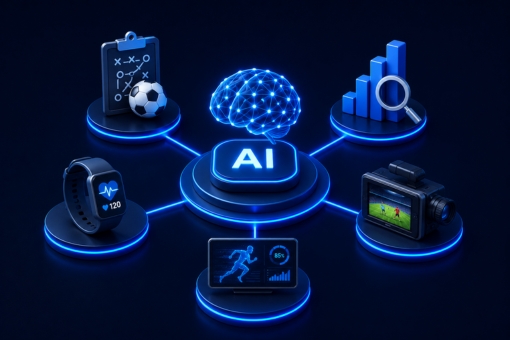
The benefits of AI in the sports industry are endless, and that is why the AI segment is expected to reach $19.2 billion by 2030. Many biggest names in the sports industry are leveraging the power of AI, including Major League Baseball (MLB), the National Football League (NFL), and the National Basketball Association (NBA). FIFA World Cup 2022 is adopting Artificial Intelligence to enhance viewers’ experience and help players improve their training and play. Below is the list of top AI applications or use cases in the sports industry.

  • Improve Viewer Experience

Sports teams are incorporating Artificial Intelligence to enhance the fan experience and make them feel valued with personalized service. A few use cases of AI to improve viewer experience include creating virtual reality experiences and matching fans with their stadium seats. AI tools help offer personalized content to viewers and help them interact with their favorite players via chatbot. With advanced tech, it is possible to monitor social media to see what fans say about FIFA World Cup 2022 and the players to avoid hatred and abusive content.

  • Predictive Modeling

Another major AI trend in FIFA World Cup 2022 is predictive modeling, which helps teams predict future trends. The information gathered from a player’s past performance can be utilized to predict future trends and identify which players are likely to get injured. AI helps predict breakout seasons, injuries, and underperformance to help sports teams make strategic decisions.

  • Customized Training Programs 

The trend of customized training programs is growing by leaps and bounds, especially in the FIFA World Cup 2022. Athletes use AI tools to create personalized training programs that meet their needs and help them monitor their progress to improve performance. With the information received from AI tools, athletes can revamp their gaming strategy and overall game.

  • Prevent Injuries

The team has to incur financial damage if a player gets injured during a match. AI promises to prevent monetary loss due to injuries by helping teams monitor players’ health beforehand. The AI tool tracks the various health parameters of the individual and identifies the players at risk of injury.

  • Better Sports Equipment

Big companies are using AI to manufacture better, more accurate, and more powerful sports equipment. Adidas, for instance, recently developed an AI-powered soccer ball with an adjustable flight path to improve accuracy. The primary role of using Artificial Intelligence during the manufacturing of sports products is to improve their performance and accuracy, leading to improved gaming.

Brands can integrate the latest technologies to market their products and services on various social media platforms, including Twitter, Snapchat, Instagram, etc., during the FIFA World Cup 2022 and remain ahead of the competition.

Enter The World Of AI With Inferenz Experts

Artificial Intelligence is revolutionizing the sports industry by improving player safety and gaming strategy with predictive modeling. Aside from players, marketers are bringing Web3 to FIFA World Cup 2022 to improve their marketing strategy, engage more customers, and drive sales.

As you see, the future of the sports industry goes hand-in-hand with emerging technologies like Artificial Intelligence. If you are an enterprise owner looking to improve your strategies in FIFA World Cup 2022 with AI tools, get in touch with the skilled team of Inferenz to build AI applications.

Alternatives To Twitter: 5 Social Media Platforms That Could Replace Twitter

With #RIPTwitter trending, people are looking for alternatives to Twitter. “TWITTER IS THE WORST! But also the best,” — says Elon Musk’s recent tweet, giving people a reason to talk. However, people agree more with the former statement than the latter. Soon after he became the new CEO of Twitter, #TwitterMigration became a hot trend. This came after the announcement of mass layoffs news by Musk, where he asked Twitter employees to resign for no definite reason.

Now the term trending on social media platforms is #RIPTwitter, which puts the future of the social media app a little dicey. The hashtag became trending after Twitter employees offered their resignations to Musk before time instead of allegedly signing the ultimatum and agreeing to the new working rules. Witnessing the plans of Elon Musk for the platform, many people are flocking to the alternatives to Twitter. This article will reveal the top 5 social media platforms capable of replacing Twitter and other trending news about the social media platform.

ALSO READ: Benefits Of Big Data Analytics In The Healthcare Industry

5 Alternatives To Twitter In 2023

Elon Musk’s decision to purchase Twitter for $44 billion and the changes made to the social media application have frustrated some users. As a result, people are looking to switch from Twitter to its alternatives. Below is the list of top social media platforms with features and functionalities that could replace Twitter in 2023.

  • Mastodon

Mastodon, an open-source software application, is one of the most Twitter-like alternatives available on the market. The popularity of the Twitter alternative was proved by the open-source group’s CEO Eugen Rochko’s tweet declaring that Mastodon got over 1 million users since 27 October, when Elon Musk became the new CEO of Twitter. WIRED also said that millions of people are fleeting to Mastodon after Elon took over Twitter. It has two useful tools — debirdify and Fedifinder — that allow users to search and find all the people they’ve been following on Twitter.

  • Tumblr

Tumblr is one of the oldest social media platforms for people searching for Twitter alternatives. While Twitter has a character limit, Tumblr allows users to write and share whatever they want. It is a comprehensive social networking service that is becoming popular among influencers due to its similar functionality to Twitter. So, it wouldn’t be surprising if Tumblr is the next best alternative to Elon Musk’s Twitter 2.0.

  • Gab

Gab is the perfect combination of Twitter and Facebook to put people and free speech first. With the #RIPTwitter and #TwitterMigration trending, many flocks consider Gab as an alt-right alternative to Twitter. Gab is a fully-decentralized social media platform that allows users to publish posts, join groups, live stream, buy products, and initiate private chats — a lot of the same functions as Twitter.

  • CoHost

CoHost is another popular alternative to Twitter people are talking about. There are numerous charms of the platform over Elon Musk’s Twitter, such as no character limit and more creativity. Users can even add CSS notes to their posts in addition to fully functional games. However, CoHost is not as popular as the other alternatives to Twitter in the list.

  • GETTR

GETTR, launched by Jason Miller (Donald Trump’s former senior advisor), is a new social media platform for conservative people who are irked by Elon Musk’s changes to the app. Many users praise the app with the names such as back to free speech, escape from digital tyranny, and more.

New Wave Of Twitter’s Mass Layoff News 

According to Twitter’s mass layoffs news, Musk fired around 50% of the workforce. After firing half of the employees, Elon Musk has recently laid off 4,400 contractual Twitter workers. Platformer’s founder, Casey Newton, reportedly said contractors aren’t notified about the layoffs. He added workers on contract are allegedly losing access to email and Slack — indicating the new wave of layoffs.

Elon Musk asked the workers to commit to a hardcore culture or leave their three months of severance pay. In response to this, the employees decided to resign from their positions. Musk recently replied to a tweet, “I’m not super worried regarding the mass resignations, as the best employees are staying.” However, the effect of mass resignation can be seen as Twitter temporarily closed all its offices and suspended badge access.

Elon Musk, who heads SpaceX and Tesla, is focused on building Twitter 2.0 and making it successful as soon as possible — following a mass layoff strategy. He said he would grant the blue-tick verification label from November 29 to those willing to buy premium services and pay USD 8 a month.

Future Of Elon Musk’s Twitter 2.0

Elon Musk taking over Twitter, firing employees, and starting the new wave of mass layoffs is the most trending topic. The company’s office has been abruptly shut down until Monday, November 21, 2022, indicating some more news from Twitter’s headquarters. Stay tuned to know what happens next.

If you want to stay updated with the latest news on Blockchain, Metaverse, Artificial Intelligence, Predictive Analysis, Data Migration, etc., subscribe to the Inferenz newsletter!

Artificial Intelligence System Development

Artificial Intelligence system exists everywhere around. There are a variety of ways in which its existence can be felt. AI has been defined in a number of different ways from its inception, but the simplest way to define AI is to stick to the one given by the pioneers of this field, John McCarthy and Marvin Minsky, in 1959. Artificial Intelligence is the ability of any program or machine to perform tasks that require humans to apply intelligence to do the same. There has been a lot of work done by a lot of people in this domain. One of the most famous works by Alan Turing in 1950 was an attempt to determine whether or not machines could be tagged with artificial intelligence.

How do Artificial Intelligence Systems work?

Artificial Intelligent systems work around three cognitive skills i.e., learning, reasoning, and self-correction. The development of Artificial Intelligence systems requires specialized hardware and software to make the algorithms work. AI development systems take advantage of these skills by combining large data sets with intelligent iterative algorithms. This lets AI systems learn from the patterns and features in the data they analyze. Each time an AI system performs a data cycle, it tests and measures its own performance and tries to improve its performance over a period of time. To understand how AI actually works, we need to understand that AI is not a single computer program or application but an entire discipline or science.

Artificial Intelligence System Development

Many companies in Ahmedabad and elsewhere are working on AI systems, including machine learning, deep learning, natural language processing, and other areas. Natural Language Processing is widely applied in text mining. It may be used to summarize chunks of text, getting insight from the text by understanding its specifics. Machine Learning models are basically mathematical models used to predict patterns in data, prediction of events, and classification of a variety of objects.

ALSO READ: Artificial Intelligence In Data Science: Important Facts Revealed

Deep learning is a form of machine learning which can learn from unstructured, unlabeled data without human supervision. Computer vision allows systems to derive meaningful information from visual inputs in the form of digital images or videos. Cloud services help to shape the AI use cases effectively. Top Artificial Intelligence companies are developing systems that can handle huge amounts of data. Many companies in Ahmedabad are also developing chatbots that can be integrated into any website which pops up when you land there. These chatbots have become common these days for offering customer service, marketing services and IT service helpdesk, etc.

With its broad applications in different sectors, Artificial Intelligence has become instrumental in aiding people’s life with complex problems. Although Artificial Intelligence cannot completely replace humans, it has definitely changed the way we live, and businesses work. AI systems try to emulate human consciousness and intuitiveness with the aim of changing society.

Applications of Artificial Intelligence

There are a number of applications of Artificial Intelligence for sectors like healthcare, retail, eCommerce, hospitality, and many more. Inferenz is one of the rapidly expanding companies focused on Artificial Intelligence Systems Development.

The goal of such systems is to solve critical business problems with advanced technology, particularly Artificial Intelligence, to automate business processes by examining the issues in depth. Irrespective of which application area Artificial intelligence is applied, it helps in reducing errors in the workflows and increases the likelihood of accuracy. A major challenge for AI is to find ways to express common-sense knowledge and experiences so that humans can perform everyday activities, such as having long conversations or navigating busy streets. Ordinary digital computers may need to develop new machines capable of running such programs and supporting the complexities of human thinking.

Conclusion

Artificial intelligence continues its move to become a part of our personal and work life. A career in AI today not only guarantees a decent salary in top Artificial Intelligence System Development Companies but also promises opportunities to help you grow. It plays an important role not only in the computer and space industries but also in industries directly connected to the general public, such as the medical, automobile, banking, and agricultural sectors. So, start your journey toward a successful career in Artificial Intelligence.