










Data Structure: How To Drain Data Swamp Effectively?

Data is a tremendously valuable asset that helps organizations to get insights into their day-to-day business operations. Using organizational data to make strategic and data-driven decisions enables businesses to grow in the competitive market. However, a lot of structured and unstructured data piled up in the data warehouse leads to a lack of quality control, negating the benefits of data and costing unnecessary expenses. The best way to maintain the quality of the data structure is to drain the data swamp. 

Data swamps, a large opaque pool of data that arrives in multiple formats, are the major obstacle that prevents companies from mining valuable insights and improving their decision-making process. A lack of transparent data governance can cause havoc in data management, making it hard for organizations to extract value from their data. This guide will focus on how to drain the data swamp in 2022 and organize the data lake with meaningful information.

What Is A Data Swamp? 

Using big data strategically could generate $3 trillion in value annually, indicates a McKinsey Global Institute report. When organizations follow a haphazard approach to storing and managing data, it leads to the building of data swamps that slow down data analysis.

ALSO READ: Data Warehousing vs. Data Virtualization – How to Store Data Effectively?

Due to unstructured data in the data swamps, data-driven businesses find it hard to find valuable data and make strategic decisions. The effective data structure in 2022 will help data scientists analyze information without dealing with disparate formats’ tangled mess. Some of the significant drawbacks of a data swamp in an organization include the following:

  • The lack of sorted and properly curated data makes it hard for data engineers to access data structures in diverse formats and systems. 
  • Continuous data flow in the data swamp exacerbates the problem as data analysts deal with non-functional data that increase complexities. 
  • Having irrelevant data affects the overall core function of an organization, leading to less strategic business decisions. 
  • Locating and collating data without labeling and meta descriptions is hard, and data analysts search multiple files and sources to find the correct information. 
  • Lack of knowledge about data stored makes it challenging to implement clear data governance rules in a data swamp environment, leading to the risk of data breaches.

Difference Between Data Swamp And Data Lake

Data lake and swamp are related to compiling structured and unstructured data in one repository without needing a particular format. A data lake is an organized data structure heap where all the relevant business data is collected, managed, and stored to get essential insights.

In a data lake, data analysts divide the business data and label it to make it searchable and prevent the build-up of duplicate or unusable data. On the flip side, a data swamp is an unorganized space with loads of replication and unwanted data, making it hard for businesses to leverage data to its total value.

An unmanaged data lake can quickly become a data swamp if businesses fail to set guidelines for data relevance. That said, it becomes a cornerstone for organizations to invest in structuring the data lake and prevent it from becoming a swamp.

Inferenz data swamp organize services can help your business avoid unmanaged and duplicate information. Data analyst experts utilize the data lake best practices to structure data and prevent data swamps. Read our case studies here.

ALSO READ: 5 Things To Consider Before Any SQL To Snowflake Migration

Data Structure: How To Drain Data Swamp And Organize Data Lake? 

Following the best practices to structure an organization’s data is the best way to drain the data swamps and access valuable data to make decisions.

  • Ensure The Trustworthiness Of the Data 

Companies must ensure that the stored data they use for business insights is reliable, trusted, and readily accessible for data analysts and engineers to make strategic and data-driven decisions. 

  • Implement End-To-End Strategy 

Setting standards from the start, like monitoring connections, utilizing the cloud resources, scaling and automating data pipelines, and making intentional data-design decisions, is a dynamic data structuring approach during project planning that helps drain the data swamp.

  • Ensure Relevancy Of Data 

Instead of hoarding irrelevant data, organizations must establish specific parameters to remove and clean outdated data. Data obtained from different sources should have a clear purpose of helping the in-house team to make profitable business decisions. 

  • Define Data Ownership 

An organization’s vast amount of data can overwhelm the in-house team, leading to data mismanagement. Organizations must figure out who will manage the data pools so that unmanaged data lakes will not become swamps.

Leverage The New Technology To Clean Up Data Swamp

Drowning in the sea of data can affect the business’s profitability and set it behind its competitors. Only a data structure company with cutting-edge technologies can streamline the data management process. They can create the proper data structure and algorithms that help businesses succeed, regardless of how swampy the data lake is.

If you are tired of having irrelevant data in your organization, let the tech-expert team of Inferenz help you to drain the data swamp with services and tech-enabled solutions.

5 Best Practices For Snowflake Implementation

Effective data management is the cornerstone of holistic business development and overall growth in the competitive market. To thrive and yield effective business outcomes, data analysts need to store, manage and utilize data and improve their decision-making process. Conventional relational databases are not efficient enough to handle large data volumes. Snowflake, explicitly designed for the cloud, is a widely used data warehouse solution for SMEs and large enterprises, and that is why most enterprise solutions opt to have Snowflake implementation.

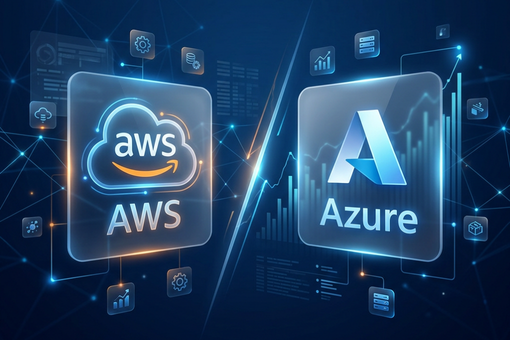
The unique architecture of Snowflake, built on top of AWS (Amazon Web Services), makes it a fast and flexible data management solution. Snowflake gathers all the heterogeneous data from different sources and loads it into a single data warehouse. For efficient data transfer with a standard format, enterprises must plan and execute a Snowflake implementation strategy. This guide will cover the best Snowflake implementation practices for migrating data into the single-stop virtual data warehouse.

ALSO READ: 5 Strong Reasons Why Your Workplace Needs Learning & Development?

Evaluate Virtual Data Warehouse Options

According to SLINTEL, a 6sense company, over 10788 enterprises have shifted to Snowflake data warehousing solutions in 2022, with around 7307 customers from the United States alone. Enterprises should start the Snowflake migration strategy by evaluating the virtual warehouse options in modern database solutions. These are a cluster of computing resources that plays a vital role in executing SQL SELECT statements, performing DML operations, and other essential tasks.

Experts must evaluate different warehouse sizes before picking the one that fits the business’s data needs and workload requirements. It is crucial to determine the warehouse size based on Snowflake’s “auto-resume” and “auto-suspend” features to save costs, as large warehouses require high expenses, leading to the stretching of the budget.

Ascertain The Right Warehousing Size

Another critical consideration for the success of the Snowflake migration strategy is selecting the right warehousing size, and enterprises must focus on aligning the virtual data warehouse size with the workload of the business for successful data migration. Some of the other crucial points to consider during warehouse sizing include the following:

  • Recognizing the workload patterns and gradually increasing the size of the warehouse to avoid overloading issues
  • Identifying the correct cluster size and improving the individual query performance by scaling the warehousing size up and out 
  • Automating suspend/resume by suspending idle time settings and offering end-user workloads 
  • Aligning the warehouse size with the workload by keeping the business team in a loop 
  • Keeping in mind the credit requirement per hour Snowflake before finalizing the warehouse size 

Inferenz data warehouse and analytics solution framework can help enterprises streamline the Snowflake migration process and transfer data securely. The Inferenz team has recently partnered with a US-based premium healthcare service provider to help them with data warehouse and analytics solutions. 

ALSO READ: 5 Things To Consider Before Any SQL To Snowflake Migration

Understanding Credit Charges on Snowflake

Snowflake charges according to the pay-per-second billing that includes the number of clusters, servers per cluster, and time duration for each cluster run. A complete understanding of credit charges will allow enterprises to scale up and down, save costs, and get the maximum profits from the virtual data warehouse. Optimizing resources, computing, and storing charges is another essential factor that will make the Snowflake implementation hassle-free. Here are a few best practices for cost optimization during Snowflake database implementation. 

  • Enable proactive notifications and setting on account level if team-by-team quotas are not required to manage resources 
  • Compute the viewing usage and resource monitors to cut down costs
  • Focus on crucial areas such as dimensional tables, materialized relationships, persistent staging areas, and business rules while storing.

Have A Robust Network Security Policy

For a successful data migration to the Snowflake database, enterprises need to have a tight network security policy for network, object, account, and data.

Some of the best ways to secure data migration include restricting access to specified IP/IP ranges, schema, tables, views, and databases, enabling multi-factor authentication to mandate user access, and following an end-to-end data encryption policy.

ALSO READ: Best Questions to Ask Before Choosing a Cloud Data Security System

Streamline The Data Loading Process 

Breaking the overall migration process into predefined steps can ease data transformation to the Snowflake database warehouse. 

  • Focus on the ingestion pattern and transfer the bulk data into tables 
  • Prioritize the file size by splitting the larger files into smaller ones and aggregating the smaller files to load faster 
  • Prepare a delimited text file with data in ASCII format and UTF-8 as the default character set.
  • Enhance the query performance by implementing the clustering key for large tables and using separate warehouses for load tasks and queries

Make Seamless & Successful Snowflake Implementation

Organizations must adhere to the best practices and guidelines to ensure that Snowflake’s implementation strategy is executed well and without errors. Following the above rules will help enterprises propel toward a successful implementation that allows them to achieve expected goals and outcomes. 

Inferenz can help you switch to Snowflake, the fully managed cloud data warehouse, to store data, run analytics, and make better business decisions. Feel free to contact us to learn more about our Snowflake implementation strategy.

Best Practices To Data Structure

As data is a valuable asset for an organization to make insightful decisions, data analysts must capture, manage, structure, and analyze the data appropriately to achieve a positive return on investment. Enterprises need to handle the large influx of data accumulating in their database daily and categorize it into structured data. They must follow the best practices for data structure effectively and access vital information lurking in all the stored data. 

Modernizing data architecture is one of the best ways to handle massive data volumes and leverage them to make decisions that bring profits. Effective data management practices can break down the barriers of dealing with duplicate and unwanted data stored in disparate repositories. This guide will reveal the best practices for data structure in 2022 that organizations can follow to get a competitive edge and generate better revenue.

What Is A Data Structure?

Allied Market Research indicates that the business analytics market and big data will grow by 13.5% from 2021 to 2030, reaching an estimated $684.12 billion. The data structure is a simple way to organize data in an organization. It makes it easy for the in-house team to collect, organize, store and retrieve data quickly and effectively. Data structure and algorithms go hand-in-hand and are essential for turning organized data into useful information. Some of the most critical reasons why data structures are crucial include the following:

  • High processing speed – Data analysts organize data into easy-to-use formats, contributing to faster processing of large amounts of data. 
  • Make data searchable – When businesses have information stored in a data structure, the team can conduct searches and get the desired information quickly. 
  • Reusable – Implementing a data structure and modernizing the data architecture allows data analysts to reuse it without needing a new system. 
  • Easy-to-handle data requests – Different teams are searching for data to make organizational decisions and strategies. Data structures arrange the information to help users instantly access the required data.

Best Practices For Data Structure In An Organization 

SMEs and large enterprises have large amounts of data available from disparate sources. Proper utilization of different data structures can help businesses generate significant insights that boost data-driven decisions. Eliminating unstructured data, organizing the relevant material, and illustrating the data processing in a data architecture diagram can help businesses stay updated and maintained. Some of the best practices for enterprise data architecture and structure include:

  • Clean The Unstructured Data

Ronald Van Loon, CEO of Intelligent World and a leader in data and analytics, in his webinar entitled “Your Future in Data Science: Career Outlook 2020,” focuses on statistics that 65% of the businesses couldn’t analyze or categorize all the data they stored, indicating the need for data structuring.

ALSO READ: 7 Things Modern L&D Professionals Should Be Doing

Adhering to the stringent data cleaning rule can avoid damage to the entire data collection while helping teams to stay away from random sources. Data analysts should acquire data only from dependable sources to construct an organized database for practical analysis and real-time access to business data.

  • Eliminate Internal Data Silos

Part of the data structure heap is modernizing the data architecture that makes internal data accessible to all the team members. For many companies, internal data silos are a significant barrier to data structuring as it leads to poor data management practices and inefficiency in business. Data architecture modernization cleans and validates the data to determine which information is complete and accurate to gain insights.

  • Leverage The Advanced Technology 

With the advent of new data structuring technologies, it has become easy for organizations to retrieve and store data for appropriate usage. Companies can determine the project’s needs and compare it with the potential technological stack to make the final choice of the right tool.

Inferenz data structure services involve helping businesses leverage the ever-evolving technology to eliminate the manual process of structuring data. The tech-expert team of Inferenz will help you mine data by implementing the latest technologies and ensure your in-house team gets data from trustworthy sources. 

  • Focus On Scalability 

When SMEs grow into large enterprises, it leads to the accumulation of data that requires scalable solutions. Extrapolating the future of data volume will allow organizations to select reliable solutions and enable real-time reporting and time analysis. That said, the data analyst team should focus on choosing agile, scalable, and flexible solutions to meet the growing demands of the enterprise.

ALSO READ: Artificial Intelligence System Development in 2022

Implement The Best Practices For Data Structure With Experts 

Embarking on data structuring and data architecture modernization initiative involves expertise, knowledge, and access to the right tools. Businesses must pay attention to enterprise-grade data quality technologies that transform unstructured and raw data into dependable insights. 

If you want to implement the best practices for data structure without degrading data integrity and quality, you can reach out to the expert team of Inferenz. The tech experts of Inferenz can help you put the best practices in place and ensure your team gets access to valid, clean, and reliable information.

Best Questions to Ask Before Choosing a Cloud Data Security System

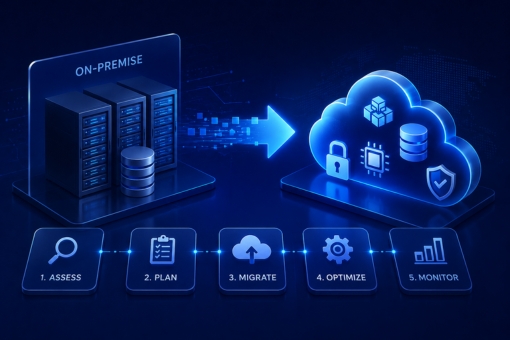
Enterprises have been reluctant to move their business data from on-premises to the cloud due to data security issues and data breaches. However, with the advancement in the tech industry, organizations are now leveraging cloud migration or a cloud data security system to improve business capabilities, enhance operational efficiency, and improve customer experience without worrying about data loss during migration. 

As the cloud industry is growing explosively, many cloud service providers are continually innovating, evolving, and delivering high-quality services to stand ahead of the competition. A managed service provider can implement an end-to-end cloud migration strategy to ensure successful data migration and mitigate data security system problems. This guide will focus on the questions every business owner should ask before choosing a cloud data security system. 

How do they ensure the security of cloud data while migrating?

Cloud adoption has been expanding for several years as new trends take shape, enabling business owners to leverage the benefits of the cloud. A study by LogicMonitor indicates that nearly 30% of the on-premise workload will shift to the cloud by 2025. 

Even though transitioning from physical servers to the cloud can improve business operations and secure data, business owners must focus on strengthening the security system to eliminate potential vulnerabilities before data migration. Here is what an experienced team will take into account to improve network security. 

  • Data backup and end-to-end encryption 
  • Monitor the data systems to identify threats in real-time
  • Effective measures to mitigate the short-term vulnerabilities 
  • Creates a backup IT environment to run applications until the cloud migration is complete 
  • Compliant with data security compliance standards

What security systems does the cloud migration service provider have?

Many tech leaders are planning to move their data to the cloud; however, the security of cloud data systems remains a concern. Only a reliable and well-managed cloud data migration company can protect sensitive data from a breach with a high-level security system that includes the following: 

  • Identity management and secure user endpoints to reduce the risk in cloud dataflow 
  • Authentication security to control application and data changes 
  • Access control to protect sensitive business information 
  • Secure connections between internal data and the cloud with standardized APIs
  • Sophisticated threat intelligence, extensive automation, and extended visibility 

Do the cloud service providers have a well-qualified team of data security professionals?

Moving the entire data to the cloud requires expertise, knowledge, and skills to ensure no data loss or breach midway and smooth data migration. A reputable cloud service provider leverages state-of-the-art security controls and round-the-clock guards to boost technical security and continuously monitor attacks. 

Data security professionals create and maintain a secure environment with due diligence to protect server data in the cloud. Inferenz data security professionals can help you remain vigilant and make the data transfer to the cloud a breeze by using its cutting-edge technologies. Read our detailed case study to know how we leverage tools to help our clients here

What cloud security certifications does the cloud migration service provider have?

Lee James, who is the hosting provider Rackspace CTO, believes that multi-cloud environment systems are the future of cloud computing, Server space indicates. Business owners who want to switch to multi-cloud must look for a certified migration service provider to deal with data security and migration problems.

Security certifications prove that the provider legally excels in the security standards and meets the current and future cloud security requirements. 

What shared responsibility model does the cloud migration service provider follow?

The business owner and the cloud service provider enter into a partnership of shared responsibility for security reasons. A cloud security and risk framework outlines which data states, security duties, and locations are in the business owners’ domain and which are in cloud service providers. The three main types of models include Software as a Service, Platform as a Service, and Infrastructure as a Service.

ALSO READ: 5 Things To Consider Before Any SQL To Snowflake Migration

Before entering into the partnership with the provider, reviewing and understanding the shared responsibility can make moving data to the cloud manageable and secure. Some of the other benefits of choosing a shared responsibility model for a data security system include the following:

  • Reduces customer responsibility for the cloud dataflow 
  • Less management of infrastructure and reduced extra costs that stretch the budget 
  • Relieves operational burden for the in-house team as they can focus on other tasks 
  • Improves cybersecurity by reducing the risk of vulnerabilities and data breaches 
  • Delineating which responsibilities the cloud service providers take on to enhance the productivity of the business team 

Make Digital Transformation Easy With Experts Of Inferenz

Data security in 2022 has become the main apprehension for organizations of all sizes. Performing timely backup, restoring data, and choosing the right cloud service provider can protect a business’s sensitive data and critical information. 

If you want to secure the data during cloud migration, Inferenz data security professionals can help you with a well-structured migration strategy to move data smoothly from the database to the cloud data security system.

Data Warehousing vs. Data Virtualization – How to Store Data Effectively?

Data Warehousing or Data Virtualization? This is one of the most important questions enterprises ask when it comes to storing data effectively. With the advent of the latest Data Design, Architecture, and Engineering technologies, an organization can use the tools to gain insights into their business operations from the company’s data and develop new strategies that help them generate more revenue and market share. Organizations have data stored in diverse sources and locations, so they require a reliable architecture and engineering tool to export, copy and transform data into one system. 

The two principal techniques that focus on cleaning, integrating, and consolidating data available in a company are data warehousing and data virtualization, which can help drive better business decisions using up-to-date information. This comprehensive data warehousing vs. virtualization guide will reveal the best technology to store the company’s data and why business owners should choose it. 

Why Is Effective Data Storage Important For An Organization?

Every business – small, mid-size, or large enterprise – gathers data to understand its customers better and improve the business decisions that directly impact the company’s bottom line.

ALSO READ: 15 Ways in Which Machine Learning Expands Your Business

In his article, Bernard Marr, a thought leader in the business and technology field, said: “While the average small business has less self-generated data than big players like Google or Facebook, this doesn’t mean big data is off limits. In many ways, big data is more suited to small businesses because they’re generally more agile and able to act more quickly on data-driven insights.”

Bernard Marr’s statement proves that stored data can benefit companies of all sizes, especially SMBs and growing enterprises, and help them hedge against their competitors.

Some of the critical benefits of adequate data storage and utilization of the latest data warehousing services in an organization include:

  • Helps make better decisions, increase customer retention, improve customer service, and find new customers
  • Tracks the past-month performance to build marketing campaigns that drive sales 
  • Keeps the sensitive business data safe and secure against cyber attackers and hackers 
  • Prevents data loss by consolidating data from multiple sources into a single data source 
  • Helps create fail-proof strategies by identifying the customer interaction with business 

Which Is Better – Data Warehousing VS Data Virtualization?

survey conducted by Deloitte indicates that “data analytics helped 49% of respondents make better business decisions, 16% to take strategic initiatives, and 10% to improve relationships with business partners and their customers.” 

No matter the business size, this study indicates that data storage is vital to outrank the competitors in the market. Both data warehousing and data virtualization are effective ways to store, access, and analyze data; however, the ultimate choice will depend on the needs and preferences of an organization. 

Data Warehousing

Data warehousing is extracting, electronically storing, and making the data from the operational systems available for analysts and other team experts for ad-hoc queries and reporting. The dimensional models used in the data warehousing architecture help extract meaningful information from the raw data available in an organization and translate it into an easy-to-understand structure to achieve business goals. 

Features & Benefits Of Data Warehousing

The data warehousing solutions are subject-oriented and gather data from different sources in a single place to get an in-depth business overview. Data analysts and other business experts can get information about sales data, products, and customer and supplier details to improve the organization’s ongoing operations. Data warehousing is time-variant, integrated, and non-volatile, making it one of the most accurate data storage solutions, which keeps data integrity intact. 

Data Virtualization

On the other hand, data virtualization is a tool that involves accessing, managing, and retrieving critical business data without collecting or duplicating the data in a physical repository. It leverages modern technology to help business owners get real-time insights with high speed, low cost, and agility and perform their business operations better than the competition. 

The data engineering experts of Inferenz can help you implement data virtualization tools that integrate information from diverse sources into a single system for easy access to data. Inferenz has recently helped a US-based e-commerce company build analytics solutions and implement a Self Service BI tool to increase conversions and access 100% of data in real time.

ALSO READ: 5 Essential Tips for Corporate Learning

Features & Benefits Of Data Virtualization

The unified virtual layer of data virtualization reduces the complexities of gathering data from different sources by avoiding the need for data replication. Compared to data warehouse cost, data virtualization allows speedy resource deployment at a lower price, as it does not involve installing hardware devices. 

Implement The Best Data Storage Tool With Inferenz

As one must have seen, data virtualization and warehousing services are the two best technologies for storing business data and analyzing it to predict future outcomes. However, the choice between the two will depend on business needs and preferences, budget, and business objectives. 

If you want to choose the data engineering tools that best serve your company and boost revenue, Inferenz experts can help you simplify the data architecture with their tech-enabled solutions.

5 Things To Consider Before Any SQL To Snowflake Migration

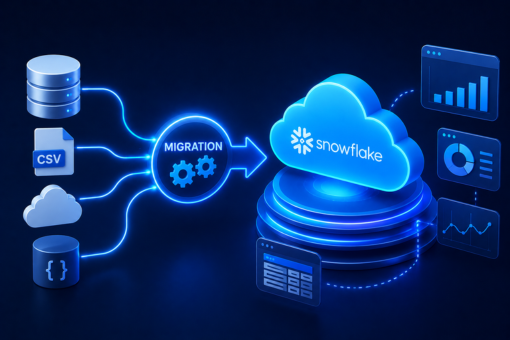
SQL to Snowflake migration can be a straightforward task if a proactive approach is followed during migration. The migration process starts with data identification, in which data is categorized based on sensitivity, format, and location. Organizations must consider the right tools and resources during migration to keep the business’s confidential data safe.

With the rise in data and information, SMEs and large enterprises understand that the traditional method of collecting, managing, and storing data through SQL is insufficient, as its database is no longer sufficient to handle the massive data. Due to some vulnerabilities in the database management system, SMEs and large enterprises are looking for effective ways to migrate their data from SQL to other reliable solutions. This is where Snowflake comes with its modern data analytics capabilities.

Being one of the top-performing cloud data warehousing solutions, Snowflake allows businesses to store, manage, analyze and share data in unthinkable ways. This Inferenz’s comprehensive SQL to Snowflake migration guide will uncover the effective aspects that will make launching a migration project easy and help SMEs and large enterprises stay on track.

Why Launch A Migration Project From SQL To Snowflake?

For SMEs, SQL servers have multiple advantages, as no specific coding knowledge is required, and basic keywords like SELECT, UPDATE, and INSERT INTO can be used.

ALSO READ: 5 Essential Tips for Corporate Learning

However, the disadvantages of going ahead with SQL exceed the advantages of an enterprise looking for an effective way to store its data. For instance, newer versions of Microsoft SQL Server need advanced technologies, and one might have to invest in acquiring new machines to use the updated versions of SQL Server.

Enterprise solutions looking to create multiple warehouses to isolate multiple processes prefer migrating from SQL to Snowflake. Some of the benefits of launching an SQL to Snowflake migration project are:

  • Supports both semi-structured and structured data 
  • Compliant with automated query optimization 
  • Fully managed and cost-effective data warehousing solution with the pay-as-you-go pricing model 
  • Robust technology support and cross-cloud capabilities 

Remember, organizations should follow the best practices for Snowflake implementation so all the data is migrated safely. 

5 Factors To Consider Before Any SQL to Snowflake Migration

Moving data from the SQL database to the Snowflake data cloud is not enough; business managers and experts need to review and structure the data in a way that seamlessly fits the new system that is reformed, effective, possess fewer vulnerability factors, and can handle big data-related projects.

Here are a few things that you should keep in mind when the foundation of the migration to the Snowflake project is launched:

Analysis the Data

Every data has its value, but organizations should consider the build-up expenditures when one migrates from SQL Server to Snowflake. If an enterprise migrates the entire data to a new server, it might reduce the efficiency of the data migration process. The best way to customize the data is by decluttering, restructuring, and discarding the information that is no longer required.

Architecture And Roadmap

Defining the migration architecture and data beforehand is the best way to avoid the big bang approach and make a seamless move to the Snowflake data cloud. For a smooth MS SQL to Snowflake migration project, businesses must follow the strenuous architecture and data preparation procedure by keeping the team members in a loop.

At Inferenz, we specialize in complex SQL to Snowflake migration processes, and if you are wondering how to start constructing the correct architecture, you can speak with one of our experts, who will guide you and save you time and resources as you migrate to a new server.

Security & Governance Needs

During the launch of a migration project, business solutions have to deal with security threats that harm the entire migration process and put the data in a highly vulnerable condition, resulting in a massive data breach. The best way to protect the data during the migration process is by keeping the connections secure, encrypting them, and putting all the data retention and archiving policies in place. 

Scalability

As a growing business requires more data storage space, scalability is crucial when launching a migration project. This scalability might lead to an increase in cost and complexities. Snowflake uses standard ANSI SQL and follows a pay-as-you-go pricing model, helping SMEs and large enterprises to understand the cost factor effectively. 

Understand Business Goals

Data is an asset for every business as it can help them identify the loopholes in the existing business framework and make necessary changes to grow in the long run. While launching SQL to Snowflake migration project, understanding the business goals and analyzing the data helps enterprises make meaningful decisions that would bring efficient results.

It’s worth noting that a step-by-step process to migrate data to Snowflake should be followed. This will help companies reduce the overall migration costs and safely move data from traditional data warehouses to Snowflake.

Get Effective SQL to Snowflake Migration Solution

As one must have learned from this SQL Server migration guide, SQL primarily stores and retrieves data, but Snowflake is an analytics database built for the Cloud. Snowflake’s modern architecture, which runs on AWS, makes it one of the top-performing data warehousing solutions among other cloud-native database players.

If you are looking for SQL to Snowflake migration methods, schedule a discovery call with our experts, who will analyze your data and suggest the best method that you should use to achieve a seamless data migration.