Top ML Algorithms for Anomaly Detection in Machine Learning

Anomaly detection in Machine Learning is identifying outliers to prevent network intrusions, adversary attacks, frauds, etc.

Every organization must focus on in-house business operations to ensure everything works efficiently.

However, a sudden suspicious activity due to data corruption or human error can impact a model’s performance. This is where anomaly detection in ML comes into the picture.

The approach identifies outlier data points to make the entire dataset free of anomalies. In this article, we’ve touched on every aspect of anomaly detection. Let’s get started!

ALSO READ: AWS Community Day 2022 With AWS Experts For AWS Insights

What Is Anomaly Detection in Machine Learning?

Anomalies are data points that do not confirm normal data behavior amongst other data points in the dataset. There are three board categories of anomaly detection.

  • Point Anomaly – if the tuple is far from the rest of the data. 
  • Contextual Anomaly – if the anomaly is due to the context of a specific observation. 
  • Collective Anomaly – the data set that helps you to find an abnormality.

The process of catching these outliers/anomalies is called anomaly detection. It is done using the concept of Machine Learning.

ML Algorithms For Anomaly Detection 

Multiple Machine Learning algorithms are available that will help you with anomaly detection. Below is the list of top ML and data science algorithms that every data scientist needs to understand.

  • DBSCAN

DBSCAN uncovers clusters in large spatial datasets based on the principle of density. When used for anomaly detection, the algorithm handles outliers where non-discrete data points represent data.

  • K-Nearest Neighbors

K-nearest neighbors have supervised Machine Learning algorithms used for classification. It is a valuable tool that helps to visualize data points and make anomaly detection intuitive.

  • Support Vector Machines 

Another supervised Machine Learning algorithm is SVM which uses hyperplanes in multi-dimensional space. SVM is effective when more than one class is involved in the problem.

  • Bayesian Networks

Bayesian networks enable Machine Learning engineers to discover defects in high-dimensional data. When anomalies are subtle and more complex, ML engineers use bayesian networks to discover and visualize abnormalities.

Different algorithms are used for anomaly detection in Machine Learning to get desired results. However, before commencing the project, you should have an experienced ML engineer team.

Need For Machine Learning In Anomaly Detection

According to Anomaly Detection Solution Market Research Report, the worldwide anomaly detection solution is expected to grow at a booming CAGR between 2022-2030. Let us now understand a few ways to use anomaly detection in Machine Learning in the real world.

  • Intrusion Detection 

Companies are concerned about protecting confidential data about clients and employees. Intrusion detection systems detect malicious activity and notify the team of actions.

  • Defect Detection

The manufacturing industry especially has to deal with defects in the supply chain. Anomaly detection in Machine Learning uses computer vision to monitor internal systems and detect faults.

  • Fraud Detection

Like intrusion detection, fraud detection aims to prevent activities that focus on obtaining money or property from customers. In addition, anomaly detection in ML detects fraudulent activities and documents to protect business operations.

  • Health Monitoring

Anomaly detection systems are incredibly useful in the healthcare sector. They assist health professionals in detecting unusual patterns in test results and MRIs to give a more accurate diagnosis.

Inferenz has worked with a manufacturing and eCommerce company to help them with text mining solutions. The AI and ML algorithms helped the company with 100% information availability and improved data quality. 

Different Anomaly Detection Methods

There are three different types of anomaly detection methods with Machine Learning.

  • Supervised – This method labels the datasets as normal and abnormal samples to classify future data points. ML engineers must collect and label examples to train the datasets in supervised anomaly detection. 
  • Unsupervised – It is the most common type of anomaly detection in Machine Learning that does not involve manual work. Artificial neural networks can be applied to unstructured data to determine anomalies. 
  • Semi-Supervised – This anomaly detection method combines supervised and unsupervised methods. ML engineers can automate anomaly detection of unstructured data with unsupervised learning methods and monitor the process to improve accuracy.

Make Your Business Smart With ML Solutions 

Machine Learning and computer vision are the leading technologies used by anomaly detection systems. Adapting this latest technology like ML will help you automate anomaly detection and efficiently manage large datasets.

If you intend to scale your business operations, automate redundant tasks, and digitize your business, contact Inferenz ML experts. The team helps companies to implement systems like anomaly detection in Machine Learning to manage their large datasets better.

FAQs for Anomoly Detection in ML

AWS vs Azure vs Google Cloud: The Best Cloud Platform

Summary

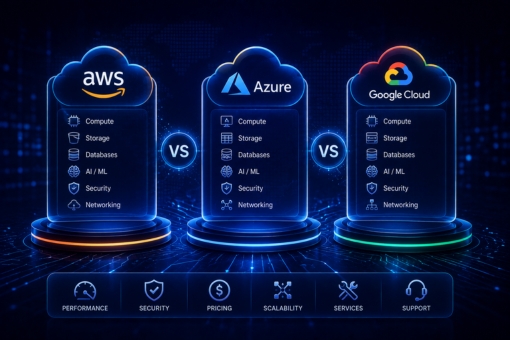
AWS vs Azure vs Google Cloud (GCP) together control more than 65% of the global cloud market. Each platform offers distinct strengths: AWS leads in breadth and global scale, Azure excels in enterprise integration and hybrid cloud, and GCP dominates in data analytics and AI-native workloads. Choosing the right platform depends on your workload type, existing technology stack, and long-term data strategy. This guide delivers a structured, decision-ready comparison to help technology and business leaders make an informed choice.

Introduction: The Cloud Decision That Defines Your Infrastructure

Most organizations recognize that cloud migration is no longer optional. However, selecting the right cloud provider remains one of the most consequential infrastructure decisions a business can make.

The wrong choice leads to vendor lock-in, unexpected costs, performance gaps, and significant rework. Many enterprises invest months in evaluation, only to realize their original choice no longer fits as workloads scale or requirements evolve.

AWS, Microsoft Azure, and Google Cloud Platform each present compelling cases. Furthermore, their feature sets, pricing models, compliance offerings, and ecosystem integrations differ in ways that matter enormously at scale. Therefore, a generic recommendation serves no one well.

This blog breaks down every critical dimension of the AWS vs Azure vs GCP debate, from compute and storage to AI capabilities, pricing, and real-world enterprise fit, so your team can move forward with clarity and confidence.

Understanding the Three Cloud Giants

Amazon Web Services (AWS)

Amazon launched AWS in 2006, and it has since grown into the world’s most comprehensive cloud platform. AWS currently offers more than 200 fully featured services across compute, storage, databases, networking, analytics, IoT, machine learning, and developer tools.

Key platform attributes include:

  • Global footprint: 33 geographic regions and 105 availability zones, the largest of any provider
  • Market share: AWS holds approximately 31% of the global cloud market as of 2026
  • Pricing model: Pay-as-you-go, with Reserved and Savings Plan options for cost optimization
  • Enterprise trust: Companies such as Netflix, Coinbase, Expedia, and Coca-Cola rely on AWS at scale

AWS suits organizations that prioritize service breadth, operational flexibility, and the ability to run complex, multi-region workloads. Additionally, its massive community, documentation library, and third-party tool ecosystem reduce the time-to-value for most deployment scenarios.

For enterprises pursuing Cloud Management Solutions at scale, AWS provides one of the most mature operational frameworks available, including AWS Control Tower for governance and AWS Organizations for multi-account management.

Microsoft Azure

Microsoft Azure holds approximately 24% of the cloud market and remains the top choice for enterprises already operating within the Microsoft ecosystem. Azure integrates natively with Microsoft 365, Active Directory, Teams, Dynamics 365, and the broader Power Platform.

Key platform attributes include:

  • Enterprise penetration: Azure serves 95% of Fortune 500 companies
  • Compliance breadth: 90+ compliance certifications across regulated industries including healthcare, finance, and government
  • Hybrid cloud: Azure Arc and Azure Stack extend cloud capabilities directly to on-premises environments
  • Global reach: 60+ regions, making it the provider with the broadest geographic coverage

Businesses replacing on-premise infrastructure or adopting hybrid cloud strategies will find Azure the most natural fit. Moreover, Azure’s seamless Active Directory integration simplifies identity management across large organizations.

Google Cloud Platform (GCP)

Google Cloud Platform, originally launched as App Engine in 2008, holds approximately 11% of the global cloud market. While GCP trails AWS and Azure in overall service breadth, it leads in specific high-value domains.

Key platform attributes include:

  • Data and AI superiority: BigQuery, Vertex AI, and TensorFlow on GCP represent the most advanced native analytics and machine learning stack available
  • Open-source commitment: GCP leads in Kubernetes (which Google originally created), Istio, and Knative adoption
  • Network performance: Google’s private global fiber network delivers consistently low-latency performance
  • Developer-centric: Strong DevOps integration and container-native architecture

Companies such as Spotify, Toyota, and Equifax leverage GCP specifically for its data capabilities. In particular, organizations pursuing AI-first or data-platform strategies will find GCP’s tooling meaningfully ahead of competitors in those domains.

AWS vs Azure vs GCP: Detailed Feature Comparison

Compute and Virtual Machines

CapabilityAWSAzureGCP
Virtual MachinesEC2 (Elastic Compute Cloud)Azure Virtual MachinesGoogle Compute Engine
PaaSAWS Elastic BeanstalkAzure App ServiceGoogle App Engine
ContainersEKS / ECSAzure Kubernetes Service (AKS)Google Kubernetes Engine (GKE)
ServerlessAWS LambdaAzure FunctionsGoogle Cloud Functions

AWS EC2 offers the widest instance variety, with hundreds of instance types optimized for compute, memory, storage, and GPU workloads. Azure Virtual Machines benefit from tight Windows Server integration. GKE, however, remains the industry benchmark for managed Kubernetes due to Google’s foundational role in the technology.

Storage Architecture

CapabilityAWSAzureGCP
Object StorageAmazon S3Azure Blob StorageGoogle Cloud Storage
File StorageAmazon EFSAzure FilesFilestore
Archive StorageS3 GlacierAzure ArchiveCloud Storage Archive
Data WarehouseAmazon RedshiftAzure Synapse AnalyticsBigQuery

Amazon S3 is the gold standard for object storage, with near-universal third-party support and a mature feature set. Nevertheless, BigQuery stands out as the most powerful serverless data warehouse for analytical workloads, processing petabytes without infrastructure management.

Networking and Security

CapabilityAWSAzureGCP
Virtual NetworkAmazon VPCAzure VNetsVirtual Private Cloud
DNSAmazon Route 53Azure DNSGoogle Cloud DNS
CDNAmazon CloudFrontAzure CDNGoogle Cloud CDN
FirewallAvailable (full)Available (full)Available (limited)

AWS Route 53 provides advanced traffic routing with latency-based, geolocation, and failover capabilities. Azure’s networking layer integrates more naturally with on-premises networks through ExpressRoute. GCP’s network, however, benefits from Google’s own private infrastructure, delivering exceptional throughput for data-intensive applications.

AI, Machine Learning, and Analytics

This dimension increasingly separates the three providers in 2026.

AWS AI and ML services include SageMaker (end-to-end ML lifecycle), Bedrock (foundation models), Comprehend, Rekognition, Polly, Lex, and Transcribe. AWS Bedrock now provides access to third-party foundation models from Anthropic, Meta, and Mistral.

Azure AI services include Azure Machine Learning, Azure OpenAI Service (with GPT-4o access), Cognitive Services, and Azure Bot Service. Azure’s partnership with OpenAI gives it a distinctive advantage for enterprises building generative AI applications on familiar Microsoft infrastructure.

GCP AI and ML services include Vertex AI, Gemini API, AutoML, and the original TensorFlow ecosystem. Furthermore, GCP’s BigQuery ML allows teams to run machine learning models directly inside the data warehouse without moving data.

For enterprises pursuing Data and Cloud Modernization Services and Solutions, GCP’s integrated data-to-AI stack offers the most cohesive path from raw data ingestion to production model deployment.

Pricing Comparison: What You Actually Pay

Cloud pricing involves compute, storage, data transfer, and managed service costs. Comparing list prices rarely reflects real-world spend.

AWS Pricing Model

AWS charges on a pay-as-you-go basis. Reserved Instances (1-year or 3-year) reduce costs by up to 72% compared to on-demand pricing. AWS Savings Plans offer flexible pricing across instance families and regions. However, data egress costs remain a common source of billing surprises.

Azure Pricing Model

Azure pricing is generally competitive with AWS for Windows-based workloads, particularly because Microsoft licenses are often pre-included or discounted through existing enterprise agreements. Organizations with existing Windows Server and SQL Server licenses can reduce cloud costs significantly through the Azure Hybrid Benefit program. For enterprises already invested in Microsoft’s licensing ecosystem, this combination frequently delivers the lowest effective cost.

GCP Pricing Model

GCP introduced sustained use discounts that apply automatically without requiring upfront commitments. Committed use discounts offer deeper savings on predictable workloads. Additionally, GCP’s per-second billing (versus AWS and Azure’s per-minute minimums) provides incremental savings for short-duration workloads.

For most enterprises, AWS and Azure deliver comparable total cost of ownership, while GCP can undercut both on certain compute-heavy workloads with careful configuration.

Cloud Compliance and Security Posture

AWS Compliance

AWS maintains more than 140 compliance certifications, including FedRAMP, HIPAA, SOC 1/2/3, ISO 27001, and PCI DSS. On-demand access to compliance documentation is available through AWS Artifact. For federal and defense workloads with the highest regulatory requirements, AWS GovCloud (US) provides a dedicated, isolated environment.

Azure Compliance

Azure leads in compliance breadth with 90+ offerings across 50+ regions. Its deep government and regulated industry penetration reflects strong compliance tooling. Azure Blueprints and Policy automate compliance enforcement at scale, making governance management significantly more efficient for large enterprises.

GCP Compliance

GCP maintains a strong compliance posture, though its coverage is narrower than AWS or Azure. It holds FedRAMP High, HIPAA, PCI DSS, and ISO certifications. However, enterprises in heavily regulated sectors such as healthcare or defense will find AWS or Azure more comprehensively documented.

Strengths, Limitations, and Ideal Use Cases

AWS: Best for Scale, Breadth, and Flexibility

Strengths:

  • Largest global infrastructure with the most availability zones
  • Broadest service catalog with the deepest feature maturity
  • Largest partner ecosystem and third-party tool integration
  • Strong pay-as-you-go model suitable for variable workloads

Limitations:

  • Complex pricing structure requires careful cost governance
  • Steep learning curve for teams without prior AWS experience
  • Management overhead for large multi-account environments

Ideal for: Enterprises, ISVs, and fast-scaling startups that need maximum flexibility, broad service selection, and global reach.

Azure: Best for Enterprise Integration and Hybrid Cloud

Strengths:

  • Seamless integration with Microsoft 365, Active Directory, and Dynamics
  • Industry-leading hybrid cloud capabilities through Azure Arc and Stack
  • Strong compliance and governance tooling for regulated industries
  • Azure OpenAI Service for enterprise generative AI workloads

Limitations:

  • Performance can vary by region for non-Microsoft workloads
  • Vendor concentration risk for Microsoft-heavy organizations
  • Less suitable for greenfield cloud-native applications without existing Microsoft dependencies

Ideal for: Enterprises deeply invested in the Microsoft ecosystem, organizations running hybrid cloud environments, and businesses in regulated industries.

Organizations evaluating CloudOps Services on Azure benefit from its native integration with Microsoft Defender for Cloud, Azure Monitor, and Azure Policy, which simplify day-two operations considerably.

GCP: Best for Data, AI, and Cloud-Native Workloads

Strengths:

  • Market-leading data analytics with BigQuery
  • Most advanced native AI and ML tooling with Vertex AI and Gemini
  • Kubernetes expertise and open-source leadership
  • Competitive pricing with automatic sustained-use discounts

Limitations:

  • Narrower service catalog compared to AWS and Azure
  • Fewer global data center locations
  • Smaller partner and support ecosystem
  • Higher operational complexity when transitioning from GCP to other platforms

Ideal for: Data-first organizations, AI-native product teams, and companies competing with Amazon that require an alternative to AWS.

How to Choose: A Decision Framework

Rather than declaring a universal winner, consider these decision criteria:

Choose AWS if:

  • You require the broadest service portfolio and maximum global availability
  • Your team values flexibility and ecosystem independence
  • You run diverse workloads across multiple industries and verticals

Azure is the right fit if:

  • Your organization runs Microsoft 365, Active Directory, or Dynamics at scale
  • You operate in a regulated industry with complex compliance requirements
  • You need a robust hybrid cloud strategy connecting on-premises to the cloud

GCP makes the most sense when:

  • Data analytics, machine learning, or AI are central to your product strategy
  • You prefer open-source-first infrastructure with strong Kubernetes capabilities
  • You want competitive pricing with automatic discounts and per-second billing

For most large enterprises, a multi-cloud strategy combining AWS or Azure as the primary platform with GCP for analytics or AI workloads delivers the strongest outcome. In contrast, organizations early in their cloud journey benefit most from committing to a single platform to reduce operational complexity.

Conclusion

The AWS vs Azure vs GCP debate does not produce a single correct answer. Instead, it requires honest assessment of your organization’s technology stack, workload profile, compliance obligations, and long-term data strategy.

AWS offers unmatched depth and global scale, making it the default choice for organizations that value flexibility above all else. Azure delivers the strongest value for enterprises already operating within the Microsoft ecosystem, particularly those navigating hybrid cloud or regulated environments. GCP provides the most advanced data and AI capabilities, making it the preferred choice for organizations where analytics drives competitive advantage.

The most successful enterprises do not choose based on brand recognition alone. They align platform capabilities to specific workload requirements, build governance models that control cost and risk, and retain the ability to evolve their architecture as the cloud landscape continues to change.

For organizations seeking expert guidance on cloud platform selection, architecture design, or migration strategy, working with a specialized partner can compress evaluation timelines and reduce the risk of costly rework. The right platform, implemented correctly, becomes a durable foundation for growth.

Frequently Asked Questions

Types Of Data Warehouses & 7 Best Tools For Modern Data Stack

In today’s modern ecosystem, enterprises use distinct types of data warehouse tools to handle large data volumes and get quick insights. Modern data tools can store, centralize, and query large data volumes to aid the decision-making process across various departments. The best data warehousing tool helps large enterprises reserve pools of information in their database beyond terabytes.

The lack of tools and the massive size of information stored in the organization often overshadows the value data can provide. A data warehousing solution is a sophisticated and structured approach to storing data and driving value from it. This guide will reveal the various types of data warehouses and the best warehousing tools a company can use to store data effectively.

ALSO READ: Snowflake Migration: Ultimate Guide To Migrate Data To Snowflake

Types Of Data Warehouses to Escalate Business

Data warehousing solutions are the ultimate solution to access critical data from disparate sources to make quick business decisions. It is a central repository where data is stored, processed, transformed, and ingested to help teams make strategic decisions. Leveraging the right data warehousing tool and solution can help businesses scale and unlock the true potential of enterprise data, which is why the data warehousing market will exceed $30 billion by 2025. Here are the three main types of data warehouses for different business sizes.

  • Enterprise Data Warehouse: An enterprise solution is a centralized place where all business information and data are available. Data stored consistently and logically makes it easier for teams to utilize data and scale business. 
  • Operational Data Store – Also known as ODS, it allows refreshing the information stored in the data warehouses in real time. The best use of ODS is to reserve employee records and make them easy to manage for large enterprises. 
  • Data Mart – The third type of data warehouse is data mart which collects data subsets. The primary goal of storing the information in the data mart is to enhance user response and reduce data volumes for analysis.

Top 7 Data Warehouse Tools to Implement in 2023

With different types of data warehouse tools available on the market, it can be challenging for business owners to invest their money in the right modern data stack tool. Learn about the top 7 highly efficient and scalable data warehouse platforms.

  • Snowflake

Snowflake is an enterprise-grade data warehouse solution that helps businesses analyze data from structured and unstructured sources. Snowflake’s high scalability and multi-tenant design accelerate query performance, deliver actionable insights, and share data across their organization.

  • Google BigQuery

Organizations that intend to choose a cost-effective data warehousing solution should choose Google BigQuery. The built-in Machine Learning capabilities help organizations execute queries and get real-time analysis for petabytes of data. This cloud-native solution supports geospatial analytics to help teams analyze location-based data and improve business operations.

  • Amazon Redshift

Amazon Redshift is specially designed for enterprises that store exabytes of data and plays a primary role in establishing the data warehousing industry. Startups and large enterprises prefer AWS Redshift as it prioritizes speed and scalability and has an easy-to-use structure. Furthermore, the data warehousing solution separates computing and storage to help enterprises scale as per their business needs.

  • Microsoft Synapse Analytics

Microsoft Synapse Analytics is an efficient data warehouse tool hosted in the Azure ecosystem. Organizations operating in the Microsoft Azure ecosystem can easily integrate the tool with Microsoft SQL Server. In addition, it is equipped with advanced security features like data masking and row-level security to keep data secure.

  • Teradata

Teradata is a data warehousing solution that collects and analyzes data in the cloud. The super fast parallel querying infrastructure helps data experts to get real-time actionable insights. Organizations can optimize their database performance to employ smart in-memory processing without extra expenses.

  • PostgreSQL

An open-source database management solution suitable for SMEs and large enterprises is PostgreSQL. Like Google BigQuery, it can help data teams with location-based business solutions. However, they should integrate PostgreSQL with the PostGIS extension to drive value from geospatial data.

  • SAP HANA

SAP HANA is a cloud-based solution that supports enterprise-wide data analytics and high-speed real-time data processing. SAP HANA’s simple and centralized interface enables teams to access, integrate, and virtualize data. The data federation feature helps data experts query remote databases without moving data from one location to another.

Inferenz has experienced analysts and data migration experts who assist startups, SMEs, and large enterprises choose and integrate the right data warehousing solution. Read the case studies of Inferenz to learn how our experts help enterprises switch from on-premise solutions to cloud computing tools.

ALSO READ: 5 Best Practices For Snowflake Implementation in 2022

Get Best Data Warehouse Services With Inferenz

Organizations that intend to scale their business should focus on improving data quality and making it available for in-house data experts. However, storing data in disparate resources can make data mining challenging for teams.

The best solution to save time and resources while using the stored data to get valuable insights is switching to the right data warehousing solution. If you want to choose the right type of data warehouse tool or a cloud-based solution for your business, feel free to contact the experts of Inferenz.

Top 5 Game-Changing AI Applications In The Sports Industry

The adoption of AI in the FIFA World Cup 2022 will allow video match officials to get real-time offside alerts and improve the viewer experience. With modern data tools and algorithms, Artificial Intelligence has completely transformed how we interact with the world and brands market their products. In the sports industry, technology is becoming more prevalent as it helps teams with post-game analysis, improves fan experience, and enhances player performance.

Although AI technology is in its nascent stage, the sports industry is witnessing endless use cases and benefits of emerging tech. FIFA World Cup 2022 will use AI to detect social media abuse among the players, making it an AI-powered world cup. This guide will reveal the role of emerging techs, the top 5 AI trends for the sports industry, and the innovative ways to use them.

ALSO READ: Data Science in Healthcare: 8 Use Cases No One Will Tell You

Role Of Artificial Intelligence In the Sports Industry

The advent of new technologies, such as Artificial Intelligence, Augmented Reality, Machine Learning, etc., has changed the face of every industry, including sports. Brands, viewers, and players use Artificial Intelligence tools in multiple ways to improve strategizing, advertising, broadcasting, and player training.

One of the biggest brands, Adidas, has jumped onto the bandwagon for FIFA World Cup 2022 by creating NFT characters for advertisement. Likewise, other brands are incorporating different ways to leverage the new technology and gain an edge against the competition. The new wave of AI in the sports industry will transform the way players used to watch the FIFA World Cup, and brands use it to promote their services.

5 AI Trends For The Sports Industry

The benefits of AI in the sports industry are endless, and that is why the AI segment is expected to reach $19.2 billion by 2030. Many biggest names in the sports industry are leveraging the power of AI, including Major League Baseball (MLB), the National Football League (NFL), and the National Basketball Association (NBA). FIFA World Cup 2022 is adopting Artificial Intelligence to enhance viewers’ experience and help players improve their training and play. Below is the list of top AI applications or use cases in the sports industry.

  • Improve Viewer Experience

Sports teams are incorporating Artificial Intelligence to enhance the fan experience and make them feel valued with personalized service. A few use cases of AI to improve viewer experience include creating virtual reality experiences and matching fans with their stadium seats. AI tools help offer personalized content to viewers and help them interact with their favorite players via chatbot. With advanced tech, it is possible to monitor social media to see what fans say about FIFA World Cup 2022 and the players to avoid hatred and abusive content.

  • Predictive Modeling

Another major AI trend in FIFA World Cup 2022 is predictive modeling, which helps teams predict future trends. The information gathered from a player’s past performance can be utilized to predict future trends and identify which players are likely to get injured. AI helps predict breakout seasons, injuries, and underperformance to help sports teams make strategic decisions.

  • Customized Training Programs 

The trend of customized training programs is growing by leaps and bounds, especially in the FIFA World Cup 2022. Athletes use AI tools to create personalized training programs that meet their needs and help them monitor their progress to improve performance. With the information received from AI tools, athletes can revamp their gaming strategy and overall game.

  • Prevent Injuries

The team has to incur financial damage if a player gets injured during a match. AI promises to prevent monetary loss due to injuries by helping teams monitor players’ health beforehand. The AI tool tracks the various health parameters of the individual and identifies the players at risk of injury.

  • Better Sports Equipment

Big companies are using AI to manufacture better, more accurate, and more powerful sports equipment. Adidas, for instance, recently developed an AI-powered soccer ball with an adjustable flight path to improve accuracy. The primary role of using Artificial Intelligence during the manufacturing of sports products is to improve their performance and accuracy, leading to improved gaming.

Brands can integrate the latest technologies to market their products and services on various social media platforms, including Twitter, Snapchat, Instagram, etc., during the FIFA World Cup 2022 and remain ahead of the competition.

Enter The World Of AI With Inferenz Experts

Artificial Intelligence is revolutionizing the sports industry by improving player safety and gaming strategy with predictive modeling. Aside from players, marketers are bringing Web3 to FIFA World Cup 2022 to improve their marketing strategy, engage more customers, and drive sales.

As you see, the future of the sports industry goes hand-in-hand with emerging technologies like Artificial Intelligence. If you are an enterprise owner looking to improve your strategies in FIFA World Cup 2022 with AI tools, get in touch with the skilled team of Inferenz to build AI applications.

What is Web 3.0? Complete Guide for Developers, Businesses & Learners

The new era of computing has begun, and Web 3.0 tutorial is becoming the trending search by developers, students, and business owners alike. The technologies like Blockchain, Internet of Things (IoT), Augmented Reality, Metaverse, SocialFi, and GameFi Suite, are expanding the opportunities, leaving no space to discuss the old Web 2.0 term.

The concept of Web 3.0 is based on making Internet communication decentralized, efficient, and transparent while transitioning the web from a passive to a dynamic and interactive social space. The hype around blockchain and other Web 3.0-based technologies make Web 3.0 developers a lucrative career prospect for emerging talents. This Web 3.0 tutorial is the ultimate guide for students, developers, and enterprises looking to learn about the features of the new technology and utilize it to gain an edge in the competitive market. 

ALSO READ: 15 Ways Machine Learning Expands Your Business in 2022

Web 3.0 Tutorial For Students

With the advancements in business technology, applications, software, and devices, imagining a future without the Internet seems impossible. A report by Emergen Research states that the global Web 3.0 market will reach USD 81.5 billion by the end of 2030, growing at a CAGR of 43.7%. Learning advanced technology from the Web 3.0 tutorials will equip students with the right skills to fully leverage the technology. Here are a few ways that make Web 3.0 crucial for everyone, including students:

  • Data Security 

Web 3 improves the privacy and security of data sharing due to the decentralized nature of blockchain technology. Users are the sole proprietor of data and can keep their information secured from being misused by the companies.

  • Personalized Experience 

Incorporating the Internet of Things, Web 3.0, ML, and AI will provide every user with a better user-centric and personalized Internet experience.

  • Career Opportunities 

Web 3 is a prominent career opportunity for students. They can watch Web 3.0 tutorials, improve their skills, and better understand new concepts. YouTube and Web 3.0 communities are the best sources for students to learn about the latest trends in the NFT marketplace, metaverse technology, and other Web 3.0-based concepts.

Web 3.0 Tutorial For Developers 

With blockchain technology becoming prominent, the Web 3 industry desperately needs developers for NFT development, applications, and software. Here is detailed information about becoming a Solidity and Blockchain specialist.

  • Learn Smart Contract and Solidity Basics 

Developers need to learn the basics of Smart contracts and Solidity, as there are the two most essential tech stacks they need to focus on to enter the Web 3.0 industry. Solidity, in simple words, is a high-level object-oriented programming language that helps developers to create smart contracts. Solidity generates machine-level code that runs on EVM chains, and smart contracts govern the account behavior in the Ethereum state to help developers understand blockchain programming.

  • Understand Blockchain Fundamentals 

Machine Learning and Artificial Intelligence technologies are expanding exponentially, making them prominent for Web 3.0 developers. Blockchain technology is a solid foundation for Web 3 as it transforms the data in the web backend, contributing to a backend revolution.

  • Learn About AR/VR Frameworks 

As Metaverse is more about virtual reality, there is a drastic shift from 2D to 3D applications. Stan Trenev, a blockchain professional and CEO of Coinbet, said that web 3.0 developers should be part of Web 3.0 culture and walk into users’ shoes to build a successful project. That said, web3 developers must focus on equipping themselves with the skills related to AR/VR frameworks like A-frame, three.js, and babylon.js to create distinct applications using modern technology.

Developers can watch Web 3.0 tutorials to learn more about the skills required to excel in the field and build the next-gen NFT, GameFi, and DeFi products on the Fire Blocks Web3 engine.

Web 3.0 Tutorial For Enterprises

Web 3 uses blockchain technology that powers smart contracts, decentralized apps, non-fungible tokens (NFTs), and cryptocurrency. The new wave of technology is impacting businesses in multiple ways, and some of the significant benefits that Web 3 technology offers to grow companies include the following:

  • Streamline Business Processes 

The third-generation Internet is enabling business owners to streamline their business processes. Organizations can safely store invoices, transaction details, and booking details in the database to ease business operations. With the help of smart contracts, business owners can automate business contracts and manage their supply chain to improve profits.

  • Enables Efficient Collaboration 

Web 3.0 eliminates third-party services, enabling organizations and businesses to store and effectively communicate essential information with employees, customers, and suppliers. Blockchain technology’s easy and efficient collaboration will help companies to save resources and make quick business decisions.

  • Improve Data Access 

Data is one of the most valuable acquisitions for businesses of all sizes as it helps them improve business decisions and gain insights into their day-to-day operations. Since Web 3 utilizes blockchain technology, it will provide faster data access across disparate channels. As a result, it offers better data transparency and protection and will help organizations gain customer loyalty by being accountable for their actions.

Inferenz blockchain development services help business owners develop and deploy the latest technologies and boost their business productivity. The blockchain developers of Inferenz have worked with a leading manufacturer of optical systems and optoelectronics to reduce 70% cost and give access to complete data. Here is the detailed case study – Learn More.

Web 3.0 – The Real Future Of The Internet 

Web 3.0, the third version of the Internet, which uses Artificial Intelligence, Blockchain, and Machine Learning, is undoubtedly the future of the Internet. With the world migrating to centralized Internet, a massive wave in the form of a global digital revolution is expected. Users can expect improved digital services, whereas enterprises can envision a way to improve business operations, automate repetitive tasks, and get fast data access.

Inferenz’s experts help enterprises leverage the benefits of modern data tools and technologies for their business growth. The blockchain consultants will assist business owners in understanding the latest technologies with detailed Web 3.0 tutorials and deliver services that meet their unique business needs.

10 Common Challenges Enterprises Face While Cloud Data Migration 

Cloud computing is becoming necessary for businesses in the digital era, and more enterprises are investing in cloud data migration. Cloud systems are propelled to the forefront of the digital revolution due to the rising need for integrated solutions that store and aggregate customer data to gain insights and improve the business decision-making process. 

A successful cloud data migration improves scalability, reduces the risk of data breaches or cyber-attacks, and decreases costs, which might derail your business in the long run. However, each cloud migration process is unique, and business professionals should build an end-to-end strategy when transitioning to a cloud environment. This guide will help enterprises learn the importance and challenges of switching to the cloud.

ALSO READ: How Data Analytics Is Transforming The Healthcare Industry?

Importance Of Cloud Data Migration 

A new market research report released by MarketsandMarkets™ indicates that the cloud market will be worth $832.1 billion by 2025. The exponential growth of the cloud is why businesses switch from their on-premise data to cloud-based solutions daily. Some of the main advantages of choosing AWS cloud migration services include the following:

  • Improves flexibility and scalability by deploying applications quickly 
  • Enhances security as clouds have robust built-in security features 
  • Boosts operational efficiency and reduces the overall cost 
  • Reduces infrastructure complexities and improves collaboration between teams 
  • Improves employee productivity with access to multiple tools, applications, and resources

Challenges In Cloud Data Migration 

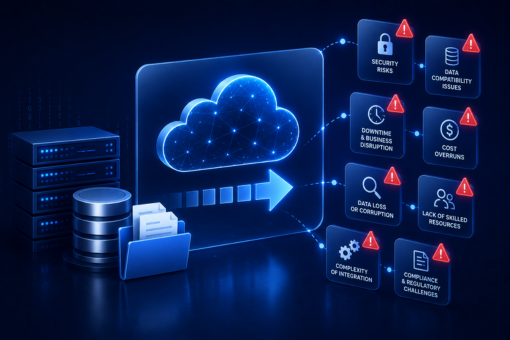
Businesses that plan to move to the cloud should identify the struggles and challenges beforehand to ensure long-term cloud migration success. Some of the most common challenges involved in cloud data migration include the following:

  • Complexity 

Cloud data migration is a complex process, and things can go awry during or post-migration without expert assistance and strategic planning. Preparation is the key to avoiding the complexities and reducing the overall cost of cloud migration in 2023.

  • Cost 

Switching to the cloud involves a few expenses, such as training the in-house team to use the modern technology, charges related to AWS cloud migration services, and upgrading the network connectivity. Business owners must plan their IT budget to ensure that the cost of cloud migration does not exceed the budget limits.

  • Security 

When data is transitioned from physical servers to cloud solutions, business owners need to ensure that there are no potential vulnerabilities during the migration. Data should be backed up, compliant with the data security compliance standards, and end-to-end encrypted to avoid the threat of data breach and ensure a safe transition.

  • Bandwidth

Many business owners fail to map out the bandwidth requirements and network constraints that become a significant challenge during the AWS cloud migration process. Failure to consider the bandwidth can negate the cloud benefits and result in latency, leading to an inefficient cloud migration process.

  • Adaptability 

Adaptability in cloud migration involves how fast the in-house team can cope with the new technology deployed into their business. The team should be ready to adopt a new approach and allocate technical resources, authority, funding, and staffing to make the transition smooth and manage the business operations.

  • Vendor Lock-In

Switching cloud vendors can be cost-intensive and time-consuming, and business owners need to research while choosing the potential one to minimize vendor lock-in. 

Inferenz offers AWS cloud data migration services to help organizations transition from on-premise to cloud computing at a reduced cost.

  • Interoperability 

All the applications migrated to the cloud are compatible, and experts must focus on identifying the interoperability issues between cloud services and on-premise systems to make the migration successful.

  • Downtime 

Network outages will be one of the biggest challenges in 2023 due to the massive volumes of data stored in the database. Interruptions while switching to the cloud and moving large amounts of on-premise data can cause irretrievable data loss, affecting the success of the migration.

  • Capability 

Many businesses try to shift their data from on-premises to the cloud without hiring an expert team for cloud data migration. A lack of strategy and capabilities can lead to potential cloud migration issues and overspending due to the repetition of the process.

  • Resistance 

Many midsize and large-sized enterprises have to deal with cloud adoption resistance when the in-house team resists the massive change in the organization. Failure to identify and solve the issue early on can lead to delays down the road and increase cloud migration costs.

ALSO READ: Data Structure: How To Drain Data Swamp Effectively?

Avail Cloud Data Migration Services in 2022 

Cloud data migration is the need of the new digital era for businesses of all sizes. The best way to make the AWS cloud migration process successful is by working with an experienced IT partner, as one wrong step can lead to additional risks, such as latency and data breaches.

Inferenz’s cloud data migration services help SMEs and large-sized enterprises migrate to the cloud by simplifying the AWS migration process. Our experts understand the cloud challenges specific to your business, find ideal solutions, and make cloud migration seamless. Contact us to know more!

How Data Analytics Is Transforming The Healthcare Industry?

Summary

Data analytics in healthcare is reshaping how providers diagnose, treat, and manage patient populations. From predictive risk modeling to revenue cycle optimization, healthcare organizations now rely on data to drive clinical and operational decisions. The global healthcare analytics market is set to reach $96.90 billion by 2030, growing at a 15.3% CAGR. This blog examines what data analytics means for healthcare, why it matters, its core types, and the real-world applications that define its impact. It also addresses key challenges and emerging trends shaping the future of the field.

Introduction

Healthcare organizations generate enormous volumes of data every day. Electronic health records, lab results, imaging files, insurance claims, and wearable device outputs collectively form a data landscape that no human team can process manually at scale. Yet most of that data historically sat underused, stored in siloed systems that rarely communicated with one another.

The core problem is not a shortage of data. It is the inability to turn raw, fragmented data into timely, actionable intelligence. Clinicians need accurate risk assessments before a condition becomes critical. Administrators need visibility into billing cycles to reduce revenue leakage. Health systems need population-level insights to allocate resources responsibly. Data analytics solves each of these problems, but only when applied with the right tools, governance, and expertise.

Furthermore, the stakes are unusually high. In most industries, a delayed insight costs revenue. In healthcare, it can cost a life. This guide explores how data analytics in the healthcare industry is closing that gap, and what decision-makers need to know to lead the transformation effectively.

What Is Data Analytics in Healthcare?

Data analytics in healthcare refers to the systematic process of collecting, organizing, and interpreting structured and unstructured data to improve clinical outcomes, operational performance, and financial results. It encompasses everything from basic reporting dashboards to advanced machine learning models that predict patient deterioration hours before symptoms escalate.

At its core, healthcare analytics converts raw data from clinical, financial, and administrative sources into insights that support better decisions. Specifically, it integrates data from sources such as electronic health records (EHRs), medical imaging systems, insurance claims, genomic databases, remote monitoring devices, and patient-reported outcomes.

In contrast to traditional business analytics, healthcare analytics must account for clinical nuance, regulatory compliance (HIPAA, GDPR), and the ethical weight of decisions that directly affect patient health. Therefore, deploying analytics in this domain requires both technical depth and domain expertise.

Importance of Data Analytics in Healthcare

The importance of data analytics in healthcare extends well beyond operational efficiency. It fundamentally changes the quality of care that providers can offer, and the speed at which they can offer it.

Enabling Evidence-Based Clinical Decisions

Doctors traditionally relied on clinical guidelines, personal experience, and available test results. Analytics augments that foundation with population-level evidence, real-time risk scores, and treatment outcome comparisons. As a result, clinicians make decisions informed by far more data than any individual encounter can provide.

Improving Patient Safety and Reducing Errors

Medication errors, misdiagnoses, and care protocol deviations remain persistent problems in healthcare. Analytics systems flag anomalies in prescribing patterns, alert clinicians to potential drug interactions, and identify patients whose vitals deviate from expected ranges. Consequently, clinical teams can intervene before an error becomes irreversible.

Supporting Administrative and Strategic Planning

Beyond bedside care, healthcare executives use analytics to plan capacity, manage workforce scheduling, evaluate supplier contracts, and benchmark performance against industry standards. Moreover, data-driven strategic planning reduces the reliance on intuition-based decisions that often misallocate resources.

According to Allied Market Research, the global healthcare analytics market reflects this growing recognition. Its projected growth to $96.90 billion by 2030 signals that organizations across the industry understand the strategic value analytics delivers.

Types of Data Analytics in Healthcare

Healthcare analytics is not a single capability. Instead, it spans four distinct types, each addressing a different layer of insight.

Descriptive Analytics

Descriptive analytics answers the question: what happened? It aggregates historical data into dashboards, reports, and scorecards. For example, a hospital might use descriptive analytics to track monthly readmission rates by department or compare bed utilization trends across quarters. This type forms the foundation of most healthcare reporting environments.

Diagnostic Analytics

Diagnostic analytics answers: why did it happen? It uses drill-down analysis, data mining, and correlation techniques to identify root causes. For instance, if readmission rates spike, diagnostic analytics can isolate whether the cause is early discharge, inadequate post-care instructions, or specific condition types.

Predictive Analytics

Predictive analytics answers: what is likely to happen? It applies statistical models and machine learning algorithms to historical data to forecast future events. In healthcare, predictive models help identify patients at high risk of sepsis, readmission, or chronic disease progression. Additionally, they support demand forecasting for hospital capacity planning.

Prescriptive Analytics

Prescriptive analytics answers: what should we do? It goes beyond prediction to recommend specific actions. A prescriptive model might suggest the optimal treatment protocol for a given patient profile or flag which intervention reduces 30-day readmission risk most effectively for a specific population segment. This represents the most advanced level of healthcare analytics capability.

How Data Analytics Is Transforming the Healthcare Industry

Big data analytics in healthcare is shifting the industry from reactive care to proactive, personalized medicine. The transformation touches every functional area, from the clinical floor to the executive boardroom.

Advancing Diagnostic Accuracy

Data analytics enables healthcare professionals to cross-reference a patient’s current symptoms against vast datasets of clinical history, lab patterns, and imaging results. This significantly improves diagnostic accuracy, particularly for rare conditions or complex presentations where standard protocols may fall short. Moreover, AI-assisted diagnostic tools now help radiologists detect anomalies in medical images with greater speed and consistency.

Identifying High-Risk Patients Early

Predictive models continuously analyze patient data to flag individuals at elevated risk of deterioration, hospital-acquired infections, or chronic disease complications. Clinicians can then prioritize those patients for proactive interventions rather than waiting for an acute episode. This shift from reactive to preventive care is one of the most significant impacts of data analytics in healthcare.

Eliminating Clinical and Operational Errors

Business intelligence tools cross-check prescriptions against patient histories, flag dosage inconsistencies, and alert teams to contraindicated treatment combinations. As a result, error rates decrease substantially without adding burden to already stretched clinical staff.

Enabling Personalized Treatment Pathways

Healthcare organizations now integrate genomic data, lifestyle indicators, and environmental factors alongside traditional clinical records. This approach supports treatment plans tailored to the individual rather than the average patient. Consequently, patients benefit from therapies more likely to work for their specific biology and circumstances, while providers avoid costly treatments with low probability of success.

Enhancing Remote Patient Monitoring

Wearable devices and connected health platforms generate continuous streams of patient data outside clinical settings. Analytics platforms process these streams in real time, enabling clinicians to track patients with chronic conditions between visits. This capability is particularly valuable for managing diabetes, cardiac conditions, and post-surgical recovery, where early intervention can prevent hospitalizations.

Benefits of Data Analytics in Healthcare

The benefits of data analytics in healthcare are measurable across clinical, operational, and financial dimensions.

  • Improved patient outcomes through early identification and personalized treatment
  • Reduced hospital readmission rates via risk-stratified care management
  • Faster and more accurate diagnoses supported by data-driven clinical decision tools
  • Lower operational costs through workflow automation and resource optimization
  • Higher staff productivity by eliminating manual data tasks and streamlining reporting
  • Stronger regulatory compliance through automated audit trails and documentation
  • Enhanced patient engagement via mobile health platforms and personalized communications
  • Better financial performance through improved revenue cycle visibility and billing accuracy

Additionally, healthcare organizations that invest in analytics consistently outperform peers in quality metrics. In particular, those leveraging predictive models for population health management report measurable reductions in preventable hospitalizations and emergency department overutilization.

How Is Data Analytics Used in Healthcare?

How is data analytics used in healthcare across real-world clinical and administrative settings? The applications are broad and deeply integrated into daily operations at leading health systems.

Clinical Decision Support

Analytics platforms provide clinicians with real-time alerts, risk scores, and treatment recommendations at the point of care. These tools pull from patient history, current vitals, and evidence-based protocols to guide decisions. For example, a sepsis prediction model might alert a nurse when a patient’s early-warning score crosses a threshold, triggering a rapid-response protocol.

Population Health Management

Health systems use analytics to segment patient populations by risk level, condition prevalence, or care gaps. This segmentation allows care teams to focus outreach, preventive services, and chronic disease management programs on the patients who need them most. Moreover, payers use population analytics to design benefit structures that encourage preventive care utilization.

Appointment Scheduling and Capacity Management

Predictive scheduling models analyze historical demand patterns to optimize appointment availability, reduce no-show rates, and minimize patient wait times. Administrative staff can use these insights to balance provider workloads and ensure adequate staffing during peak periods.

Quality Measurement and Reporting

Healthcare organizations must report on dozens of quality metrics to accreditors, payers, and regulators. Analytics automates the extraction, calculation, and submission of these measures, reducing manual effort and improving reporting accuracy. Furthermore, dashboards surface performance gaps in near-real time, enabling faster improvement cycles.

Applications of Data Analytics in Healthcare

The applications of data analytics in healthcare span every layer of the delivery system.

Drug Discovery and Clinical Trials

Pharmaceutical companies and research institutions use analytics to accelerate drug development. By analyzing genomic data, biomarker trends, and historical trial outcomes, data scientists identify promising compound candidates and optimize clinical trial design. Specifically, adaptive trial analytics allow researchers to modify protocols in response to interim data, reducing time and cost to regulatory approval.

Fraud Detection and Claims Auditing

Insurance organizations and health system billing departments use anomaly detection models to flag fraudulent claims, duplicate billing, and coding inconsistencies. These systems reduce financial losses and improve billing integrity across large transaction volumes.

Chronic Disease Management

Remote monitoring platforms combined with predictive analytics enable ongoing management of chronic conditions such as diabetes, hypertension, and heart failure. Algorithms analyze continuous device data and alert care teams when trends suggest deterioration, allowing timely adjustments to treatment plans.

Supply Chain and Inventory Optimization

Hospitals use demand forecasting analytics to manage medical supply inventories, reduce waste from expired products, and ensure critical supplies are available when needed. This capability became especially relevant during the supply disruptions that defined the post-pandemic healthcare environment.

Data Analytics in Healthcare Revenue Cycle

Data analytics in healthcare revenue cycle management addresses one of the most financially significant pain points for health systems: revenue leakage caused by billing errors, claim denials, and collection inefficiencies.

Denial Management and Prevention

Analytics tools analyze historical denial patterns to identify the root causes of claim rejections. By surfacing the most common denial reasons, billing teams can implement upstream coding and documentation corrections before claims reach the payer. As a result, first-pass claim acceptance rates improve and rework volume decreases.

Charge Capture and Coding Accuracy

Undercoding and overcoding both carry significant financial and compliance risks. Analytics platforms compare clinical documentation against billing codes in real time to ensure accurate charge capture. Moreover, natural language processing tools extract billable information from clinical notes that coding staff might otherwise miss.

Collections and Payment Prediction

Predictive models assess the likelihood of payment from individual patients based on demographic data, insurance type, and historical payment behavior. This insight allows revenue cycle teams to prioritize collection efforts and design payment plan offerings that match patient financial capacity.

Payer Contract Analytics

Health systems use contract analytics to model the financial impact of payer contract terms, compare reimbursement rates across payers, and identify underpayments relative to contracted rates. Consequently, organizations recover revenue that would otherwise go unnoticed in complex multi-payer environments.

Data Analytics Use Cases in Healthcare

The following data analytics use cases in healthcare illustrate how leading organizations deploy these capabilities in practice.

Sepsis Early Warning Systems

Several major health systems have implemented machine learning models that continuously analyze vital signs, lab values, and nursing assessments to generate real-time sepsis risk scores. Facilities using these systems report significant reductions in sepsis mortality and ICU length of stay compared to pre-implementation baselines.

Predictive Readmission Reduction

A large regional health network deployed a readmission prediction model that flagged high-risk patients at discharge. Care coordinators used those predictions to prioritize post-discharge follow-up calls and home health referrals. Furthermore, the organization achieved a measurable reduction in 30-day readmissions within the first year of deployment.

Pharmaceutical Vital Parameter Monitoring

Inferenz recently partnered with a German pharmaceutical company to build a predictive health alert system. The model analyzed patient vital parameters and generated alerts before clinical deterioration became visible. This use case demonstrates how data analytics transforms both patient safety and drug safety surveillance simultaneously.

Operational Throughput Optimization

Emergency departments use flow analytics to identify bottlenecks in patient throughput, from triage to discharge. By analyzing timestamp data across each step of the care process, operations teams can redesign workflows that reduce door-to-physician times and length of stay without adding resources.

Challenges of Data Analytics in Healthcare

Despite its clear value, the challenges of data analytics in healthcare remain significant. Organizations that underestimate these barriers often struggle to move beyond pilot projects.

Data Quality and Interoperability

Healthcare data originates from dozens of systems that use different formats, terminologies, and coding standards. Integrating these sources into a unified analytics environment requires substantial data engineering effort. Moreover, poor data quality, including missing values, duplicate records, and inconsistent coding, directly undermines model accuracy.

Privacy, Security, and Regulatory Compliance

Patient data carries strict regulatory protections under HIPAA in the United States and GDPR in Europe, among other frameworks. Analytics deployments must implement robust access controls, audit logging, de-identification protocols, and consent management. Consequently, compliance requirements add significant complexity to analytics architecture and governance.

Talent Shortages in Healthcare Data Science

Skilled professionals who combine clinical domain knowledge with advanced analytics expertise are rare. Health systems often compete with technology companies for the same talent pool. Additionally, building internal analytics teams capable of delivering sustained value requires long-term investment in recruitment, training, and culture.

Clinical Adoption and Change Management

Even technically excellent analytics tools fail without clinician adoption. Physicians and nurses must trust the outputs, understand the underlying logic, and integrate alerts into their workflows without disruption. Therefore, successful analytics programs invest as heavily in change management and user experience design as in the underlying technology.

Infrastructure and Integration Complexity

Legacy health IT environments were not built for analytics. Integrating modern analytics platforms with older EHR systems, imaging archives, and administrative applications requires significant technical investment. Furthermore, cloud migration in healthcare carries its own compliance and security considerations that slow deployment timelines.

Future of Data Analytics in Healthcare

The future of data analytics in healthcare points toward a more integrated, intelligent, and patient-centered delivery system. Several trends will define the next phase of development.

Artificial Intelligence and Generative AI Integration

AI models, including large language models capable of synthesizing clinical notes, research literature, and patient history, will increasingly support clinical decision-making at scale. Generative AI tools will assist in drafting care plans, summarizing patient records, and generating prior authorization documentation. However, governance frameworks must evolve in parallel to ensure accuracy and accountability.

Real-Time Analytics at the Point of Care

The shift from batch reporting to real-time analytics will continue. Clinicians increasingly expect insights delivered in the moment of decision, not hours later through a static report. As a result, edge computing and streaming data architectures will become standard components of healthcare analytics infrastructure.

Interoperability and Health Data Networks

Regulatory mandates, including CMS interoperability rules and the expansion of FHIR-based data exchange standards, will accelerate data sharing across health systems, payers, and patients. This richer data ecosystem will unlock population-level analytics that no single organization can build independently.

Precision Medicine and Genomic Analytics

As genomic sequencing costs continue to fall, more health systems will incorporate genomic data into clinical analytics workflows. Precision medicine programs will use this data to identify the most effective treatments for individual patients, shifting care from population averages to personalized protocols grounded in biological evidence.

Patient-Generated Data and Wearable Integration

Wearable devices, remote monitoring platforms, and patient-reported outcome tools will generate increasingly rich real-world datasets. Integrating this continuous data with clinical records will provide a more complete picture of patient health between visits, enabling truly longitudinal care management.

Conclusion

Data analytics in healthcare is no longer an optional capability. It is a foundational requirement for organizations that intend to compete on quality, efficiency, and patient experience. The path from raw data to clinical and operational impact is complex, but the evidence base for its value is unambiguous.

Health systems that invest in the right analytics infrastructure, governance frameworks, and talent will consistently outperform those that do not. Moreover, as regulatory environments evolve and interoperability improves, the data available to analytics programs will expand dramatically, further widening the gap between analytics leaders and laggards.

For healthcare leaders evaluating where to begin or how to accelerate their analytics journey, the priority should be clarity of purpose: identify the highest-value clinical or operational problem, build toward solving it with clean data and proven methodology, and expand from there. The technology is mature. The talent is available. The competitive and patient-care imperative is clear.

Inferenz works with healthcare organizations to design and deploy data analytics solutions that deliver measurable clinical, operational, and financial impact. Contact the Inferenz team to explore how analytics can transform your organization.

Frequently Asked Questions (FAQs)