










The Hospital Throughput Crisis: How COOs Are Using AI to Cut LOS and Discharge Delays

Summary

A patient who’s medically cleared to go home but is still lying in a bed isn’t a staffing problem. It’s a coordination failure, and it quietly drains millions of dollars a year in beds that never reopen for the next admission. Hospital throughput AI closes that gap. It turns the moment a physician writes “discharge today” into the moment a bed is actually clean and ready, replacing whiteboards and 3 p.m. huddles with a live, predictive view of the entire patient journey. 

Throughput and Length of Stay are not the same problem 

Every hospital tracks length of stay like a scoreboard. Throughput barely gets a line on the report, and that blind spot is exactly where the money and the beds disappear. 

Length of stay counts the days a patient occupies a bed, admission to discharge.  

Throughput measures something harder to see how efficiently the whole system, beds, staff, transport, pharmacy, environmental services, moves that patient from the front door to the exit.  

Hospital and ambulatory data can often include a perfectly respectable average length of stay and yet bleed capacity in reality, every day. This happens because the real leak is usually what happens after the clinical decision to discharge has already been made. 

Operations teams have a name for that gap: the discharge-to-actual-discharge gap. It’s where most avoidable bed days live, and it’s nearly invisible on a standard length-of-stay report. We map exactly where that last mile breaks down in Why Beds Stay Occupied After the Clinical Decision to Discharge. 

What causes hospital discharge delays 

What causes hospital discharge delaysThe instinct is to blame acuity: sicker patients, more complex cases, an aging population. That’s part of the story, but not the biggest part. According to the American Hospital Association’s 2026 Costs of Caring report, hospital workforce spending rose 5.6% in 2025 alone, and hospitals spent $43 billion in 2025 simply trying to collect payment for care they had already delivered, chasing denials, prior authorization delays, and repeated documentation requests. 

None of those billions buy a single extra day of good clinical care.  

It buys time which patients spend waiting 

  • on insurance sign-offs 
  • for skilled nursing beds to open 
  • on transport 
  • for a family member to pick up the phone.  

Add ongoing workforce shortages at post-acute and behavioral health facilities, and a discharge that should take an afternoon stretches into two or three extra days. None of it shows up on a clinical chart. All of it shows up on the P&L. 

That’s why hospital solutions for discharge delays are worth budgeting for in 2026 starting with care coordination. Adding case managers to a broken handoff process just means more people waiting on the same missing information. 

The real price tag: what counts as an avoidable bed day 

An avoidable bed day is any day a patient stays in an inpatient bed after being clinically cleared to leave, for nonclinical reasons, with no reimbursement attached. Hospitals absorb the full cost, staffing, supplies, overhead, and collect none of the revenue. 

That’s the quiet part of the crisis. It’s rarely one catastrophic failure. It’s dozens of small delays compounding across a 300-bed hospital, every single day, at a cost that seldom reaches a board presentation until someone finally adds it up. This is the core of hospital capacity optimization AI: recovering capacity you already own instead of building or leasing more of it.

Build a hospital command center layer to ensure predictive discharge signals reach the people who can act on them.  From dashboards to decisions: what a hospital command center actually does 

A hospital command center AI platform isn’t a bigger screen on a wall. It’s an operating layer that pulls bed status, staffing, transport, and discharge readiness into one place, then tells someone exactly what to do about it before a backlog forms. 

The results are becoming hard to dismiss. Sutter Health ran a command center pilot across three hospitals through 2025 and, according to the American Hospital Association, cut ED arrival-to-departure time by 8%, grew transfers and direct admissions by 29%, increased discharges by 4%, and reduced net days above geometric mean length of stay by 27%, the equivalent of freeing up 12 beds a day without adding a single physical bed. 

Throughput Lever What It Actually Fixes Explored In 
Last-mile discharge coordination The gap between “cleared to leave” and “bed is open” Why beds stay occupied after the clinical decision to discharge 
Post-acute matching Out-of-network referrals draining revenue and outcomes Referral leakage to post-acute care 
Early risk flagging Patients likely to bounce back within 30 days Predicting readmission risk before it happens 
Census-based staffing Overtime cost and unsafe nurse-to-patient ratios Staffing and demand forecasting 

Baptist Health Arkansas took a comparable approach and, per Becker’s Hospital Review, saw a 32% reduction in discharge processing time, a 25% reduction in opportunity days, and a 34% reduction in geometric-mean-length-of-stay variance after standardizing predictive discharge data estimation (forecasts) and automated escalation inside its command center. 

That’s the difference between visibility and action. A dashboard tells a nurse manager that 11 patients are ready for discharge. A command center built on hospital throughput AI tells her which of them are stuck, why, and who needs to move next. 

A point to note, though. A command center is only as good as the patient view feeding it, which is why hospitals building real hospital throughput AI usually start with a Master Patient Index and Patient 360 view that reconciles bed status, case management notes, and post-acute referrals into one record instead of three. 

How AI Actually reduces Length of Stay 

Strategies that use AI to reduce length of stay rarely start with a new algorithm. They start with visibility into three things most hospitals still track separately: predicted discharge date, current discharge barriers, and who owns each barrier right now. 

Predictive discharge date estimation flags, often 24 to 48 hours out, which patients are trending toward a delay, so case managers can intervene before it happens instead of reacting the morning of. Real-time bed management software replaces the static whiteboard with a live view that updates the moment a bed is marked clean. And care coordination software ties case management, nursing, and physician rounds together, so a barrier surfaced on one unit doesn’t sit unaddressed for six hours because nobody outside that unit knew it existed. 

None of this works as a dashboard nobody owns. The hospitals seeing length of stay reduction strategies pay off are the ones pairing AI patient flow management with an accountable owner and a clock, not the ones that bought software and called it done.

ED boarding starts at the back door, not the front door 

It’s tempting to treat emergency department boarding as an ED problem. It usually isn’t. A patient boards in the ED because there’s no inpatient bed available, and there’s no inpatient bed available because a patient upstairs who’s ready to leave hasn’t left yet. 

Federal regulators have started treating that connection seriously. The Agency for Healthcare Research and Quality convened a national summit specifically because, in its own words, the causes of ED boarding “originate at the hospital or health system level and require solutions beyond the walls of the ED.” CMS has since moved to require hospitals to report ED boarding metrics as part of its quality measurement program, formally tying the two problems together. 

If your hospital is still tracking ED boarding and discharge delays on two separate dashboards, owned by two separate teams, you’re only solving half the equation. 

How to standardize discharge barrier escalation across units 

Discharge barrier escalation is what happens after a case manager identifies exactly why a patient can’t leave yet: pending labs, a family member who hasn’t been reached, an unsigned insurance form, a transport slot that was never booked. The barrier itself is rarely the hard part. The hard part is that in most hospitals, escalating it depends on someone remembering to make a call or send an email, and that someone is usually already covering twenty other patients. 

This is where agentic AI for healthcare earns its keep. Instead of a case manager manually chasing five departments, an agent can flag the barrier, route it to the right owner automatically, escalate it if nobody responds within a set window, and log the resolution, all without anyone having to remember to check a spreadsheet. It’s a meaningful piece of what Caregence, Inferenz’s HIPAA compliant agentic AI platform for healthcare was built to do for hospital operations teams. 

Nonclinical discharge delay causes account for a meaningful share of excess bed days, and they’re also the easiest to automate, because they rarely require clinical judgment. They require consistency. 

Who actually engages the patient during discharge, and why it matters? 

Who actually engages the patient during discharge, and why it matters?“Ask who ‘owns’ a patient’s discharge and most hospitals point to a case manager.  

In practice it’s a relay:  

  1. Nursing confirms readiness

  2. Case management builds the plan 

  3. A discharge navigator or a digital patient engagement platform, has to make sure the patient and family actually understand what happens next.  

That last handoff is where a surprising number of delays start. A patient confused about medication changes, or a family that couldn’t be reached to arrange a ride, turns a same-day discharge into a next-day one. This is why patient engagement matters in throughput conversations now, not just satisfaction scores. Platforms that text discharge instructions, confirm transportation, and flag confusion in real time give the care team a head start instead of a surprise. 

Where referrals, readmissions, and staffing fit into the bigger picture 

Throughput doesn’t end when a patient walks out the door. A discharge that sends a patient to an out-of-network skilled nursing facility, simply because the in-network bed wasn’t matched in time, isn’t just a coordination miss. It’s revenue and outcomes walking out with the patient. We break down exactly what that leakage costs in Referral Leakage to Post-Acute Care: The Silent Revenue and Outcomes Drain. 

Some of those same patients come back. Readmission risk doesn’t appear the day someone is readmitted, it builds during the stay, and the hospitals catching it early give their care coordination teams enough runway to actually intervene rather than react. Check out this article: Predicting Readmission Risk Before It Happens. 

How accurate are AI discharge date predictions, really? 

Case managers have always predicted discharge dates. The question isn’t whether AI guesses better than an experienced nurse, on its own, it usually doesn’t. The value shows up when the prediction runs continuously in the background, flagging patients drifting off-plan before a case manager would otherwise notice, and freeing up human judgment for the cases that actually need it. 

None of this holds together without the right people in the right place on the right day. Matching nurse staffing to predicted census, not last week’s census, is its own discipline, one that also shapes overtime cost and unsafe staffing ratios. We cover this topic in Staffing and Demand Forecasting: Matching Capacity to Patient Flow. 

Across integrated command center deployments, health systems including Baptist Health Arkansas and University Health in San Antonio have reported, per Becker’s Hospital Review, up to a 12-hour reduction in length of stay, a 2% increase in admissions, and a 5% increase in daily discharges, all without adding a single bed. AI discharge planning software doesn’t replace a case manager’s judgment. It gives that judgment a 24-to-48-hour head start.

Every hospital's throughput bottleneck built on the beds, discharges, and staffing data sits different.  Frequently Asked Questions

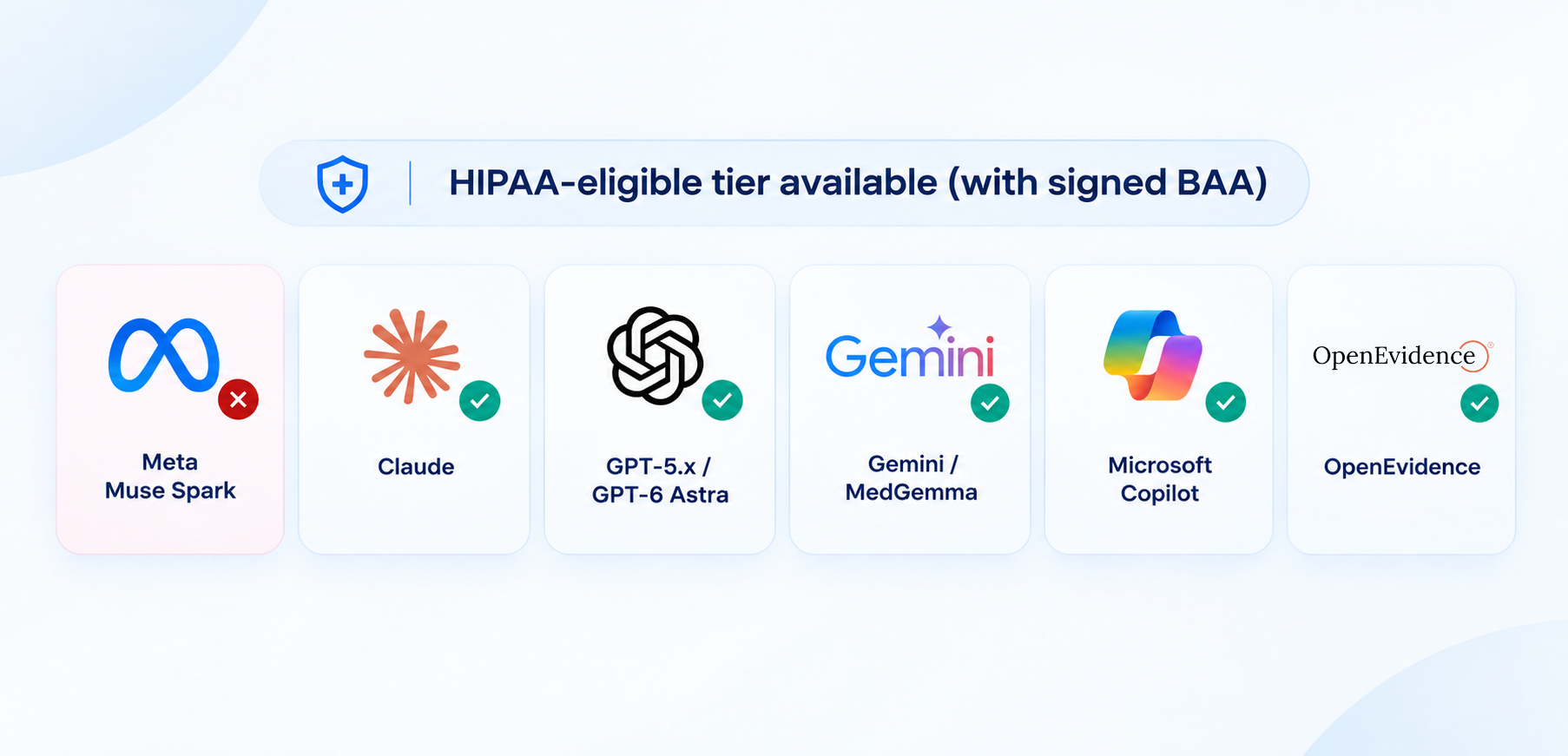
GPT-6 Astra vs Claude Fable 5.1: A Comparison of the Agentic AI Models

Summary

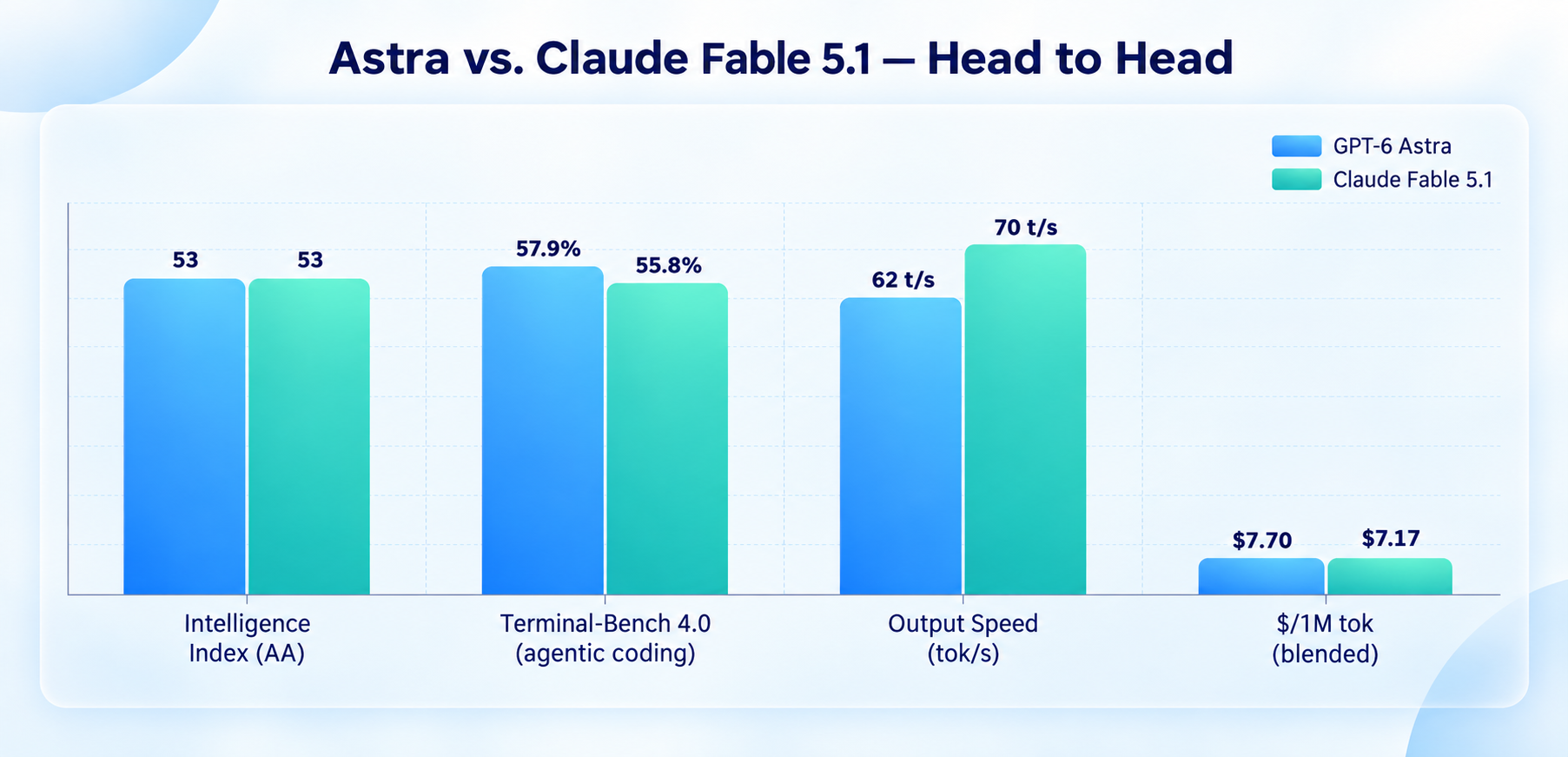
GPT-6 Astra and Claude Fable 5.1 are the two frontier agentic AI models setting the pace for computer use, agentic coding, and enterprise AI automation heading into 2027. Astra leads on computer-use accuracy, CAD and 3D reconstruction, and cybersecurity benchmarks; Fable 5.1 holds its own on output speed and blended cost. The right fit comes down to which tools, workflows, and governance model your team needs. 

At a Glance 

GPT-6 Astra, OpenAI’s flagship model released on September 3, 2026, and Claude Fable 5.1, Anthropic’s parallel release this quarter, are both built to finish work, not just answer questions. Astra pulls ahead on computer use, design and CAD reconstruction, and cybersecurity benchmarks. Fable 5.1 answers back with faster raw output and a lower blended cost. Here’s what each one does well, tool by tool, before we get into the numbers.  

Where Each Model Actually Wins

Skip the leaderboard for a second. In practice, the two models split along clean lines. 

Astra is the stronger pick for anything that touches a screen: filling out forms, running QA on a live frontend, reconstructing a 3D object from photos, or laying out a circuit board. It’s also the one OpenAI trusts, cautiously, with real offensive security work, since it’s the first model to cross the “Critical” threshold on the company’s Preparedness Framework. 

Claude Fable 5.1 answers with efficiency. Teams already inside the Anthropic ecosystem get comparable agentic coding results, a broader library of MCP Apps, and content-provenance features (a statistical watermark plus signed C2PA credentials) that Astra doesn’t publicly document yet. 

Both ship a genuinely broad toolkit rather than a single chat window. That’s the part most coverage skips, and it’s the part that actually decides whether a model fits your stack. 

What This Launch Is Really About

Most of the public conversation about GPT-6 Astra collapses it into one number: a benchmark score, a context-window size, a price tag. That misses the point. What OpenAI actually built Astra to do sits somewhere else: computer use, software engineering, design and CAD, legal work, business documents, and scientific research. https://openai.com/index/gpt-6-astra This piece covers the features, use cases, and built-in tooling that matter most across those six areas, holding the same head-to-head discipline against Claude Fable 5.1 throughout. 

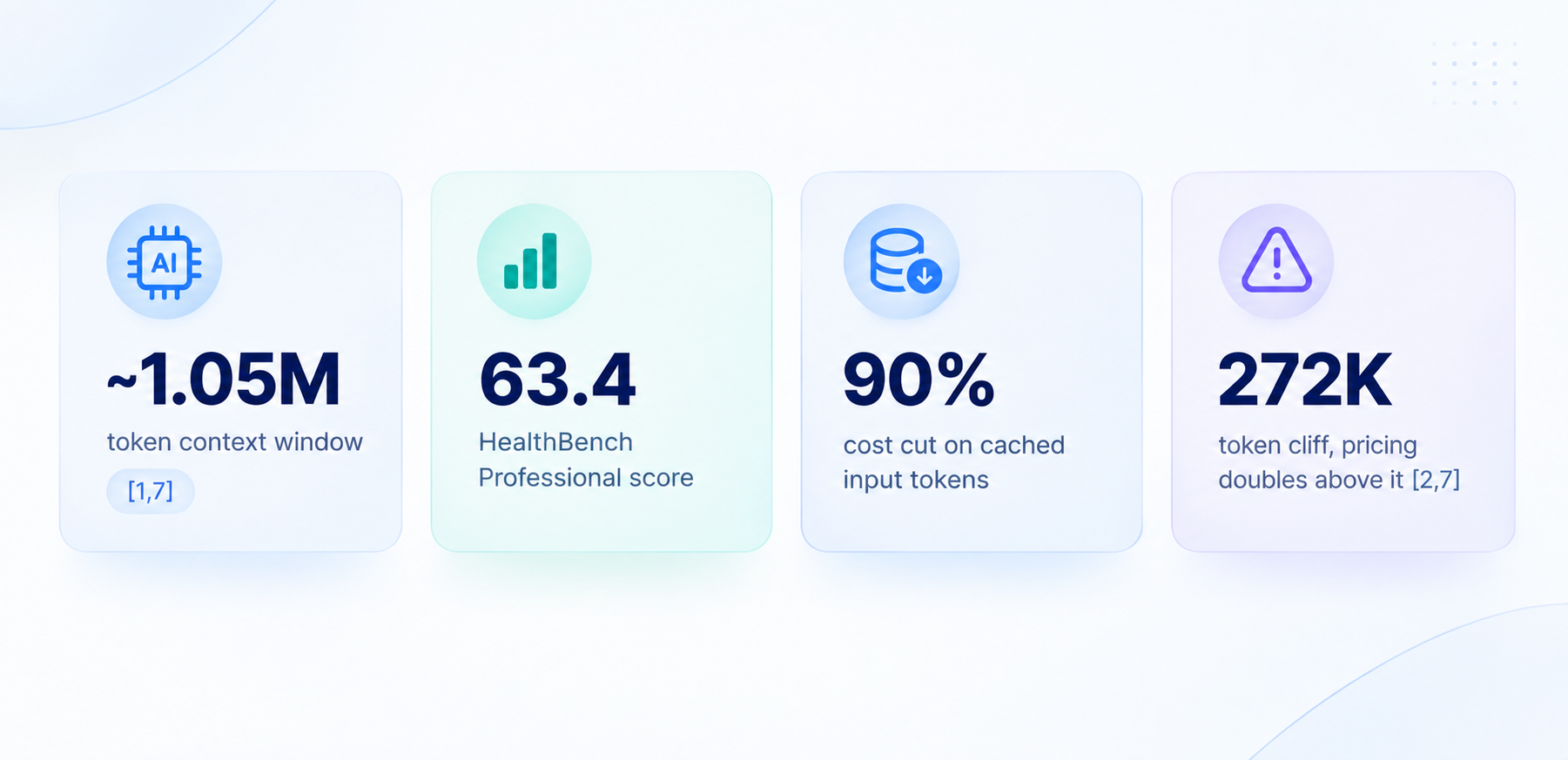
Four numbers frame the launch outside pure chat benchmarks 

  • 95.9% on BenchCAD (3D reconstruction to CAD code) 
  • 72.6% on OSWorld 2.0 (roughly 47% less time per task) 
  • 100% on ExploitBench (“Critical” cyber tier) 
  • 10+ built-in tool types via the Responses API. 
 GPT-6 Astra Claude Fable 5.1 
Launched September 3, 2026 Same launch window, 2026 
Strongest at Computer use, CAD/3D reconstruction, cybersecurity review Output speed, blended cost efficiency 
Headline benchmark 95.9% BenchCAD; 100% ExploitBench 84.3% BenchCAD; 30.4% ExploitGym 
Cybersecurity tier “Critical” (OpenAI Preparedness Framework) Not publicly documented at this tier 

Computer Use: The Biggest Single Capability Jump

Computer Use The Biggest Single Capability JumpAstra marks what OpenAI calls a new frontier in the speed, accuracy, and safety of computer use: filling out online forms, updating CRM records, organizing a calendar, drafting research summaries inside an email or document editor, and running frontend QA checks.  

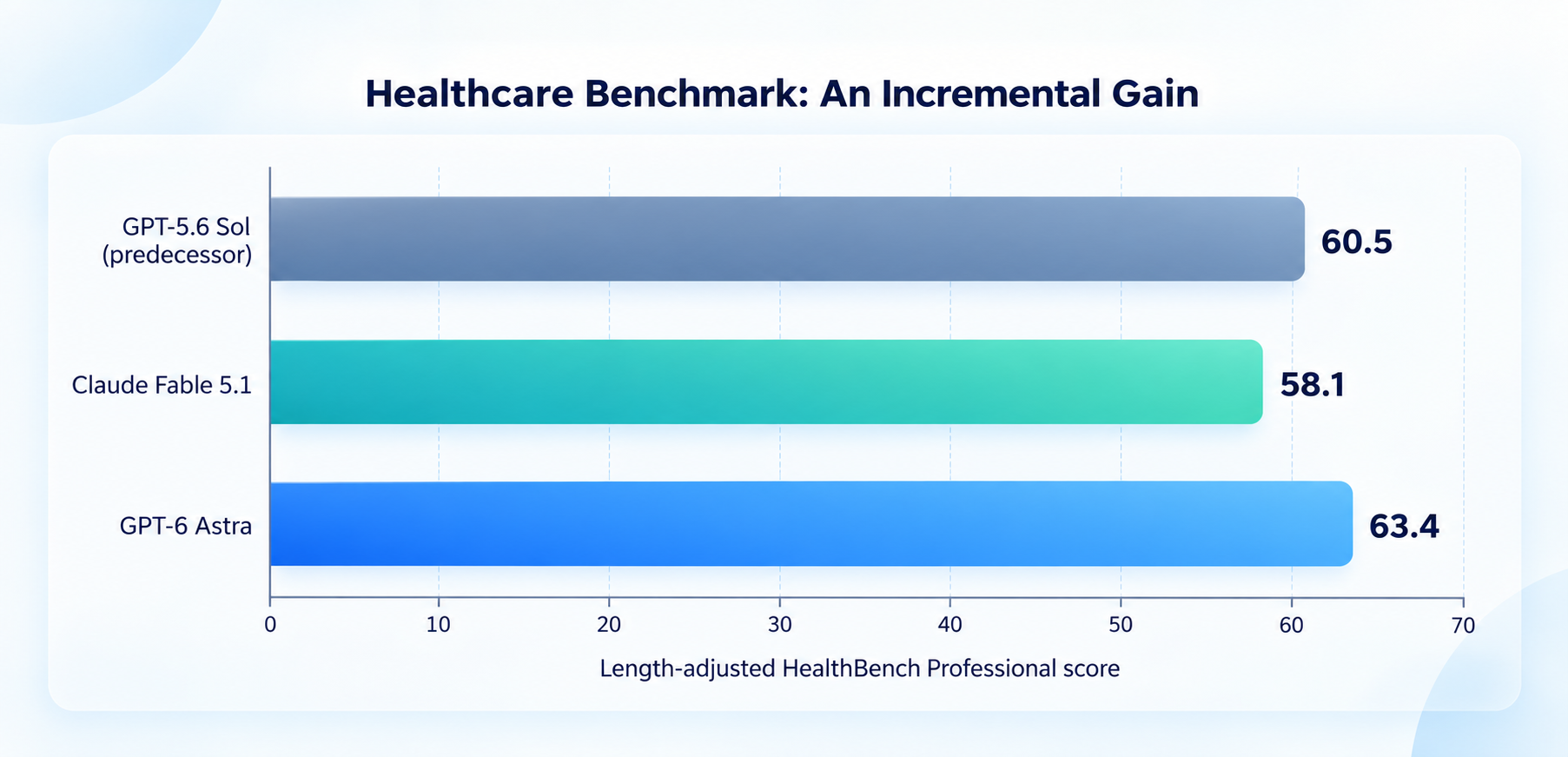
In latency testing on OSWorld 2.0, Astra hit 72.6% in roughly 40 minutes per task, against 65.7% in about 75 minutes for GPT-5.6 Sol, its predecessor, a 47% cut in time for a higher score. 

Paired with an updated Codex harness, OpenAI reports 1.9x faster task completion on Mind2Web versus the prior GPT-5.6 Sol experience. For any business built around repetitive screen work (data entry, back-office operations, QA testing, research summarization), this is the feature with the widest reach across industries. It goes well beyond any single vertical. 

Agentic Coding: Long Sessions, Not Just Better Code 

Agentic Coding Long Sessions, Not Just Better CodeAstra posts real gains on agentic coding benchmarks against Claude Fable 5.1. Terminal-Bench 4.0, DeepSWE, and FrontierCode all favor Astra by several points. 

Two features matter more than the raw scores. 

Persistent notes across context windows. Rather than summarizing away detail every time a long coding session fills its context, Astra can keep searchable notes across windows in Codex. It can find a requirement or test result from an earlier message even if that detail never made it into a compacted summary. This is opt-in today and becomes the default in the coming weeks. 

Async tool calls. Astra can ask a clarifying question and keep working on an independent part of the task while it waits for a reply, instead of blocking entirely. If nobody responds, it proceeds on sensible assumptions for routine gaps but waits on consequential decisions, useful for any long-running automation where blocking on every ambiguity kills throughput.

Design, CAD and 3D: A Genuinely New Application Area 

Design, CAD and 3D A Genuinely New Application AreaBenchCAD tests whether a model can reconstruct 3D objects from multi-view renders by generating CAD code. Astra scores 95.9% with tools, well ahead of Claude Fable 5.1’s 84.3%, though Anthropic’s own system card notes that score reflects three modifications to the evaluation, worth keeping in view. 

OpenAI’s own demonstrations extend this into practical engineering and design work: laying out a printed circuit board in KiCad from a schematic, modeling a house in Blender and turning it into a walkable Unreal Engine 5 scene, and building playable games with accurate motion and graphics. 

Choosing between frontier models before a frontier model ever touches a live workflow? Business Documents, Legal Work and Scientific Research 

Astra is trained to match a business’s existing templates rather than produce generic output: slides, spreadsheets, and analyses that fit an organization’s writing and visual style, pulling only the context that matters into the final artifact. Executing complex creative workflows in videos used up to 20% fewer tokens than other models tested, which translates directly into higher-quality output for end customers. 

In early legal testing, Astra approached legal work “the way a discerning lawyer does”: distinguishing documents from established records, surfacing unsupported assumptions, and converting gaps into concrete drafting positions. On the scientific side, Astra contributed to two new results on prime-number gaps, improving a bound that had stood for more than 80 years, and it pairs scientific reasoning with computer use to inspect sequencing data and genetic variation directly inside specialized research software.

Cybersecurity: A Capability Jump with Guardrails Attached 

Cybersecurity A Capability Jump with Guardrails AttachedAstra is the first OpenAI model to meet the “Critical” threshold for cybersecurity capability under the company’s Preparedness Framework. With the right tooling, it can independently identify and develop exploits for previously unknown vulnerabilities across hardened systems. https://openai.com/index/gpt-6-astra On ExploitBench it scored 100% versus 78.5% for GPT-5.6 Sol; on ExploitGym, a harder benchmark, it scored 42.4% against Claude Fable 5.1’s 30.4%. 

Because of that jump, OpenAI is keeping the most advanced cybersecurity capability restricted to a limited group of testers through its Daybreak program rather than opening it broadly. The model is designed to refuse tasks like generating proof-of-concept exploits under standard deployment. For security teams, the more immediately usable value is defensive: secure code review, patching, and, with expanded access, vulnerability validation and malware analysis.

Built-In Tools, Side by Side 

Neither lab ships a single chat endpoint. Both ship a broad agentic toolkit. The table below lines up what’s documented for each as of this launch window; where a capability isn’t publicly documented for a model, that’s noted rather than assumed absent. 

Built-in tool GPT-6 Astra Claude Fable 5.1 
Web search Yes, native tool Yes, togglable feature 
File search / retrieval Yes, dedicated File search tool Via Files API + code execution 
Code execution / interpreter Yes, Code interpreter tool Yes, code execution tool 
Computer use (GUI control) Yes, native Computer use tool Yes, native computer-use tool 
MCP / external connectors Yes, MCP & Connectors, Secure MCP Tunnel Yes, MCP Apps 
Hosted / local shell Yes, Shell and Local shell tools Bash tool via agentic harness 
Image generation Yes, gpt-image-2 Via code execution tool 
Deep research (specialized mode) Yes, separate Deep research model Yes, Deep research feature 
Persistent output canvas Sites in ChatGPT Artifacts 
Output content provenance Not specifically documented on launch page Statistical watermark + signed C2PA credentials 

Where This Shows Up Across Industries 

  • Engineering & Manufacturing: Reconstructs 3D CAD models from multi-view renders and lays out PCBs in KiCad from a schematic. 
  • Legal: Distinguishes established records from unsupported assumptions and converts gaps into concrete drafting positions. 
  • Finance & Consulting: Produces slides, spreadsheets, and analyses that match a firm’s own templates and visual style. 
  • Web, App & Game Dev: Creates, hosts, and shares a website, web app, or game directly from a prompt. 
  • Scientific Research: Combines scientific reasoning with computer use to inspect data in specialized software; contributed to two new results on prime-number gaps. 

How the Two Models Actually Compare

On general intelligence parameters, the two are close. Astra is genuinely ahead on agentic coding, design and CAD, and cybersecurity benchmarks. Fable 5.1 stays ahead on raw output speed and blended cost. 

Both ship comparably broad tool ecosystems. Astra’s toolkit is more granular and explicitly named (tool search, async tool calling, apply patch as distinct primitives), while Fable 5.1 folds similar capability into fewer, broader features. Which one fits a given team depends far more on existing cloud commitments, tool-by-tool fit, and cost profile than on any single leaderboard position. 

Our data and AI engineering experts can help you know which model serves your needs best. Frequently Asked Questions 

Predicting Readmission Risk Before It Happens: A COO’s Playbook for Closing the Discharge Loop

Summary

A standalone readmission risk score doesn’t move a hospital’s numbers, the 2025 and 2026 evidence both say so. What works is scoring patients at three points around discharge, routing every flagged risk to a named owner with a deadline, and measuring intervention completion alongside the readmission rate itself. The piece closes with a 90-day pilot design and the three-part rule for deciding whether to scale it.

Introduction 

Every hospital COO has sat through the meeting set up for predictive analytics in healthcare. A dashboard lights up red with high-risk discharges, a task force gets formed, and six months later the 30-day readmission rate hasn’t moved. The score wasn’t wrong. Nobody built a workflow around it. 

That’s the gap most readmission-risk programs fall into. The real job isn’t predicting who comes back. It’s identifying which discharges need an intervention, assigning that intervention to a named person, and finishing it before the patient hits the next failure point. Get that right, and readmission risk prediction stops being a compliance exercise and starts closing one of the quietest leaks in hospital capacity: a bed that reopens three days later because a discharge bounced back was never actually freed. If length of stay and discharge delay are the front half of your throughput problem, as we cover in The Hospital Throughput Crisis: How COOs Are Using AI to Cut LOS and Discharge Delays, readmissions are the back half nobody puts on the same whiteboard. 

Predictive modelling in healthcare is not starting from zero here. Somewhere in the building, a predictive model is already scoring patients. What’s usually missing isn’t the math. It’s the workflow, the named owner, and the deadline attached to what the model finds. 

Why readmission risk prediction alone won’t move your numbers

Most vendor demos sell prediction as the finish line. The evidence says otherwise. A randomized evaluation of causal machine learning across 19 hospitals and 9,959 patients tested a sharper idea: instead of targeting patients with the highest predicted risk, target the ones most likely to benefit from outreach. The trial found a 30-day readmission rate of 7.7% for benefit-based targeting against 8.2% for standard care. That gap wasn’t statistically significant. 

The model itself worked fine operationally. What the study actually proved is less comfortable: a high AUC, the number vendors love to put on a slide, doesn’t tell you whether an intervention will land. Readmission risk stratification only pays off when it’s measured against preventability and available outreach capacity, not against how cleanly the model separates high-risk from low-risk patients on paper. Grade your program on discrimination alone, and you’re grading the wrong exam. 

Most hospitals aren’t starting this comparison from scratch, either. The LACE index, built on length of stay, acuity, comorbidities, and emergency-department visits, has been the default readmission screening tool for well over a decade, and it remains a fair baseline to test any newer model against. The honest question was never LACE versus a fancier algorithm. It’s whether either one, on its own, changes what a care team actually does before the patient leaves. A model that beats LACE on a validation set but doesn’t move a single workflow decision hasn’t improved anything a COO can put on a scorecard.

What the 2026 evidence actually shows

A more encouraging picture comes from a nine-hospital study published in 2026. Researchers compared 4,662 discharges supported by virtual nursing against 4,662 traditional discharges with similar baseline risk scores. Emergency-department readmissions within 30 days landed at 3.7% for the virtual-nursing group, versus 13.3% for the control group. 

That’s a real difference, and it’s still a retrospective implementation study, not a randomized trial. It shows what the workflow model can do, not that the algorithm alone caused the drop. The prediction was attached to a full discharge operating system: medication reconciliation, teach-back, follow-up scheduling, barrier resolution, and a structured post-discharge contact plan. A score sitting alone on a dashboard, with no closed-loop task behind it, is unlikely to touch outcomes at all. 

This is where the scoring engine must earn its place inside the workflow, not just inside a model registry. Inferenz’s Caregence™ Predictive Models, built on their data science and predictive analytics services embed this kind of risk model directly into clinical and operational workflows, so a discharge score triggers action instead of sitting in a report nobody opens until the next steering committee. 

Score at three moments, not once 

A single admission-time score is a snapshot from before the patient’s condition, medications, and discharge plan took final shape. Three checkpoints work better: 

  • At admission: establish a provisional risk and flag likely barriers. 
  • 24 to 48 hours before discharge: refresh the score using current labs, utilization data, medication changes, functional status, social needs, and discharge destination. 
  • At discharge and again 48 to 72 hours after: re-score or trigger a rules-based escalation the moment a patient misses a prescription fill, a follow-up visit, or a home-service connection. 

The second and third checkpoints carry more operational weight than the first, because they’re the only ones where the team can still change what happens to the patient. None of this works if a case manager has to log into four systems to see current labs, medications, and social-needs data in one place. That’s a real-time readmission risk dashboard problem before it’s a prediction problem, which is why MPI and Patient 360 matters as much here as the model itself. The use of predictive AI in discharge planning could include a risk assessment tool that refreshes on stale or fragmented data will confidently produce the wrong answer.

Three checkpoints and two lanes for responsesTwo lanes, not one risk list 

Treating every elevated score the same way guarantees alert fatigue. Split the response into two lanes instead: 

  1. High risk, high urgency: same-day case-management review, medication reconciliation, a follow-up visit booked before discharge, and resolved transportation, caregiver, food, housing, or equipment barriers.
  2. Moderate risk, high modifiability: a virtual nurse or transition coach, teach-back, a 48-hour call, a pharmacy and primary-care connection, and automated escalation if contact fails. 

The model should optimize for risk times preventability times available intervention capacity, not risk in isolation. That’s the same principle behind the benefit-based targeting study above, applied at the operational level instead of the modeling level. Case managers should keep override authority. They see context a model never will, and a program that strips out clinical judgment for the sake of algorithmic purity tends to lose clinician trust fast, which is its own kind of failure.

Turn every alert into an owned task 

A risk score without an owner is just anxiety with a percentage attached. Every alert needs three things: an owner, a deadline, and a disposition.

Turn every alert into an owned taskThis is intelligent automation in healthcare doing the unglamorous work it’s actually good at: not diagnosing anyone, just making sure a task doesn’t fall through a shift change. It’s also a clean example of agentic AI applications in healthcare done right, where the agent’s job is routing and follow-through, not clinical judgment. Inferenz’s Risk Analyzer Agent is built around exactly that pattern. It tracks vitals, visit patterns, and clinical events to flag deterioration early, routes the next best action to the right team automatically, and keeps tracking whether that action closed on time.  

Pair that with a structured post-discharge contact channel for the 48-hour call and teach-back steps, and the dashboard finally shows something more useful than a headcount of high-risk patients. It shows open tasks and how long they’ve been sitting there. 

See how a digital patient engagement layer unified post-discharge outreach for a national hospice provider.Read the case study

What COOs and CNOs should actually measure 

Two categories of metrics matter here and mixing them up is a common mistake.  

Leading indicators tell you if the workflow is running: the share of eligible discharges scored before the decision window closes, the share of high-priority patients with a named owner within four hours, medication reconciliation completed before discharge, follow-up appointments booked before discharge, successful patient contact within 48 hours, and alert acceptance, override, and closure rates by unit. 

Leading indicators (is the workflow running?) Outcome & balancing measures (did it work?) 
% of eligible discharges scored before the decision window closes 7-, 30-, and 90-day all-cause readmission 
% of high-priority patients with a named owner within 4 hours ED revisits without admission 
Medication reconciliation completed before discharge Time to first post-discharge contact 
Follow-up appointment booked before discharge Staff workload and after-hours burden 
Successful patient contact within 48 hours Mortality and observation stays 
Alert acceptance, override, and closure rates by unit Calibration by race, language, payer, disability, rurality, discharge destination 

There’s a hard financial backdrop to all this. CMS’s FY 2026 rule continues to publish Hospital Readmissions Reduction Program payment-adjustment factors for discharges beginning October 1, 2025, alongside hospital-level social-risk and behavioral-health diagnosis coding data. That turns readmission and equity monitoring into a standing operating concern for a COO, not a side project the data-science team reports on once a quarter. 

It also connects directly to whatever value-based or bundled-payment contracts your finance team is already tracking. A readmission avoided inside a bundled episode isn’t just a quality win. It’s margin your CFO can point to on the same call where HRRP penalties get discussed, which is usually the fastest way to keep a discharge-workflow program funded past its first budget cycle.

A 90-day pilot you can actually finish 

Pick one service line with real volume and a defined transition team, is what we suggest as part of our data quality, governance, and compliance services. Heart failure, COPD, general medicine, and oncology all work well as a starting point. Ninety days is short enough to keep executive attention and long enough to get past the noisiest weeks of any new workflow. 

A 90-day pilot you can actually finish The decision rule before you scale 

Fund the program past the pilot only if it clears three bars at once: a usable signal that calibrates well in your own population, operational conversion where alerts turn into completed actions inside your real staffing model, and clinical value where the intervention arm improves readmission or revisit outcomes without pushing workload, inequity, or safety risk onto your staff. 

The 2026 virtual-nursing results are encouraging, and they’re still observational, published as an early-access manuscript still working through peer edits. Pilot the workflow. Measure intervention completion, not just the risk score. Scale after your own data backs it, not after a vendor’s. 

None of this is really about the algorithm. A discharge isn’t finished when the patient walks out the door. It’s finished when they don’t come back for a preventable reason, and getting there is a staffing and workflow discipline with a model attached to it, not the other way around. This is where a digital patient engagement platform can extend the workflow beyond the hospital, helping care teams maintain meaningful patient engagement, follow-up, and communication after discharge.  

Treat readmission risk prediction as the entry ticket, not the finish line, and you’ve also closed one of the least visible drains on your throughput math, because every bed a readmission reopens is one your capacity planning already counted as free. 

Ready-to-turn-readmission-risk-into-a-working-discharge-workflow-Talk-to-us-todayFrequently Asked Questions

Referral Leakage to Post-Acute Care: The Silent Revenue and Outcomes Drain

Summary

Post-acute referral leakage quietly costs the average health system millions in margin every year, and CMS’s mandatory bundled payment model (TEAM) just turned that leakage into a direct financial and quality risk. This piece shows hospital COOs and CFOs how to measure referral leakage, build a preferred post-acute network, and close the loop with real-time data and agentic AI before the next board review turns up a number nobody can explain.

Introduction

Your discharge planner just placed a patient at a skilled nursing facility eleven miles outside your network. Nobody flagged it. Nobody will, either, not until your CFO’s quarterly review turns up a margin gap that takes three meetings to trace back to its source.

That gap has a name: referral leakage to post-acute care. It rarely shows up as a clean line item. It shows up as a slow erosion across margin, readmission data, and quality scores, and by the time finance connects the dots, the patient has already been discharged, readmitted, or lost to follow-up for months.

For a hospital COO or CFO in 2026, this stopped being a someday fix the day CMS made bundled payments mandatory. Under the Transforming Episode Accountability Model (TEAM), your organization now owns the cost and quality outcome for 30 days after a covered surgical discharge, regardless of which skilled nursing facility, home health agency, or rehab center the patient actually ends up at. Referral leakage used to be a marketing problem. It’s a balance sheet problem now.

What Referral Leakage Actually Means (and Why It Isn’t the Same as Patient Choice)

Post-acute care is the bridge between hospital discharge and full recovery: skilled nursing, inpatient rehabilitation, home health, and hospice services that pick up where the inpatient stay leaves off. Referral leakage happens when a patient who was a good fit for one of your preferred, high-performing post-acute partners ends up somewhere else instead, at a facility your system has no data-sharing agreement with, no outcomes visibility into, and often no quality track record on at all.

That’s a different problem from patient choice, and the distinction matters for compliance as much as for strategy. Federal discharge planning rules require hospitals to give every Medicare patient a list of certified home health agencies and skilled nursing facilities, along with relevant performance data, and to respect whichever provider the patient or family ultimately picks. You cannot, and should not, try to engineer that choice away.

What you can influence is which option looks easiest, fastest, and clearest on that list. A predictive matching AI agent can help discharge teams identify suitable post-acute providers based on patient needs, provider capabilities, availability, location, and relevant quality indicators. Most leakage isn’t patients actively rejecting your preferred partners. It’s a discharge planner on a Friday afternoon defaulting to whoever picks up the phone first, because nobody built a faster path to the provider who’s actually good.

The Real Number: How Much Revenue Is Leaking to Post-Acute Care, and How Do You Measure It

The Real Number: How Much Revenue Is Leaking to Post-Acute Care, and How Do You Measure ItAsk five people on your leadership team how much revenue leaks to out-of-network post-acute providers every year, and you’ll likely get five different guesses. That uncertainty is itself the finding, and it’s showing up at a moment when hospitals can least afford it.  

Fitch Ratings forecasts nonprofit hospital operating margins between just 1% and 2% for 2026, with the sector splitting into three tiers: the top 20% of systems using strong balance sheets to grow, the middle 65% expected to stagnate, and the bottom 15% losing ground.  

Against margins that thin, and that unevenly distributed, recaptured referral volume, care you’re already equipped to deliver, at reimbursement you’re already contracted for, is one of the few growth levers that can move the needle inside the same fiscal year. 

The mismatch shows up in the data wherever researchers have looked for it.  

The Medicare Payment Advisory Commission’s March 2026 report to Congress cites a peer-reviewed study finding that the discharging hospital itself had a measurably large effect on whether stroke patients were referred to an inpatient rehabilitation facility or a skilled nursing facility. The same report notes that industry stakeholders have told the Commission that inpatient rehabilitation facilities admit fewer than 40% of the patients referred to them in the first place, a gap that has little to do with network status and everything to do with a referral process that doesn’t reliably match patients to a setting that will actually take them. 

None of that variation is random, and none of it means the fix requires guessing better. It means the process determining where a patient lands, runs on hospital habits and default behavior. It is not connected to a system built to route patients to the best available fit and confirmed placement.  

If your organization doesn’t have a defined measurement approach in place, in-network capture rate, leakage rate by service line, and time-to-placement, tracked continuously through business intelligence & data visualization services instead of reconstructed after the fact once claims data finally surfaces the problem, you’re not managing referral leakage. You’re guessing at it. 

Building an Enterprise Data Platform from the Ground Up for a Post-Acute Care Organisation

Where the Leakage Actually Happens: The Discharge Planning Breakdown Points

Ask a discharge planner why a patient ended up at Facility B instead of your preferred Facility A, and the honest answer is rarely “the patient chose it.” More often, it’s one of a handful of operational failure points that repeat across nearly every health system, on nearly every shift.

Breakdown PointWhat It Looks Like on the FloorWhy It Drives Leakage
No real-time bed or capacity visibilityPlanner manually calls four or five facilities to check for an open bedWhoever answers first gets the patient, not whoever performs best
Fragmented scheduling workflowsReferral sent by fax, confirmed by phone, tracked in a spreadsheetThe loop closes late, or doesn’t close at all
Insurance and prior-auth frictionPlanner isn’t sure which post-acute partners the plan actually coversDefault becomes convenience, not network fit
No closed-loop confirmationOnce the discharge order is signed, no one confirms the placement happenedLeakage stays invisible until claims data surfaces it months later
Weekend and after-hours coverage gapsDischarge happens Friday afternoon; preferred partners don’t answerPatient goes wherever is reachable, network status aside

Table 1. Five recurring breakdown points across the post-acute referral process.

None of these are exotic problems. They’re the same five or six friction points, repeating on every shift, invisible until someone finally adds up the cost.

The Downstream Hit: Readmissions, Quality Scores, and the Beds You Can’t Turn Over

Once a patient leaves your network for post-acute care, you lose more than the placement. You lose visibility. There’s no shared data feed telling you whether that skilled nursing facility caught a medication issue early, whether the home health agency showed up for the first visit, or whether the patient is trending toward a readmission you could have prevented.

That matters more than it used to. Hospitals nationwide are now watching Medicare Advantage patients wait nearly twice as long to be discharged to post-acute care as traditional Medicare patients, a gap that has doubled since 2019, even as MA reimbursement to hospitals fell 8.8% over the same period. Hospitals are absorbing that mismatch directly: longer stays, no matching payment, and beds tied up by patients who are medically ready to leave but have nowhere confirmed to go.

Referral leakage and bed-turnover delay come from the same root cause: discharge planners without real-time visibility into which post-acute partner has capacity, takes the patient’s plan, and actually performs well on outcomes. Fix the visibility problem and both numbers move together.

The ROI Case: What a Preferred Post-Acute Network Actually Buys You

The ROI Case What a Preferred Post-Acute Network Actually Buys YouBuilding a genuinely high-performing, in-network post-acute panel, and steering referrals toward it, isn’t just a defensive move. It compounds.

  • Retained margin, at a moment when mandatory bundled payments put post-acute spend directly on your books.
  • Two-way quality data, so you can route future patients to partners who actually perform well, not just the ones with the fastest fax response.
  • Real negotiating leverage with skilled nursing facilities and home health agencies who want steady referral volume in exchange for shared outcomes accountability.
  • Faster, safer discharges, because planners choose from a short list of vetted partners instead of cold-calling down a directory.
  • A board-defensible measurement story, built on conversion rate and readmission data instead of anecdote.

CMS’s Mandatory Bundled Payments Just Raised the Stakes

If you’ve been treating post-acute referral strategy as a someday project, TEAM changed the timeline. The model has been mandatory since January 1, 2026, for more than 700 acute care hospitals across 188 geographic markets, covering five surgical episodes: lower extremity joint replacement, surgical hip and femur fracture treatment, spinal fusion, coronary artery bypass graft, and major bowel procedures. 

Here’s the part that should change how your team thinks about referrals. Each episode includes 30 days of post-acute care bundled under a single target price, covering skilled nursing, home health, and hospice. Come in under that target while hitting quality benchmarks, and the hospital shares in the savings. Let a patient leak to an out-of-network, uncoordinated, or lower-performing post-acute provider during that same window, and the hospital still owns the cost and the outcome, even though it lost control of where the patient went. 

Medicare Advantage plans add another layer of pressure, often steering patients toward their own narrow post-acute networks regardless of clinical fit or your existing partnerships. Between TEAM’s mandatory risk and MA’s narrowing networks, referral leakage has quietly become one of the more direct financial exposures on your books. Addressing that exposure requires data strategy consulting services that bring referral, payer, provider, network, and post-acute data together to give hospital leaders the visibility they need to make better-informed decisions. 

Real-Time Data and Interoperability: What Actually Closes the Loop

Most referral leakage isn’t a strategy failure. It’s a data-timing failure. The discharge planner needs to know, in the moment, which preferred partners have an open bed, accept the patient’s insurance, and have a real track record on readmissions and length of stay. Instead, that information usually lives in three different systems, none of which talk to each other, updated on three different schedules.

Closing the loop takes three things working together:

  1. A live feed of bed and capacity availability from your preferred partners
  2. Care transitions data that flows both directions between your EHR and the post-acute provider
  3. Closed-loop referral tracking that confirms a placement actually happened instead of assuming it did once the discharge order is signed.

Without that third piece, leakage stays invisible until claims data surfaces it, long after the decision that caused it.

Is Agentic AI for Referral Management Ready, or Still Overhyped?

Reasonable question, and worth a direct answer instead of a sales pitch.

Fully autonomous AI making clinical placement decisions on its own: not ready, and not something most compliance or clinical governance teams should sign off on yet. What is ready, and already deployed at scale in some health systems, is much narrower. AI agents that check real-time bed availability across your preferred network, verify insurance and prior-authorization fit, surface the best matching in-network option to the discharge planner within seconds, and automate the caregiver matching and scheduling steps that used to eat an entire afternoon.

The useful test for a COO or CFO evaluating vendors: does the AI make the decision, or does it hand the discharge planner a faster, better-informed decision to make themselves? The second version is mature technology, deployable now. The first version, mostly, is still a demo.

KPIs to Track (and How to Build Accountability Without Adding Headcount)

KPIWhat It Tells YouTarget Direction
In-network capture rateShare of eligible referrals placed with preferred, high-performing partnersHigher
Referral conversion rateShare of referrals that result in a confirmed, completed placementHigher, and faster
Time-to-placementHours from discharge order to confirmed bedLower
Readmission rate by post-acute partnerWhich partners actually perform once the patient leavesTrack continuously, route accordingly
Leakage rate by service lineWhere leakage concentrates, prioritized by TEAM-covered episodesLower, starting with highest-volume episodes

Table 2. Core KPIs for benchmarking post-acute referral performance.

You don’t need a bigger team to close this gap. You need visibility that already exists somewhere in your systems, surfaced at the moment a discharge decision gets made, with the friction stripped out. Automate the checking, the matching, and the confirming. Leave the judgment calls, and the relationships, to your discharge planners.

Where This Fits in Your Throughput Strategy

Referral leakage and bed-turnover delay are two symptoms of the same disease: discharge decisions made without real-time visibility into where a patient can actually go, safely and well. 

  • If your organization is measuring leakage for the first time, start narrow. 
  • Pick your highest-volume TEAM-covered episode and build a preferred panel of three to five post-acute partners with real outcomes data behind them. 
  • Track conversion rate for ninety days before scaling further. 

Your board doesn’t need a hundred-page strategy. It needs a number that moves, and proof of why it moved. Data engineering and integration services can connect referral, partner, placement, and outcomes data across disconnected systems, giving teams the visibility they need to identify leakage and improve throughput. 

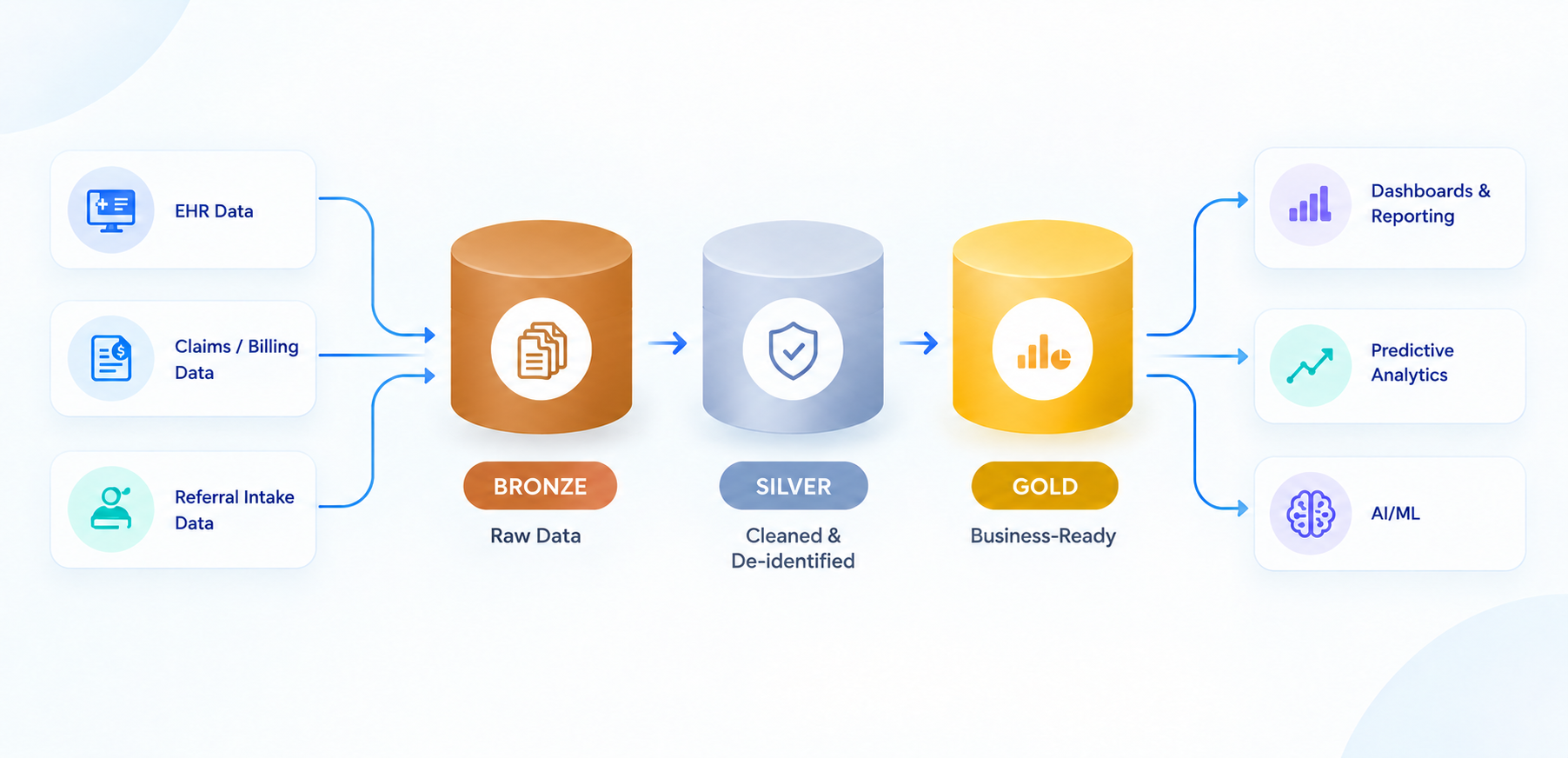
Inferenz unifies hospital and ambulatory data into one governed foundation, building an AI-ready infrastructure for hospitals & ambulatory environments.

Frequently Asked Questions 

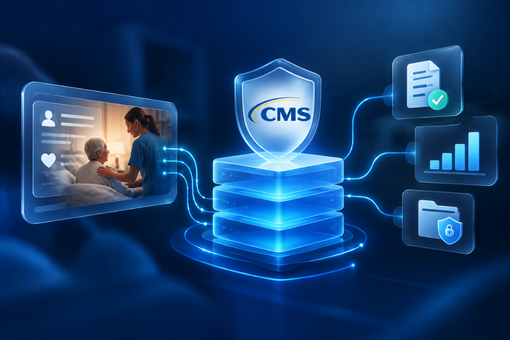
What CMS-0057-F Actually Requires from Hospitals (Not Just Payers)

Summary

CMS-0057-F regulates payers directly, Medicare Advantage plans, Medicaid and CHIP programs, and marketplace QHP issuers. Hospitals get pulled in through EHR certification, daily API traffic, and a new Promoting Interoperability attestation. That attestation is optional for CY2027 and turns mandatory starting CY2028, per CMS’s FY2027 IPPS Final Rule, one year later than most compliance calendars still assume.

If you ask five professionals working at your hospital who CMS-0057-F applies to and you will probably get five different answers. Compliance says “not us, that is a payer rule.” IT says “sort of, through the EHR.” Finance just wants to know if it shows up in next year’s capital plan. All three are half right, which is exactly the problem. 

CMS-0057-F, the CMS Interoperability and Prior Authorization Final Rule, technically regulates health plans, not hospitals. But three separate mechanisms pull provider organizations into its compliance perimeter anyway, and one of them carries a real reporting obligation with a deadline that just moved. This piece untangles the payer-versus-provider confusion, walks through what your hospital actually has to do and by when, and flags where the real risk sits if you get it wrong. 

Does CMS-0057-F Apply to Hospitals, or Only to Payers? 

CMS-0057-F hospital requirements exist, but they are a side effect of a rule written for a different audience. The final rule regulates what CMS calls “impacted payers,” and that is a defined, closed list, not a general statement about the health system. 

Directly Regulated (“Impacted Payers”) Explicitly Outside the Rule 
Medicare Advantage (MA) organizations Traditional Medicare Fee-for-Service (Original Medicare) 
State Medicaid & CHIP fee-for-service programs Employer-sponsored / self-funded commercial plans 
Medicaid managed care plans (MCOs, PIHPs, PAHPs) Stand-alone dental plan (SADP) issuers 
CHIP managed care entities FF-SHOP-only issuers 
QHP issuers on the Federally Facilitated Exchanges State-Based Exchange (SBE) issuers 

 That second column answers two questions we hear constantly. Is traditional Medicare FFS subject to CMS-0057-F? No, though CMS has said it wants Original Medicare to be a “market leader” on data exchange voluntarily, which is an intention, not a mandate. Are commercial employer plans exempt? Yes, almost entirely, since the only commercial coverage the rule touches is QHPs sold on the federal exchange.  

The full CMS-0057-F Requirements for Payers run through four FHIR APIs, which we break down below.

The Three Side Doors That Pull Your Hospital In 

The Three Side Doors That Pull Your Hospital InIf your hospital is not a regulated payer, why is this rule on your CIO’s roadmap at all? Three mechanisms do it, and none of them require you to build anything CMS-0057-F itself mandates. 

  1. EHR certification inheritance. Your EHR vendor, Epic, Oracle Health, MEDITECH, whichever you run, has to certify against updated ONC standards to keep selling into the market impacted payers depend on. That certification cascade means your environment inherits new data requirements whether or not your compliance team ever reads the Federal Register notice. Confirm what your vendor has actually shipped against the ONC Certified Health IT Product List before it lands on a board slide marked “done.” 
  2. A new Promoting Interoperability Prior Authorization measure. Covered in full in the next section, this is the one true reporting obligation CMS-0057-F creates for providers. It is the reason a “payer rule” now has a line on your MIPS and Promoting Interoperability scorecards. 
  3. Daily provider-side API traffic. Once impacted payers stand up their Provider Access and Payer-to-Payer APIs, your staff will pull and push patient data through them constantly, whether or not your organization formally opted in. Does CMS-0057-F require hospitals to build their own FHIR API? No. The build obligation sits with payers. What you do need is a clean way to consume what they build at scale, and that is a real technical decision even without a mandate attached.  

Keen to know how the new regulation and a AI-ready hospital has in common? Read the comprehensive article here: CMS-0057-F and the AI-Ready Hospital: What CIOs Must Solve Before January 2027 

One practical step worth taking this quarter: pull your top payer contracts and mark which ones are actually impacted payers under this rule. A regional Medicaid MCO and a national Medicare Advantage plan both count. A self-funded employer plan administered by the same carrier does not. Knowing the difference changes your leverage in the next vendor conversation, since an impacted payer is working against a federal deadline you can point to and a non-impacted one is not. 

Budget impact follows the same logic. Payers carry the cost of building the APIs, but your hospital absorbs the downstream cost: EHR upgrade fees folded into your maintenance contract, integration tooling to consume payer endpoints at real volume, and the governance work required to prove your attestation is accurate on request. None of that shows up in CMS’s regulatory impact analysis. All of it shows up in your capital plan. 

For most hospitals that isn’t a connectivity problem. Legacy HL7v2 feeds and free-text notes have to become clean FHIR resources before any API call means anything, and that’s exactly where generative AI data mapping for healthcare interoperability earns its keep, turning months of manual field-mapping into a supervised, auditable process. 

The Promoting Interoperability Attestation, Explained 

This is the part most compliance briefings skip past, and it is the one with an actual reporting requirement attached to your organization’s name. 

CMS-0057-F added a new measure called Electronic Prior Authorization to two separate reporting tracks: the Promoting Interoperability performance category of MIPS, for MIPS eligible clinician prior authorization attestation, and the Medicare Promoting Interoperability Program 2027, for eligible hospitals and critical access hospitals. 

Both tracks work the same way. It is an CMS-0057-F yes/no attestation requirement, not a numerator-over-denominator calculation. You, or your CAH, report a simple yes or claim an applicable exclusion, confirming that you requested at least one prior authorization electronically through a payer’s FHIR-based Prior Authorization API, using certified EHR technology, during the reporting period. 

Reporting Track Who It Covers Status 
MIPS Promoting Interoperability category MIPS eligible clinicians CY2027 performance period / CY2029 payment year, as originally finalized 
Medicare Promoting Interoperability Program Eligible hospitals & Critical Access Hospitals Optional bonus for CY2027, mandatory from CY2028 (FY2027 IPPS Final Rule) 

 Are Critical Access Hospitals affected by CMS-0057-F?  

Yes, explicitly. CAHs sit in the same reporting bucket as eligible hospitals under the Medicare Promoting Interoperability Program, not a separate, lighter-touch category. 

This single line is also how CMS-0057-F interacts with your existing Promoting Interoperability scoring. Electronic Prior Authorization sits inside the Health Information Exchange objective, next to measures you already report. It does not replace your current PI obligations. It adds one more, worth bonus points now and a required line item later. 

If your data foundation is not ready for one clean attestation, it is not ready for AI at scale either. They are the same gap, wearing two different deadlines. Leaders need to align with the regulation objectives by transforming the data foundation for building an AI-Ready infrastructure for hospitals & ambulatory organizations.  

2027 vs. 2028: The Deadline Most CIOs Still Have Wrong 

A lot of hospital compliance calendars are quietly out of date on this exact point. 

When CMS-0057-F was finalized in January 2024, the Electronic Prior Authorization measure was written as effective for eligible hospitals and CAHs starting the CY2027 EHR reporting period, full stop. That is still the number sitting in a lot of 2025-era compliance decks. 

It changed.  

In the CMS FY2027 IPPS rule hospital prior authorization update, CMS finalized a one-year softening specifically for hospitals and CAHs: the measure is now an optional bonus measure for CY2027, attest yes and earn 10 bonus points toward your PI score, no exclusion needed because it is voluntary, becoming a CMS-0057-F provider compliance 2027 non-issue this year and a mandatory measure starting CY2028. 

That is genuinely good news, one more year of runway on this specific line item. It is not, however, a reason to sit still. Here is why. The hard part was never the attestation checkbox. It is the underlying capability: a working connection to a payer’s live Prior Authorization API, patient and encounter data clean enough to generate a real submission, and a workflow that gets a clinician or utilization management team to actually use it. That build takes months. Checking a box takes ten minutes. Treat CY2027 as a free pass and you simply move the scramble to late 2027, competing with every other hospital in your market for the same integration vendors at the same time. That’s the kind of gap an outside AI healthcare consulting engagement tends to catch faster than an internal audit, because it’s looking specifically for the space between what’s on the roadmap and what’s actually in production. 

CMS-0057-F 2028 hospital extension, in short: real, confirmed, and not an excuse to wait.

Contact UsCMS-0057-F vs. CMS-9115-F: What Actually Changed 

CMS-0057-F did not start from a blank page. It builds directly on CMS-9115-F, the 2020 CMS Interoperability and Patient Access Final Rule, which first required impacted payers to stand up a Patient Access API and a Provider Directory API. 

CMS-0057-F keeps that foundation and adds three new FHIR APIs, plus operational teeth the earlier rule never had. 

FHIR API What It Does New or Expanded? 
Patient Access API Lets patients pull claims, clinical, and now prior authorization data into apps of their choice Expanded (originated in CMS-9115-F; PA data added by CMS-0057-F) 
Provider Access API Shares claims, clinical, and PA data with in-network providers for patients they treat New in CMS-0057-F 
Payer-to-Payer API Moves up to five years of claims and clinical history when a patient switches plans New in CMS-0057-F 
Prior Authorization API Automates PA request submission, decision tracking, and specific denial reasons New in CMS-0057-F 

 The practical difference for a hospital: CMS-9115-F never created a provider-side reporting obligation. CMS-0057-F does, through the Promoting Interoperability attestation covered above. That is the line separating “a payer compliance rule we read about once” from “a measure with our organization’s name attached to it.” 

What Happens If You Don’t Attest, or Get It Wrong 

What Happens If You Don't Attest, or Get It WrongTwo separate risk tracks live under this rule, and hospitals routinely conflate them. 

  • Track one: missing the Electronic Prior Authorization measure itself. For CY2027, there is no penalty for skipping it. It is optional, and no exclusion process exists because none is needed, you simply forgo the 10 bonus points. Starting CY2028, that changes. Once it becomes a required measure, failing to attest without a qualifying exclusion counts against your Promoting Interoperability score the same way missing any other required PI measure would, which can affect your standing as a meaningful EHR user and, downstream, your Medicare payment update. 
  • Track two: information blocking. This is the sharper edge, and it does not run through CMS-0057-F directly. It sits under the separate 21st Century Cures Act framework. If your hospital cannot produce a documented, defensible reason for withholding electronic health information from a legitimate Provider Access or Payer-to-Payer request, and OIG investigates and refers a finding to CMS, the consequences are concrete. An eligible hospital loses meaningful EHR user status for that reporting period and forfeits three-quarters of its annual market basket payment increase.  

A CAH gets paid 100% of reasonable costs instead of 101%. HHS’s own estimate put the median financial hit at roughly $394,000, ranging from about $30,000 to $2.4 million depending on the hospital. 

The realistic risk exposure for a hospital that treats CMS-0057-F as someone else’s problem: low on the attestation itself through 2027, real and growing from 2028 forward, and already live today on the information blocking side, which has applied to Medicare-enrolled providers since July 2024.

Should You Voluntarily Attest in 2027 for the Bonus Points? 

Given the compliance risk is genuinely light this year, the more useful question is not a compliance question at all. It is a strategic one.  

Yes, and here is the actual reasoning. The technical build, connecting to a payer’s Prior Authorization API and generating one real submission, is the same work whether you do it as an optional pilot in 2027 or a mandatory rollout in 2028. Doing it now, while the stakes are low and there is no exclusion pressure, means your first real submission happens as a controlled test, instead of scrambling and competing for the same Prior Authorization API bonus points promoting interoperability and the same integration vendors. 

Treat CY2027 as your evidence-generating year. Pick one payer relationship, most likely your highest-volume Medicare Advantage plan, run one clean electronic prior authorization through it, and use that single transaction to validate your workflow, your data quality, and your governance sign-off process before any of it is mandatory. That is a defensible pilot with a real regulatory deadline behind it, which happens to be exactly the kind of proof point a board actually trusts over a vendor demo. 

Frame this correctly and CMS-0057-F stops being a compliance line item. It becomes the budget justification that finally gets digital transformation in healthcare funded as infrastructure.

What Your CIO Should Tell the Board 

Boards do not need the FHIR API taxonomy. They need three things, stated plainly. 

  • This is a data-readiness deadline wearing a compliance disguise. The clean patient identities, governed data lineage, and FHIR-based connectivity CMS-0057-F assumes are the same foundation any serious AI initiative needs. Fund it once, not twice. 
  • The hospital-side deadline moved; the underlying work did not shrink. CY2027 optional, CY2028 mandatory buys a year of runway, not a year of inaction. 
  • Real financial exposure sits in information blocking, not the attestation checkbox. That risk is live now, not in 2028. 

Talk to Our Strategy ConsultantsFrequently Asked Questions