AWS vs. Azure vs. GCP Cost: Top 3 Cloud Pricing Comparison

Summary

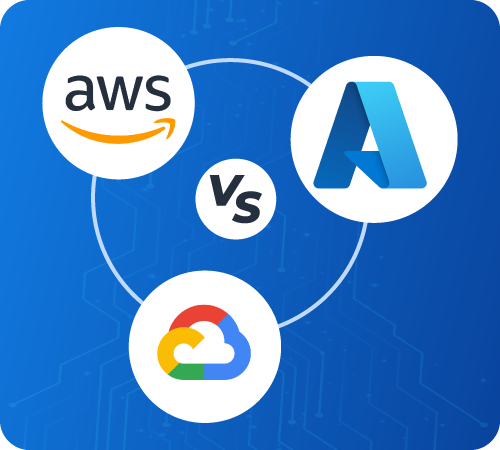
Choosing between AWS, Azure, and Google Cloud Platform (GCP) is one of the most consequential infrastructure decisions an enterprise makes. Each provider structures its pricing differently, and the “cheapest” option depends heavily on workload type, commitment term, and discount eligibility. This guide breaks down the AWS vs Azure vs GCP cost comparison across compute, storage, and discount models to help technology leaders make an informed, budget-aligned decision. For organizations pursuing cloud modernization, understanding these pricing dynamics is the foundation of long-term cost efficiency.

Introduction: Why Cloud Pricing Is More Complex Than It Looks

Most enterprises begin their cloud journey with a straightforward question: which platform costs less? The answer, however, is never straightforward.

Cloud pricing is not a static number. It shifts based on instance type, region, commitment length, data transfer volume, and the specific services a workload demands. Consequently, two organizations running similar workloads on the same provider can arrive at drastically different monthly bills.

For technology and finance leaders, this complexity creates a real risk: selecting a provider based on surface-level pricing data, only to face unexpected cost overruns after migration. Additionally, as multi cloud cost optimization becomes a board-level priority, procurement teams are under increasing pressure to justify every dollar spent on infrastructure.

This guide cuts through that complexity. It delivers a clear, structured AWS vs Azure vs GCP cost comparison across the dimensions that matter most, including compute pricing, discount models, minimum and maximum instance costs, and strategic fit.

Understanding the Three Cloud Giants: A Baseline Overview

Before comparing costs, it helps to understand what each provider brings to the table. Each platform has a distinct origin, customer base, and pricing philosophy.

Amazon Web Services (AWS)

Amazon launched AWS in 2006 with two foundational services: Simple Storage Service (S3) and Elastic Compute Cloud (EC2). Over the following years, it expanded rapidly, adding Elastic Block Store (EBS), Amazon CloudFront, and a broad Content Delivery Network (CDN).

Today, Amazon Web Services (AWS) offers over 200 services spanning machine learning, analytics, IoT, security, databases, and enterprise applications. It holds the largest market share among global cloud providers and serves high-profile customers such as Netflix, LinkedIn, Adobe, Airbnb, and the BBC.

AWS uses a pay-as-you-go pricing model. However, it also offers Reserved Instances (RIs), which allow customers to commit to 1 or 3 years in exchange for discounts of up to 75%. Payment options include no upfront, partial upfront, and all upfront.

Microsoft Azure

Microsoft Azure positions itself as the enterprise-grade cloud for organizations already operating within the Microsoft ecosystem. It supports a wide range of storage types, including Data Lake Storage, Queue Storage, and bulk storage for large volumes of unstructured data.

Like AWS, Azure offers a pay-as-you-go model. It also provides Reserved Instances with 1 to 3-year commitment terms. Notably, Azure bills per second rather than per hour or per month, which can produce more granular and accurate cost tracking for variable workloads.

Azure’s high-profile customers include Apple, Coca-Cola, HP, Verizon, and Xbox. For organizations already invested in Microsoft 365 or Dynamics, Azure often delivers tighter integration and potential bundled savings.

Google Cloud Platform (GCP)

Google Cloud Platform has emerged as a strong third contender, particularly for data-intensive workloads and AI-native applications. GCP offers $300 in free credits to new customers and provides multiple free-tier products across storage, databases, artificial intelligence, IoT, and compute.

GCP’s pricing philosophy differs meaningfully from AWS and Azure. It offers Committed Use Discounts (CUD) for 1 or 3-year terms and Sustained Use Discounts (SUD), which apply automatically when a workload runs for more than a quarter of the billing month. No upfront payment is required for GCP’s standard pricing.

Furthermore, GCP’s minimum instance cost starts at approximately $52 per month for 8 GB RAM and 2 vCPUs, making it the most affordable entry point among the three providers.

AWS vs Azure vs GCP Cost Comparison: The Numbers Explained

The table below summarizes the key cost and discount parameters across all three providers. However, numbers alone rarely tell the full story. The sections that follow explain the strategic implications of each data point.

DetailAmazon AWSMicrosoft AzureGoogle Cloud Platform
Discount TypeReserved Instances (RIs)Reserved Instances (RIs)Committed Use Discount (CUD) + Sustained Use Discount (SUD)
Payment OptionsNo upfront, partial upfront, all upfrontAll upfrontNo upfront
Commitment Term1 to 3 years1 to 3 yearsCUD: 1 or 3 years; SUD: no commitment
Maximum DiscountUp to 75%Up to 72%CUD: up to 55% (3-year); SUD: up to 30%
Minimum Instance~$69/month (8 GB RAM, 2 vCPUs)~$70/month (8 GB RAM, 2 vCPUs)~$52/month (8 GB RAM, 2 vCPUs)
Maximum Instance~$3.97/hour (3.84 TB RAM, 128 vCPUs)~$6.97/hour (3.89 TB RAM, 128 vCPUs)~$5.32/hour (3.75 TB RAM, 160 vCPUs)
Billing GranularityPer month or per hourPer secondPer second
Notable CustomersNetflix, Airbnb, Adobe, BBCApple, Coca-Cola, HP, VerizonTwitter, PayPal, eBay, Intel

Compute Pricing: Where the Real Differences Emerge

At the entry level, GCP is clearly the most cost-efficient option. Its minimum instance at $52 per month undercuts both AWS ($69) and Azure ($70). For small and mid-sized businesses or teams running lightweight workloads, this difference accumulates meaningfully over time.

At the maximum instance level, AWS offers the most competitive rate at $3.97 per hour for 128 vCPUs and 3.84 TB RAM. GCP comes in second at $5.32 per hour for a slightly larger configuration (160 vCPUs), while Azure’s maximum instance is the most expensive at $6.97 per hour.

Therefore, for compute-heavy workloads requiring maximum performance, AWS delivers better price-to-performance at the high end. For standard workloads, GCP’s lower baseline and automatic SUD discounts make it a compelling choice.

Discount Models: Commitment vs. Flexibility

AWS and Azure both rely on Reserved Instances as their primary discount mechanism. In contrast, GCP offers two distinct discount paths, which gives teams more flexibility.

The Committed Use Discount (CUD) requires a 1 or 3-year commitment and delivers up to 37% savings for 1 year and up to 55% for 3 years. The Sustained Use Discount (SUD), however, requires no commitment at all. GCP applies it automatically when a resource runs for more than 25% of a billing month, with savings scaling up to 30%.

For organizations that run predictable, long-term workloads, AWS’s 75% maximum discount under a 3-year Reserved Instance remains the most aggressive offer. However, for teams that need flexibility without upfront commitment, GCP’s SUD model eliminates the risk of over-committing to reserved capacity.

Cloud Pricing Comparison by Use Case

Not every workload fits the same pricing model. The right provider depends on what the workload actually does and how it behaves over time.

Use Case 1: Data and Analytics Workloads

For organizations managing large-scale data pipelines, GCP’s BigQuery and its per-query pricing model offer a distinct cost advantage. Additionally, GCP’s storage pricing for frequently accessed data tends to be lower than equivalent AWS S3 tiers.

Teams investing in Data and Cloud Modernization Services and Solutions often find GCP’s native data tooling reduces the operational overhead that would otherwise drive up total cost of ownership.

Use Case 2: Enterprise Applications with Microsoft Dependencies

Azure delivers the most natural fit for organizations running Windows Server, SQL Server, Active Directory, or Microsoft 365. Azure Hybrid Benefit allows existing Microsoft license holders to apply those licenses toward Azure virtual machines, which can reduce compute costs by up to 40%.

Consequently, for enterprises deeply embedded in the Microsoft stack, Azure’s total cost may be lower than raw pricing suggests. Cloud architecture and modernization projects that standardize on Microsoft tools should factor in these licensing synergies before comparing list prices.

Use Case 3: AI, Machine Learning, and Emerging Workloads

AWS leads in breadth of ML services through Amazon SageMaker, while GCP holds a technical edge in AI infrastructure through Google’s Tensor Processing Units (TPUs). Azure, meanwhile, has strengthened its AI capabilities significantly through its partnership with OpenAI.

For organizations building AI-native applications, the true cost comparison extends beyond compute to include data egress, model training time, and managed service fees. In this context, GCP’s TPU pricing and tight integration with Vertex AI often produce lower training costs for large-scale models.

Multi Cloud Cost Optimization: A Strategic Lens

Increasingly, organizations do not choose one cloud provider. They distribute workloads across multiple providers to optimize cost, avoid vendor lock-in, and leverage best-in-class services from each platform. This approach, known as multi cloud cost optimization, requires deliberate governance to prevent fragmented spending from negating the benefits.

Effective multi cloud cost optimization involves three core practices. First, teams must establish unified cost visibility across providers using tools like AWS Cost Explorer, Azure Cost Management, or third-party platforms such as CloudHealth or Apptio Cloudability. Second, workloads must align with the provider where they run most efficiently, not where they were initially deployed. Third, discount strategies must coordinate across providers to avoid paying full price on one platform while over-committing reserved capacity on another.

The Risk of Unmanaged Multi Cloud Spend

Without a structured governance model, multi cloud environments can produce shadow IT costs, duplicate services, and underutilized reserved capacity. According to Flexera’s State of the Cloud Report, organizations waste an average of 28% to 35% of their cloud spend annually. A significant portion of that waste stems from poor discount utilization and over-provisioning across providers.

Therefore, cloud pricing comparison exercises should extend beyond initial selection to include ongoing FinOps practices that monitor, alert, and optimize spend continuously.

Healthcare Cloud Modernization: Special Pricing Considerations

Healthcare organizations face a distinct set of requirements when evaluating cloud providers. Beyond cost, they must assess HIPAA compliance, data residency controls, Business Associate Agreement (BAA) availability, and audit trail capabilities.

All three providers offer HIPAA-eligible services and will sign BAAs with covered entities. However, the scope of eligible services and the operational support model differs across platforms.

AWS offers the broadest catalog of HIPAA-eligible services and has the largest installed base among healthcare cloud modernization service providers. Azure benefits from existing relationships with health systems that already run Microsoft products, making governance and identity integration more straightforward. GCP has made significant investments in healthcare-specific APIs, including the Cloud Healthcare API, which supports FHIR, HL7v2, and DICOM standards natively.

For organizations evaluating healthcare cloud modernization service providers, the pricing conversation must weigh compliance infrastructure costs alongside raw compute pricing. A platform that appears cheaper on a pricing sheet may carry higher implementation costs if it requires additional compliance tooling to meet regulatory requirements.

Cloud Modernization Services: What to Expect from Each Provider

Each provider offers cloud modernization services through its own professional services arm and an ecosystem of certified partners. Understanding the cost and scope of these services is essential for accurate total cost of ownership modeling.

AWS offers AWS Migration Acceleration Program (MAP) funding for qualified migration projects, which can offset a portion of migration and modernization costs. Azure provides Azure Migrate as a free assessment and migration tool, along with co-investment programs for enterprise migrations. GCP offers the Google Cloud Migration Program with credit incentives and architecture support for qualified workloads.

In addition to native programs, organizations typically engage specialized cloud modernization services partners to accelerate migration, redesign architectures, and implement governance frameworks. These partners often have preferred pricing arrangements with one or more providers, which can translate into additional cost savings.

How to Choose: A Decision Framework

Selecting the right cloud provider requires more than comparing instance prices. The following framework helps technology leaders align platform selection with business objectives.

AWS is the right fit if:

  • The organization needs the broadest service catalog and the most mature ecosystem of third-party integrations.
  • Long-term Reserved Instances make it the strongest option for maximizing compute discounts.
  • Existing team expertise and tooling are already built around AWS.

Azure works best when:

  • Significant Microsoft workloads are in play, making Azure Hybrid Benefit a direct cost advantage.
  • Enterprise identity management through Active Directory and Azure AD is a priority.
  • Tight integration between cloud infrastructure and Microsoft 365 or Dynamics is a business requirement.

GCP makes the most sense if:

  • Cost efficiency at entry-level compute is a priority.
  • Data-intensive workloads stand to benefit from BigQuery or GCP’s AI/ML infrastructure.
  • Automatic discounts without long-term commitment, through GCP’s Sustained Use Discount, are preferable.

A multi cloud strategy deserves consideration when:

  • Different workloads have distinct best-fit platforms across providers.
  • Avoiding single-vendor dependency is a strategic risk management goal.
  • A structured FinOps practice is already in place to govern cross-provider spend.

Conclusion: Price Is a Starting Point, Not the Answer

The AWS vs Azure vs GCP cost comparison reveals meaningful differences in pricing models, discount structures, and baseline compute costs. GCP wins on entry-level affordability and discount flexibility. AWS offers the deepest maximum discounts and the broadest service catalog. Azure delivers the strongest value for organizations already embedded in the Microsoft ecosystem.

However, the lowest list price rarely produces the lowest total cost of ownership. Migration complexity, compliance requirements, talent availability, and service integration all affect what an organization actually pays over time. For industries like healthcare, the stakes are higher, and cloud architecture and modernization decisions must account for regulatory complexity alongside price.

The most disciplined approach is to evaluate providers against a specific workload profile, model the 3-year total cost including discounts and migration investment, and establish ongoing FinOps governance to capture savings continuously.

Inferenz helps enterprise and healthcare organizations navigate this complexity with structured cloud modernization services, multi cloud governance frameworks, and vendor-neutral cost modeling. The right cloud decision is not simply the cheapest one at launch. It is the one that remains cost-efficient, compliant, and scalable as the business evolves.

Frequently Asked Questions

Expert Predictions: Top Data Analytics Trends for 2027

Summary

Data analytics is shifting from dashboards to decisions. In 2027, augmented analytics, agentic AI, and real-time decision intelligence will define how enterprises compete. Consequently, organizations that modernize their data foundations now will extract insights faster and act on them with more confidence. This blog breaks down the trends that matter, explains why they matter, and outlines how business leaders can prepare. Inferenz experts weigh in throughout to ground each prediction in practical, real-world application.

Introduction: The State of Data Analytics in 2027

Every enterprise collects data. Few enterprises use it well. This gap defines the state of data analytics heading into 2027, and it explains why so many digital transformation efforts stall before they deliver value.

For years, businesses treated analytics as a reporting function. Teams built dashboards, generated static reports, and reviewed metrics after the fact. However, that model no longer matches the pace of modern business. Customers expect instant service. Markets shift within hours. Therefore, companies need analytics that inform decisions as events unfold, not weeks later.

Three forces are accelerating this shift. First, generative and agentic AI are making it possible to query data in plain language and receive contextual answers instantly. Second, cloud-native data platforms have matured to the point where real-time processing is affordable at scale. Third, regulatory scrutiny around data privacy and AI governance is pushing organizations to build trust into their systems from the start rather than bolting it on later.

As a result, 2027 will separate organizations that treat data as a byproduct from those that treat it as a strategic asset. The sections below outline exactly where that separation will show up first.

Expert Predictions: The Top Data Analytics Trends to Watch

Inferenz analysts reviewed enterprise deployments across healthcare, financial services, retail, and manufacturing to identify the trends with the most staying power. The following predictions reflect patterns already visible in production environments today, not speculative future scenarios.

AI-Powered Data Analytics and Augmented Analytics

Augmented analytics uses machine learning to automate data preparation, pattern detection, and insight generation. Instead of analysts manually building every query, the system surfaces anomalies, correlations, and forecasts on its own. Consequently, teams spend less time cleaning data and more time acting on findings.

This shift matters because data volumes are growing faster than analyst headcount. Augmented tools close that gap by handling repetitive analysis automatically. In addition, they reduce the skill barrier for business users who need insights but lack a statistics background. Organizations investing in Data Science and Predictive Analytics Services are building this capability directly into their existing data warehouses rather than treating it as a separate tool.

Generative AI and Natural Language Analytics

Generative AI is changing how people interact with data. Rather than writing SQL or navigating a business intelligence tool, users can now ask a question in plain English and receive a chart, summary, or recommendation in seconds. This is natural language analytics, and it is quickly becoming a baseline expectation rather than a differentiator.

For this to work reliably, the underlying data has to be well-structured and well-governed. Otherwise, a natural language interface simply returns confident but inaccurate answers. For this reason, companies building Generative and Agentic AI Development Services capabilities are pairing them with strict data quality controls, not deploying them on top of messy legacy systems.

Agentic AI for Autonomous Data Analysis

Agentic AI takes automation a step further. Instead of answering a single question, an AI agent can plan a multi-step analysis, pull data from several sources, test hypotheses, and recommend an action, all without a human directing each step. For example, an agent monitoring supply chain data might detect a delay, evaluate three rerouting options, and flag the best one to a logistics manager.

This capability is still maturing, and most enterprises are piloting it in narrow, well-defined use cases before expanding scope. Nevertheless, the direction is clear. Analysts increasingly move from running analysis themselves to supervising AI agents that run it for them. Enterprises exploring Enterprise AI Application Development Services are prioritizing this shift because it compresses the time between detecting a problem and resolving it.

Real-Time Analytics and Decision Intelligence

Batch processing, where data updates once a day or once an hour, is no longer fast enough for many use cases. Real-time analytics processes data as it arrives, giving decision-makers a live view of operations. Meanwhile, decision intelligence layers logic on top of that live data so the system doesn’t just display information, it recommends what to do about it.

Contact centers offer a clear example. A live feed of call volume, wait times, and channel performance lets a manager reallocate agents before service levels slip, rather than reviewing the damage in a report the next morning. Similarly, retailers use real-time inventory data to prevent stockouts during demand spikes. Because these use cases span both cloud infrastructure and connected devices, many organizations pursue them through Cloud, IoT and Platform Engineering Services that unify data from sensors, applications, and transaction systems into one live pipeline.

Predictive Analytics and Prescriptive Analytics

Predictive analytics forecasts what is likely to happen based on historical patterns. Prescriptive analytics goes further and recommends what to do about it. Together, they move analytics from hindsight to foresight.

In 2027, expect these two capabilities to merge into a single workflow rather than existing as separate tools. A predictive model might flag rising customer churn risk, while a prescriptive layer immediately suggests a retention offer tailored to that customer’s history. As a result, the gap between insight and action keeps shrinking, which is exactly the outcome most digital transformation strategies promise but rarely deliver on schedule.

Data Democratization and Self-Service Analytics

Data democratization means giving more employees, not just data specialists, direct access to trustworthy data and the tools to analyze it. Self-service analytics platforms make this possible by simplifying the interface so a marketing manager or operations lead can explore data without submitting a request to a central analytics team.

This trend reduces bottlenecks, but it only works when paired with strong governance. Otherwise, self-service quickly turns into inconsistent metrics and conflicting reports across departments. Consequently, organizations building self-service capability are also formalizing a Data Strategy Consulting Services engagement to define shared metric definitions, access controls, and data ownership before opening access broadly.

Modern Data Platforms and Data Cloud Adoption

Legacy on-premise data warehouses struggle to keep up with the volume, variety, and velocity of modern data. In response, organizations are consolidating onto modern cloud data platforms that separate storage from compute, scale elastically, and support both structured and unstructured data in one place.

This consolidation is not simply a lift-and-shift exercise. It requires rethinking data architecture, pipeline design, and integration patterns from the ground up. That is why many enterprises pursue Data and Cloud Modernization Services and Solutions as a structured program rather than an ad hoc migration, sequencing the highest-value workloads first and building reusable patterns for everything that follows.

Data Governance, Quality, and Trust

None of the trends above matter if the underlying data cannot be trusted. Poor data quality undermines AI models, skews dashboards, and erodes confidence in analytics teams. Because of this, governance is moving from a compliance checkbox to a core analytics function.

Strong governance programs define clear data ownership, establish quality checks at the point of ingestion, and maintain lineage so teams can trace an insight back to its source. In addition, they document how metrics are calculated so different teams stop arguing over whose number is correct. Organizations building this foundation typically start with Data Engineering and Integration Services to standardize how data enters the system in the first place.

Data Privacy, Security, and Responsible AI

As AI models consume more data, privacy and security expectations are rising in parallel. Regulators are introducing stricter rules around how personal data can be used to train and deploy AI systems, particularly in regulated industries. Meanwhile, customers are more aware of how their data is used and more willing to switch providers when trust breaks down.

Responsible AI practices, including bias testing, explainability, and access controls, are becoming standard requirements rather than optional add-ons. Therefore, organizations that build privacy and security into their analytics architecture from the start will move faster than competitors who have to retrofit compliance later.

Analytics for Unstructured and Multimodal Data

Most enterprise data is not neatly organized in rows and columns. It exists as text, images, audio, video, and sensor readings. Multimodal analytics combines these formats to extract insights that no single data type could reveal alone.

A retailer, for instance, might combine customer reviews, product images, and purchase data to understand not just what customers buy, but why. Healthcare providers combine clinical notes, imaging, and lab results for a fuller patient picture. This is one of the fastest-growing areas of investment because the underlying AI models needed to process unstructured data have improved dramatically, making previously impractical use cases commercially viable.

Industry-Specific Analytics: Healthcare, Insurance, and Beyond

Generic analytics platforms increasingly give way to industry-specific solutions built around the regulatory and operational realities of a given sector. In healthcare, for example, analytics platforms need to handle protected health information, integrate with clinical systems, and support use cases like readmission risk scoring or care gap identification.

Because compliance requirements differ so much by industry, providers building Data and AI-Powered Healthcare Solutions design their architecture around HIPAA and interoperability standards from day one rather than adapting a generic platform after the fact. Insurance, financial services, and manufacturing show similar patterns, each with its own compliance and workflow requirements shaping how analytics gets deployed.

The Shift From Dashboards to Actionable Intelligence

Perhaps the most important trend underlying all the others is a shift in what “good analytics” even means. For years, success meant a well-designed dashboard. Increasingly, success means a system that tells a decision-maker what to do next, not just what happened.

This shift changes how analytics teams measure their own value. Instead of tracking dashboard usage, teams increasingly track how many decisions their analytics directly influenced and how much faster those decisions happened. That is a much harder metric to game, and it is a much better indicator of real business impact.

What These Data Analytics Trends Mean for Business Leaders

For business leaders, these trends translate into a clear mandate: analytics can no longer sit in a separate silo owned only by the data team. Instead, it needs to be embedded into daily operations, customer-facing products, and strategic planning.

This has budget implications. Investments that once went toward reporting tools are shifting toward AI infrastructure, data quality programs, and talent that can bridge data science with business strategy. Additionally, leaders need to set realistic expectations. Agentic AI and generative analytics are powerful, but they are not a substitute for a solid data foundation. Skipping that step to chase a flashy AI use case tends to backfire.

Finally, leaders should expect competitive pressure to intensify. Competitors that adopt real-time and predictive analytics well will move faster on pricing, retention, and operational efficiency, which raises the cost of standing still.

How Organizations Can Prepare for the Future of Data Analytics

Preparing for 2027 does not require adopting every trend at once. Instead, it requires sequencing the right investments in the right order.

Start with data quality and governance, since every AI and analytics capability built on top depends on it. Next, consolidate fragmented data sources onto a modern platform that can support real-time processing as needs grow. From there, introduce augmented and generative analytics tools for specific, high-value use cases rather than a broad rollout. Finally, pilot agentic AI in a narrow, low-risk process before expanding its scope.

Throughout this sequence, involve business stakeholders early. Analytics investments succeed when they are built around a specific decision someone needs to make faster or better, not around technology for its own sake.

Conclusion: From Data Insights to Business Outcomes

Data analytics in 2027 will reward organizations that treat data as infrastructure for decision-making, not just a reporting function. Augmented analytics, agentic AI, real-time decision intelligence, and industry-specific solutions are converging to make that possible at a scale that was not practical even two years ago.

The organizations that benefit most will be the ones that build strong governance and data quality first, then layer AI capability on top with clear business outcomes in mind. Inferenz works with enterprise teams to sequence exactly this kind of transformation, starting with a data foundation and building toward autonomous, decision-ready analytics.

Frequently Asked Questions

Data Lake Architecture: Components & Best Practices To Build Data Lake

Summary

A data lake is a centralized, scalable repository that stores structured, semi-structured, and unstructured data in its native format. Unlike a data warehouse, a data lake supports flexible schema design and accommodates diverse data types from multiple sources. Organizations adopt data lake architecture to accelerate analytics, reduce storage costs, and power AI and machine learning workloads. However, without proper governance, security, and architecture design, data lakes can become unmanageable. This guide covers every critical dimension of data lake architecture, from core components and types to best practices and emerging trends.

Introduction

Most organizations today generate data at a scale and variety that traditional storage systems cannot handle efficiently. Relational databases and warehouses impose rigid schemas that slow data ingestion, limit flexibility, and inflate costs. Meanwhile, data scientists, analysts, and AI teams need fast, unrestricted access to raw data across formats and sources.

This gap is where data lake architecture delivers decisive value. However, many implementations fail not because the technology is flawed, but because organizations lack a clear architecture strategy, proper governance frameworks, and the right data engineering foundations.

This guide provides a structured, decision-ready overview of data lake architecture, covering what it is, how it compares to warehouses, what components and technologies power it, and how to implement it effectively.

What is Data Lake Architecture?

A data lake is a centralized storage repository that holds large volumes of raw data in its native format until the data is needed for analysis or processing. The architecture is flat rather than hierarchical, meaning each data element carries a unique identifier and metadata tags rather than residing in predefined folders or schemas.

Data enters a data lake from multiple sources simultaneously, including IoT devices, transaction systems, log files, social media, and application events. This multi-source ingestion model makes the data lake a single source of truth for both operational and analytical workloads.

How Data Lake Architecture Works

At its core, data lake architecture organizes data across distinct layers, each serving a specific processing function. Raw data arrives at the ingestion layer without transformation. It then moves through distillation, processing, and insights layers before reaching end users or analytical tools.

Furthermore, a unified operations layer monitors and manages workflows, auditing, and performance across all layers. Each layer adds progressively more structure and context to the data, transforming raw inputs into actionable intelligence.

Key Characteristics of a Data Lake

  • Stores all data types: structured, semi-structured, and unstructured
  • Schema-on-read model (schema defined at query time, not at ingestion)
  • Supports batch, real-time, and interactive processing
  • Built for scale, handling petabytes of data cost-effectively
  • Compatible with AI, ML, and advanced analytics tools

Data Lake vs Data Warehouse

The comparison between data lakes and data warehouses remains one of the most common decision points in enterprise data strategy. Both serve different purposes, and understanding the distinction is essential before committing to an architecture investment.

DimensionData LakeData Warehouse
Data TypeAll types (raw, unstructured, structured)Structured, processed data only
SchemaSchema-on-readSchema-on-write
CostLower storage costHigher storage and licensing cost
FlexibilityHigh, reconfigurableLow, fixed schemas
Use CaseData science, ML, raw analyticsBusiness intelligence, reporting
Data QualityVariable (raw ingestion)High (curated, governed)
Security ControlRequires deliberate governanceBuilt-in controls typically stronger

When to Choose a Data Lake

Choose a data lake when your organization needs to store diverse data at scale, run exploratory analytics, train machine learning models, or consolidate data from varied sources without defining schemas upfront.

However, if your primary use case is structured reporting, dashboards, or regulated financial analysis, a data warehouse or a hybrid lakehouse architecture may serve better.

Core Components of Data Lake Architecture

A well-designed data lake consists of five critical components. Each plays a distinct role in ensuring data is secure, accessible, and useful.

1. Ingestion Layer

The ingestion layer collects raw data from source systems and loads it into the data lake without applying transformations. It supports both batch ingestion, where the system processes data at scheduled intervals, and real-time ingestion via streaming pipelines.

Tools such as Apache Kafka, AWS Kinesis, and Azure Event Hubs power high-throughput ingestion pipelines. The ingestion layer organizes incoming data into logical folder structures based on source, date, or data type to simplify downstream retrieval.

2. Distillation Layer

The distillation layer transforms raw data into structured formats suitable for analysis. This layer performs data cleansing, normalization, deduplication, and schema alignment. As a result, downstream teams receive consistent, reliable datasets rather than raw, inconsistent inputs.

Additionally, this layer handles derived data generation, where new datasets are created by combining or enriching existing data from the ingestion layer.

3. Processing Layer

The processing layer, sometimes called the gold or production-ready layer, applies user queries and advanced analytical operations to the structured data. Teams can run workloads in batch mode, real-time streaming, or interactive query sessions using tools like Apache Spark, Databricks, or AWS EMR.

This layer also supports machine learning model training and feature engineering workflows, making it a core enabler for AI-driven analytics.

4. Insights Layer

The insights layer serves as the query and output interface for the data lake. It connects end users, BI tools, and dashboards to the processed datasets. SQL and NoSQL query engines, such as Amazon Athena, Presto, or Google BigQuery, power fast retrieval at this layer.

Consequently, business analysts and data teams access curated, ready-to-use data without needing to interact with the raw ingestion or processing layers directly.

5. Unified Operations Layer

The unified operations layer manages the entire data lake infrastructure. It covers performance monitoring, workflow orchestration, auditing, access control, and capacity management. For instance, Apache Airflow or AWS Glue Workflows manage pipeline scheduling and execution at this layer.

Moreover, this layer enforces data governance policies, tracks lineage, and maintains audit trails that support regulatory compliance requirements.

Types of Data Lakes

Organizations implement data lakes in several deployment models, each with distinct trade-offs in cost, control, and scalability.

Cloud-Native Data Lakes

Cloud platforms such as AWS (S3 + Glue + Athena), Azure (ADLS Gen2 + Synapse), and Google Cloud (GCS + BigQuery) offer fully managed data lake services. These deployments scale automatically, reduce operational overhead, and integrate natively with cloud analytics and AI services.

For organizations prioritizing speed and scalability, cloud-native data lakes are the dominant choice in 2026.

On-Premises Data Lakes

On-premises deployments use Hadoop Distributed File System (HDFS) or similar infrastructure managed within the organization’s own data centers. These setups offer greater control over data residency and security but require significant capital investment and operational expertise.

Hybrid Data Lakes

Hybrid architectures combine on-premises storage with cloud processing layers. Organizations with strict data sovereignty requirements or legacy infrastructure investments often adopt this model. Data Strategy Consulting Services frequently recommend hybrid architectures as a transitional path toward full cloud adoption.

Lakehouse Architecture

The lakehouse is an emerging model that combines the scalability of a data lake with the data management and governance features of a warehouse. Platforms like Databricks Delta Lake and Apache Iceberg enable ACID transactions, schema enforcement, and versioning on top of raw data lake storage.

Benefits of Implementing Data Lake Architecture

When properly designed and governed, data lake architecture delivers substantial organizational and operational advantages.

Unified Data Repository

A data lake consolidates data from all organizational sources into a single repository. Therefore, teams eliminate data silos, reduce duplication, and gain a consistent view of organizational data assets.

Cost-Efficient Scalability

Object storage platforms that underpin data lakes, such as Amazon S3 or Azure ADLS, cost a fraction of traditional warehouse storage per terabyte. Organizations scale storage independently of compute, which reduces overall infrastructure spend.

Accelerated AI and Machine Learning Development

Data scientists access raw, unprocessed data directly from the data lake. This access accelerates feature engineering, model training, and experimentation. Furthermore, the data lake supports the large-scale datasets that deep learning and large language model fine-tuning require.

Flexibility for Diverse Workloads

Unlike data warehouses, data lakes accommodate ad hoc analytics, real-time streaming, batch processing, and predictive modeling simultaneously. This workload flexibility makes them suitable for organizations running multiple data-intensive programs in parallel.

Support for Regulatory Data Retention

Organizations in healthcare, finance, and government often must retain raw data for compliance and audit purposes. A data lake provides cost-effective long-term raw data storage while maintaining retrieval capabilities for regulatory review.

Key Technologies of Data Lake Architecture

Selecting the right technology stack is critical to building a reliable, high-performance data lake. Below are the foundational technology categories and leading tools within each.

Storage Layer Technologies

  • Amazon S3: Industry-standard object storage with high durability, lifecycle policies, and native integration with AWS analytics services
  • Azure Data Lake Storage Gen2 (ADLS Gen2): Hierarchical namespace object storage optimized for big data analytics on Azure
  • Google Cloud Storage (GCS): Scalable object storage with tight integration into BigQuery and Vertex AI

Data Processing Engines

Apache Spark remains the de facto standard for large-scale data transformation, offering distributed in-memory processing for both batch and streaming workloads. Databricks builds on Spark with a managed platform that adds collaboration, governance, and ML lifecycle features in a unified environment. For organizations on AWS, Glue provides a serverless ETL service that automates schema discovery, data cataloging, and transformation without managing infrastructure.

Data Cataloging and Governance

Data Engineering And Integration Solutions require robust cataloging tools to maintain discoverability and lineage. Tools like Apache Atlas, AWS Glue Data Catalog, and Microsoft Purview enable metadata management, data lineage tracking, and access governance at scale.

Query Engines

  • Amazon Athena: Serverless SQL query engine directly on S3
  • Presto/Trino: Open-source distributed SQL query engine for federated queries across storage systems
  • Google BigQuery: Serverless analytics warehouse with native data lake integration

Data Ingestion Tools

  • Apache Kafka: High-throughput distributed streaming platform for real-time data ingestion
  • AWS Kinesis: Managed real-time data streaming service for ingesting event and log data
  • Apache NiFi: Visual data flow automation tool for building complex ingestion pipelines

Best Practices for Effective Data Lake Management

Building a data lake is straightforward. Managing it effectively over time requires deliberate practice and disciplined governance. The following practices distinguish high-performing data lake implementations from those that degrade into “data swamps.”

Define Data Goals Before Collecting Data

Organizations should identify the specific analytical, operational, or AI outcomes they need the data lake to support before ingesting data. Without clear data goals, teams accumulate data that nobody uses, consuming storage and creating governance overhead.

Implement Robust Data Governance from Day One

Data Governance Consulting Services consistently emphasize that governance is the most neglected dimension in data lake implementations. Establish data ownership, access policies, quality standards, and retention rules before the first dataset enters the lake.

Additionally, adopt a metadata management framework that captures data provenance, lineage, and usage history. This metadata infrastructure is the foundation of trust in any data lake environment.

Automate Ingestion and Transformation Pipelines

Manual data pipelines introduce latency, inconsistency, and errors. Instead, automate data acquisition, schema detection, data quality checks, and transformation workflows using orchestration tools like Apache Airflow or cloud-native equivalents.

Automation also accelerates onboarding of new data sources, which is particularly valuable in organizations undergoing rapid data expansion.

Apply a Layered Architecture with Clear Zone Definitions

Organize the data lake into clearly defined zones, typically raw, curated, and consumption zones. Each zone serves a distinct function and applies appropriate data quality and access controls. This zoned model prevents raw, unvalidated data from reaching analytical tools prematurely.

Enforce Column- and Row-Level Security

Access control in data lakes must operate at a granular level. Implement column-level security for sensitive fields (for example, PII or financial data) and row-level security to restrict access based on user roles or regions. Tools like Apache Ranger and AWS Lake Formation provide these controls natively.

Monitor Data Quality Continuously

Data quality degrades over time as source systems change, pipelines fail, or new data types are introduced. Implement automated data quality monitoring tools, such as Great Expectations or Soda Core, to detect and alert on quality anomalies before they reach downstream consumers.

Version Data and Enable Time Travel

Modern data lake formats like Apache Iceberg and Delta Lake support data versioning and time travel, which allow users to query historical states of a dataset. This capability is essential for model reproducibility, audit trails, and debugging data pipeline issues.

Challenges of Data Lake Architecture

Despite their advantages, data lakes introduce several well-documented challenges that organizations must proactively address.

The Data Swamp Problem

Without governance, data lakes accumulate poorly documented, low-quality, and duplicate datasets. The resulting “data swamp” makes data discovery difficult and erodes trust in the platform. Consequently, data scientists spend more time finding and cleaning data than analyzing it.

Security and Access Control Complexity

Data lakes store sensitive data across multiple formats and ingestion streams. Applying consistent security policies across all datasets requires deliberate architecture. Organizations often underestimate the complexity of securing a multi-source, multi-format storage environment.

Schema Drift and Data Quality Issues

Source systems change over time, altering data schemas without notice. Data lakes operating on schema-on-read models are particularly vulnerable to schema drift, where downstream pipelines break because the source data structure changed unexpectedly.

Performance at Scale

Query performance on a data lake depends heavily on data organization, file formats, and partitioning strategies. Poorly organized data lakes with small files or inefficient formats (for example, CSV instead of Parquet) deliver significantly worse query performance as data volumes grow.

Skill Requirements

Effective data lake management requires expertise across distributed systems, cloud infrastructure, data engineering, security, and governance. For many organizations, assembling and retaining this skill set is a significant operational challenge.

Future Trends in Data Lake Architecture

Data lake architecture continues to evolve rapidly. Several converging trends will shape enterprise data lake strategies through 2026 and beyond.

Rise of the Lakehouse Architecture

The lakehouse model, combining the flexibility of a data lake with the governance and performance of a warehouse, is becoming the default enterprise architecture for unified analytics. Platforms like Databricks, Apache Iceberg, and Delta Lake are accelerating this transition.

AI-Native Data Lakes

Organizations are redesigning data lakes to serve AI workloads as a primary use case rather than an afterthought. This shift includes optimizing storage for vector embeddings, fine-tuning datasets, and model artifacts alongside traditional analytical data.

Real-Time Data Lakes

Batch-oriented architectures are giving way to streaming-first designs. Furthermore, tools like Apache Flink, Kafka Streams, and Delta Live Tables make real-time ingestion and processing at the data lake layer increasingly accessible to mid-market organizations.

Data Mesh Integration

The data mesh paradigm, which distributes data ownership to domain teams rather than centralizing it in a single platform team, is influencing how organizations design and operate data lakes. In a data mesh model, the data lake becomes a federated fabric of domain-owned data products rather than a monolithic repository.

Automated Data Quality and Observability

AI-driven data quality and observability platforms are maturing rapidly. These tools automatically detect anomalies, trace lineage, and surface quality issues across complex data lake environments, reducing the manual effort required to maintain data trust.

Boosting Data Lake Optimization with Inferenz

Building a data lake is a strategic investment, not a one-time infrastructure project. Organizations that optimize their data lakes continuously, applying modern governance frameworks, robust security controls, and efficient processing architectures, extract significantly more value from their data assets than those that treat it as a static platform.

Inferenz brings specialized expertise in end-to-end data lake design, implementation, and optimization. From architecture assessment and cloud migration to real-time pipeline engineering and governance framework deployment, Inferenz helps organizations build data lakes that deliver measurable outcomes.

Whether your organization is starting from scratch, migrating from a legacy warehouse, or optimizing an existing data lake environment, Inferenz provides the technical depth and strategic perspective to move quickly and build with confidence.

Contact Inferenz today to discuss your data lake requirements and explore how our data engineering and cloud teams can accelerate your data maturity journey.

FAQs About Data Lake Architecture

Business Intelligence Vs. Data Science: 8 Differences

Business Intelligence vs. Data Science is a hotly debated topic in the world of data analytics. Many forward-thinking organizations collect and store data to extract value and future-proof their businesses. However, the increasing complexity in volume, velocity, and variety of data makes it hard for data experts to leverage its full value. 

The leading technologies that help professionals to harness the power of data include Data Science and Business Intelligence. This article will provide a deep head-to-head comparison of the two technologies and how to use them for specific business tasks.

What Is Business Intelligence (BI) And Data Science?

Let us start with the basic information about Business Intelligence and Data Science. 

Data Science is a common term that incorporates different technologies, including advanced programming abilities, machine learning, and statistics. The primary goal is to extract value from a company’s data and use it to address complicated problems. 

Conversely, Business Intelligence provides users with a comprehensive picture of current and historical data. Since its inception, the tool has grown into a complex data analysis method that allows business users to use data and answer specific questions. 

With more organizations adopting BI, the global business intelligence market size is predicted to grow with a CAGR of 8.7% over the 2021-2028 period. It will cross an estimated value of $43.03 billion by the end of 2028. 

Data Science Vs. Business Intelligence: Use Cases 

Now that you know the basics of data tools, here is the comparison between their use cases. 

Data Science Use Cases

  • Healthcare: In the healthcare industry, medical professionals use data science in multiple ways. Reliable data solutions help diagnose diseases faster, practice preventative medicine, and explore new opportunities. 
  • Cybersecurity: Many cybersecurity organizations use data science and machine learning tools daily to detect new malware samples. Additionally, the tech helps users understand new ways of cybercrime in real time. 
  • Banks: Banks provide money on credit to clients. However, the risk of loss is high in every case. Models powered by predictive analytics help organizations predict whether future payments will be on time. 

Business Intelligence Use Cases

  • Cloud Analytics: As cloud technologies are widely adopted, there is a high need for BI and analytics technologies. Organizations are looking for tools that support hybrid and multi-cloud deployment technologies. 
  • Self-Service Analytics: The technique allows non-technical users to analyze and visualize various data sets in data sources. Data governance is a crucial component of self-service analysts that maintains accuracy and quality control about the information exchanged. 
  • Embedded Analytics: Several self-service BI platforms allow users to embed the analytic dashboard into regularly used apps. Incorporating analytics into existing workflows help business users obtain access to the required capabilities without leaving the operation settings.

Deciding between the two technologies depends on specific business needs and requirements. If you’re confused about how to better manage the stored business information and data, contact Inferenz experts. 

Understanding Data Science and Business Intelligence Comparison

Data Types 

Business Intelligence uses structured data stored in data warehouses or silos. Conversely, Data Science is charged with semi-structured, structured, and unstructured data. Therefore, Data Science requires more time to clean and improve data quality. 

Business Processes

The initial step in Business Intelligence is descriptive analytics. With the help of visualizations, non-technical business users can grasp and interpret data. 

On the other hand, Data Science uses an experimental method. Rather than answering business questions about performance, the tool focuses on studying data through its properties, hypothesis testing, and exploring common trends. 

Deliverables 

Business Intelligence deliverables include building dashboards and conducting ad-hoc requests. Conversely, Data Science deliverables focus on long-term and forward-looking projects. 

Perspective 

Data Science is inclined toward the future and forecasting, whereas Business Intelligence is concerned with the present. 

In BI, users work on historical data to determine a responsive course of action. On the other hand, Data Science produces predictive models to anticipate future opportunities. 

Complexity

The scope of BI is limited to the business domain and is concerned with dashboard creation. It focuses on the creation of business insights and the organization of data, making it easy for users to extract information. 

Data Science includes advanced statistical techniques and prediction models. Thus, it is far more complex than BI. 

Flexibility 

Business Intelligence is a little less flexible compared to data science. Business managers must estimate data sources ahead of time in the case of BI. 

Conversely, data science is highly flexible. Data scientists can add data sources as and when required. 

Skills

Some essential skills required for Business Intelligence include the ability to solve problems, sound commercial acumen, creative thinking, and more. 

On the other hand, the abilities necessary for data science include proficiency in Python, R, SAS, etc. Knowledge of data visualization and big data analytics tools is vital to gain insights from the stored business data. 

Responsibilities 

Understanding the responsibilities of BI and Data Science is vital to solving business problems. BI entails various duties, including engagement in business connectivity, data validation, source system identification, etc. 

Data processing and transformation, predictive model development, fine-tuning ML models, etc., are all duties of a data scientist. 

Handle Your Real-Time Data Like A Pro With Expert Solution

Even though both Data Science and Business Intelligence can work independently, combining them allows you to get quick insights to drive strategic decisions. Organizations can utilize Data Science and Machine Learning to construct hypotheses to forecast the likelihood of future projects. 

Remember, handling the data in the best possible way is essential for organizations. The right tools help in managing large volumes of data efficiently. If you want to choose the best data management method between Business Intelligence vs. Data Science, contact Inferenz experts today! 

FAQs 

Best AWS Competitors And Alternatives

Summary

AWS remains a leading cloud platform, but many enterprises now evaluate alternatives that better fit their budget, compliance needs, or hybrid cloud strategy. This guide compares the top AWS competitors in 2026, including Microsoft Azure, Google Cloud, Oracle Cloud, IBM Cloud, and VMware Cloud. It breaks down pricing models, service depth, security posture, and ideal use cases for each provider. Furthermore, it outlines a practical framework for choosing the right platform and migrating without disruption. Businesses evaluating a shift can use this comparison to make a confident, data-backed decision.

Introduction

Cloud spending keeps climbing every year, and AWS still commands the largest share of that market. However, “largest” does not always mean “best fit.” Many organizations discover that AWS’s pricing structure, feature set, or support model does not match their specific workload.

A retail company running seasonal traffic spikes has different needs than a healthcare provider managing sensitive patient data. Similarly, a startup optimizing for cost has different priorities than an enterprise running a multi-region deployment. As a result, more businesses are actively comparing AWS against Azure, Google Cloud, Oracle Cloud, and other providers before committing to a long-term contract.

This guide walks through the strongest AWS alternatives available in 2026, the factors that should drive your decision, and a clear path for migration if you decide to switch. For teams reassessing their cloud strategy, working with a partner that offers dedicated Cloud Consulting Services can turn this comparison into a confident, well-supported decision.

What Is Amazon Web Services (AWS)?

Amazon Web Services is a cloud computing platform that provides on-demand infrastructure, storage, databases, machine learning, and networking services. Amazon launched AWS in 2006, and it has since grown into one of the most comprehensive cloud ecosystems in the world.

AWS runs on a pay-as-you-go pricing model. Consequently, businesses can scale their infrastructure up or down without a large upfront investment. The platform supports thousands of services, ranging from basic compute instances (EC2) to advanced AI and analytics tools.

Core AWS Capabilities

  • Compute power through EC2 and Lambda for serverless workloads
  • Storage services such as S3 and Glacier for long-term data retention
  • Database options including RDS, DynamoDB, and Redshift
  • Networking tools like VPC and CloudFront for global content delivery
  • Machine learning services through SageMaker

Despite this breadth, AWS is not automatically the right choice for every business. In particular, its pricing complexity and steep learning curve push many teams to evaluate alternatives.

Why Organizations Look for AWS Alternatives

Several recurring pain points push enterprises to review other cloud providers. Understanding these triggers helps clarify whether switching makes sense for your organization too.

Cost Unpredictability

AWS billing can be difficult to forecast, especially for businesses with variable workloads. Hidden costs around data egress, storage tiers, and support plans often surprise finance teams. Therefore, many companies look for providers with simpler, more transparent pricing.

Vendor Lock-In Concerns

Once a business builds deeply on AWS-specific services, moving away becomes expensive and time-consuming. As a result, organizations increasingly prefer platforms that support open standards and multi-cloud portability.

Compliance and Data Residency

Industries like healthcare, finance, and government face strict data residency and compliance rules. In some regions, alternatives like Oracle Cloud or regional providers offer better-aligned compliance frameworks.

Specialized Workload Needs

Some workloads perform better on platforms built for specific use cases. For example, Google Cloud’s strength in data analytics and machine learning makes it appealing for AI-first companies. Meanwhile, Azure’s tight integration with Microsoft products benefits enterprises already running Windows Server or Office 365.

Because of these factors, businesses often reach out to firms offering Data and Cloud Modernization Services and Solutions to assess whether a platform switch, or a hybrid approach, better serves long-term goals.

Key Factors to Consider When Choosing an AWS Alternative

Selecting the right cloud platform requires more than comparing price lists. The following factors matter most for long-term success.

Pricing Structure and Total Cost of Ownership

Look beyond the sticker price. Consider data transfer fees, storage tiers, support costs, and reserved instance discounts. A platform that looks cheaper upfront can cost more once these variables are added.

Service Breadth and Depth

Some providers offer hundreds of services, while others focus on a narrower, highly optimized set. Match this to your actual technical requirements instead of choosing based on the largest catalog.

Security and Compliance Certifications

Check for certifications relevant to your industry, such as HIPAA, SOC 2, ISO 27001, or FedRAMP. Additionally, review the provider’s shared responsibility model to understand what security tasks fall on your team.

Integration With Existing Systems

If your business already runs Microsoft tools, Azure often integrates more smoothly. Conversely, if your team relies heavily on open-source and Kubernetes-native tools, Google Cloud may fit better.

Support and SLA Guarantees

Enterprise support tiers vary significantly across providers. Review response time guarantees, uptime SLAs, and escalation paths before signing a contract.

Migration Complexity

Some platforms offer built-in migration tools and partner ecosystems that simplify the move. Others require significant custom engineering. Partnering with a team experienced in Data Engineering and Integration Services can reduce this risk substantially.

Best AWS Competitors and Alternatives in 2026

The cloud market has matured considerably, and several providers now offer credible, enterprise-ready alternatives to AWS. Below is a breakdown of the top contenders.

Microsoft Azure

Microsoft launched Azure in 2010, and it has grown into the second-largest cloud platform globally. Azure works especially well for enterprises already invested in the Microsoft ecosystem.

  • Deep integration with Windows Server, SQL Server, and Active Directory
  • Strong hybrid cloud support through Azure Arc
  • Extensive compliance certifications across regulated industries
  • Flexible pricing through Azure Hybrid Benefit for existing license holders

Google Cloud Platform

Google Cloud has built a reputation around data analytics, machine learning, and Kubernetes-native infrastructure. Since Google originally built Kubernetes, GCP offers arguably the most mature container orchestration experience available.

  • Advanced AI and machine learning tools through Vertex AI
  • Strong big data analytics with BigQuery
  • Transparent, often lower-cost pricing compared to AWS
  • Global network infrastructure built on Google’s own backbone

Oracle Cloud Infrastructure

Oracle Cloud focuses heavily on enterprise workloads, particularly those already running Oracle databases. The platform’s Generation 2 architecture separates control and data planes, which improves security and performance.

  • Competitive pricing on compute and storage
  • Strong performance for Oracle Database and enterprise applications
  • Autonomous Database features that reduce manual administration
  • Solid support for hybrid and multi-cloud deployments

IBM Cloud

IBM Cloud combines traditional infrastructure services with strong AI and hybrid cloud capabilities through Red Hat OpenShift. Enterprises with existing IBM infrastructure often find this the most natural extension.

  • Deep integration with Red Hat OpenShift for hybrid deployments
  • Strong focus on regulated industries like banking and healthcare
  • Watsonx AI platform for enterprise AI use cases
  • Global network of data centers with fast file transfer

VMware Cloud

VMware Cloud gives enterprises a consistent operating model across private and public cloud environments. Consequently, businesses that already run VMware on-premises often choose this path to avoid re-architecting applications.

  • Consistent infrastructure across on-premises and cloud environments
  • Simplified disaster recovery and workload portability
  • Reduced operational complexity for hybrid environments
  • Strong fit for enterprises in the middle of a gradual cloud migration

AWS vs. Azure

Azure and AWS compete closely across most categories, but the right choice often depends on your existing technology stack.

Azure holds an advantage for organizations already using Microsoft products. Active Directory integration, Windows Server licensing, and Office 365 compatibility create a smoother transition. In contrast, AWS offers a broader and more mature overall service catalog, along with deeper third-party tool support.

On pricing, Azure Hybrid Benefit can meaningfully reduce costs for businesses with existing Microsoft licenses. However, AWS’s reserved instance and savings plan options remain highly competitive for steady-state workloads.

For hybrid cloud specifically, Azure Arc gives enterprises stronger native tools for managing on-premises and cloud resources together. Businesses should weigh their licensing situation and hybrid needs carefully before deciding between the two.

AWS vs. Google Cloud

Google Cloud distinguishes itself primarily through data and AI capabilities. BigQuery’s serverless architecture handles massive analytical workloads without the infrastructure management that AWS’s Redshift often requires.

For machine learning teams, Vertex AI provides a more streamlined development experience than AWS SageMaker in many use cases. Additionally, since Google created Kubernetes, GCP’s Google Kubernetes Engine (GKE) offers arguably the smoothest container management experience available today.

Pricing also differs meaningfully. Google Cloud’s sustained-use discounts apply automatically, whereas AWS requires more manual planning through reserved instances or savings plans. As a result, Google Cloud often appeals to data-first and AI-first organizations, while AWS remains the safer choice for teams needing the widest possible service catalog.

AWS vs. Oracle Cloud

Oracle Cloud targets a different audience than AWS. Enterprises running Oracle Database, Oracle Applications, or other Oracle enterprise software typically see the strongest results on Oracle Cloud Infrastructure.

Oracle’s Generation 2 Cloud architecture separates the control plane from customer workloads, which can reduce certain attack surfaces compared to traditional multi-tenant designs. Furthermore, Oracle’s Autonomous Database automates patching, tuning, and scaling, reducing the operational burden on internal teams.

On cost, Oracle Cloud frequently undercuts AWS for compute-heavy and database-heavy workloads. However, AWS still offers a significantly larger third-party ecosystem and broader global infrastructure footprint. Businesses already invested in Oracle technology should evaluate Oracle Cloud closely before defaulting to AWS.

Feature Comparison of Top AWS Alternatives

The table below summarizes how each major provider compares across key decision factors.

ProviderBest ForPricing ModelStandout StrengthHybrid Cloud Support
AWSBroadest service catalogPay-as-you-go, reserved instancesLargest ecosystemModerate (Outposts)
AzureMicrosoft-centric enterprisesPay-as-you-go, hybrid benefitWindows/AD integrationStrong (Azure Arc)
Google CloudData and AI-first teamsPay-as-you-go, sustained-use discountsBigQuery, Vertex AIStrong (Anthos)
Oracle CloudOracle database workloadsCompetitive fixed and pay-as-you-goAutonomous DatabaseStrong (Oracle hybrid)
IBM CloudRegulated industriesPay-as-you-go, enterprise contractsRed Hat OpenShiftStrong (hybrid-first)
VMware CloudGradual cloud migrationSubscription-basedConsistent on-prem/cloud modelVery strong


This comparison shows that no single provider wins across every category. Instead, the right fit depends on your existing infrastructure, team expertise, and workload type.

How to Choose the Right Cloud Platform

Choosing a cloud provider is a strategic decision, not just a technical one. The following approach helps structure that decision.

Start With a Workload Audit

Map out your current and planned workloads before comparing providers. Identify which applications need the most compute, storage, or specialized services like AI and analytics.

Match Providers to Technical Requirements

Once you understand your workload profile, compare it against each provider’s core strengths. For instance, data-heavy workloads often perform better on Google Cloud, while Microsoft-centric enterprises benefit more from Azure.

Model the True Total Cost

Build a realistic cost model that includes compute, storage, data transfer, and support fees. Avoid comparing only the base compute pricing, since this rarely reflects your actual monthly spend.

Involve Compliance and Security Teams Early

Compliance requirements can eliminate certain providers immediately. Therefore, involve your security and compliance teams during evaluation, not after signing a contract.

Consider a Multi-Cloud or Hybrid Strategy

Many enterprises now avoid single-vendor dependency altogether. A multi-cloud approach, supported by strong Data Engineering and Integration Services, can reduce risk while letting teams use the best platform for each workload.

When Should You Migrate from AWS?

Not every business needs to migrate away from AWS, but certain signals suggest it is worth evaluating.

Rising, Unpredictable Costs

If your AWS bill grows faster than your actual usage or business growth, it is a signal to reassess. Egress fees and storage tier costs often drive this pattern.

Mismatched Service Needs

If your team constantly builds custom workarounds because AWS lacks a specific capability another provider offers natively, that is a sign the platform no longer fits.

Compliance or Regional Requirements

New regulations or expansion into new markets sometimes require data residency options that AWS does not support in a given region.

Merger, Acquisition, or Technology Shift

Organizational changes, such as acquiring a company that runs on Azure or Google Cloud, often make a unified cloud strategy necessary.

Cloud Migration Best Practices

A successful migration depends on preparation, not speed. The following practices reduce risk during the transition.

Audit Before You Move

Document every application, dependency, and data flow before starting the migration. Skipping this step often leads to unexpected downtime later.

Migrate in Phases

Moving everything at once increases risk significantly. Instead, migrate lower-risk workloads first, validate performance, and then proceed to mission-critical systems.

Plan for Data Integrity

Data corruption or loss during migration can be costly. Consequently, businesses should build validation checkpoints throughout the process, not just at the end.

Test Thoroughly Before Cutover

Run parallel environments where possible, and test performance, security, and integrations before fully switching traffic to the new platform.

Partner With Experienced Teams

Complex migrations benefit significantly from experienced partners. Firms offering Data and Cloud Modernization Services and Solutions bring the frameworks and tooling needed to reduce downtime and avoid costly missteps.

Conclusion

AWS remains a strong, capable cloud platform, but it is not automatically the right fit for every business. Azure, Google Cloud, Oracle Cloud, IBM Cloud, and VMware Cloud each offer distinct advantages depending on your existing technology stack, compliance needs, and workload type.

The right decision comes from matching your specific requirements to each provider’s core strengths, rather than following market share alone. Furthermore, a clear workload audit, realistic cost modeling, and early compliance review will save significant time and money down the line.

Whether you decide to stay on AWS, move to a competitor, or adopt a multi-cloud strategy, the path forward should be driven by data, not assumptions. Businesses that need support navigating this decision can work with an experienced Cloud Consulting Services provider to build a platform strategy suited to their long-term goals.

FAQs

Data Warehouse Architecture: Types & Best Practices Explained

Summary

A data warehouse is a centralized system that consolidates historical and current data from multiple sources to support analytical reporting and business decision-making. Its architecture defines how data flows from source systems into storage and ultimately into the hands of analysts. Organizations typically choose from three core architectural tiers: single-tier, two-tier, and three-tier models. Modern implementations increasingly favor cloud-native and hybrid designs that support both structured and unstructured data at scale. Understanding the right architecture is foundational to any effective data strategy.

Introduction: When the Wrong Architecture Costs More Than You Think

Most organizations recognize that data is a strategic asset. Fewer recognize that how that data is stored, organized, and accessed determines whether analytics delivers value or bottlenecks operations.

Poor architecture choices compound over time. Data silos emerge. Query performance degrades. Integration projects stall. And by the time leadership notices, rebuilding the foundation costs significantly more than designing it correctly from the start.

This guide breaks down data warehouse architecture in precise terms: what it means, how it works, which types suit which scenarios, and what best practices separate high-performing implementations from costly failures.

What Is Data Warehouse Architecture?

Data warehouse architecture refers to the structural design that governs how an enterprise collects, stores, transforms, and retrieves data for analytical purposes. It specifies the layers, components, and data flows that together form the analytical backbone of an organization.

Unlike transactional databases optimized for speed and write operations, a data warehouse architecture prioritizes read performance, historical depth, and cross-system data consistency. It brings together data from relational databases, flat files, cloud applications, and mainframe systems into a unified analytical environment.

Key Characteristics of a Data Warehouse

Before selecting an architecture, it helps to understand the four properties that define how data warehouses behave.

Subject-Oriented: A data warehouse organizes data around business subjects, such as sales, operations, or customer behavior, rather than around individual applications or systems. This orientation makes it easier for analysts to answer strategic questions.

Integrated: The warehouse consolidates data from varied sources into a consistent format. Different systems may define a “customer” or a “transaction” differently. The integration layer resolves these inconsistencies into a single, coherent dataset.

Time-Variant: Unlike operational systems that reflect current state, a data warehouse retains historical snapshots. This time-based layering enables trend analysis, period comparisons, and longitudinal reporting. Once data enters the warehouse, it remains fixed for historical accuracy.

Non-Volatile: The warehouse does not overwrite existing records. New data adds to the existing repository rather than replacing it. This approach preserves historical integrity and supports audit trails.

Types of Data Warehouse Architecture

Choosing the right architecture depends on organizational scale, data complexity, and analytical requirements. Each model carries specific trade-offs in terms of performance, cost, and flexibility. Understanding the types of data warehouse architecture helps decision-makers match design to business need.

Single-Tier Architecture

Single-tier architecture consolidates data sources and the analytical layer into one environment. The primary objective is reducing data redundancy by minimizing the volume of stored copies.

In practice, however, this model struggles to separate operational and analytical workloads. Because both processes compete for the same resources, performance suffers under production conditions. As a result, single-tier designs see limited adoption in enterprise environments today.

Two-Tier Architecture

Two-tier architecture introduces a physical separation between data sources and the warehouse itself. This separation reduces some of the performance conflicts that affect single-tier systems.

However, the model has a critical limitation: it does not scale well. Network constraints create connectivity bottlenecks as data volumes grow, and the architecture lacks the intermediate processing layer needed to handle complex transformation logic efficiently. Organizations that anticipate significant data growth typically bypass this model entirely.

Three-Tier Architecture

The three-tier model represents the most widely adopted modern data warehouse architecture for enterprise use. It separates the system into three distinct functional layers, each with a specific role.

Bottom Tier (Data Layer): This layer houses the back-end database where raw data lands after extraction from source systems. ETL (Extract, Transform, Load) tools cleanse, transform, and structure the data before it moves upstream. This tier determines the quality and consistency of everything that follows.

Middle Tier (Application Layer): An OLAP (Online Analytical Processing) server sits between the database and the end user. It supports two models: MOLAP (Multidimensional OLAP), which stores pre-aggregated data in multidimensional cubes for fast query response, and ROLAP (Relational OLAP), which runs queries dynamically against relational tables. This tier handles aggregation logic, business rules, and analytical computation.

Top Tier (Presentation Layer): Front-end tools, dashboards, and reporting interfaces sit at this layer. Business users, data analysts, and executives interact with the warehouse here, accessing processed, query-ready data without touching the underlying infrastructure.

Enterprise Data Warehouse Architecture

At the enterprise level, the architecture expands to accommodate greater complexity. An enterprise data warehouse architecture typically integrates multiple source systems across business units, applies governance frameworks across the data lifecycle, and supports concurrent access by large analyst populations.

Enterprise implementations often incorporate a staging area, where raw data lands before transformation, and data marts, which are subject-specific subsets of the warehouse optimized for departmental reporting. Furthermore, many enterprise architectures now integrate with data lakes to handle unstructured data at scale before selective promotion into the structured warehouse environment.

Traditional vs. Modern Data Warehouse Architecture

Traditional data warehouse architecture relies on on-premises infrastructure, batch ETL processing, and rigid schema design. It offers strong governance and predictable performance for structured data but struggles with the volume, velocity, and variety demands of contemporary data environments.

Modern data warehouse architecture, by contrast, operates predominantly in the cloud. It supports real-time and near-real-time data ingestion, elastic compute scaling, and schema-on-read flexibility. Platforms such as Snowflake, Google BigQuery, and Amazon Redshift exemplify this shift. Additionally, modern architectures support ELT (Extract, Load, Transform) workflows, which load raw data first and apply transformation logic inside the warehouse using scalable compute.

The distinction matters for organizations assessing migration paths. Consequently, many enterprises adopt a hybrid model that preserves existing on-premises investments while extending into cloud-native capabilities incrementally.

Core Components of a Data Warehouse

Regardless of tier model, every data warehouse architecture shares a common set of functional components.

Central Database

The central database stores consolidated, processed data in a format optimized for analytical queries. It serves as the single source of truth across the organization. Therefore, its design directly affects query performance, data consistency, and reporting reliability.

ETL Tools

ETL tools manage the extract, transform, load pipeline that brings data from source systems into the warehouse. Modern implementations increasingly use ELT, which moves transformation logic into the warehouse itself. Either approach requires careful design to ensure data quality and lineage traceability.

Metadata Layer

Metadata defines the structure, origin, and meaning of data within the warehouse. It acts as the catalog that tells users and systems what each dataset contains, where it came from, and how it should be used. Well-designed metadata architecture enables consistent data definitions across teams and reduces the risk of analytical errors.

Access and Reporting Tools

BI platforms, SQL clients, and self-service analytics tools form the access layer. These tools translate warehouse data into dashboards, reports, and ad-hoc queries. The quality of the access layer directly influences adoption and analytical productivity.

Data Warehouse Architecture Best Practices

Designing an effective architecture requires more than selecting a tier model. The following practices reflect approaches that consistently produce stable, scalable, and analytically capable systems.

Choose the Right Design Methodology

Two primary design approaches shape warehouse structure: top-down and bottom-up.

The top-down approach, associated with Bill Inmon, builds the enterprise warehouse first and derives data marts from it. This approach enforces consistency but requires longer initial build cycles. The bottom-up approach, associated with Ralph Kimball, constructs data marts first and integrates them incrementally. This method delivers faster time-to-value but demands careful governance to avoid fragmentation.

In practice, many organizations adopt a hybrid approach that combines elements of both methodologies based on business priority and data maturity.

Prioritize Data Quality at Ingestion

Data quality problems compound through the pipeline. Errors that enter at the source propagate into every downstream report and model. Therefore, invest in validation, cleansing, and standardization logic at the ingestion stage rather than attempting to correct issues after the fact.

Define data quality rules explicitly, automate anomaly detection, and establish clear ownership for data quality remediation.

Design for Scalability from the Start

An architecture that performs well at current data volumes may degrade significantly as volumes grow. Design compute and storage layers to scale independently. Cloud-native architectures handle this through elastic resource allocation, but on-premises systems require deliberate capacity planning.

Additionally, partition large tables by date or business key to improve query performance as datasets grow over time.

Implement Robust Metadata Architecture

Metadata architecture deserves the same design attention as physical schema. A well-structured metadata layer enables data lineage tracking, impact analysis, and self-service discovery. It also reduces the dependency on tribal knowledge that often builds up in poorly documented warehouse environments.

Apply the Right Data Model

The 3NF (Third Normal Form) data model suits environments that prioritize integration and consistency. Dimensional models (star and snowflake schemas) optimize for analytical query performance. Select the model based on primary use case: operational reporting tends to favor 3NF, while ad-hoc analytical querying benefits from dimensional design.

Govern Access and Security

Role-based access control, data masking, and audit logging are not optional in enterprise environments. Implement governance policies that control which users and applications can access specific datasets, particularly where regulatory compliance requirements apply.

Conclusion

Data warehouse architecture is not a technical afterthought. It is a strategic decision that shapes the reliability, scalability, and analytical power of an organization’s entire data environment.

As data volumes grow and analytical requirements become more sophisticated, the gap between well-designed and poorly designed architectures widens. Organizations that invest in the right foundation, whether a modern cloud-native three-tier model or a governed enterprise implementation, consistently outperform those managing fragmented, legacy data landscapes.

The most successful implementations share a common approach: they align architecture choices to business objectives, enforce data quality from the source, and build with scalability in mind from day one. For enterprises navigating this complexity, partnering with specialists who combine architectural depth with real-world implementation experience accelerates time-to-value while reducing risk.

Inferenz provides Data Strategy Consulting Services designed to help organizations assess, design, and implement data warehouse architectures that deliver measurable analytical performance. Whether you are modernizing a legacy system, migrating to the cloud, or designing a warehouse from scratch, the right guidance at the architecture stage prevents costly rework later.

FAQs

Data Science Vs. Cloud Computing: Key Differences & Examples

Summary

Data science and cloud computing solve different problems, yet businesses rarely succeed with one and not the other. Cloud computing supplies the storage, compute power, and infrastructure that make large-scale data processing possible. Data science uses that infrastructure to extract patterns, build models, and turn raw data into decisions. Understanding where each discipline starts and ends helps leadership teams invest correctly instead of treating the two as interchangeable. This guide breaks down the differences, the overlap, and how enterprises combine both to build a real data advantage.

Introduction: Data Science vs. Cloud Computing

Most executives ask the wrong question when they compare data science and cloud computing. The real question is not which one to choose, but how to sequence the investment.

Consider a retail company sitting on years of transaction data spread across regional servers. The data holds answers about customer churn, inventory waste, and pricing opportunities. However, the company cannot analyze what it cannot access, store, or process efficiently. This is where the confusion between the two disciplines usually starts.

Cloud computing solves the access and processing problem first. Data science solves the insight problem next. Consequently, businesses that skip the infrastructure step often stall their analytics initiatives before they produce any value. Organizations that invest in Data and Cloud Modernization Services and Solutions early tend to move through this sequence far more smoothly than those that try to build predictive models on top of fragmented, on-premise systems.

This article clarifies what each technology does, where they diverge, where they intersect, and how to decide what your business needs first.

What Is Data Science?

Data science is the discipline of extracting usable insight from raw data through statistics, programming, and domain knowledge. A data scientist collects data, cleans it, applies statistical or machine learning models to it, and translates the output into a business recommendation.

In practice, data science covers several connected activities:

  • Data cleaning and preparation, which removes duplicates, errors, and irrelevant records
  • Exploratory analysis, which identifies patterns and relationships in the data
  • Model building, which uses statistical or machine learning techniques to predict outcomes
  • Communication of results, which translates technical findings into decisions leaders can act on

For example, a data science team at a subscription business might build a churn model that flags customers likely to cancel within 30 days. The infrastructure that stores and serves that customer data, however, is not something data science provides. That gap is where cloud computing enters the picture.

Why Data Science Depends on Infrastructure

Data science cannot function in isolation. Models need data to train on, and that data has to live somewhere accessible, secure, and fast enough to query. Because of this, most modern data science work happens directly inside a cloud environment rather than on local machines. Teams that combine Data Science and Predictive Analytics Services with a properly modernized data platform typically see faster model deployment and fewer data quality issues downstream.

What Is Cloud Computing?

Cloud computing is the delivery of computing resources, including storage, servers, databases, and software, over the internet instead of through on-premise hardware. Instead of purchasing and maintaining physical servers, organizations rent capacity from providers such as Amazon Web Services (AWS), Microsoft Azure, and Google Cloud Platform (GCP).

Cloud computing generally splits into two categories that matter for this comparison:

Deployment Models

  • Public cloud: Shared infrastructure available over the internet, generally the most cost-effective option
  • Private cloud: Dedicated infrastructure for a single organization, offering tighter security and control
  • Hybrid cloud: A blend of public and private resources, useful for regulated industries balancing flexibility with compliance requirements

Service Models

  • Infrastructure as a Service (IaaS): Provides raw computing infrastructure, such as virtual machines and storage
  • Platform as a Service (PaaS): Provides a ready-to-use environment for building and deploying applications
  • Software as a Service (SaaS): Delivers complete applications over the internet, with no infrastructure management required

Cloud computing therefore functions as the foundation layer. It does not analyze data on its own; instead, it makes analysis possible at scale. This is precisely why Cloud, IoT and Platform Engineering Services have become a starting point for enterprises that later plan to layer analytics and AI on top of their infrastructure.

Data Science vs. Cloud Computing: Key Differences

The two disciplines are related but not interchangeable. The table below summarizes the core distinctions.

FactorData ScienceCloud Computing
Primary purposeExtracts insight and predictions from dataProvides storage, compute, and infrastructure
DependencyDepends on cloud or on-premise infrastructure to function at scaleOperates independently of data science workflows
Core outputModels, forecasts, dashboards, and recommendationsStorage capacity, compute power, and hosted services
Primary skill setStatistics, machine learning, programmingSystems architecture, networking, DevOps
Business question answered“What does the data tell us?”“Where does the data live, and how do we process it?”

In short, data science is dependent on cloud computing for scale and accessibility, while cloud computing operates independently of any specific analytics use case. Organizations that understand this asymmetry avoid the common mistake of hiring data scientists before their data infrastructure can support them.

Data Science vs. Cloud Computing: Technology Stack

The tools used in each discipline reflect their different goals, although the two stacks increasingly overlap inside modern cloud platforms.

Data Science Technology Stack

  • Python and R for statistical modeling and scripting
  • Apache Spark for distributed data processing
  • TensorFlow and PyTorch for machine learning and deep learning
  • Jupyter Notebooks for exploratory analysis
  • SQL for querying structured data

Cloud Computing Technology Stack

  • AWS, Microsoft Azure, and Google Cloud Platform as the leading providers
  • Kubernetes and Docker for container orchestration
  • Snowflake and Databricks as cloud-native data platforms that increasingly blur the line between storage and analytics
  • Terraform for infrastructure as code

Notably, platforms such as Databricks and Snowflake now combine both stacks in a single environment. As a result, the distinction between “cloud tool” and “data science tool” continues to narrow, even though the underlying skill sets remain distinct.

Data Science vs. Cloud Computing: Skills Required

Hiring the right talent depends on recognizing that these are separate career tracks with different core competencies.

A data scientist typically needs strong statistics, machine learning theory, and programming ability, along with the communication skills to translate findings for non-technical stakeholders. A cloud engineer, on the other hand, needs expertise in networking, systems architecture, security, and DevOps practices.

Because these skill sets rarely overlap deeply, enterprises building internal capability often need two distinct hiring tracks rather than one hybrid role. Alternatively, many organizations choose to work with a partner that already has both talent pools in place, which shortens the time to value considerably.

Real-World Examples of Data Science

Data science applications span nearly every industry today. A few concrete examples illustrate the range:

  • Healthcare: Predictive models flag patients at high risk of hospital readmission, allowing care teams to intervene earlier
  • Retail: Recommendation engines analyze purchase history to suggest relevant products, increasing average order value
  • Finance: Fraud detection models score transactions in real time, flagging anomalies before they cause losses
  • Manufacturing: Predictive maintenance models forecast equipment failure before it happens, reducing unplanned downtime

In each case, the model itself is the data science output. Meanwhile, the infrastructure running that model in real time is a cloud computing concern.

Real-World Examples of Cloud Computing

Cloud computing enables the scenarios above by providing the infrastructure layer underneath them:

  • Streaming platforms rely on cloud storage and content delivery networks to serve video to millions of users simultaneously
  • E-commerce companies use cloud-based auto-scaling to handle traffic spikes during sales events without over-provisioning hardware year-round
  • Financial institutions use private cloud environments to meet compliance requirements while still gaining elasticity
  • IoT-driven manufacturers stream sensor data into cloud platforms for real-time monitoring across factory floors

These examples show why cloud computing acts as a prerequisite rather than a competing discipline. Without it, most large-scale data science use cases simply could not run in production.

How Data Science and Cloud Computing Work Together

In modern enterprises, data science and cloud computing operate as a connected pipeline rather than two separate departments.

Cloud infrastructure first collects and stores raw data from applications, sensors, and transactions. Next, cloud-based data engineering pipelines clean and organize that data for analysis. Data scientists then build and train models directly within cloud environments, taking advantage of on-demand compute power for tasks that would be too resource-intensive on local hardware. Finally, cloud platforms deploy those models into production, where they generate predictions in real time.

This is exactly where Data Engineering and Integration Services become critical. Without properly integrated pipelines connecting source systems to a central data platform, even the best data science team works with incomplete or inconsistent data. Consequently, many “failed” analytics initiatives are actually failed data engineering initiatives in disguise.

Data Science vs. Cloud Computing: Which Does Your Business Need?

The honest answer is both, though the sequencing matters. A business with fragmented, siloed data typically needs cloud infrastructure first. Without a centralized, accessible data platform, data science teams spend most of their time on data wrangling instead of analysis.

On the other hand, a business that already has clean, centralized, cloud-based data but has not yet built analytics capability should invest in data science next. In this scenario, the infrastructure investment has already been made, and predictive models represent the fastest path to additional value.

For most mid-sized and enterprise organizations, a phased approach works best: modernize the data platform first, then layer data science and AI capability on top of it. A Data Strategy Consulting Services engagement at the outset helps clarify exactly where an organization sits on this spectrum before committing budget to either side.

Benefits of Combining Data Science and Cloud Computing

When paired correctly, the two disciplines create advantages neither can deliver alone.

Speed and Scalability

Cloud infrastructure provides on-demand compute power, so data science teams can train complex models without waiting for hardware procurement. As a result, experimentation cycles shrink from months to days in many cases.

Cost Efficiency

Because cloud platforms charge based on usage, organizations avoid the sunk cost of maintaining idle on-premise servers for occasional heavy workloads. This pay-as-you-go model particularly benefits smaller teams running periodic, rather than constant, analytics jobs.

Better Decision-Making

Centralized, cloud-hosted data combined with predictive models gives leadership a single source of truth. Instead of reconciling conflicting reports from different departments, executives can trust one governed dataset.

Common Challenges

Despite the clear benefits, enterprises frequently encounter friction when combining the two disciplines.

  • Data silos: Legacy systems often store data in incompatible formats across departments, which slows integration
  • Talent gaps: Finding professionals skilled in both cloud architecture and advanced analytics remains difficult
  • Governance and compliance: Moving sensitive data to the cloud raises questions about security, residency, and regulatory compliance, particularly in healthcare and finance
  • Cost management: Cloud spending can escalate quickly without proper monitoring, especially once machine learning workloads scale up

Addressing these challenges typically requires a structured modernization plan rather than an ad hoc migration, which is why many organizations bring in outside expertise before attempting a large-scale transition.

Data Science and Cloud Computing for Enterprise AI

Enterprise AI adoption depends entirely on the foundation built by cloud computing and data science working in tandem. Large language models and predictive AI systems require enormous compute resources, which cloud platforms supply on demand. At the same time, these AI systems are only as good as the data feeding them, which brings the conversation back to data engineering and governance.

In 2026, enterprises increasingly treat AI readiness as a data infrastructure question first and a model selection question second. A company with disorganized data will not see meaningful returns from AI, regardless of which model or vendor it chooses. In contrast, a company with clean, governed, cloud-native data can adopt new AI capabilities quickly as they emerge, because the hard infrastructure work is already complete.

How Inferenz Helps Businesses with Data and Cloud Transformation

Inferenz works with enterprises at every stage of this journey, from initial data strategy through full-scale AI deployment. Our team combines cloud architects, data engineers, and data scientists under a single engagement model, which removes the coordination gap that slows down most in-house initiatives.

Specifically, Inferenz supports organizations through:

  • Assessing current data infrastructure and identifying modernization priorities
  • Migrating on-premise systems to cloud platforms such as AWS, Azure, and Google Cloud
  • Building governed, integrated data pipelines that feed accurate data to downstream analytics
  • Developing predictive models and AI solutions once the infrastructure is production-ready

Because our engagements span both the infrastructure and analytics layers, clients avoid the common trap of building data science capability on top of an unstable foundation. Instead, they get a phased, coordinated path from raw data to measurable business outcomes.

Conclusion

Data science and cloud computing answer different questions, and treating them as competing choices misses the point entirely. Cloud computing builds the foundation; data science turns that foundation into decisions. Businesses that sequence their investment correctly, starting with infrastructure and layering analytics on top, consistently outperform those that try to shortcut the process.

As enterprise AI adoption accelerates through 2026, the gap between organizations with strong data foundations and those without will only widen. The businesses that treat data strategy, cloud modernization, and predictive analytics as one connected initiative, rather than three separate projects, will be the ones positioned to act on their data instead of simply storing it.

Frequently Asked Questions

Cloud Market Share: Overview Of Cloud Ecosystem

Summary

The global cloud market crossed $129 billion in Q1 2026 alone, growing 35% year over year for the ninth straight quarter of acceleration. AWS, Microsoft Azure, and Google Cloud together control roughly 67% of worldwide cloud infrastructure spending, though their growth rates now tell very different stories. This guide breaks down what a cloud ecosystem is, how its players and service models fit together, and where the market stands heading into the second half of 2026. Enterprises evaluating a cloud strategy will find a clear, data-backed view of the providers, deployment models, and trends shaping the industry today.

Introduction

Choosing a cloud provider used to be simple: pick the biggest name and move on. That approach no longer works.

The cloud ecosystem has grown into a web of hyperscalers, specialized vendors, and AI-driven workloads that shift market share every quarter. Enterprises now juggle multi-cloud strategies, hybrid deployments, and rising infrastructure costs, all while trying to avoid vendor lock-in.

If your team is stuck comparing AWS, Azure, and Google Cloud without a clear framework, this guide simplifies the decision. We will cover what a cloud ecosystem actually includes, how it operates, the major players competing for share, and the latest market data for 2026. By the end, you will have a practical reference for evaluating cloud providers based on facts rather than brand reputation alone.

What Is Cloud Ecosystem?

A cloud ecosystem is the complete network of providers, technologies, and services that work together to deliver computing resources over the internet. It includes infrastructure providers, software vendors, managed service partners, and the tools that connect them.

Think of it less as a single product and more as a marketplace. Public cloud giants supply the raw computing power. Independent software vendors build applications on top of that infrastructure. Managed service providers, such as Inferenz, help enterprises design, migrate, and optimize their cloud environments so the technology actually delivers business value.

Why the Ecosystem Matters More Than Any Single Provider

Enterprises rarely rely on one vendor anymore. Instead, they combine infrastructure from one provider, security tools from another, and data platforms from a third. This is why understanding the ecosystem as a whole, rather than fixating on one company, leads to better technology decisions.

For organizations rebuilding their technology stack, Data and Cloud Modernization Services and Solutions bring these moving pieces together under one coherent strategy instead of leaving teams to stitch together point solutions on their own.

How Does the Cloud Ecosystem Work

At its core, the cloud ecosystem functions through shared responsibility. Cloud providers manage the physical infrastructure, including data centers, servers, and networking hardware. Enterprises, meanwhile, manage what they build and run on top of that infrastructure.

Consequently, a request from a user’s device travels through the internet to a provider’s data center, where servers process it and return a response in milliseconds. Behind the scenes, providers distribute this workload across thousands of servers using virtualization, so no single machine bears the full load.

The Role of APIs and Automation

APIs connect every layer of the ecosystem. They let developers provision servers, deploy applications, and scale resources automatically, without manual configuration. As a result, teams can launch new infrastructure in minutes instead of weeks.

Automation also drives cost efficiency. Auto-scaling adjusts computing resources based on real-time demand, so businesses pay only for what they use. This flexibility is precisely why organizations increasingly favor cloud environments over traditional, fixed-capacity data centers.

The Players in a Cloud Ecosystem

Multiple categories of vendors make up a functioning cloud ecosystem. Each plays a distinct role.

  • Hyperscalers: AWS, Microsoft Azure, and Google Cloud supply the bulk of global infrastructure capacity.
  • Regional and niche providers: Oracle Cloud, IBM Cloud, and Alibaba Cloud serve specific industries or geographies.
  • Independent software vendors (ISVs): Companies that build SaaS applications on top of hyperscaler infrastructure.
  • Managed service providers (MSPs): Partners that handle migration, optimization, and day-to-day cloud operations.
  • Security and compliance vendors: Tools that protect data and enforce regulatory standards across cloud environments.

Why Managed Partners Are Gaining Influence

As cloud environments grow more complex, enterprises increasingly lean on specialized partners rather than managing everything internally. Cloud, IoT and Platform Engineering Services help bridge the gap between infrastructure providers and business applications, particularly for organizations connecting edge devices, sensors, and cloud platforms into one operational system.

This shift matters because in-house teams often lack the bandwidth to monitor cost, security, and performance across multiple providers simultaneously. Specialized partners fill that gap.

Service Models in a Cloud Ecosystem

Three core service models define how enterprises consume cloud resources. Understanding each one clarifies which fits a given use case.

Infrastructure as a Service (IaaS)

IaaS delivers on-demand access to computing resources, including servers, storage, and networking. Providers manage the physical hardware, while customers control the operating systems, applications, and data. Because of this division, IaaS suits businesses that need maximum flexibility over their technology stack. It also scales up or down instantly based on processing and storage needs.

Platform as a Service (PaaS)

PaaS gives developers a ready-made environment to build, test, and deploy applications without managing underlying infrastructure. The provider handles security, backups, and the operating system, so development teams can focus purely on writing code. In particular, PaaS accelerates time-to-market for custom applications, since teams skip the setup work entirely.

Software as a Service (SaaS)

SaaS delivers fully built applications over the web or through an API. Users access the software directly, and the provider manages every layer beneath it, including updates and maintenance. For instance, tools like email platforms, CRM systems, and collaboration software typically run on a SaaS model. Enterprises favor SaaS because it removes the burden of installation and ongoing upkeep entirely.

Benefits of Cloud Ecosystem

Enterprises adopt cloud ecosystems for measurable, practical reasons rather than trend-chasing.

  • Cost efficiency: Pay-as-you-go pricing eliminates large upfront hardware investments.
  • Scalability: Businesses scale resources instantly during demand spikes, then scale back down.
  • Faster innovation: Teams deploy new applications and features in days rather than months.
  • Global reach: Cloud providers operate data centers worldwide, enabling low-latency access for global users.
  • Built-in security: Major providers invest heavily in compliance certifications and threat detection.

Where Enterprises Still Struggle

However, these benefits come with real challenges. Cost overruns, security misconfigurations, and skills gaps remain common pain points. Additionally, many enterprises underestimate the operational overhead of running workloads across multiple providers.

This is where CloudOps Consulting Services add tangible value, since ongoing monitoring, cost governance, and performance tuning determine whether a cloud investment actually pays off over time. Instead of treating cloud adoption as a one-time migration, successful enterprises treat it as a continuous operational discipline.

Cloud Ecosystem Deployment Models

Not every workload belongs in the same environment. Four deployment models give enterprises options based on cost, control, and compliance needs.

Public cloud runs on shared infrastructure owned by a third-party provider, such as AWS or Azure. It offers the lowest cost and fastest scalability, making it the default choice for most modern applications.

Private cloud runs on dedicated infrastructure, either on-premises or hosted by a provider exclusively for one organization. Highly regulated industries, including healthcare and finance, often choose private cloud for tighter data control.

Hybrid cloud combines public and private environments, allowing data and applications to move between them. This model gives enterprises flexibility, letting them keep sensitive workloads private while running less sensitive operations on public infrastructure.

Multi-cloud involves using two or more public cloud providers simultaneously. Enterprises adopt this approach to avoid vendor lock-in and to take advantage of each provider’s specific strengths, such as Google Cloud’s AI tooling or Azure’s Microsoft 365 integration.

Choosing the Right Model

Selecting a deployment model depends on workload sensitivity, budget, and long-term growth plans. Enterprises building new applications often start with public cloud, then shift specific workloads to private or hybrid environments as compliance requirements demand.

Cloud Market Share in 2026

The cloud market has entered a new phase, driven almost entirely by AI infrastructure demand. According to Synergy Research Group, global cloud infrastructure spending reached $129 billion in Q1 2026, up 35% year over year, marking the ninth consecutive quarter of accelerating growth.

The Big Three: Current Standing

AWS continues to lead with approximately 30% of global cloud infrastructure spending, ahead of Microsoft Azure at roughly 24% and Google Cloud at around 13%. Together, these three providers hold nearly 67% of the market, a share that has remained remarkably stable for two years even as overall spending has surged.

The growth story, however, looks very different from the market share story. Google Cloud grew 63% year over year in Q1 2026, its fastest quarter on record, fueled by demand for its Gemini models and TPU infrastructure. Azure grew 40%, supported heavily by its OpenAI partnership and continued Microsoft 365 migrations. AWS, meanwhile, grew a comparatively modest 19%, though it still leads in absolute revenue among cloud providers.

AI Is Reshaping the Competitive Landscape

AI infrastructure now accounts for approximately 19% of total cloud spending in 2026, up sharply from just 8% in 2023. This shift explains why Azure and Google Cloud are gaining ground on AWS despite AWS’s larger overall base. Enterprises are increasingly directing new AI workloads toward the providers with the strongest AI tooling and partnerships, rather than defaulting to their existing infrastructure provider.

Beyond the Big Three, Oracle Cloud, IBM Cloud, Alibaba Cloud, and Salesforce round out the next tier of major providers. None currently holds more than a small single-digit share, though Oracle has gained visibility through large-scale AI infrastructure deals.

What This Means for Enterprise Buyers

For enterprises planning cloud investments, the growth-rate gap matters more than current market share. A provider gaining share quickly today may offer better long-term pricing, faster feature releases, and stronger support for emerging workloads like AI inference. On the other hand, providers with dominant existing share, like AWS, continue to offer the broadest range of mature services and the deepest partner ecosystem.

Conclusion

The cloud market in 2026 no longer rewards simple, single-provider decisions. AWS, Azure, and Google Cloud each hold meaningful share, but the fastest growth is happening at the AI infrastructure layer, not in traditional compute and storage. Enterprises that treat cloud strategy as a one-time provider selection risk missing the shift already underway.

Instead, the smarter path involves evaluating workloads individually, matching each one to the provider and deployment model best suited to it, and building in the operational discipline to manage cost and performance continuously. That is precisely the gap that specialized cloud partners are built to close, turning market data into a strategy that actually fits your business rather than a generic industry trend.

FAQs

Google Cloud Vs. AWS: Differences Between AWS And GCP

Summary

Google Cloud Platform (GCP) and Amazon Web Services (AWS) are the two most widely adopted hyperscale cloud providers globally. AWS leads the public cloud market with approximately 31% market share, while GCP holds around 12% and continues to accelerate. Both platforms offer computing, storage, databases, networking, AI/ML, and security services but they differ considerably in pricing models, global infrastructure, and service breadth. For enterprises evaluating Cloud Modernization Services and Solutions, understanding these differences is critical before committing to a platform. This blog provides a structured, side-by-side analysis to help you make a confident, informed decision.

Introduction

Choosing a cloud provider is no longer a purely technical decision. It is a strategic one that affects operating costs, developer velocity, compliance posture, and long-term scalability.

Many enterprise teams find themselves caught between two strong contenders: AWS, with its unmatched service catalog and global reach, and Google Cloud, with its competitive pricing and AI-native infrastructure. The wrong choice can mean costly migrations, vendor lock-in, and missed performance targets.

This analysis cuts through the noise. It compares GCP and AWS across market share, services, global infrastructure, pricing, cost optimization, and overall fit so your team can move forward with clarity rather than guesswork.

What Is a Cloud Platform?

A cloud platform is a suite of on-demand computing resources including servers, storage, databases, networking, software, and analytics delivered over the internet by a third-party provider.

Instead of building and maintaining physical data centers, organizations access these resources on a pay-as-you-use basis. This model eliminates large capital expenditure, accelerates deployment cycles, and enables global scalability.

Leading cloud platforms operate on three primary service models:

  • IaaS (Infrastructure as a Service): Raw compute, storage, and networking resources (e.g., virtual machines, object storage)
  • PaaS (Platform as a Service): Managed environments for building and deploying applications without managing underlying infrastructure
  • SaaS (Software as a Service): Ready-to-use applications hosted and managed by the provider

Additionally, cloud platforms now extend into AI/ML services, edge computing, serverless architectures, and multi-cloud management. Selecting the Best Cloud Platform for your organization depends on aligning these capabilities with your workload requirements and long-term roadmap.

Cloud Platform Market Share

Understanding market position helps organizations assess vendor stability, community support, and long-term investment safety.

As of 2026, the global cloud infrastructure market breaks down as follows:

  • AWS: ~31% market share the dominant leader with over a decade of compounding investment
  • Microsoft Azure: ~25% market share strong in enterprise hybrid environments
  • Google Cloud: ~12% market share the fastest-growing hyperscaler, particularly in AI/ML and analytics workloads

AWS reached its market position by being first to market in 2006 and subsequently building the most extensive service catalog in the industry. Google Cloud, however, has consistently grown year-over-year, driven by its data analytics heritage, Kubernetes leadership (Google invented Kubernetes), and aggressive enterprise sales expansion.

For organizations planning Data and Cloud Modernization Services and Solutions, both platforms present viable long-term options but the choice increasingly depends on workload type rather than brand preference alone.

AWS vs. GCP Service Comparison

Both platforms cover the full spectrum of cloud services. However, AWS offers over 200 distinct services while GCP offers approximately 100+, with notable depth in data, AI, and developer tooling.

Compute Services

Service CategoryGoogle Cloud (GCP)Amazon Web Services (AWS)
IaaSGoogle Compute EngineAmazon EC2
PaaSGoogle App EngineAWS Elastic Beanstalk
Serverless FunctionsGoogle Cloud FunctionsAWS Lambda
ContainersGoogle Kubernetes Engine (GKE)Amazon ECS / EKS

GKE is widely regarded as the most mature managed Kubernetes service available, given that Google designed and open-sourced Kubernetes. AWS responds with EKS and deep integrations across its broader ecosystem.

Database Services

Service CategoryGoogle Cloud (GCP)Amazon Web Services (AWS)
Relational (RDBMS)Cloud SQLAmazon RDS
Fully Distributed SQLCloud SpannerAmazon Aurora
NoSQL (Document)Cloud FirestoreAmazon DynamoDB
NoSQL (Wide Column)Cloud BigtableAmazon Keyspaces

Cloud Spanner stands out as a globally distributed, strongly consistent relational database with no direct AWS equivalent at scale. Conversely, AWS offers a broader portfolio of purpose-built database services.

Networking Services

Service CategoryGoogle Cloud (GCP)Amazon Web Services (AWS)
Virtual NetworkVirtual Private Cloud (VPC)Amazon VPC
Load BalancingCloud Load BalancingElastic Load Balancer
DNSCloud DNSAmazon Route 53
Dedicated ConnectivityCloud InterconnectAWS Direct Connect

Storage Services

Service CategoryGoogle Cloud (GCP)Amazon Web Services (AWS)
Object StorageCloud StorageAmazon S3
Cold/Archive StorageCloud Storage (Archive class)Amazon S3 Glacier
Block StoragePersistent DiskAmazon EBS
File StorageFilestoreAmazon EFS

Verdict: AWS provides the broader service catalog, making it the stronger choice for organizations that need a wide variety of managed services under one roof. GCP, however, offers superior depth in data analytics (BigQuery), AI/ML (Vertex AI), and container orchestration.

Global Network of GCP vs. AWS

Infrastructure reach directly affects application latency, regulatory compliance, and disaster recovery planning.

AWS Global Infrastructure

AWS operates the largest global cloud network among all providers:

  • 105+ Availability Zones across 33 geographic regions (as of 2026)
  • An additional 12+ regions in planned expansion
  • AWS Local Zones extend low-latency services to metropolitan areas outside standard regions
  • AWS Wavelength integrates with 5G networks for edge computing use cases

GCP Global Infrastructure

Google Cloud has expanded aggressively and now operates:

  • 200+ points of presence for content delivery
  • 40+ cloud regions with 120+ availability zones globally
  • Google’s private subsea fiber network one of the largest privately owned networks in the world underpins its infrastructure, providing lower latency and higher throughput on inter-region traffic compared to public internet routing

Key Difference

Google routes traffic across its own private backbone by default, rather than across the public internet. This gives GCP a structural latency advantage for globally distributed applications, particularly real-time data workloads. AWS, on the other hand, provides greater raw geographic coverage with more regions in markets such as the Middle East, Africa, and Southeast Asia.

Verdict: AWS wins on sheer geographic reach. GCP wins on network quality and private backbone performance for data-intensive, globally distributed workloads.

Price of Google Cloud vs. AWS

Cloud pricing is multidimensional it includes compute instances, storage, data transfer, licensing, and support costs. Below is a representative comparison based on standard instance types in 2026.

Compute Instance Pricing (Standard Configurations)

ConfigurationGoogle CloudAWS
Small instance (8 GB RAM, 2 vCPU)~$25/month~$69/month
Large instance (160–128 vCPU, ~3.75–3.84 TB RAM)~$5.32/hour~$3.97/hour
Billing modelPer-secondPer-second (EC2 Linux)

GCP has historically offered lower pricing on small-to-mid-tier instances. AWS becomes more competitive at the extreme high end of compute, particularly on memory-optimized and GPU-based instances.

Committed Use vs. Reserved Instances

  • GCP Committed Use Discounts (CUDs): Automatically apply 1- or 3-year commitments at the project level, reducing costs by up to 57% on compute
  • AWS Reserved Instances / Savings Plans: Offer up to 72% discount over on-demand pricing with 1- or 3-year terms; more flexible with Savings Plans that apply across instance families and regions

Data Transfer Costs

Both providers charge for egress (outbound) data transfer. GCP generally offers lower egress costs, particularly for multi-cloud or hybrid architectures where data regularly moves between environments.

Verdict: GCP is the more cost-effective choice for standard compute workloads. AWS offers competitive discounts through Reserved Instances and Savings Plans, especially at enterprise scale. Organizations should model their specific workloads before drawing conclusions from list prices alone.

Cost Optimization Features

Effective cloud cost management requires more than choosing the cheapest instance type. Both platforms provide native tooling to help organizations optimize spend over time.

GCP Cost Optimization Capabilities

  • Sustained Use Discounts: Automatically apply when a VM runs for more than 25% of a billing month no upfront commitment required
  • Committed Use Discounts (CUDs): Provide 1- or 3-year commitments at the project or regional level
  • Recommender: An AI-driven service that identifies idle resources, rightsizing opportunities, and unnecessary spend
  • Active Assist: Proactively surfaces optimization insights across GCP services
  • BigQuery Slot Reservations: Allow predictable pricing for large analytics workloads

AWS Cost Optimization Capabilities

  • AWS Cost Explorer: Visualizes historical spend patterns and forecasts future costs
  • Savings Plans: Flexible commitment-based discounts across compute services (EC2, Lambda, Fargate)
  • AWS Trusted Advisor: Provides cost, performance, security, and fault tolerance recommendations
  • Spot Instances: Allow workloads to run on spare capacity at up to 90% discount vs. on-demand
  • AWS Compute Optimizer: Uses ML models to recommend optimal instance types based on usage history

Key Difference

GCP’s sustained use discounts activate automatically, requiring no action from teams. AWS’s spot instance model offers deeper savings for fault-tolerant workloads but requires deliberate architecture decisions to leverage effectively.

For organizations pursuing Cloud Modernization Services and Solutions, both platforms reward architectural discipline but GCP’s automatic discounting lowers the operational effort required to achieve savings.

Which Cloud Platform Is Best?

There is no universally correct answer. The best cloud platform depends on your organization’s workload type, existing tooling, team expertise, and growth trajectory.

When to Choose AWS

  • Your organization needs the widest service catalog with the deepest ecosystem integrations
  • You operate in markets where GCP has limited regional presence
  • Your team has existing AWS expertise or certifications
  • You rely on services with no GCP equivalent (e.g., AWS Ground Station, AWS Outposts)
  • You operate enterprise workloads with complex compliance requirements across multiple jurisdictions

When to Choose GCP

  • Your workloads are data-heavy and rely on analytics (BigQuery remains the industry benchmark for serverless data warehousing)
  • You run containerized applications at scale (GKE is the most mature managed Kubernetes offering)
  • Your team is building AI/ML pipelines (Vertex AI and TPU access give GCP a structural advantage)
  • Cost efficiency on standard compute is a priority
  • You want to leverage Google’s private global network for latency-sensitive applications

Feature Summary

DimensionAWSGCP
Service breadth200+ services100+ services
Global regions33 regions, 105+ AZs40+ regions, 120+ AZs
Container orchestrationEKS (mature)GKE (industry-leading)
AI/ML capabilitiesSageMakerVertex AI + TPUs
Data analyticsRedshift, AthenaBigQuery (benchmark)
Default pricing modelPer-second (Linux EC2)Per-second
Auto cost discountsNone (opt-in required)Sustained use (automatic)
Network architecturePublic internet + backboneFully private backbone

For enterprises planning Data and Cloud Modernization Services and Solutions, a hybrid or multi-cloud strategy is increasingly common using GCP for analytics and AI workloads while running transactional systems on AWS or Azure.

Conclusion

AWS and Google Cloud are both credible, enterprise-grade platforms that power some of the world’s most demanding workloads. AWS maintains its lead through unmatched service breadth, global reach, and a mature partner ecosystem. GCP counters with superior data analytics capabilities, a high-performance private network, competitive pricing, and an AI-native infrastructure that positions it strongly for the next wave of enterprise AI adoption.

The decision ultimately comes down to workload fit. Organizations with existing AWS investments and broad service dependencies should remain on AWS and optimize aggressively. Organizations building new data platforms, AI pipelines, or globally distributed applications should evaluate GCP seriously the pricing and technical advantages in those domains are material.

What matters most is not which platform is “better” in the abstract, but which platform best matches your architecture, team capabilities, and business objectives over the next three to five years.

If your team is navigating this decision and needs structured guidance on cloud strategy, workload assessment, or migration planning, Inferenz’s cloud architects can provide the analysis your organization needs to move forward with confidence.

Frequently Asked Questions

Top 10 AI Tools & Frameworks Every AI Engineer Needs To Know

Summary

AI engineers today operate in a rapidly expanding ecosystem of tools and frameworks, each designed to solve specific challenges in model development, training, deployment, and monitoring. Choosing the wrong stack can stall delivery cycles and inflate infrastructure costs. This guide covers the ten most critical AI tools and frameworks in active enterprise use as of 2026, explains how to evaluate them for your specific context, and addresses the emerging challenges AI engineering teams face. Whether your organization is building its first production model or scaling a fleet of intelligent agents, these insights will sharpen your technical decision-making.

Introduction

Enterprise AI projects fail more often because of poor tooling choices than poor algorithms. Teams pick frameworks that perform well in research environments but buckle under production load. They adopt platforms that lack observability hooks, making model debugging a manual nightmare. Others invest in specialized deep learning libraries before establishing basic data pipelines, resulting in wasted compute and delayed timelines.

Furthermore, the AI engineering landscape has shifted dramatically since 2022. Large language models (LLMs), vector databases, and real-time inference infrastructure have moved from niche experiments into core enterprise requirements. As a result, the criteria for evaluating AI frameworks have changed significantly. Performance benchmarks alone no longer tell the full story.

This guide takes a consulting-grade approach to the topic. Rather than listing features in isolation, it connects each tool to real engineering contexts, common use cases, and organizational fit. Additionally, it addresses what experienced AI engineers and technology leaders need to make confident decisions in 2026.

What Are AI Tools and Frameworks?

An AI tool is a software utility that supports one or more stages of the machine learning lifecycle, including data preparation, model training, evaluation, deployment, or monitoring. An AI framework, by contrast, provides the foundational architecture on which models are built and executed.

In practice, the distinction between tools and frameworks often blurs. TensorFlow, for example, functions as both a computational graph framework and a deployment platform. However, understanding the core purpose of each technology helps engineering teams avoid over-engineering their stacks.

Key Categories of AI Tools and Frameworks

Modern AI engineering stacks typically span five categories:

  • Training frameworks: Libraries for defining, training, and optimizing models (e.g., TensorFlow, PyTorch)
  • LLM application frameworks: Platforms for orchestrating LLM-based workflows (e.g., LangChain, LlamaIndex, Haystack)
  • Model and data management platforms: Tools for experiment tracking, versioning, and serving (e.g., MLflow, Hugging Face, Kubeflow)
  • API-based AI services: Hosted model APIs that abstract training infrastructure (e.g., OpenAI APIs)
  • Agentic and multi-agent frameworks: Tools for coordinating autonomous AI agents (e.g., CrewAI, AutoGen)

Together, these categories form a complete AI engineering stack. In practice, most enterprise teams use tools from each category rather than relying on a single vendor or platform.

Top 10 AI Tools and Frameworks Every AI Engineer Should Know

The following ten tools represent the most strategically relevant choices for enterprise AI engineering teams in 2026. Each entry covers an overview, key features, and practical use cases to help you evaluate fit within your own stack.

1. TensorFlow

Overview

TensorFlow is Google’s open-source machine learning framework and one of the most widely deployed deep learning platforms in enterprise environments. Originally released in 2015, it has since grown into a full production ecosystem that spans model development, training, evaluation, and serving.

TensorFlow runs efficiently on CPUs, GPUs, and TPUs, and it supports deployment across Android, iOS, cloud environments, and edge devices. Its TensorFlow Extended (TFX) component provides an end-to-end pipeline platform for production ML, while TensorFlow Lite enables optimized inference on mobile and embedded hardware.

Key Features

  • Scalable distributed training across multi-GPU and multi-node clusters
  • TensorBoard for interactive visualization of training metrics and model graphs
  • TensorFlow Serving for high-throughput model API deployment
  • TensorFlow Lite for mobile and edge inference with model quantization
  • Keras integration as the high-level API for model definition and rapid prototyping
  • Strong support for custom training loops via the tf.GradientTape API

Use Cases

TensorFlow suits teams building and deploying large-scale deep learning models in production, particularly on Google Cloud or in environments with strict hardware optimization requirements. Additionally, it fits computer vision pipelines, speech recognition systems, and recommendation engines where model serving performance is critical.

2. PyTorch

Overview

PyTorch, originally developed by Meta AI, has become the dominant framework in both academic research and production LLM development. Its dynamic computation graph model gives developers immediate feedback during model construction, which accelerates iteration cycles considerably compared to static graph frameworks.

Furthermore, PyTorch underpins most of the foundational LLM work in the field, including GPT model training and Meta’s LLaMA series. Its ecosystem includes TorchServe for deployment, PyTorch Lightning for training abstraction, and direct integration with Hugging Face Transformers.

Key Features

  • Dynamic computation graphs (eager execution) for flexible model experimentation
  • Native support for distributed training via PyTorch Distributed and FSDP (Fully Sharded Data Parallel)
  • TorchCompile for model optimization and accelerated inference
  • Rich ecosystem of domain libraries including TorchVision, TorchAudio, and TorchText
  • Deep integration with Hugging Face Transformers for LLM fine-tuning
  • ONNX export support for cross-framework deployment

Use Cases

PyTorch is the framework of choice for teams building and fine-tuning large language models, conducting NLP research, and developing computer vision systems. Consequently, any engineering team working with LLMs will encounter PyTorch at some stage of their workflow, whether in training, fine-tuning, or evaluation.

3. LangChain

Overview

LangChain is an open-source framework for building applications powered by large language models. It provides a structured way to chain together LLM calls, tools, memory components, and data sources into coherent workflows. Since its release in 2022, it has become one of the most widely adopted frameworks in the LLM application development space.

Specifically, LangChain addresses the challenge of connecting LLMs to external data, tools, and systems without requiring teams to build custom orchestration logic from scratch. Its modular architecture allows developers to compose complex pipelines from reusable components.

Key Features

  • Chains: Sequential composition of LLM calls and processing steps
  • Agents: LLM-driven decision-making loops that select and execute tools dynamically
  • Memory: Short-term and long-term conversation context management
  • Retrieval-augmented generation (RAG) support with vector store integrations
  • LangSmith integration for tracing, evaluation, and debugging LLM pipelines
  • Broad connector library covering 50+ LLM providers, vector databases, and external APIs

Use Cases

LangChain is well suited for building enterprise chatbots, document question-answering systems, automated research assistants, and multi-step reasoning pipelines. Moreover, teams implementing retrieval-augmented generation architectures find LangChain’s document loader and retriever abstractions significantly reduce development time compared to building from scratch.

4. Hugging Face

Overview

Hugging Face is both a model hub and a framework ecosystem for NLP, computer vision, and multimodal AI development. Its Transformers library provides standardized implementations of hundreds of pre-trained models, enabling teams to apply state-of-the-art architectures with minimal setup.

Additionally, Hugging Face operates the largest public repository of pre-trained AI models and datasets, with over 500,000 models available as of 2026. This makes it a critical infrastructure component for any team working with foundation models.

Key Features

  • Transformers library with unified API for 200+ model architectures (BERT, GPT, T5, LLaMA, Mistral, etc.)
  • Datasets library for efficient data loading, preprocessing, and sharing
  • PEFT (Parameter-Efficient Fine-Tuning) for LoRA, QLoRA, and adapter-based fine-tuning
  • Inference Endpoints for managed model deployment on dedicated hardware
  • Evaluate library for standardized model assessment and benchmarking
  • Spaces platform for sharing interactive AI demos and applications

Use Cases

Hugging Face suits teams that need to fine-tune pre-trained models on proprietary data, benchmark model performance across standardized tasks, or deploy NLP models into production APIs quickly. For organizations building on top of open-source LLMs such as LLaMA or Mistral, Hugging Face provides the most complete toolchain for model access, adaptation, and deployment.

5. LlamaIndex

Overview

LlamaIndex (formerly GPT Index) is a data framework designed to connect large language models with enterprise data sources. Where LangChain focuses on agent orchestration and chaining, LlamaIndex specializes in data indexing, retrieval, and query optimization for LLM-powered applications.

In particular, LlamaIndex excels at building retrieval-augmented generation (RAG) pipelines over complex, heterogeneous data sources including PDFs, databases, APIs, and knowledge graphs. As a result, it has become the preferred tool for enterprise teams building knowledge-intensive AI applications.

Key Features

  • Advanced indexing structures: vector stores, summary indexes, keyword table indexes, and knowledge graph indexes
  • Multi-document reasoning with cross-document synthesis capabilities
  • Query routing and sub-question decomposition for complex retrieval tasks
  • LlamaParse for high-fidelity extraction from complex document formats including tables and charts
  • LlamaCloud for managed indexing and retrieval infrastructure
  • Extensive integrations with vector databases including Pinecone, Weaviate, Qdrant, and pgvector

Use Cases

LlamaIndex is the framework of choice for enterprise document intelligence applications, internal knowledge bases, and any system that requires LLMs to reason over large volumes of structured or unstructured organizational data. Furthermore, teams building compliance automation, contract analysis, and technical documentation search tools find LlamaIndex’s retrieval capabilities significantly more capable than basic vector search implementations.

6. OpenAI APIs

Overview

OpenAI’s API platform provides programmatic access to GPT-4, GPT-4o, o1, o3, and a growing suite of supporting models including DALL-E for image generation, Whisper for speech transcription, and text-embedding models. It abstracts the complexity of training and serving large models, allowing teams to integrate advanced AI capabilities through simple REST API calls.

For many enterprise teams, OpenAI APIs serve as the fastest path from AI concept to working prototype. Moreover, the platform’s structured outputs, function calling capabilities, and Assistants API have made it viable for complex production workflows, not just experimentation.

Key Features

  • Access to GPT-4o and o3 reasoning models with function calling and JSON mode
  • Assistants API for building stateful AI agents with built-in memory and tool use
  • Batch API for high-volume, cost-optimized asynchronous inference
  • Fine-tuning support for domain-specific model adaptation on GPT-3.5 and GPT-4o mini
  • Embeddings API for semantic search, clustering, and classification
  • Enterprise-grade controls including role-based access, usage policies, and audit logs

Use Cases

OpenAI APIs suit organizations that want to integrate advanced language understanding and generation capabilities without managing model infrastructure. They also fit teams that need rapid iteration on LLM-powered features, structured data extraction from unstructured documents, or intelligent search over enterprise content. For production workloads requiring governance and cost control, the Batch API and fine-tuning options provide additional operational levers.

7. MLflow

Overview

MLflow is an open-source platform for managing the full machine learning lifecycle, from experiment tracking through model packaging, registry, and deployment. Databricks developed it as a response to the reproducibility and governance challenges that teams encounter when running multiple experiments across different frameworks and environments.

MLflow is framework-agnostic, which means it integrates with TensorFlow, PyTorch, Scikit-Learn, XGBoost, and most other ML tools without requiring code changes beyond a few logging calls. Consequently, it has become a standard component in enterprise MLOps stacks.

Key Features

  • Experiment Tracking: Log parameters, metrics, and artifacts across runs with automatic comparison views
  • MLflow Projects: Package reproducible runs in a standardized format for sharing and execution
  • Model Registry: Centralized store for model versioning, stage transitions (staging, production, archived), and annotations
  • Model Serving: Deploy registered models as REST endpoints locally or on cloud infrastructure
  • MLflow Recipes: Opinionated pipelines for common tasks including regression and classification
  • Native integration with Databricks for managed tracking and governance at enterprise scale

Use Cases

MLflow is an essential tool for teams that run frequent experiments and need to maintain reproducibility, compare results systematically, and promote models through governed review stages. Additionally, organizations building Enterprise LLMOps Services and Solutions increasingly use MLflow to track LLM evaluation runs, log prompt versions alongside model outputs, and maintain an auditable record of model lifecycle decisions.

8. Kubeflow

Overview

Kubeflow is an open-source machine learning platform built on top of Kubernetes. It brings ML workload orchestration, pipeline management, and model serving into cloud-native infrastructure, enabling teams to run ML workflows with the same reliability and scalability they expect from production software systems.

Specifically, Kubeflow addresses the challenge of running ML pipelines at scale in a way that integrates with existing DevOps and platform engineering practices. For organizations with mature Kubernetes infrastructure, Kubeflow provides a natural ML layer without requiring a separate managed ML platform.

Key Features

  • Kubeflow Pipelines: Define, run, and track multi-step ML workflows as directed acyclic graphs (DAGs)
  • Katib: Automated hyperparameter tuning and neural architecture search using Kubernetes-native jobs
  • KServe: Scalable, standards-compliant model serving with support for TensorFlow, PyTorch, ONNX, and XGBoost
  • Notebooks: Managed Jupyter notebook environments with GPU scheduling and persistent volumes
  • Training Operator: Coordinated distributed training for TensorFlow, PyTorch, MXNet, and XGBoost
  • Multi-tenancy and namespace isolation for team-level resource governance

Use Cases

Kubeflow suits platform engineering teams building internal ML infrastructure for large organizations where multiple data science teams need shared, governed access to compute and pipeline tooling. Furthermore, organizations with complex multi-step training pipelines, hyperparameter search requirements, or strict infrastructure compliance policies find Kubeflow’s Kubernetes-native design more controllable than managed cloud ML services.

9. Haystack

Overview

Haystack is an open-source NLP framework developed by deepset, specifically designed for building production-ready search, question answering, and retrieval-augmented generation systems. It provides a pipeline-based architecture that connects document retrieval, reader models, and LLMs into end-to-end NLP applications.

In contrast to general-purpose LLM frameworks, Haystack focuses narrowly on document-centric AI use cases. As a result, it provides deeper retrieval optimization features and more mature document processing components than broader orchestration frameworks.

Key Features

  • Pipeline architecture: Composable, inspectable DAG pipelines for NLP workflows
  • Document stores: Native connectors to Elasticsearch, OpenSearch, Weaviate, Pinecone, and pgvector
  • Dense and sparse retrieval: Support for BM25, sentence transformers, and hybrid retrieval strategies
  • Reader components: Extractive and generative QA using fine-tuned and LLM-based models
  • haystack-experimental: Early-access components for agentic pipelines and structured output generation
  • Evaluation framework: Built-in tools for measuring retrieval accuracy, answer faithfulness, and context relevance

Use Cases

Haystack is particularly well suited for enterprise search applications, customer support automation, knowledge base querying, and compliance document analysis. Additionally, teams that need to implement hybrid retrieval, combining keyword and semantic search, across large document repositories find Haystack’s document store integrations significantly reduce implementation complexity compared to building custom retrieval layers.

10. CrewAI and AutoGen

Overview

CrewAI and Microsoft AutoGen represent the leading frameworks for multi-agent AI systems, where multiple specialized AI agents collaborate, delegate tasks, and reason together to complete complex objectives. This category has grown rapidly as organizations move beyond single-agent chatbots toward more capable, autonomous AI workflows.

CrewAI provides a role-based agent collaboration model, where each agent has a defined persona, goal set, and tool access. AutoGen, developed by Microsoft Research, takes a more flexible conversational approach, enabling agents to engage in multi-turn dialogue and self-correct through peer review. Together, these frameworks define the current frontier of agentic AI engineering.

Key Features

  • CrewAI: Role-based agents with defined goals, backstories, and task assignments
  • CrewAI: Sequential and hierarchical task execution with inter-agent delegation
  • AutoGen: Conversational multi-agent patterns including two-agent debate and group chat
  • AutoGen: Code generation and execution loops with automated review and correction
  • Both: Integration with OpenAI, Anthropic, Hugging Face, and local LLMs via Ollama
  • Both: Tool use and function calling to connect agents with external APIs, databases, and file systems

Use Cases

Multi-agent frameworks suit organizations building AI systems that require decomposing complex tasks across specialized agents, such as automated software development workflows, market research pipelines, financial report generation, and multi-step data analysis. Moreover, as organizations scale their AI Strategy Consulting Services practices and move toward autonomous AI operations, multi-agent frameworks provide the architectural foundation for AI-driven enterprise workflows that go far beyond simple chatbot interactions.

How to Choose the Right AI Tools and Frameworks

Selecting the right AI stack requires evaluating several dimensions beyond raw performance benchmarks. The following framework helps engineering leaders make defensible decisions aligned with team capability, infrastructure, and business context.

Evaluate Against Your Use Case First

Not all tools suit all problem types. TensorFlow and PyTorch handle deep learning tasks well, while LangChain and LlamaIndex fit LLM application development. Haystack serves document-centric NLP, and CrewAI or AutoGen suits multi-agent orchestration. Start by categorizing your task type before selecting a framework.

Assess Team Maturity and Ecosystem Fit

A framework that your team cannot maintain in production creates more risk than it eliminates. Therefore, assess current skill levels honestly. PyTorch’s Python-first design suits teams with strong software engineering backgrounds. OpenAI APIs suit teams prioritizing speed of delivery over infrastructure control. Kubeflow suits platform engineering teams with existing Kubernetes expertise.

Additionally, consider the broader ecosystem. Organizations using Databricks benefit from MLflow’s native integration. Teams building on AWS benefit from tight SageMaker alignment. Similarly, organizations invested in Microsoft Azure find AutoGen and Azure OpenAI Service a coherent combination.

Plan for MLOps and LLMOps from Day One

Deploying a model is only the beginning. Production AI systems require monitoring, retraining pipelines, version control, and governance mechanisms. As part of any AI Strategy Consulting Services engagement, Inferenz recommends evaluating frameworks based on their MLOps compatibility as early as the proof-of-concept stage. Retrofitting observability into a poorly chosen framework is expensive and time-consuming.

Furthermore, as organizations move toward LLM-based applications, Enterprise LLMOps Services and Solutions become critical. Choose frameworks and deployment platforms that support prompt versioning, model evaluation at scale, and fine-tuning pipelines from the outset.

Common Challenges AI Engineers Face

Even experienced AI engineers encounter recurring obstacles when building and maintaining production systems. Understanding these challenges helps teams plan mitigations before they cause delays.

Framework Fragmentation

Enterprise AI teams often end up with mixed stacks, using PyTorch for training, MLflow for experiment tracking, LangChain for LLM orchestration, and Kubeflow for pipeline management. While this is sometimes unavoidable, it increases maintenance overhead and makes onboarding new engineers harder. Consequently, teams should document stack decisions clearly and evaluate consolidation opportunities regularly.

Scalability Bottlenecks

Frameworks that perform well on research datasets often show performance degradation at production scale. Distributed training, efficient data loading, and hardware-aware optimization require deliberate planning. Both TensorFlow and PyTorch provide multi-GPU support, but effective use requires configuration expertise that goes beyond default settings.

Model Drift and Monitoring Gaps

Deploying a model without a monitoring strategy is one of the most common and costly mistakes in enterprise AI. Models degrade as data distributions shift over time. Therefore, every production deployment should include data drift detection, prediction confidence monitoring, and automated retraining triggers. Many frameworks do not include these capabilities natively, making MLOps tooling integration essential.

LLM-Specific Operational Challenges

LLM-based applications introduce operational challenges that differ from traditional ML systems. Prompt regression, token cost management, latency variability, and hallucination rates require specialized evaluation and monitoring approaches. Teams that apply only traditional MLOps practices to LLM deployments typically discover these gaps in production rather than in staging. Using platforms such as MLflow with LLM evaluation extensions or dedicated LLMOps tooling addresses these gaps proactively.

Emerging Trends in AI Engineering

The AI engineering landscape continues to evolve rapidly. Several trends are reshaping how practitioners evaluate and deploy frameworks in 2026.

Agentic AI and Multi-Agent Orchestration

The rise of agentic AI, where models plan, act, and self-correct across multi-step tasks, has elevated frameworks such as CrewAI, AutoGen, and LangGraph to strategic importance. Enterprise teams are moving beyond question-answering chatbots toward AI systems that execute workflows autonomously. This shift requires new engineering disciplines around agent safety, output verification, and human-in-the-loop controls.

Retrieval-Augmented Generation at Enterprise Scale

RAG has moved from a research technique to a production standard for enterprise AI. LlamaIndex and Haystack have matured into production-grade platforms, and vector database infrastructure from Pinecone, Weaviate, and pgvector has stabilized. However, enterprise RAG implementations increasingly require sophisticated retrieval strategies, including hybrid search, re-ranking, and multi-hop reasoning, that go beyond basic embedding lookup.

Hardware-Accelerated Inference

Custom AI accelerators from NVIDIA, Google (TPUs), and Amazon (Trainium and Inferentia) are changing inference economics significantly. Frameworks that support hardware-specific compilation, such as TVM or MLIR-based pipelines, provide substantial cost advantages as inference demand scales. Consequently, production deployment decisions are increasingly driven by inference cost optimization rather than training performance alone.

AI Engineering Meets Platform Engineering

Platform engineering principles, including internal developer platforms, standardized toolchains, and golden paths, are being applied to AI infrastructure. Kubeflow, MLflow, and managed LLMOps platforms reflect this trend. Organizations that invest in AI platform standardization now will scale their AI programs faster and with fewer quality issues than those building ad-hoc stacks team by team.


How Inferenz Leverages AI Tools and Frameworks

Inferenz operates at the intersection of cloud infrastructure, data engineering, and enterprise AI. Our delivery model centers on selecting tools that fit the problem, not the other way around.

Specifically, our engineering teams apply PyTorch and TensorFlow for deep learning development, Hugging Face Transformers for NLP and LLM fine-tuning, LangChain and LlamaIndex for RAG and agentic pipeline development, and MLflow for experiment tracking and model governance. Additionally, we integrate Kubeflow and cloud-native pipeline tooling to ensure production ML workloads run with reliability and observability from day one.

AI Strategy Consulting Services

As part of our AI Strategy Consulting Services, we help enterprise clients evaluate their current AI tool stacks, identify gaps, and design scalable architectures that align with their industry requirements and team capabilities. We do not recommend frameworks in isolation. Instead, we assess the full lifecycle, from data sourcing through to production monitoring, and build a coherent technical roadmap that engineering teams can execute with confidence.

Enterprise LLMOps at Scale

For organizations moving beyond individual LLM experiments into production-grade deployments, Inferenz provides Enterprise LLMOps Services and Solutions. These engagements cover model evaluation frameworks, prompt version control, fine-tuning pipelines, cost governance, and integration with existing enterprise data infrastructure.

Furthermore, we work with clients across healthcare, financial services, and manufacturing to ensure that LLM deployments meet regulatory and security requirements specific to their sectors. Our approach combines the technical depth of an engineering firm with the strategic clarity of a consulting practice.

Conclusion

The AI tools and frameworks available to engineers in 2026 are more capable and more complex than ever before. TensorFlow and PyTorch remain the foundation of deep learning development. LangChain, LlamaIndex, and Haystack have established themselves as the core toolchain for LLM application engineering. MLflow and Kubeflow bring the governance and scalability that enterprise production demands. OpenAI APIs accelerate delivery for teams that do not need to manage model infrastructure. And multi-agent frameworks like CrewAI and AutoGen are opening the next frontier of autonomous AI operations.

However, tool selection is ultimately a strategic decision, not a technical one. The best framework is the one your team can build on, maintain, scale, and govern within your specific business context. Therefore, before adding any tool to your stack, evaluate it against your use case, your team’s skills, your infrastructure constraints, and your production requirements.

Organizations that approach AI tooling with the same rigor they apply to enterprise architecture will build more reliable systems, onboard engineers faster, and deliver more consistent business outcomes. For teams that want expert guidance on building that foundation, Inferenz is ready to help.

Frequently Asked Questions