










Medallion Architecture Explained: Bronze, Silver, and Gold Layers for Healthcare Data

Summary

Medallion architecture sorts healthcare data into three progressively cleaner layers, bronze, silver, and gold, so a hospice or health system’s leadership team can trust the number behind every clinical, compliance, and financial decision. This guide breaks down what happens at each layer, where PHI de-identification belongs, and what a real build costs.

Introduction

Your length-of-stay number is probably wrong. Not fraudulently wrong!

Quietly wrong: pulled from three systems, patched by hand where the columns didn’t line up, rounded where nobody had time to check. It ends up in the board deck anyway. Ask where it actually came from and watch the room go quiet.

That’s the real failure hiding inside most hospice data stacks. It’s not that the data is missing. It’s that nobody can say with confidence which version of it is true.

Medallion architecture is the fix. Databricks, Microsoft Fabric, and Snowflake have all landed on it as their default recommendation, a layered bronze, silver, gold pattern that turns scattered EHR exports, claims files, and referral forms into one number a COO can actually defend, whether that’s in a board meeting or in front of a CMS reviewer.

What medallion architecture actually means

Medallion architecture organizes data into three layers, bronze, silver, and gold, where each layer represents a higher standard of trust than the one before it. Databricks popularized the pattern around 2019 as part of its data lakehouse approach. It’s since become the default design recommendation inside Microsoft Fabric’s OneLake and Snowflake’s dynamic tables, and that convergence across three competing vendors says something: this isn’t a one-vendor trend, it’s how the industry has settled on structuring data at scale.

The concept itself is simple, even when the engineering underneath isn’t. Raw data lands untouched. It gets cleaned and validated in a middle layer. It gets shaped into something a dashboard, a predictive model, or a CMS report can consume directly in the last layer. Each layer acts as a checkpoint, and a number doesn’t move forward until it clears the bar for that stage.

For a hospice organization pulling EHR records, claims data, referral intake forms, and HOPE assessment data out of a dozen disconnected systems, a familiar problem if you’ve read our breakdown of hospice EMR and referral data integration, medallion architecture is what turns that sprawl into one governed, explainable pipeline instead of a dozen separate one-off cleanup jobs.

Bronze, Silver, and Gold: what actually happens at each layer
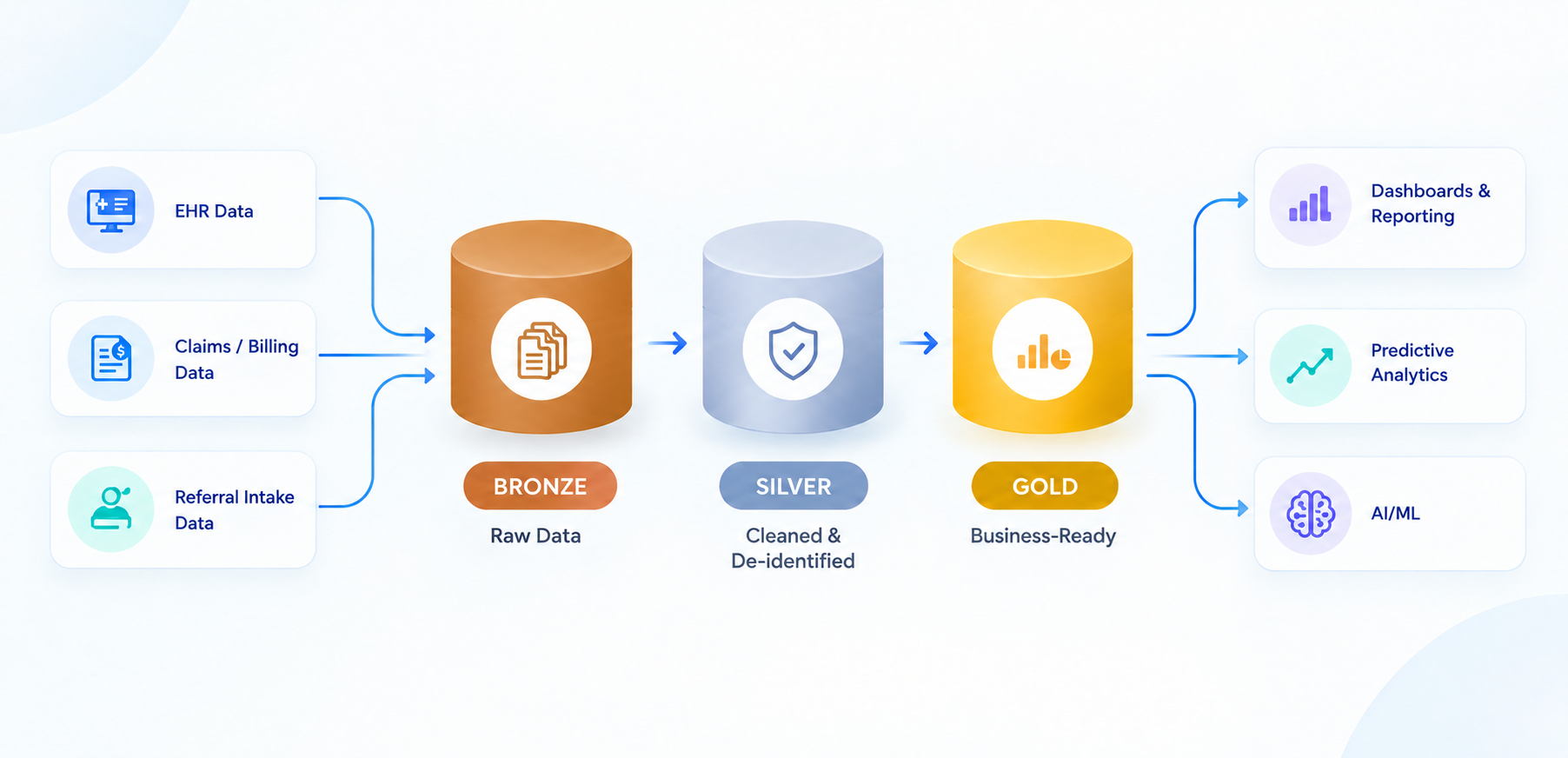
Bronze, Silver, and Gold: what actually happens at each layer

Bronze: raw data, untouched

The bronze layer stores data exactly as it arrives, no cleanup, no validation, no reformatting. An EHR export lands here with its duplicate patient records still duplicated. A claims file lands here with its rejected line items still in it. Nothing gets fixed yet, and that’s deliberate.

Keeping an untouched copy means you always have a way to answer what the source system actually sent, without arguing about it later. If a downstream report looks wrong, bronze is where you go to check whether the error started upstream or got introduced during cleanup.

Silver: cleaned, validated, de-identified

This is where the real work happens. Silver takes the raw bronze data and applies the rules: drop the duplicate patient records, standardize date formats across systems that all format dates differently, reject line items that fail a validation check, and join related datasets, patient plus claims plus caregiver visit, for instance, into something coherent.

This is also, functionally, where PHI de-identification belongs in most healthcare medallion builds. The HHS Office for Civil Rights’ Safe Harbor guidance under 45 CFR 164.514(b) sets out 18 identifier categories that have to be removed or generalized before health data counts as de-identified.

Silver is the natural checkpoint for that removal, after raw data has been validated and joined, but before it reaches gold-layer tables that a wider set of analysts, vendors, or BI tools can query.

De-identification is one piece of a bigger picture. Access controls, retention policies, who’s allowed to query what, that’s a separate set of decisions worth its own conversation, which is why we’ve broken it out in our framework for data governance and CMS compliance for hospice care agencies.

Gold: business-ready, aggregated

Gold is what your COO actually looks at. Length-of-stay averages by team. HQRP compliance rates by facility. Referral-to-admission conversion by source. These are aggregated, curated tables built for a specific consumer, a dashboard, a predictive model, a CMS submission, not a general-purpose dump of everything the organization has ever collected.

The Databricks lakehouse documentation is explicit on this point: gold tables should be organized around named use cases with a clear owner, not treated as a shared catch-all for every possible metric. When two departments can’t agree on which gold table holds the real length-of-stay number, that’s usually a sign gold wasn’t scoped tightly enough to begin with.

Usually, that argument gets settled by tracing the number back through the pipeline, bronze to silver to gold, which is exactly what is built for: not just what a gold table says, but proof of how it got there.
Modernizing a Healthcare Data Platform from the Ground Up from bronze-to-gold?

Medallion Architecture vs. Data Mesh: Which One Do You Actually Need

Medallion architecture organizes data by quality stage, bronze to silver to gold. Data mesh organizes data by business domain, giving each team, clinical, billing, referrals, ownership of its own data products. They answer different questions, and for most single-organization hospice or home-based care networks, they’re not actually competing.

A mid-size hospice agency with one data team and a handful of source systems rarely needs the organizational overhead of a full data mesh: distinct domain teams, federated governance, a data product marketplace. Medallion architecture, applied inside a single governed platform, gets you a trustworthy, audit-ready gold layer without that overhead. Data mesh tends to earn its complexity at multi-facility health systems or larger networks, where a dozen departments are already fighting over who owns what data and no single team could realistically own a company-wide bronze-to-gold pipeline anyway.

Databricks, Microsoft Fabric, or Snowflake: How the Big Three Actually Differ
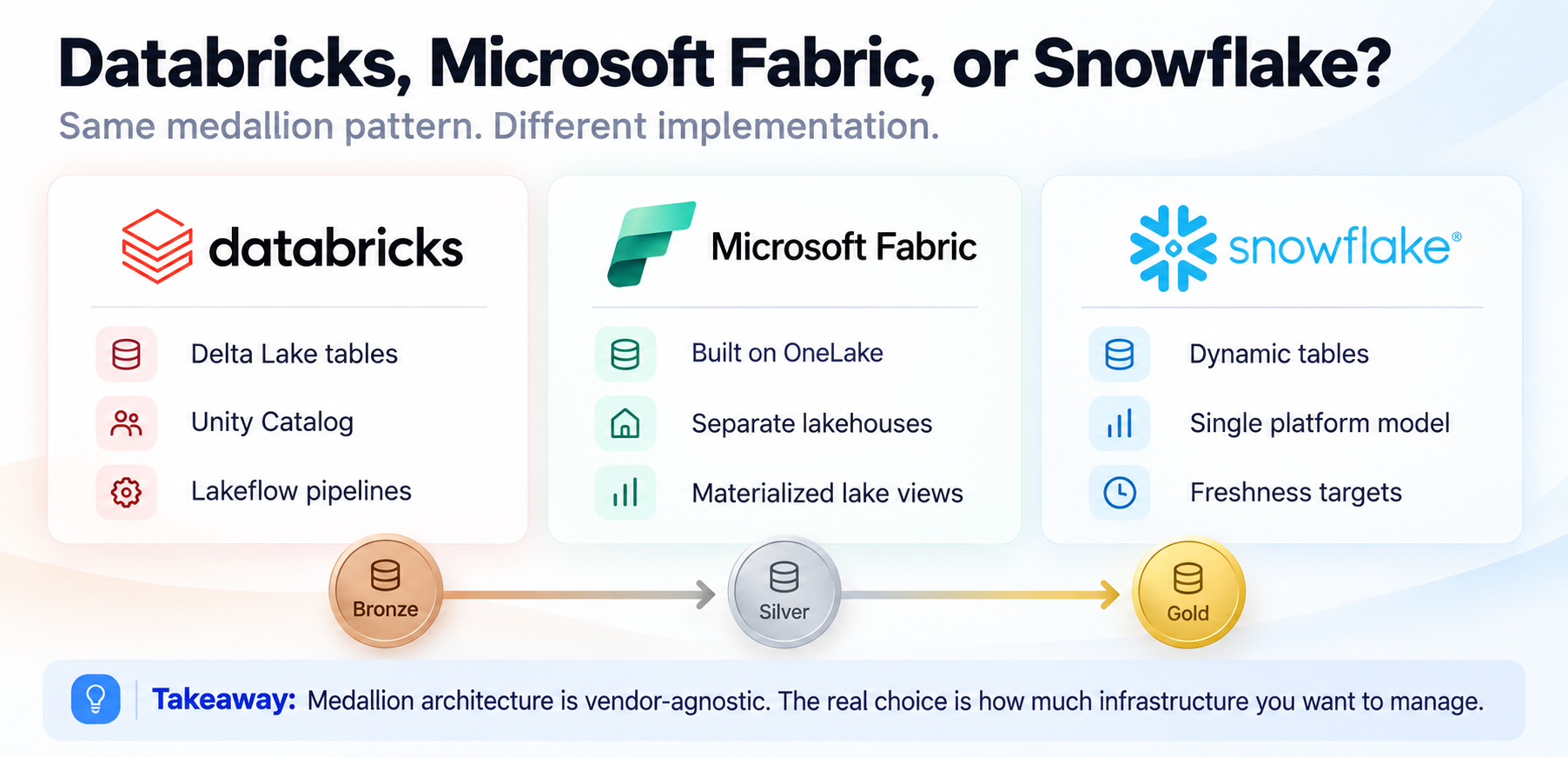
Databricks, Microsoft Fabric, or Snowflake: How the Big Three Actually Differ

All three vendors now treat medallion architecture as a first-class, documented pattern, but the mechanics differ:

  • Databricks implements the layers as Delta Lake tables inside Unity Catalog, typically one schema per layer, and increasingly through Lakeflow’s declarative pipelines for the bronze-to-gold flow, per Databricks’ own lakehouse documentation.
  • Microsoft Fabric builds medallion directly on OneLake, its unified logical data lake, recommending either separate lakehouses per layer or materialized lake views for the silver-to-gold transformation, according to Microsoft’s own Fabric documentation.
  • Snowflake doesn’t require separate storage per layer. Its own documentation on dynamic table design patterns describes bronze as the raw landing table, silver as a cleaned dynamic table with a downstream-linked refresh target, and gold as an aggregated dynamic table with its own freshness goal, all inside one platform’s compute and governance model.

The practical takeaway for a hospice CIO evaluating platforms: the medallion pattern itself is vendor-agnostic. What changes is how much infrastructure you manage directly versus how much a managed service handles for you, and that’s a platform decision worth making with your data engineering partner, not one the architecture pattern forces on you.

What This Actually Costs: Team, Timeline, and Budget

A realistic bronze-to-gold build for a mid-size hospice care agencies typically needs a small dedicated team, one to three data engineers depending on source system count, plus a part-time data architect for the first phase, and runs for some weeks for an initial working pipeline covering your highest-priority source systems: EHR, billing, referral intake. Full coverage across every legacy system usually extends past that, as acquisitions and edge cases get absorbed.

That tracks with what we’ve seen in practice. Our work building an enterprise data platform from the ground up for a post-acute care organization unified EMRs, a patient triaging platform, the state HIE, and HR data into one governed warehouse, architected specifically so new EMRs, service lines, or acquired entities can onboard without rebuilding the foundation each time. The project shipped in a fraction of its planned 18-month timeline.

The heavy lift is building that foundation once. After that, onboarding a new source system becomes a repeatable process instead of a custom project.

Cost scales with source system count and data volume more than with the architecture pattern itself. Medallion architecture doesn’t inherently cost more than an ad hoc pipeline. It just makes the cost visible and predictable instead of hidden inside a dozen one-off scripts nobody understands months later.

Is Medallion Architecture Still Relevant in 2026?

The medallion pattern remains the default, not a close call. Databricks recommends it natively, Microsoft Fabric calls it the recommended design approach, and Snowflake has built native tooling around the same three-layer vocabulary in its own documentation.

At nearly six years old, it’s mature enough that the real question has shifted from whether to use it to how to enforce layer boundaries so gold doesn’t become a dumping ground, which for a healthcare organization sitting on scattered EHR, claims, and referral data is reason to adopt it now, not wait for a replacement that isn’t coming. And gold doesn’t just sit there for reporting: it’s what feeds the length-of-stay models, staffing projections, and capacity planning that become forecasts leadership can defend, not a hunch dressed up in a spreadsheet.

Building This on a Foundation That’s Actually CMS-Ready

None of this works in isolation. A gold layer is only as trustworthy as what’s holding it up, and that’s the full picture we walk through in our guide to building a CMS-ready hospice data foundation. Medallion architecture gives you the layers. That guide is where the rest of the foundation lives.

Starting with data modernization or evaluating your first medallion build? Our team can walk you through.

Frequently Asked Questions

Hospice EMR and Referral Data Integration: Connecting EHR, Billing, and CMS Reporting Effectively

Summary

Most hospice care agencies don’t have a software problem. They have a data problem: EMR, billing, referral intake, and CMS reporting running as separate islands that staff bridge by hand. Here’s how to connect them with a real data integration layer, not a system replacement. 

Introduction

Every hospice CIO we’ve talked to this year has heard some version of the same pitch: rip out the old EMR, move everything to a shiny new platform, and the integration headaches disappear. They don’t. They just move to the new system, along with a nine-to-eighteen-month migration, a retrained staff, and a fresh set of interfaces you still must build from scratch. 

The actual fix is less dramatic and considerably cheaper. It’s connecting the systems you already have, EMR, billing, referral intake, and CMS reporting, so data moves between them automatically. That’s integration, not replacement, and for most agencies it closes the real gap faster than a rebuild ever would. 

The False Choice Between “Replace It” and “Live With It”

Ask a hospice COO how their EMR talks to their billing system and you’ll usually get one of two answers: “it doesn’t, someone keys it in twice,” or “we’re planning to switch platforms next year.” Both answers assume data integration itself is off the table and it’s the same for those trying to implement AI-powered solutions too. 

It isn’t. A hospice EMR, a billing system, and CMS’s iQIES submission system are all built to exchange discrete data, not just PDFs and faxes. The gap is almost always in the interface layer sitting between them, not in the core platforms themselves. Data integration services can help fix that layer, allowing the systems your staff already trust to start behaving like one connected environment instead of three separate ones someone must reconcile by hand. 

What a Bidirectional Hospice EMR Interface Actually Means

A bidirectional interface reads and writes data in both directions, close to real time. Update a medication order in the EMR and it shows up in the pharmacy system. Post a payment in billing and the EMR’s financial record updates on its own. 

That’s different from what a lot of vendors call “integration.” Plenty of connections only push data one way, usually EMR to a reporting tool, built for a compliance export. That’s a data feed, not an interface. It solves reporting. It does nothing for the daily double entry that eats staff time and introduces the transcription errors that later show up as billing denials. 

If you’re evaluating a vendor’s integration claim, ask directly: does data flow both directions through an API or HL7 interface, and does a change in System A show up in System B without a manual export step? “We can run a report” is not a bidirectional interface. 

We took a post-acute care organization from 32 disconnected source systems to one governed enterprise data platform.

The hospital-based hospice problem: when Epic or Cerner isn’t enough

Hospital-owned hospice teams run into a version of this problem free-standing agencies don’t. The hospital runs Epic or Oracle Health (formerly Cerner) for acute care. The hospice program runs a separate, certified hospice EMR, because HOPE, HQRP measures, and hospice-specific billing rules aren’t things a generalist acute-care platform is built to handle. 

That split creates a real documentation gap. A patient admitted to the hospital, then transferred to hospice care, generates ADT (admission, discharge, transfer) data in the hospital system that the hospice EMR needs and often doesn’t get automatically. Clinicians end up re-entering demographics, medication history, and diagnosis data that already exists two systems away. 

The fix isn’t asking the hospital to abandon Epic or asking the hospice program to give up a purpose-built hospice EMR for a generalist one. It’s building the ADT feed and clinical data exchange between them, so admission data lands in the hospice record the moment a transfer happens, not two days later when someone notices it’s missing. 

Closing the loop on billing and CMS reporting

CMS has been layering new data requirements onto existing hospice systems for over a decade, not requiring providers to replace them.  

Change Request 8358, issued in 2013 and effective in 2014, added general inpatient visit reporting, facility NPI numbers, post-mortem visit data, and infusion drug reporting directly onto existing hospice claims. Agencies didn’t swap systems. They added the data fields their claims software needed. 

That pattern hasn’t stopped. Starting April 1, 2026, CMS instructed Medicare Administrative Contractors to compare primary diagnosis codes on hospital claims against hospice claims for the same beneficiary, denying hospital claims that overlap with hospice-covered services. A second edit, effective April 6, 2026, rejects long-term hospice claims where the admission date and the billing “from” date match in a way that bypasses CMS’s length-of-stay checks. 

Both edits mean the same thing operationally: your billing data and your clinical documentation now have to agree, because CMS is actively cross-checking them against data from other providers. That’s a revenue cycle synchronization problem, not a “need a new EMR” problem, and it’s exactly what a properly built billing interface solves. 

There’s one more compliance wrinkle worth naming here: election statements and revocations need an audit trail that survives the trip between systems. If a patient revokes hospice election and that status doesn’t update everywhere at once, EMR, billing, and referral records can disagree about a patient’s current status, which is precisely the kind of mismatch CMS’s newer claims edits are built to catch. A real data integration layer keeps that status synchronized from one source of truth, not three. 

The same logic applies to HOPE and iQIES. CMS requires a 90% HOPE submission rate to avoid a 4% Medicare payment reduction, and iQIES has been the only accepted submission channel since HIS was fully retired on February 16, 2026.  

We cover the full HOPE and HQRP compliance mechanics in our guide to building a CMS-ready hospice data foundation, but the integration point that matters here is simpler: your EMR needs a clean, automated path into iQIES, not a manual export someone remembers to run before the deadline. 

Referral data without fragmenting HOPE records 

Referral intake is usually the first place integration breaks down in hospice care agencies. A referral arrives by fax, portal, or email, gets keyed into the EMR as a new patient record, and later turns out to duplicate a record already created through a different intake path. Now there are two partial records instead of one complete one, and HOPE data collected against either is incomplete. 

The fix is structural: referral and eligibility tools need to write into the same admission workflow the EMR already uses, not create a parallel record that gets reconciled after the fact. If referral intake delays are the bigger issue for your team right now, we’ve covered automated eligibility screening separately, but from a pure data-integrity standpoint, the goal here is one patient, one record, from the first referral touch through HOPE-Discharge.

https://inferenz.ai/blogs/why-most-hospice-ai-projects-fail-without-data-readiness/ The systems nobody plans for: Pharmacy and DME

Most integration conversations start and stop at EMR-to-billing. Pharmacy and durable medical equipment (DME) interfaces get left for later, and “later” usually means someone is still calling in medication orders and faxing DME requests while everything else runs automatically. 

That’s a real gap, not a minor one. Medication and equipment data feed directly into the same CMS quality measures and billing codes as clinical documentation. An EMR that talks to billing and iQIES but not to your pharmacy interface is still generating manual work and still creating room for the kind of data mismatch that trips CMS’s newer billing edits. 

Middleware, HIE, and TEFCA: the case against point-to-point

There are two ways to connect multiple systems. You can build a direct, point-to-point interface between every pair of systems that need to talk, which works fine until you add a fifth or sixth system and the number of connections you’re maintaining grows faster than your team can support it. Or you can connect through a middleware layer or a health information exchange (HIE) once, and let that hub route data everywhere else. 

The second approach has real momentum behind it now. The Trusted Exchange Framework and Common Agreement (TEFCA), the federal government’s national interoperability framework, moved roughly 10 million documents in the year before 2025, and 464 million by the end of that year, according to data published by ASTP/ONC. Healthcare trade coverage in early 2026 puts that figure at nearly 500 million records exchanged through TEFCA’s Qualified Health Information Networks (QHINs), overseen by the Recognized Coordinating Entity. 

For a hospice team connecting to a hospital system, a referral partner, and a payer all at once, joining an HIE or a QHIN through one connection beats building and maintaining three or four separate point-to-point interfaces by hand. 

What integration actually costs, versus replacement

A scoped interface project, connecting your EMR to billing and to iQIES, typically runs six to twelve weeks with no clinical downtime, because you aren’t touching the system staff already know how to use. A full EMR replacement runs closer to nine to eighteen months once you account for vendor selection, data migration, staff retraining, and the inevitable stretch of running two systems in parallel during cutover. 

The dollar comparison usually favors integration too, but disruption cost is where replacement really loses. A mid-size agency mid-migration is an agency with a higher error rate, a support ticket backlog, and clinicians filling out paper workarounds “just until the new system settles.” None of that shows up on a vendor’s price sheet. 

The questions that separate real integration from a reporting export 

Before signing with an integration vendor, or asking your current EMR vendor what they can actually deliver, four questions cut through most of the marketing. 

  1. Does data move both directions, automatically, without a manual export step? 
  2. Does the connection update in near real time, or only on a batch schedule someone has to remember to trigger? 
  3. Does it cover clinical, billing, and CMS reporting data, or just one of the three? 
  4. And can you see a working example with another hospice agency, not a hospital system, since hospice data requirements are specific enough that generalist healthcare integrations don’t automatically transfer over?

If you’re comparing what platforms like WellSky, Axxess, or HospiceSoft actually support natively versus what needs a third-party interface, we’ve broken that down separately. But any vendor conversation should start with those four questions, regardless of which platform you’re running today. 

Get a straight answer on what's fixable through data integration and what genuinely isn't, from our experts.

Frequently Asked Questions 

AI in Hospice Care: How Agentic AI Is Easing Admissions, Compliance and Documentation

Summary: What Hospice Leaders Need to Know

  • The pressure is real. About 1.72 million Medicare beneficiaries used hospice in 2022, and 49.1% of Medicare decedents were enrolled at death, according to NHPCO Facts and Figures.
  • Compliance got heavier. CMS replaced the Hospice Item Set with the HOPE assessment on October 1, 2025, adding update visits and new data points.
  • AI works best on operations first. Referral intake, eligibility screening, HOPE documentation, IDG prep and billing checks are the highest-return starting points.
  • Clinicians keep the decisions. Agentic AI drafts, flags and routes. People review and sign.
  • Data readiness decides success. Agencies that unify EMR, referral and billing data first see faster results. Our guide on why hospice AI projects fail without data readiness explains why.

Introduction

A referral lands eleven days before a patient dies. The family had been managing symptoms alone for months. Nobody flagged the eligibility signals sooner, because nobody had the hours to look.

That story plays out in hospice agencies every week, and it rarely traces back to clinical skill. It traces back to paperwork, scattered systems and a workforce stretched thin. AI in hospice care is starting to change that, and the agencies moving first are using it on the administrative load, leaving the bedside to people.

This guide walks through where AI earns its place in hospice and palliative care, which workflows to automate first, how HOPE reporting changes the compliance picture, and what to ask before you buy anything. It closes with answers to the questions families and administrators ask most.

Did you know?

What Is AI in Hospice Care?

AI in hospice care means using machine learning, intelligent automation and data analytics to support the work around end-of-life care. Think intake forms read automatically, eligibility signals surfaced early, visit notes turned into audit-ready drafts, and denials caught before they happen.

It does not diagnose, and it does not decide who receives comfort care. It handles the repetitive tasks that eat clinician hours, so nurses, social workers and chaplains spend those hours with patients and families.

A newer wave, agentic AI, goes a step further. An agent plans and carries out a multi-step task, such as collecting referral documents, checking coverage and scheduling the first visit, and escalates to a person when judgment is needed. Our generative and agentic AI services are built around exactly that model, with human oversight designed in from day one.

Why hospice agencies feel the strain first

Ask a program leader what keeps them up at night and clinical care rarely tops the list. The list looks more like this:

  • Late referrals that shrink a patient’s time on service to a handful of days
  • Eligibility documentation that has to hold up under a targeted-probe audit
  • HOPE assessments that raised the compliance bar in October 2025
  • Interdisciplinary group (IDG) meetings prepared by hand, hours before they start
  • Cap exposure and live-discharge risk tracked in spreadsheets

Every one of these is a data and workflow problem. That makes them solvable.

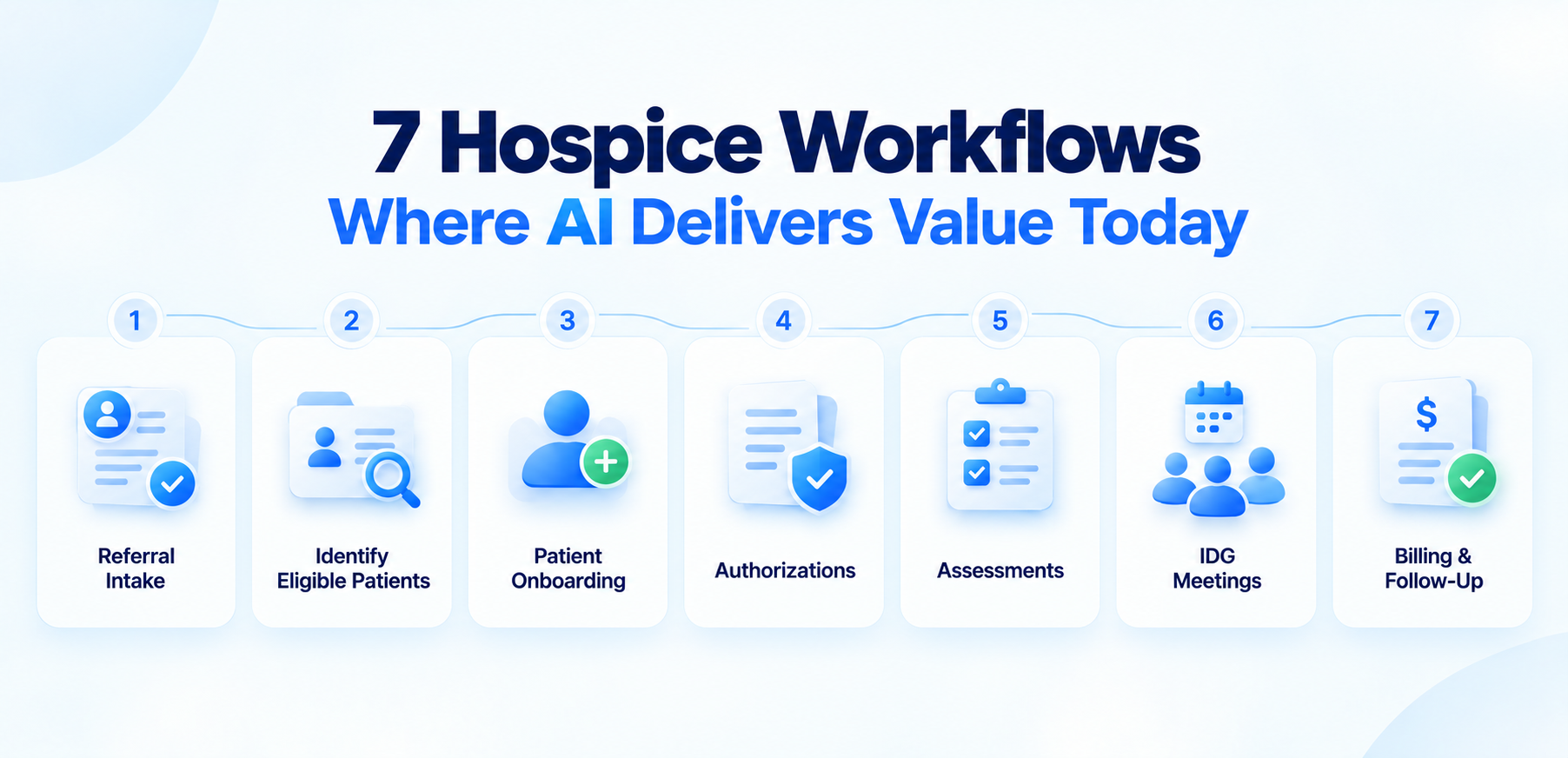
7 Hospice Workflows Where AI Delivers Value Today

7 Hospice Workflows Where AI Delivers Value Today

Start with the workflows that sit closest to revenue and compliance. The order below mirrors how a patient moves through an agency, from first referral to family follow-up.

1. Referral Intake and Eligibility Verification

Referrals still arrive by fax, portal, phone and hospital discharge feeds. Staff re-key details into the EMR, then log in to payer portals to confirm coverage. Hours disappear before a nurse ever visits.

What AI changes

  • Reads referral packets and insurance cards with OCR and machine learning
  • Checks Medicare and Medicare Advantage eligibility automatically
  • Writes verified details back to the EMR and alerts the intake team

Where Caregence fits

The Front Door Agent in Caregence™ Agents automates referral intake, eligibility screening and family outreach, and escalates to a person only when it has to. For a deeper look at the plumbing underneath, read our piece on hospice EMR and referral data integration.

2. Earlier Identification of Hospice-Eligible Patients

Medicare hospice coverage starts when a physician certifies a prognosis of six months or less if the illness runs its normal course. Many eligible patients are identified too late. Predictive models can scan clinical and claims data for hospice-eligible signals around the clock, so the first flag no longer depends on someone noticing.

The Start of Care and Intake Prediction model in Caregence™ Predictive Models flags eligibility complexity and referral urgency so patients enter hospice while there is still time to benefit. It also ties into the wider challenge of referral leakage in post-acute care.

3. Patient Onboarding and Admission

Admission touches scheduling, charting, consents, coding and care-team assignment. Each handoff is a chance for a delay or a data-entry error, and in hospice every day counts.

With AI, the intake team enters diagnoses, demographics and insurance details once. The system then identifies follow-up admission tasks, assigns the right care team by location and acuity, prepares the record and drafts initial notes for clinician review. Inferenz has written about the same pattern in AI-powered patient onboarding, and the Matching and Scheduling Agent applies it to interdisciplinary team assignment.

4. Authorizations and Election Documentation

Notices of election, level-of-care changes and related authorizations all depend on clean clinical and eligibility data. An Authorization Agent retrieves that data, completes the paperwork and tracks status end to end, so nothing sits in a queue unnoticed.

5. HOPE Assessment and Clinical Documentation

HOPE replaced the Hospice Item Set on October 1, 2025. CMS built it to capture patient and family needs in real time and at additional timepoints, and it introduced HOPE Update Visits during the first 30 days after election. Records now flow through iQIES. The full specifications sit on the CMS HOPE technical information page.

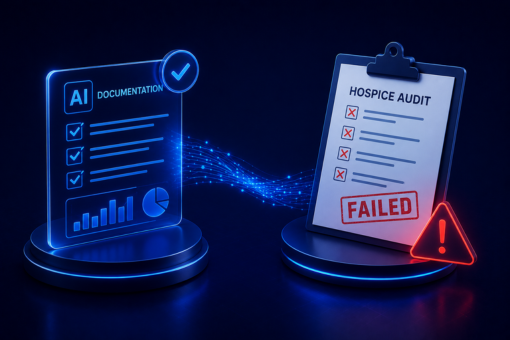
More timepoints mean more documentation, and documentation that looks complete can still fail review. We unpacked that risk in when AI documentation looks perfect and still fails a hospice audit.

What AI changes

  • Drafts HOPE documentation from visit notes for the nurse to confirm
  • Flags coding variance and documentation gaps before submission
  • Keeps every suggestion explainable and traceable for surveyors

6. IDG Meeting Preparation

The IDG meeting is a Conditions of Participation requirement, and preparing a defensible one takes hours. An Operational Summarization Agent turns visit notes, prior IDG discussions and family communications into a structured pre-meeting summary, then flags gaps. Prep time drops, and the meeting itself gets sharper.

7. Billing, Cap Management and Family Follow-Up

On the revenue side, a Billing and Claims Agent submits claims, tracks cap-related exposure and flags denials early. Predictive models forecast cap and reimbursement risk tied to level-of-care changes, so revenue-threatening shifts surface before they hit the books.

After a patient dies, the work continues. Bereavement outreach and family follow-up can be timed and triggered automatically through digital patient engagement, so no family slips through a gap during the hardest weeks of their lives.

See AI Built for Hospice Workflows

Manual vs AI-Driven Hospice Operations

Hospice processManual approachAI-driven approach
Referral intakeFax, re-keying, phone follow-upsAutomated extraction, routing and family outreach
Eligibility checksMultiple portal logins per patientAutomated verification written back to the EMR
Admission and team assignmentManual coordination across departmentsTask orchestration and acuity-based matching
HOPE documentationRetrospective chart reviewDrafted from visit notes, gaps flagged early
IDG preparationHours of live chart reviewAuto-generated summaries and gap alerts
Billing and cap trackingSpreadsheets and denial reworkPredictive exposure alerts and proactive claim checks

Benefits of AI in Hospice and In-Home Hospice Care

For patients and families

  • Faster access to hospice services, at home or in a facility
  • Symptom concerns reach the care team sooner
  • More consistent support, including bereavement follow-up

For hospice care teams

  • Less documentation and re-keying
  • Sharper IDG meetings with less prep
  • More hours for direct patient and family time

For hospice organizations

  • Fewer claim errors and avoidable denials
  • Earlier warning on cap exposure and audit risk
  • Room to grow census without adding administrative headcount

Across healthcare deployments, Inferenz reports 45% less administrative load, 5x faster onboarding and 30% better caregiver allocation on Caregence™. Results vary by organization and starting data quality.

The Future of AI in Hospice and End-of-Life Care

Automation is the opening chapter. Over the next few years, expect four shifts.

Predictive care planning

Models that read symptom progression and visit patterns will help teams anticipate pain escalation and level-of-care changes days earlier. Our take on predicting readmission risk before it happens shows the same closed-loop thinking in action.

Agentic workflows with human oversight

Agents will run onboarding, authorization and follow-up sequences end to end. Clinicians stay in control of every clinical decision, and every agent action leaves an audit trail.

Outcome-based measurement

Agencies will judge AI by admission speed, comfort outcomes and clinician time reclaimed. Adoption for its own sake loses appeal.

Governed, human-centered design

Transparency, consent and alignment with patient values will decide which tools earn trust. See how we approach this in building trusted agentic AI beyond HIPAA compliance.

How to Start: A Practical Path for Hospice Agencies

Step 1: Fix the data foundation

AI can only work with what it can see. Agencies running separate EMR, pharmacy, referral and billing systems need a unified layer first. Our data engineering and integration services and MPI and Patient 360 solution connect those sources without forcing a migration.

Step 2: Pick one high-friction workflow

Referral intake or HOPE documentation makes a strong pilot. Both are measurable, and both touch revenue and compliance. A 90-day pilot beats a twelve-month roadmap nobody finishes.

Step 3: Build governance in from day one

Role-based access, encryption and audit trails are baseline requirements for PHI. Review our data quality, governance and compliance services and the guide to PII and PHI protection in healthcare before any agent touches patient data.

Step 4: Measure and expand

Track days from referral to admission, HOPE completion rates, IDG prep time and denial rates. Once the first workflow proves out, extend to the next. Our AI strategy team can help sequence the roadmap.

Our Perspective: Where Caregence™ Fits

Caregence™ is Inferenz’s healthcare-native agentic AI platform. It connects to the EMR, hospice pharmacy, referral network and analytics tools an agency already runs, and turns them into one data layer. On top of that layer sit ready-to-use agents, predictive models and a no-code workflow builder that clinical and compliance leaders can adjust without waiting on a developer.

  • Works with your stack: integrates with platforms such as HCHB, WellSky and MatrixCare, with no forced migration
  • Governed by design: HIPAA-aligned pipelines, explainable outputs and full traceability
  • Purpose-built: designed around hospice and palliative workflows, then extended across home health, home care and hospitals

Explore the full set of Caregence™ use cases or browse all healthcare solutions from Inferenz.

Final Thoughts

Hospice teams already give everything they have. The agencies pulling ahead are the ones giving that effort back its time: fewer forms, earlier referrals, cleaner audits, calmer IDG meetings.

If you are weighing where to begin, start with the data, pick one workflow, and keep a clinician in the loop. Then talk to people who have built it. Our team is ready when you are, and you can browse our case studies or contact us to plan a first step.

Let's Connect Hospice to the Moment It Matters Most

Frequently Asked Questions

When AI Documentation Looks Perfect and Still Fails a Hospice Audit

Summary  

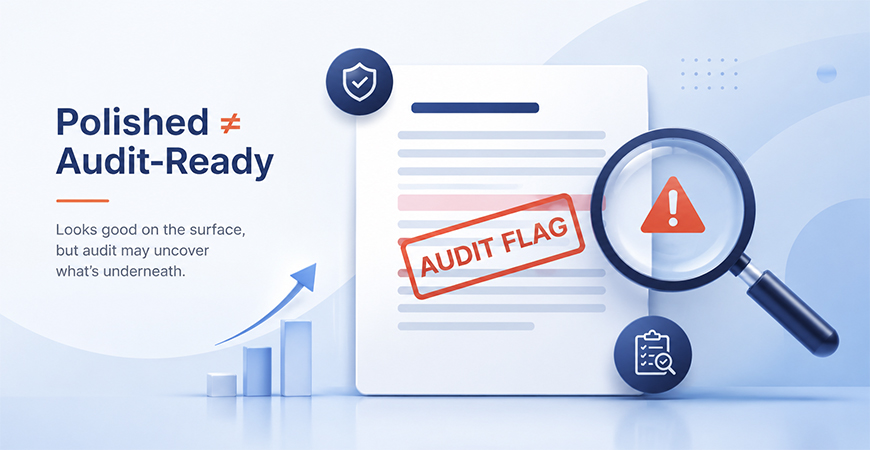
Most AI clinical documentation tools produce hospice notes that read well and fail audits. Generic AI was never built to reason through jurisdiction-specific Local Coverage Determinations or the clinical-regulatory logic Medicare Administrative Contractors actually use.  

This article breaks down why that gap exists and what compliance-first documentation actually needs. 

documentation-still-open

Introduction 

A hospice nurse wraps up a home visit at 9pm. She is exhausted, the family is anxious, and she still has to finish tonight’s note before tomorrow’s IDT meeting. She opens the AI-generated draft. Clean sentences, professional tone, not a typo in sight. She signs off and moves on. 

Six months later, that exact note comes back flagged in a Targeted Probe and Educate (TPE) audit. 

The prose was fine. The compliance case was not there. 

The note never established, in language a Medicare Administrative Contractor (MAC) could point to, why this specific patient is expected to have six months or less to live. That is not a formatting problem. That is a fundamental misunderstanding of what AI clinical documentation for hospice requires to be defensible. 

This is not an isolated case. It is the pattern. 

Why general AI clinical documentation tools cannot handle hospice compliance 

Why general AI clinical documentation tools cannot handle hospice compliance

Hospice News recently reported that hospice leaders across the country are converging on the same finding: most AI documentation tools were built for home health broadly, not hospice specifically. 

They do not understand: 

  • Local Coverage Determination (LCD) criteria and how they vary by jurisdiction 
  • The clinical logic separating a hospice recertification narrative that is well-written from one that is genuinely audit-ready 
  • The comparative decline language CMS reviewers are trained to look for 
  • What the new HOPE quality-reporting framework expects in terms of person-centred nuance 

One of the hospice CEOs summarized it directly: general AI models can produce narratives that are clinically polished and still fail an audit, because polish and compliance are not the same thing. 

More than half of hospices nationwide are already managing multiple simultaneous audits. TPE audit rates keep climbing. This is not a hypothetical risk for future planning. It is an operational reality for most hospice organizations today. 

The LCD problem no one is talking about 

Here is what makes AI clinical documentation for hospice harder than it looks on the surface level. 

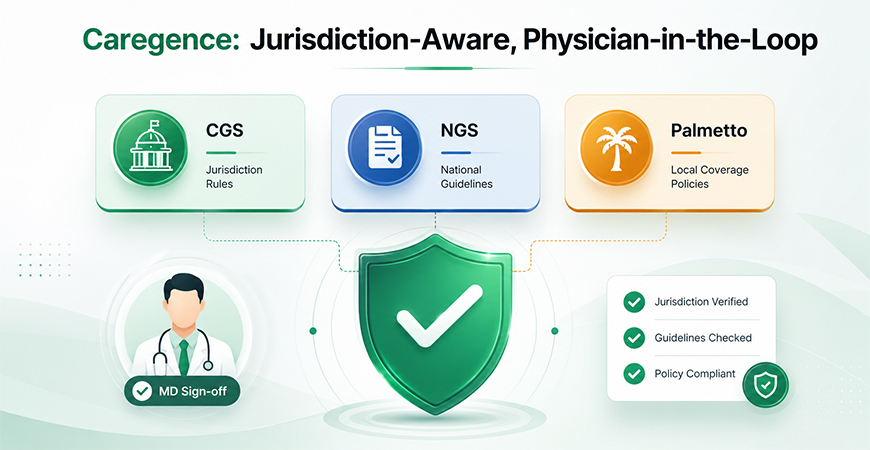
Medicare hospice eligibility is not governed by a single national standard. Despite being a federal benefit, terminal-status criteria are published as jurisdiction-specific LCDs, written separately by three different Medicare Administrative Contractors: 

  • CGS 
  • NGS 
  • Palmetto GBA 

These three MACs use different logic: 

  • CGS and NGS diverge substantively on ALS and renal disease, applying different lab thresholds and different qualifying criteria other than terminology. 
  • Palmetto GBA abandons the itemized-checklist approach entirely for five of its seven disease categories, replacing it with a narrative “structural and functional impairment” standard that carries no numeric thresholds at all 

A generic AI model trained on general clinical notes has no mechanism for knowing which of these three regulatory regimes governs the patient in front of it, let alone applying the right one correctly. 

The result is documentation that may satisfy one MAC’s expectations while failing another’s entirely, with no warning to the clinician who signed off on it.

What compliance-first hospice AI needs? 

The fix for a compliance-first hospice AI is not a larger language model. It is a system built from the regulation outward, not from the sentence inward. 

A documentation tool built for hospice compliance needs to do four things that most general AI tools currently do not: 

  • Resolve jurisdiction before screening begins. The system must identify the patient’s state, MAC assignment, and governing LCD before it touches a single eligibility criterion. 
  • Walk through disease-specific pathways item by item. Required criteria and supporting criteria must be kept distinct and evaluated separately, not summarized into a generic “probably eligible” assessment. 
  • Distinguish between a criterion that is not met and one that is simply not yet documented. Real gaps need to surface for clinical follow-up. They should never be quietly absorbed into a narrative that reads as complete when it is not. 
  • Know its role in the clinical workflow. The tool screens eligibility. It does not diagnose. The physician certifies. That boundary is not optional, and it cannot be designed around. 

These are not feature requests. They are the minimum viable architecture for AI clinical documentation in hospice that can withstand a TPE audit or a Comprehensive Error Rate Testing (CERT) review. 

Is-your-AI-clinical-documentation-built-for-a-hospice-audit-or-just-pretending

How Caregence approaches AI Clinical Documentation for hospice 

 The Caregence clinical documentation AI engine was designed around the compliance logic described above. It is not a general documentation tool adapted for hospice. It is built from the regulatory structure outward. 

How Caregence approaches AI Clinical Documentation for hospice 

Here is how it works in practice: 

  • Jurisdiction resolution first. Before screening begins, Caregence identifies the patient’s state, MAC assignment, and the specific LCD that governs their diagnosis. An ALS or renal patient in an NGS jurisdiction is measured against NGS thresholds, not CGS’s or Palmetto’s. 
  • Disease-specific pathway screening. The system works through each diagnosis pathway the way a compliance-minded clinician would: required criteria evaluated separately from supporting criteria, documentation gaps flagged explicitly rather than inferred around. 
  • Certification-ready narrative output. A completed screen translates directly into narrative language built around the “paint a picture with evidence” standard that CMS reviewers and MACs are trained to apply. The documentation is defensible, not just readable. 
  • Physician certification remains the physician’s call. The system supports the clinical and compliance case. It does not make the determination. That boundary is architectural, not a disclaimer. 

If your current AI clinical documentation tool can produce a well-structured note but cannot tell you which LCD it screened against, it is not a compliance tool. It is a drafting tool. In a benefit this audit-heavy, that distinction carries real financial and regulatory risk.

What this means for hospice organizations right now 

The hospice sector is operating in an environment where audit pressure is structural, not cyclical. 

TPE rates are climbing. The HOPE framework is adding new quality-reporting requirements. Payers are scrutinizing hospice recertification narratives more carefully than at any prior point. And the cost of a failed audit is not just the recoupment. It is the retrospective review that follows, the staff hours consumed by response documentation, and the referral relationships that erode when a provider’s compliance record comes into question. 

The organizations that will navigate this environment most effectively are not the ones with the most advanced general AI tools. They are the ones whose AI understands: 

  • Which MAC governs each patient 
  • Which hospice LCD applies to each diagnosis 
  • What the difference is between a well-written note and an audit-ready one 
  • Where the documentation gaps are before the auditor finds them 

That is bar you need to set for AI implementations.

Hospice-Audits-Are-Not-Slowing-Down.-Your-Documentation-Needs-to-Be-Ready

Frequently Asked Questions 

Why Most Hospice AI Projects Fail Without Data Readiness?

Summary 

  • Most hospice AI initiatives fail due to poor data readiness, not weak algorithms  
  • Fragmented EMR, referral, and payer data limits predictive accuracy  
  • AI readiness requires unified data, governance, and real-time integration  
  • High-impact use cases include referral automation, predictive care, and revenue integrity  
  • A data-first strategy is critical before investing in AI tools  

Introduction

Walk into any hospice boardroom today and one topic dominates the agenda: AI. 

From predictive analytics to workflow automation, hospice leaders are actively exploring how AI can solve staffing shortages, compliance pressure, and shrinking margins. 

Financial pressure is becoming increasingly difficult for hospice providers to absorb. According to the latest reimbursement update from the Centers for Medicare & Medicaid Services, hospices received a 2.6% increase in Medicare base rate payments for 2026, slightly above the initially proposed 2.4% adjustment. While this translates to approximately $750 million in additional federal hospice spending, many providers continue to face rising labor, compliance, and operational costs that outpace reimbursement growth. The hospice aggregate payment cap also increased to $35,361.44 in 2026, reinforcing the need for organizations to improve efficiency, visibility, and financial control across care operations. 

In this environment, hospice organizations are increasingly being asked to deliver better outcomes without proportional increases in reimbursement, making operational intelligence and data-driven efficiency critical priorities. 

But there is a problem, most conversations overlook. 

AI is only as effective as the data it runs on. And in hospice care, that data is often fragmented, inconsistent, and disconnected. 

As leaders prepare for NPHI 2026 Summit, the real question is not which AI vendor to choose. 

The real question is whether your organization is ready for AI at all. 

Why Do Most Hospice AI Projects Fail? 

Most AI failures in hospice do not happen after deployment. They happen before a model is even trained. 

The root cause is data fragmentation. 

Across many hospice organizations: 

  • Patient records exist across multiple EMRs and legacy systems  
  • Referral data remains locked in fax or unstructured formats  
  • Clinical documentation varies across caregivers  
  • Payer, operational, and care data do not connect  

Individually, these issues seem manageable. Together, they create a system where AI models operate on incomplete and duplicated data. 

This leads to a dangerous outcome. 

AI does not simply produce wrong answers. It produces confident wrong answers. 

In hospice care, that risk directly impacts patient outcomes, compliance, and revenue.

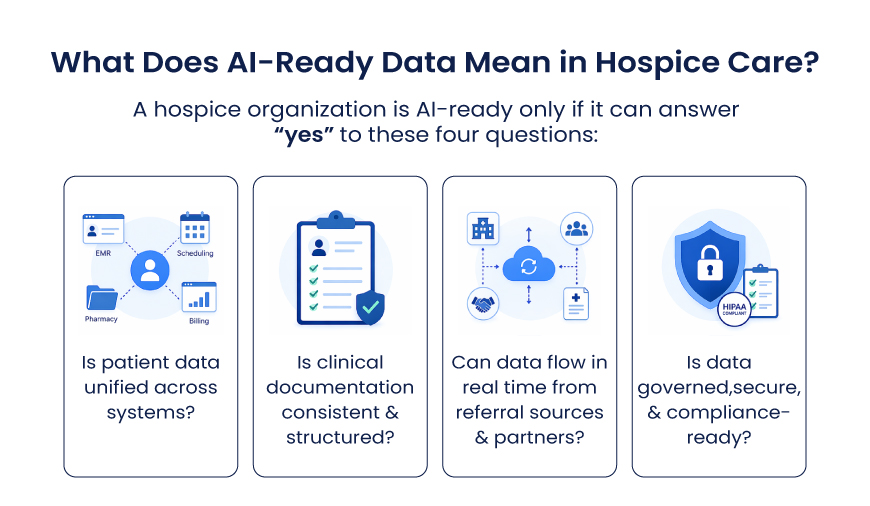
What Does AI-Ready Data Mean in Hospice Care? 

What Does AI-Ready Data Mean in Hospice Care

AI readiness is not about buying technology. It is about building the right data foundation. 

A hospice organization is AI-ready only if it can answer “yes” to these four questions: 

  1. Is patient data unified across systems?  
  1. Is clinical documentation consistent and structured?  
  1. Can data flow in real time from referral sources and partners?  
  1. Is data governed, secure, and compliance-ready?  

This is where most organizations struggle. Not because they lack tools, but because they lack a connected data foundation. 

In practice, leading organizations are moving toward a unified approach where clinical, operational, and financial data are brought together into a single layer before any AI is applied. Healthcare workflow automation platforms like Caregence are built around this principle, ensuring that AI operates on a consistent and reliable view of patients, workflows, and outcomes. 

If any of these conditions are missing, AI investments will underperform regardless of the vendor or model quality.

What Data Challenges Prevent AI Adoption in Hospice? 

Most hospice organizations do not lack data. They are lacking usable data. 

Common challenges include: 

  • Duplicate patient records across systems  
  • Unstructured referral intake processes  
  • Siloed clinical, financial, and staffing data  
  • No real-time integration with hospital partners  
  • Manual compliance and audit workflows  

These are operational bottlenecks that directly limit AI effectiveness.

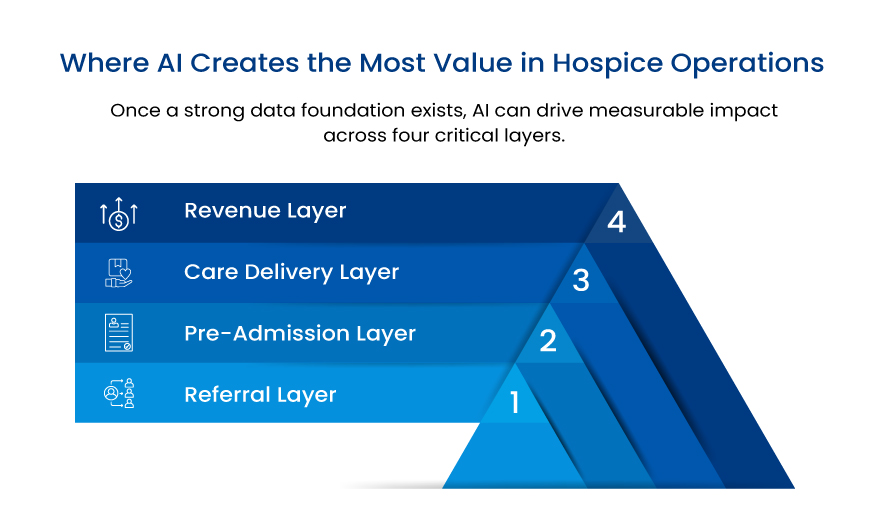
Where AI Creates the Most Value in Hospice Operations 

Where AI Creates the Most Value in Hospice Operations

Once a strong data foundation exists, AI can drive measurable impact across four critical layers. 

1. Referral Layer: Where Revenue Is Won or Lost 

Hospitals are now a primary referral source. Speed is everything. 

AI can: 

  • Convert referrals into structured data 
  • Score eligibility in real time 
  • Flag conversion risks early 

Even small improvements here create significant impact at scale. 

2. Pre-Admission Layer: Predict Before You Commit 

AI enables better decision-making before admitting patients. 

With clean data, models can predict: 

  • Length of stay  
  • Patient risk  
  • Cost alignment  

This allows organizations to plan proactively instead of reacting later. 

3. Care Delivery Layer: Proactive, Not Reactive Care 

This is where AI begins to influence clinical outcomes. 

Predictive models can: 

  • Detect deterioration signals  
  • Trigger timely interventions  
  • Support compliance with frameworks like HOPE  

Care shifts from reactive to proactive. 

4. Revenue Layer: Compliance and Financial Protection 

Audit pressure is increasing across hospice organizations. 

AI can: 

  • Align clinical and billing data  
  • Flag inconsistencies  
  • Generate audit-ready documentation  

This reduces financial risk and strengthens compliance.

The Caregiver Equation: Why This Is Also a Workforce Problem 

Most caregiver burnout is driven by friction, not compensation. 

Scheduling inefficiencies, repetitive documentation, and disconnected tools reduce time spent on patient care. 

A connected, data-driven environment can: 

  • Reduce administrative burden  
  • Improve onboarding  
  • Enable better caregiver-patient matching  

Even a small improvement in retention creates significant financial and operational impact. 

Case in point: Inferenz modernized a fragmented enterprise data ecosystem for a large healthcare organization, creating a unified digital front door that improved data accessibility, streamlined patient engagement workflows, and enabled faster, more coordinated care operations across systems through an enterprise data platform modernization initiative. 

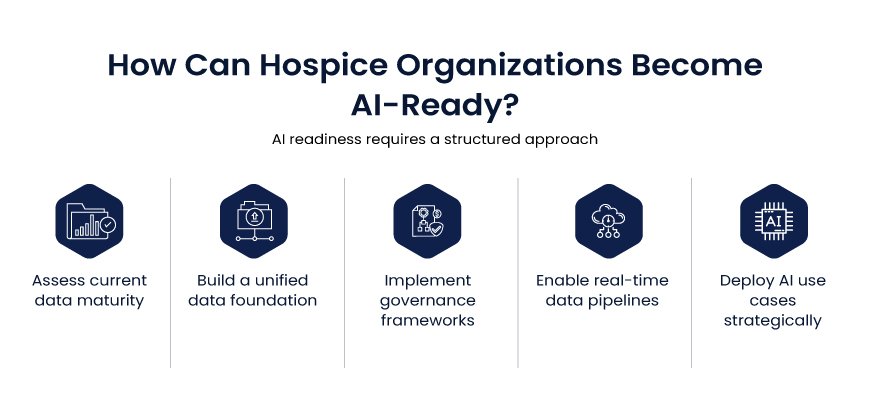
How Can Hospice Organizations Become AI-Ready? 

How Can Hospice Organizations Become AI-Ready?

AI readiness requires a structured approach: 

  • Assess current data maturity  
  • Build a unified data foundation  
  • Implement governance frameworks  
  • Enable real-time data pipelines  
  • Deploy AI use cases strategically  

This shift is already operationalized through healthcare-native platforms that unify data, workflows, and AI into a single ecosystem. AI-based workflow automation solutions like Caregence reflect this approach, helping organizations move from fragmented systems to connected, AI-ready operations. 

Key Takeaways 

  • AI success depends on data quality, not algorithms  
  • Fragmented data is the biggest barrier to adoption  
  • Unified data enables predictive intelligence  
  • Compliance and governance are essential  
  • A data-first approach drives ROI  

Conclusion: The Real Decision Hospice Leaders Must Make 

Every AI investment will perform exactly as well as the data behind it. 

Hospice leaders today face pressure across margins, compliance, workforce, and referrals. These are not separate challenges. They all stem from the same issue: fragmented data. 

The decision is not which AI tool to implement. 

The decision is whether to build the data foundation that makes agentic AI work. 

Organizations that move toward a connected, data-first model will lead to the next phase of hospice transformation. Increasingly, this is being enabled through platforms that unify data, workflows, and intelligence into a single layer. Enterprise workflow automation solutions like Caregence represent what this future looks like in practice. 

Ready to Make Your Data AI-Read

FAQs